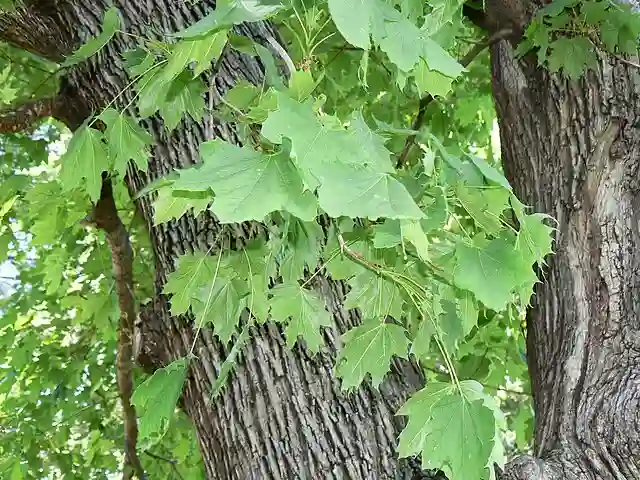
The Norway Maple (Acer Platanoides): A Comprehensive Look
The Acer platanoides, commonly known as the Norway maple, stands as a familiar and often stately presence in urban and rural landscapes across Europe and western Asia, and widely naturalized in North America. This deciduous tree, belonging to the Sapindaceae family, is celebrated for its hardiness, adaptability, and striking foliage, making it a popular choice for parks, streets, and gardens.
Season 1: The Promise in a Seed
The crisp autumn air carried the last of the Norway maple’s winged samaras, twirling to the ground. Among them was a pair I carefully collected. These tiny seeds held the blueprint for a towering tree. I remember feeling a sense of anticipation, a quiet excitement for the life they held within. After a period of stratification through the cold winter months, mimicking nature’s process, I sowed them in well-drained soil in early spring.
Botanical Profile: Decoding the Norway Maple
Acer platanoides typically reaches a height of 20-30 meters (65-100 feet) with a broad, rounded crown. Its bark is grayish-brown and develops shallow fissures with age. The leaves, characteristically maple-shaped, are 15-25 cm wide with 5-7 sharply pointed lobes. Unlike some other maples, the Norway maple’s leaves exude a milky sap when the petiole (leaf stalk) is broken. In autumn, the foliage transforms into a vibrant display of yellow, sometimes tinged with orange or red, providing a spectacular seasonal spectacle.
Key Characteristics of Acer Platanoides:
| Feature | Description |
| Common Name | Norway Maple |
| Scientific Name | Acer platanoides |
| Family | Sapindaceae |
| Tree Type | Deciduous, Woody |
| Mature Height | 20-30 meters (65-100 feet) |
| Leaves | 5-7 lobed, sharply pointed, milky sap from petiole |
| Fall Color | Yellow, sometimes orange or red |
| Flowers | Greenish-yellow, in upright corymbs (April-May) |
| Fruit | Paired samaras at an obtuse angle |
| Bark | Grayish-brown, shallowly fissured with age |
| Growth Rate | Relatively fast |
| Habitat | Urban and rural landscapes, wide soil tolerance |
| Native Range | Europe and western Asia |
| Ecological Role | Source of nectar and pollen; wind-dispersed seeds |
Season 2: First Signs of Life
Weeks turned into months, and then, a miracle. Tiny green shoots emerged from the soil, pushing their way towards the light. The first leaves, delicate and unfurled, were a testament to the power of nature. I diligently watered them, ensuring they had enough sunlight, feeling a surge of protectiveness for these fragile beginnings.
The Norway maple is a relatively fast-growing tree that exhibits tolerance to a wide range of soil conditions and urban stresses, including pollution and compaction. This adaptability has contributed to its widespread use in urban forestry. However, in some regions, particularly in North America, its vigorous growth and prolific seed production have led to its classification as an invasive species, outcompeting native vegetation. Careful consideration of its ecological impact is crucial when selecting tree species for planting.
Season 4: Establishing Roots and Branching Out
The saplings grew steadily, developing more leaves and strengthening their slender stems. I carefully transplanted them to larger pots, giving their roots more room to expand. It was fascinating to observe the early stages of their branching, the nascent framework of what would become a majestic canopy.
Floral Display and Fruiting
In spring, usually from April to May, the Norway maple produces inconspicuous yet abundant greenish-yellow flowers in upright corymbs (flat-topped clusters). These flowers are hermaphroditic, containing both male and female reproductive parts, and are an important early source of nectar and pollen for bees and other pollinators. Following pollination, the characteristic winged fruits, known as samaras or “keys,” develop in pairs at an obtuse angle. These samaras mature in the autumn and are dispersed by wind, aiding in the tree’s propagation.
Season 12: Maturity and the Cycle Continues
Years have passed, and the small seedlings are now substantial trees, their canopies providing welcome shade in the summer and their autumn colours painting the landscape. I’ve witnessed countless cycles of budding leaves, subtle flowers, the whirring descent of samaras, and the quiet dormancy of winter. The Norway maple stands as a testament to time and the enduring power of nature, a living chronicle of the seasons. It reminds me of the long-term commitment and quiet satisfaction that comes with nurturing life. While its strength and resilience are admirable, I also understand the importance of responsible planting and being mindful of its potential impact on the surrounding ecosystem. The journey from a tiny seed to a mature tree is a profound one, and the Norway maple continues its story, season after season.

If i die, water my plants!