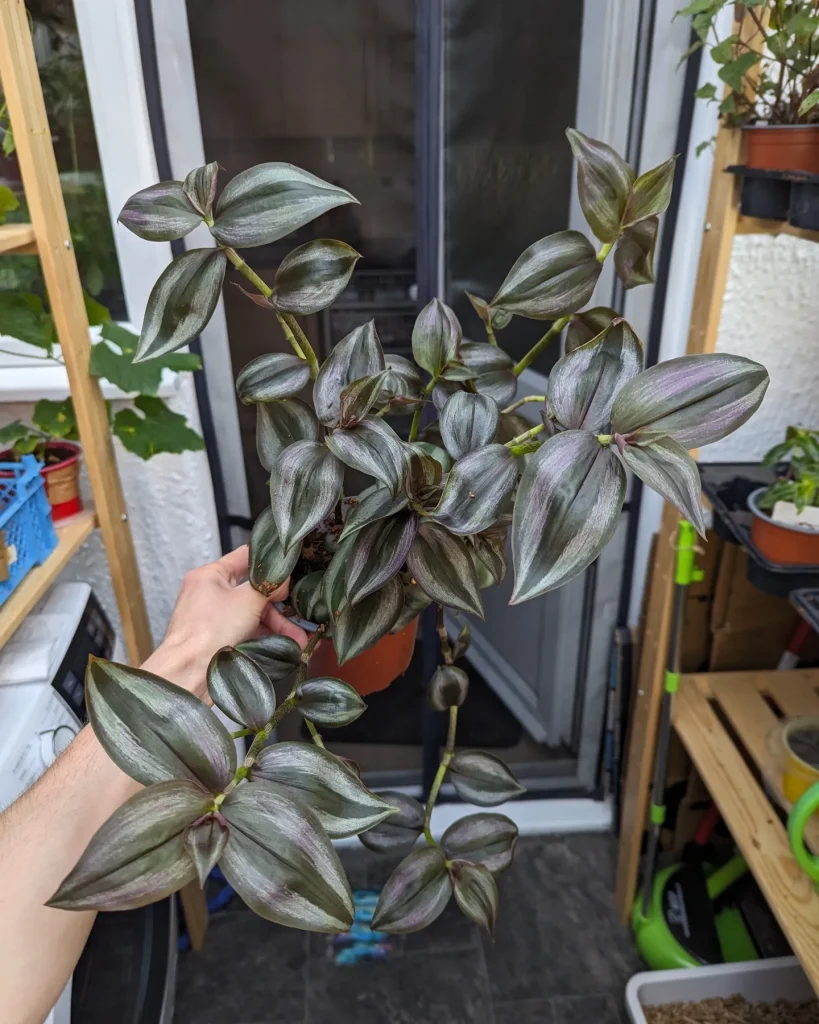
Begonia sp. U192 ‘Martin’s Mystery’, often simply called ‘Martin’s Mystery’, is a truly enigmatic and highly sought-after rhizomatous Begonia. Originating from the Philippines, this medium-sized species is celebrated not for its subtle, often unnoticed flowers, but for its breathtakingly iridescent foliage. The leaves shimmer with metallic pink and silver hues, a captivating display that shifts depending on light intensity, angle, and even humidity. Its compact, mounded growth habit and relatively easy care make ‘Martin’s Mystery’ a prized possession for houseplant collectors and a stunning addition to terrariums or shaded indoor spaces.
Unraveling the Enigma: Characteristics of Begonia Martin’s Mystery
The ‘U192’ in its name signifies that it’s an unidentified species, adding to its mysterious appeal. Despite its unknown lineage, its visual impact is undeniable, making it a favorite for those who appreciate unique foliage.
Key Characteristics of Begonia ‘Martin’s Mystery’:
- Iridescent Foliage: The most striking feature is its metallic, shimmering leaves that display hues of pink and silver, often overlaid on a deep green or burgundy background. This iridescence is particularly noticeable in certain lighting conditions and when humidity is high.
- Color Shift: The intensity of the pink and silver tones can vary, becoming more pronounced (more pink) in higher light conditions.
- Leaf Morphology: Leaves are typically asymmetrical and slightly rounded, with a soft-rippled texture and subtle gloss. They often feature prominent dark green veins. Some descriptions note fine marginal hairs.
- Rhizomatous Nature: It grows from a shallow, creeping rhizome that spreads across the soil surface, forming a dense, mounded shape. This growth habit makes it well-suited for shallow pots.
- Compact Size: ‘Martin’s Mystery’ remains relatively small, typically growing up to 12 inches (30 cm) in height and spread, making it ideal for shelves, plant cabinets, or terrariums.
- Subtle Flowers: While it does produce small, pale pink flowers occasionally, these are not the main attraction and are often overlooked in favor of its stunning foliage.
- Origin: Native to the Philippines (some sources also mention Thailand).
Comprehensive Care Guide for Begonia ‘Martin’s Mystery’
Cultivating Begonia ‘Martin’s Mystery’ successfully relies on providing stable conditions that mimic its humid, shaded tropical origins.
1. Light Requirements
- Bright, Indirect Light: ‘Martin’s Mystery’ thrives in bright, indirect light. This is crucial for encouraging its iridescent pink and silver hues to develop fully without scorching the leaves.
- Ideal Placement: A north or east-facing window is ideal, providing gentle morning sun or consistent filtered light. If placed near a south or west-facing window, always use sheer curtains to diffuse intense midday and afternoon sun.
- Color Intensity: Higher light levels (still indirect) tend to intensify the pink tones in the foliage, while lower light may emphasize the silver shimmer.
- Avoid Direct Sunlight: Direct sun will quickly lead to leaf burn, bleaching, and dulling of the iridescent colors.
- Low Light Tolerance: While it can tolerate lower light conditions for short periods, prolonged insufficient light may lead to less vibrant coloration and potentially leggy growth.
2. Watering
- Consistent Moisture, Never Soggy: ‘Martin’s Mystery’ prefers its substrate to be evenly moist but never soggy or waterlogged. This is critical, as root rot is a common issue for Begonias, especially rhizomatous types.
- Check Before Watering: Allow the top 2−3 cm (1 inch) of the soil to dry out between waterings. Use your finger to feel the soil moisture; if it’s still damp below the surface, wait.
- Thorough Soaking and Drainage: When watering, do so thoroughly until water drains from the bottom of the pot. Always ensure the pot has excellent drainage holes and promptly empty any excess water from the saucer.
- Bottom Watering (Recommended): To avoid getting water on the leaves (which can lead to leaf spotting or fungal issues) and to encourage deep root growth, consider bottom watering. Place the pot in a tray of water and allow the plant to soak up water from below for 15−30 minutes, or until the top of the soil feels moist.
- Use Tepid Water: Use room-temperature or slightly tepid water to avoid shocking the plant’s root system.
3. Soil and Potting
- Well-Draining, Aerated Mix: This Begonia thrives in an airy, light, and well-draining potting mix that still retains some moisture.
- Recommended Mix: A good mix typically includes components like peat moss (or coco coir), perlite, orchid bark, and possibly some vermiculite. A popular blend is a peat-based mix. Some successful growers use a mix that is chunky enough for good aeration but still holds moisture, similar to an aroid mix.
- pH Preference: It generally prefers a slightly acidic to neutral soil pH, typically between 5.5 and 6.5.
- Pot Selection: Given its shallow, creeping rhizomes, ‘Martin’s Mystery’ often does best in shallow pots. This prevents the lower soil from staying soggy, which can lead to root rot. Ensure the pot has adequate drainage holes. It prefers to be slightly pot-bound rather than in an oversized container.
4. Temperature & Humidity
- Consistent Warm Temperatures: ‘Martin’s Mystery’ thrives in warm, stable conditions, ideally between 65∘F and 80∘F (18∘C to 27∘C). It has no cold tolerance and will suffer if temperatures drop below 50∘F (10∘C).
- Avoid Drafts and Swings: Protect the plant from cold drafts, sudden temperature fluctuations, and air conditioning vents, as these can stress the plant and cause leaf damage or decline.
- High Humidity is Crucial: This Begonia absolutely thrives in high humidity, ideally between 60% and 80%. High humidity is essential for its leaves to display their full iridescence and to prevent crispy edges or browning tips.
- Best Methods: Enclosed environments like terrariums, plant cabinets, or cloches are highly recommended for maintaining consistent high humidity.
- Supplemental Humidity: For open-air growing, use a room humidifier placed nearby. Pebble trays can offer a slight boost but may not be sufficient for its high humidity needs. Avoid frequent misting directly on the leaves, as water sitting on the foliage can encourage fungal issues, even in high humidity.
- Balance Humidity with Air Circulation: While high humidity is vital, good airflow is equally important to prevent stagnant conditions that promote fungal diseases. Ensure the plant has some space for air to circulate, even in enclosed environments.
5. Fertilization
- Moderate Feeding During Growing Season: Fertilize ‘Martin’s Mystery’ moderately during its active growing season (spring and summer) to support its foliage development.
- Recommended Regimen: Use a balanced, liquid fertilizer (e.g., NPK 20-20-20 or similar), diluted to half or quarter strength. Apply monthly or every 4−6 weeks during the growing season.
- Reduce in Dormancy: Reduce or cease fertilization entirely in autumn and winter when the plant’s growth naturally slows down. Over-fertilizing can lead to salt buildup in the soil and potential root burn, especially with this variety’s slow growth.
6. Pruning and Maintenance
- Minimal Pruning: ‘Martin’s Mystery’ generally requires minimal pruning.
- Maintain Tidiness: Trim older or yellowing leaves at the base to keep the plant tidy and redirect energy to new growth.
- Cleanliness: Regularly remove any fallen leaves or debris from the soil surface to prevent the buildup of moisture and potential fungal issues.
Propagation: Unlocking More Mystery
Begonia ‘Martin’s Mystery’, as a rhizomatous Begonia, can be effectively propagated through both leaf cuttings and rhizome division.
- Leaf Cuttings:
- Select Leaves: Choose a healthy, mature leaf (with its petiole/leaf stem).
- Preparation: Insert the petiole directly into a moist, well-draining rooting medium (e.g., perlite, vermiculite, or a light potting mix). You can also cut the leaf into sections, ensuring each section contains a piece of a main vein, and lay these flat on the rooting medium.
- Environment: Place in a warm location with bright, indirect light and high humidity (e.g., in a propagation box or covered with a plastic dome/bag).
- Rooting: Plantlets (new roots and shoots) will emerge from the base of the petiole or along the veins of the leaf sections within several weeks.
- Rhizome Division:
- Method: When repotting or when the plant becomes overcrowded, carefully separate sections of the rhizome, ensuring each section has at least one growth point (leaf or bud).
- Planting: Plant the divided rhizomes shallowly in fresh, well-draining potting mix.
- Environment: Provide similar warm, humid, indirect light conditions as for cuttings.
- Stem Cuttings:
- Select Cuttings: Take stem sections with at least one node.
- Rooting: Place in water or a well-draining potting mix. Roots typically develop within a few weeks.
- Environment: Maintain warmth and high humidity.
Common Pests and Diseases
Begonia ‘Martin’s Mystery’ is relatively robust but, like all Begonias, can be susceptible to certain common pests and diseases, especially if care conditions are not optimal.
- Pests:
- Aphids, Mealybugs, Spider Mites, Thrips, Whiteflies: Regularly inspect the plant, particularly the undersides of leaves and new growth. Treat with insecticidal soap or neem oil at the first sign of infestation. Good air circulation can help deter pests.
- Fungus Gnats: Often indicate consistently wet topsoil. Allow the top layer to dry between waterings and use sticky traps if needed.
- Diseases:
- Root Rot / Crown Rot: The most common and serious problem, almost always caused by overwatering and poor drainage, leading to roots or the rhizome decaying. Symptoms include wilting, yellowing or browning leaves, and a soft, mushy stem base. Ensure excellent drainage and use airy soil mixes. Difficult to recover from once severe.
- Powdery Mildew: White, powdery spots on leaves and stems, favored by high humidity with poor air circulation and cool temperatures. Improve airflow, avoid overhead watering.
- Leaf Spot (Bacterial or Fungal): Brown spots on leaves, often due to water sitting on foliage or inconsistent watering. Avoid overhead watering.
- Botrytis Blight (Gray Mold): Fuzzy gray or brownish patches, often appearing on decaying leaves or flowers, especially in damp, cool, crowded conditions. Remove affected parts immediately and improve ventilation.
Prevention is Key: Good care practices, including proper watering, ensuring good air circulation, using appropriate well-draining soil, and regular inspection, are the best defenses against most problems. Promptly address any issues to prevent them from spreading.
Design Ideas and Companion Plants for Begonia ‘Martin’s Mystery’
The unique iridescent foliage of ‘Martin’s Mystery’ makes it an excellent focal point for design ideas, especially in indoor settings where its subtle shimmer can be appreciated up close.
- Decorative Houseplant: Its compact size and eye-catching foliage make it a fantastic tabletop plant for desks, shelves, or windowsills.
- Terrariums and Vivariums: Its preferred humidity and size make it an ideal candidate for enclosed terrariums or vivarium setups, where it can create a mystical, jewel-toned accent.
- Plant Cabinets: Perfect for dedicated plant cabinets, where environmental conditions can be precisely controlled to maximize its iridescence.
- Foliage Plant Collections: Combine ‘Martin’s Mystery’ with other rhizomatous Begonias or other humidity-loving foliage plants (e.g., Calatheas, Maranta, Rhipsalis, Pothos, some ferns) to create a diverse collection rich in color and texture.
- Highlighting Contrast: Place it against a dark background or in a well-lit display case to enhance the metallic shimmer of its leaves.
- Shallow Pots & Hanging Baskets: Its rhizomatous growth habit suits shallow pots, and it can also look stunning cascading gently from a small hanging basket where its unique foliage can be admired from below.
Begonia Martin’s Mystery vs. Other Popular Begonia Types
Understanding where ‘Martin’s Mystery’ fits within the diverse Begonia genus highlights its unique attributes, especially its specialized foliage appeal.
- Begonia Martin’s Mystery ( Begonia sp. U192 – Rhizomatous):
- Key Differentiator: Iridescent metallic pink and silver foliage that shifts color with light/humidity; rhizomatous; small, inconspicuous flowers.
- Foliage: Large, round, glossy, dark green/burgundy leaves with lighter veins and shimmering metallic hues.
- Growth Habit: Compact, mounded, grows from creeping rhizomes.
- Light: Bright, indirect light; emphasizes iridescence.
- Humidity: High (60-80%) is crucial for iridescence.
- Primary Use: Decorative foliage houseplant, terrarium specimen, collector’s plant.
- Rex Begonias ( Begonia rex-cultorum – Rhizomatous):
- Key Differentiator: Grown primarily for their stunning, often metallic, variegated, and intricately patterned foliage; wide range of non-iridescent colors (silver, red, purple, black).
- Foliage: Highly ornamental, diverse patterns, textures, and colors; typically larger and more dramatic patterns than ‘Martin’s Mystery’.
- Flowers: Small, inconspicuous.
- Growth Habit: Rhizomatous, compact to spreading.
- Light: Bright, indirect light.
- Humidity: Prefer high humidity to prevent crispy leaf edges.
- Primary Use: Houseplants for decorative foliage, terrariums.
- Angel Wing Begonias (Cane-stemmed types, e.g., Begonia coccinea hybrids):
- Key Differentiator: Upright, cane-like stems; large, often speckled or patterned, wing-shaped leaves; showy clusters of pendulous flowers.
- Foliage: Large, asymmetrical, wing-shaped leaves, often with silver spots or red undersides.
- Flowers: Clusters of red, pink, or white, typically more prominent than rhizomatous types.
- Growth Habit: Upright, cane-like stems, can grow quite tall.
- Root System: Fibrous.
- Light: Bright, indirect light.
- Primary Use: Tall houseplants, outdoor containers, adding vertical interest.
- Wax Begonias ( Begonia semperflorens – Fibrous):
- Key Differentiator: Small, numerous flowers; compact, mounding habit; green or bronze foliage; excellent for bedding.
- Foliage: Small, round, glossy green or bronze leaves.
- Flowers: Small, single or double, in white, pink, red.
- Growth Habit: Compact, mounding.
- Root System: Fibrous.
- Light: Full sun to partial shade (bronze leaf tolerates more sun).
- Primary Use: Bedding plants, mass plantings, containers.
Toxicity of Begonias
Important Note: All Begonias, including Begonia ‘Martin’s Mystery’, contain insoluble calcium oxalates, making them toxic to pets (dogs and cats) if ingested. The highest concentration of these toxic compounds is generally found in the rhizomes/roots. Ingestion can lead to:
- Intense burning and irritation of the mouth, tongue, and throat.
- Excessive drooling.
- Vomiting.
- Difficulty swallowing.
- Lack of appetite.
While usually not life-threatening due to the immediate discomfort that deters further ingestion, it’s crucial to keep these plants out of reach of curious pets and small children. In rare, large ingestions, more severe symptoms like kidney failure have been reported. For humans, the toxicity is generally considered mild, but ingestion of any plant material is not recommended. Always contact a veterinarian immediately if you suspect your pet has ingested any part of the plant.
Conclusion
Begonia ‘Martin’s Mystery’ is an extraordinary rhizomatous Begonia that offers a truly unique visual experience with its iridescent, shimmering foliage. Its captivating metallic pink and silver hues, combined with its compact growth and relatively straightforward care (provided humidity needs are met), make it an exceptional addition for collectors and anyone seeking a distinctive ornamental plant. Whether showcased in a terrarium, a dedicated plant cabinet, or simply on a shaded windowsill, ‘Martin’s Mystery’ is sure to draw admiration and add a touch of elusive beauty to your indoor botanical haven.

If i die, water my plants!