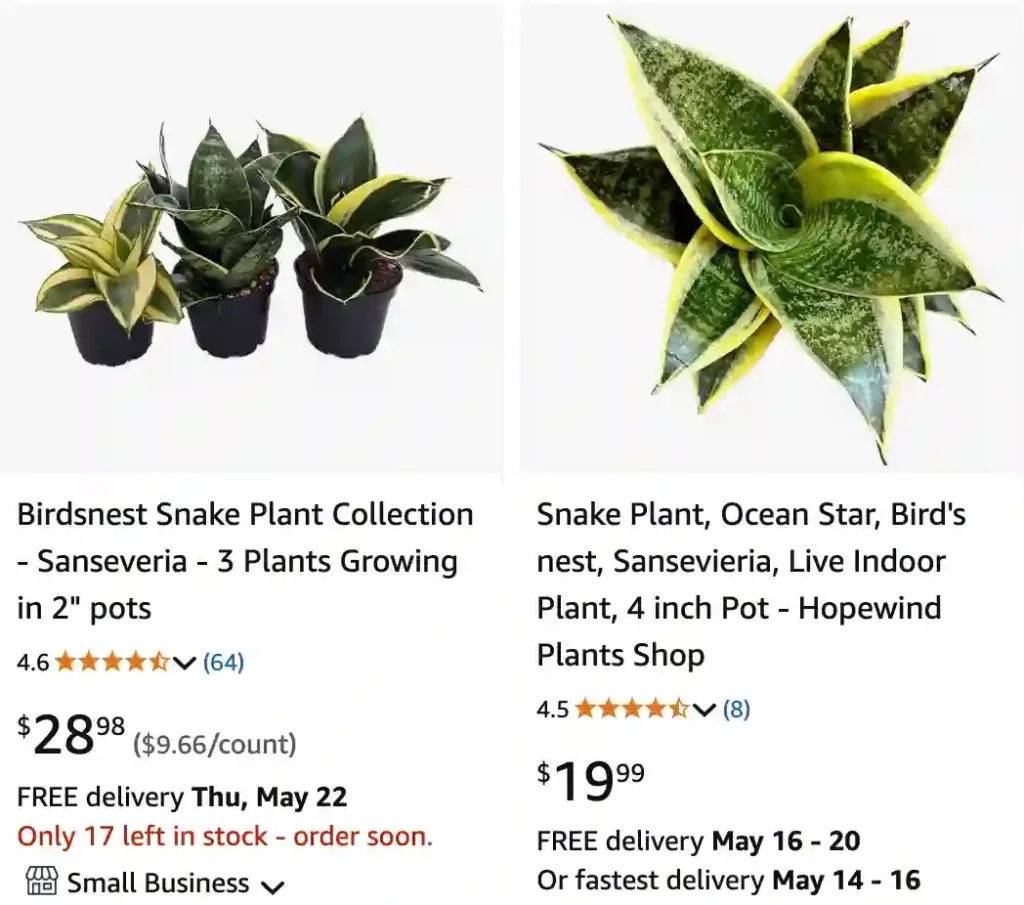
If you’re like me and always on the hunt for houseplants that are both beautiful and low-maintenance, the Bird’s Nest Snake Plant (Sansevieria Trifasciata ‘Hahnii’) should be high on your list. This compact and charming variety of snake plant has earned a permanent spot in my indoor garden. Its rosette shape and architectural leaves give a bold yet tidy appearance, and it practically thrives on neglect. I’ve had many questions over the years from fellow plant enthusiasts about this little gem, so I’ve gathered the most frequently asked ones and answered them here—from Bird’s Nest Snake Plant care to propagation tips. Let’s dive in.
73 Species in Genus Sansevieria (synonym of Dracaena) – Snake Plant
What Are the Bird’s Nest Snake Plant Benefits?
The Bird’s Nest Snake Plant benefits go beyond just its visual appeal. It’s known for improving indoor air quality. NASA included Sansevieria in its Clean Air Study for its ability to remove toxins like formaldehyde, benzene, and xylene from the air. I personally notice my bedroom feels fresher with one nearby. It also releases oxygen at night, making it an ideal plant for sleeping areas.
Another perk? It’s non-demanding. If you travel or forget to water, it’ll forgive you. Plus, it’s pest-resistant, which is a huge relief for anyone tired of battling spider mites or fungus gnats.
How Do You Care for a Bird’s Nest Snake Plant?
Bird’s Nest Snake Plant care is as simple as it gets. I water mine only when the soil is bone dry—about every 2–3 weeks indoors. Overwatering is its biggest enemy. Make sure your pot has drainage holes and that you’re using well-draining soil. A cactus or succulent mix works perfectly.
Temperature-wise, it thrives in typical household conditions but prefers it warm—think 65–85°F (18–29°C). It’s also humidity-tolerant, but dry air won’t hurt it.
What Are the Bird’s Nest Snake Plant Light Requirements?
The Bird’s Nest Snake Plant light requirements are flexible, which makes it great for various indoor spaces. Mine is thriving on a north-facing windowsill, though it also does well in indirect bright light. It can survive low-light conditions too, but it’ll grow slower and might lose some color intensity.
Avoid direct harsh sunlight, especially during peak hours—it can scorch the leaves. I’ve made that mistake before, and those leaf burns don’t go away.
What Happens When Bird’s Nest Snake Plant Leaves Turn Yellow?
Bird’s Nest Snake Plant leaves turning yellow usually signals trouble—most often from overwatering. Yellowing starts at the base, and if ignored, the whole plant can rot. I’ve rescued mine before by removing affected leaves, letting the soil dry out, and repotting it in fresh mix.
Sometimes nutrient deficiency or too much direct sun can also cause yellowing. If your watering habits are solid, check your lighting and consider a gentle, balanced fertilizer.
How Do You Propagate a Bird’s Nest Snake Plant?
Bird’s Nest Snake Plant propagation is easy and satisfying. My favorite method is leaf division. Just remove the plant from its pot, and you’ll usually find it has natural offsets (also known as pups). Separate them gently and replant in their own containers.
You can also propagate from a leaf cutting. Cut a healthy leaf into sections, let the cut ends callous over for a day or two, then plant them in soil. Be patient—roots can take weeks to form.
What Does a Full Grown Bird’s Nest Snake Plant Look Like?
A Bird’s Nest Snake Plant full grown usually reaches 6–8 inches in height and spreads out in a rosette shape. It’s compact and doesn’t grow tall like its parent Sansevieria trifasciata. Instead, it forms a tight, sculptural cluster that looks like a green flower. Mine fills a small tabletop pot perfectly and never outgrows its space aggressively.
What Bird’s Nest Snake Plant Varieties Exist?
There are several delightful Bird’s Nest Snake Plant varieties. Besides the classic green and gray Hahnii, I also grow the Golden Hahnii, which has striking yellow margins, and Silver Hahnii, with more silvery, muted tones. Each one brings a unique texture and color to your collection.
There’s also Black Star and Twist, offering even more diversity in form and hue. Mixing them on a shelf gives a rich, modern look.
Final Thoughts
From its air-purifying properties to the forgiving care routine, the Bird’s Nest Snake Plant is a winner in my book. It fits perfectly into apartments, offices, or dorm rooms. Whether you’re a beginner or an experienced plant collector, it adds charm and health to your space.
I encourage you to explore different Bird’s Nest Snake Plant varieties and enjoy the experience of propagation. Watch out for yellowing leaves and always remember its light requirements—and you’ll have a thriving, sculptural houseplant that practically takes care of itself.
If you’ve got any questions or stories about your own experience with Bird’s Nest Snake Plant, I’d love to hear them. Happy planting!

If i die, water my plants!