Cyanea Air Plant – Tillandsia Cyanea: FAQs by Ferb Vu
I’ve always been fascinated by unique houseplants, and Tillandsia Cyanea, also called the Cyanea Air Plant or Pink Quill, has earned its place among my favorites. This tropical bromeliad is not only visually stunning but also easy to care for—once you understand it.
Below, I’ve compiled answers to the most common questions I get about this remarkable plant. If you’re just starting with air plants or want to compare it to others, this guide will help you grow with confidence.
690 Species in Genus Tillandsia – Air Plants
What Makes the Tillandsia Cyanea Different from Other Air Plants?
Most people picture air plants as small, spiky, rootless clumps—like Tillandsia Ionantha or Tillandsia Xerographica. But Cyanea is a different story. It’s technically still an epiphyte, meaning it grows on other surfaces in nature, but unlike typical air plants, it thrives in soil.
That’s the first surprise: Tillandsia Cyanea prefers a pot with well-draining soil—often a mix designed for orchids or bromeliads. It’s not a “no-soil” air plant like most of its cousins.
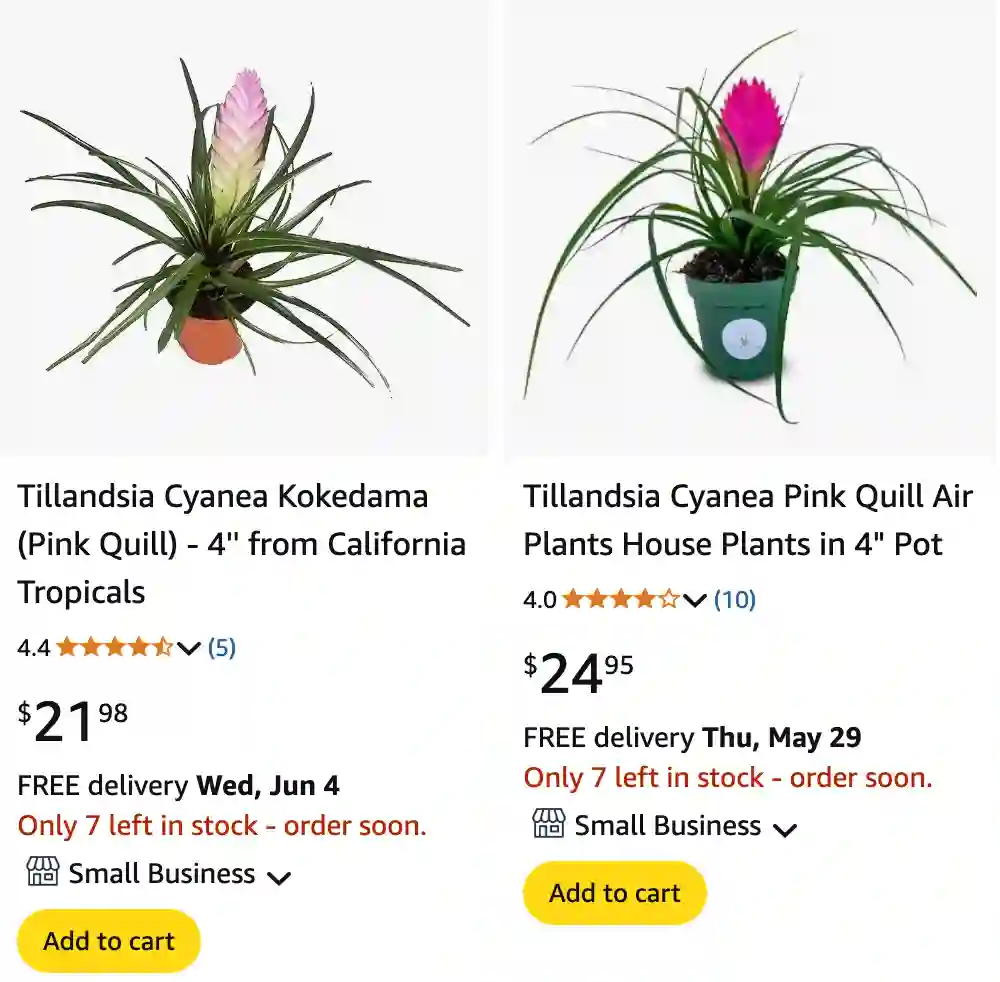
Another standout feature is its striking pink bract, which looks like a quill. That’s why it’s also called Pink Quill Plant. From that bract, small purple flowers emerge—though they’re short-lived, the bract stays bright for weeks.
How Do I Care for a Cyanea Air Plant?
This is where things get easy.
Light: I keep mine in bright, indirect light. Too much sun burns the bract; too little and it won’t bloom. Near an east-facing window works best.
Water: Unlike traditional air plants that need misting or soaking, Tillandsia Cyanea likes a good soak through the soil once or twice a week. I let the top inch dry out first. It also enjoys occasional misting around the leaves for humidity.
Humidity: This is a rainforest native, so it loves high humidity. I use a humidifier or group it with other plants to create a microclimate.
Fertilizer: Every month or so, I use a bromeliad or orchid fertilizer, diluted. Don’t overdo it—this plant prefers a light feed.
Potting: I use a shallow terracotta pot with orchid bark and perlite. Good drainage is a must.
How Long Does the Pink Quill Last?
The bright pink bract lasts up to 2–3 months, while the purple flowers each bloom for a day or two. It won’t bloom again from the same plant, but the base will produce pups or offsets.
I let the pups grow to about a third the size of the mother before separating them. That way, I can keep enjoying this plant for years.
Is Cyanea Safe for Pets?
Good news for fellow pet lovers—Tillandsia Cyanea is non-toxic to cats and dogs, according to ASPCA listings. Still, I keep mine out of reach since those pink bracts seem to attract curious paws.
Can I Grow It Outdoors?
I live in a mild climate, so I’ve tried growing it outside. It works—as long as temperatures stay above 50°F (10°C). It’s not frost-hardy. Outdoors, I hang mine in a shaded patio area where it gets light airflow and filtered light.
In colder zones, it’s strictly an indoor plant during fall and winter. I bring it in before the first frost.
How Does Cyanea Compare to Bromeliads Like Guzmania or Aechmea?
I’ve grown both, and while they share a family, Cyanea is more compact and manageable for small spaces. Guzmania and Aechmea often get larger, and their flower spikes vary in color and shape.
Cyanea wins on subtlety and ease. It’s more forgiving and doesn’t require as much humidity as some Guzmania hybrids.
Is It the Same as a Pink Quill Plant?
Yes—Tillandsia Cyanea and Pink Quill are the same. The term “Pink Quill” describes the plant’s colorful central bract, while “Tillandsia Cyanea” is the botanical name. Some garden centers label it differently, but it’s one and the same.
Why Isn’t My Cyanea Blooming?
This one frustrated me early on. The plant needs:
- Bright, indirect light
- A mature size
- Consistent humidity
- And time—it blooms once, and then produces pups.
If it hasn’t bloomed, it may still be too young or lacking light. Be patient. Don’t try to force it with too much fertilizer—it won’t help.
Does It Purify the Air?
While not the most powerful air purifier like Spider Plants or Peace Lilies, Tillandsia Cyanea does offer minor air-filtering benefits. Its presence adds moisture to the air and can support a healthier microclimate around other plants.
Final Thoughts: Why I Love Tillandsia Cyanea
It’s the perfect gateway plant for bromeliad beginners. It’s also great for seasoned collectors who want something unusual but not high-maintenance.
Between its compact size, vibrant color, and easy care, Tillandsia Cyanea (Pink Quill) has earned a permanent place in my collection. Every pup feels like a reward, and the bloom cycle adds an extra layer of joy.

If i die, water my plants!