Hi, I’m Ferb Vu, and I want to share my experiences with Panicum Heavy Metal Grass, or more formally, Panicum Virgatum ‘Heavy Metal’. This ornamental grass has earned a permanent spot in my garden. It’s bold, structured, and surprisingly easy to grow. Below, I’ll answer common questions based on my hands-on experience and compare it with other grasses and plants I’ve grown alongside it.
What Is Panicum Heavy Metal Grass?
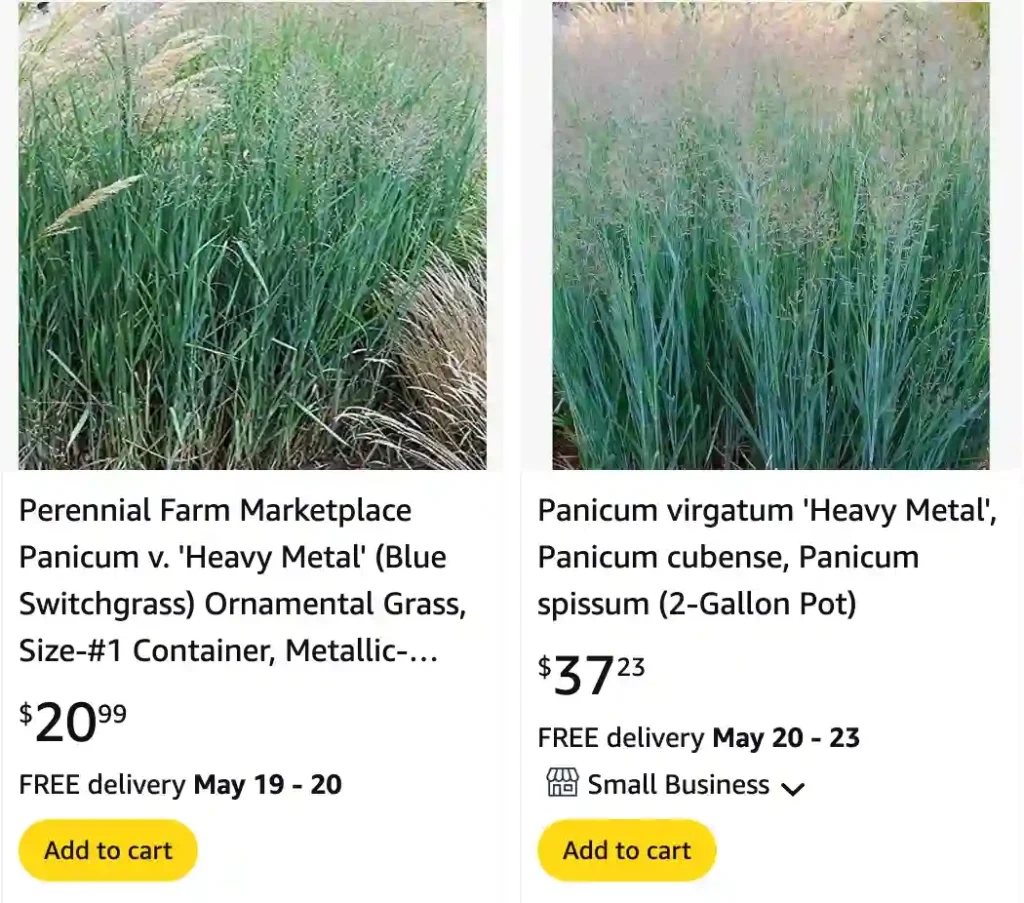
Panicum Virgatum ‘Heavy Metal’ is a cultivar of Switchgrass, native to North America. What sets it apart is its steely blue foliage, which stands upright all season. It grows up to 3 to 4 feet tall (not counting the flowers), and the fluffy pinkish seed heads can push it even higher by late summer.
What I love most? It keeps a strong vertical habit. Unlike other grasses that flop when rain hits, this one holds its shape like a soldier. It’s especially eye-catching when backlit in the early morning or late afternoon.
Where Does Heavy Metal Grass Grow Best?
I’ve had success growing Heavy Metal Grass in both clay-rich soil and sandy loam, though it thrives best in well-drained conditions. It prefers full sun—give it at least six hours of direct light. It can tolerate some shade, but the upright form becomes looser.
Zones 4 through 9 are perfect for this grass. It’s cold-hardy and handles summer heat and drought like a champ. I’ve never had to fuss over it once established.
How Is It Different from Other Switchgrasses?
Good question. I’ve grown several Panicum Virgatum cultivars, including ‘Shenandoah’, ‘Northwind’, and ‘Dallas Blues’.
- ‘Heavy Metal’ vs. ‘Shenandoah’: Shenandoah has a more wine-red tinge in its foliage and gets a bit taller and looser. Heavy Metal stays tighter and is more blue-gray.
- ‘Heavy Metal’ vs. ‘Northwind’: Northwind is even more rigid and upright than Heavy Metal, but it lacks that bold steel-blue color. I use them together for contrast.
- ‘Heavy Metal’ vs. ‘Dallas Blues’: Dallas Blues is a giant—over 6 feet with a broader leaf blade. It’s showier but not as tidy.
In short, ‘Heavy Metal’ is the clean, architectural choice.
How Do I Maintain It?
Honestly, it’s low-maintenance. Here’s how I care for mine:
- Cut it back in early spring. I trim mine down to 4–6 inches before new growth starts.
- No fertilizer needed. If anything, too much nitrogen will make it flop.
- Water during the first season. Once roots establish, it’s drought-tolerant.
I sometimes divide mine every 3 to 5 years to keep it vigorous, but that’s optional.
Is Heavy Metal Grass Deer Resistant?
Yes, deer leave it alone in my garden. Rabbits, too. The foliage is tough and not palatable. If you have trouble with grazing animals, this grass is a great choice for borders and meadows.
Does It Attract Wildlife?
Absolutely. Birds love the seeds, especially finches and sparrows. I often see them hopping around the stems in winter. The seed heads stay upright and provide winter interest, even when covered in frost or snow.
In summer, the fine-textured plumes attract beneficial insects. While not as pollinator-heavy as native wildflowers, it still plays a role in supporting biodiversity.
How Does It Compare to Maiden Grass or Fountain Grass?
I’ve grown Miscanthus Sinensis (Maiden Grass) and Pennisetum Alopecuroides (Fountain Grass) alongside Heavy Metal, and the contrasts are striking.
- Maiden Grass grows taller, with broader arching blades and larger flower plumes. But it can become invasive in some areas. Heavy Metal is better behaved.
- Fountain Grass is shorter, softer, and fluffier. It adds movement, while Heavy Metal provides structure. I use both together for texture contrast.
Both are beautiful, but for winter presence and upright form, Heavy Metal wins in my book.
Can I Grow It in Containers?
Yes, but with caveats. I’ve grown it in large, deep containers with drainage holes. Choose a pot at least 16 inches deep. It needs regular watering in pots, especially in hot months.
I use containers to highlight its foliage near patios or entrances. It doesn’t overwinter well in containers in cold climates, so I either mulch deeply or treat it as an annual.
What Are the Landscape Uses?
Let me list how I use Panicum Heavy Metal Grass in my garden:
- Backdrops for flowering perennials like Rudbeckia, Echinacea, and Salvia.
- Rain gardens and bioswales—it handles wet spells well.
- Privacy borders when planted in groups.
- Winter structure—few grasses stand tall in snow like this one.
Its linear, columnar habit makes it ideal for modern landscapes, yet it fits right into naturalistic or prairie-style gardens.
Final Thoughts: Why I Recommend It
If you want a trouble-free, native ornamental grass with striking form and four-season interest, Panicum Virgatum ‘Heavy Metal’ is a solid pick. I love its resilience, its color, and its architectural quality.
It’s not flashy, but it holds the scene together like a quiet star. In a mixed planting or on its own, it always looks purposeful.

If i die, water my plants!