Hi, I’m Ferb Vu. I’ve grown a lot of succulents over the years, and one that always turns heads in my collection is the Pink Moonstone Succulent, also known by its botanical name, Pachyphytum Oviferum. This little gem from the Crassulaceae family has earned a special place in my heart—and on my windowsill.
Here are some frequently asked questions I get about Pink Moonstone, with my answers based on firsthand experience.
What Makes The Pink Moonstone Succulent Special?
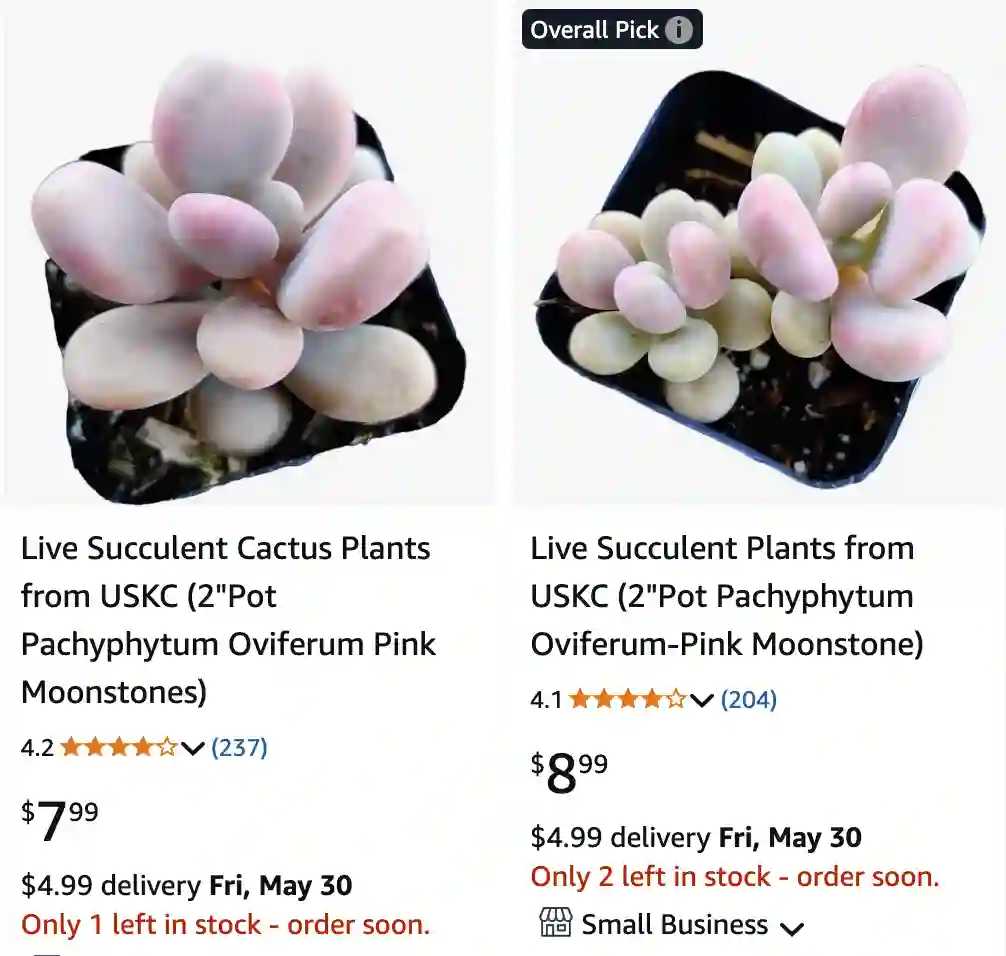
The Pink Moonstone is like a plump gemstone with a powdery pastel coat. Its round, fleshy leaves shimmer in hues of pink, peach, and silver-blue, depending on the light and temperature. The leaves are covered with farina—a natural, waxy coating that protects the plant from sunburn.
It’s a slow-growing rosette-forming succulent that looks sculptural even when small. If you’re a fan of minimal care but maximum beauty, this plant fits the bill.
How Do I Care For Pachyphytum Oviferum?
Caring for Pink Moonstone is simple—if you follow a few golden rules. Here’s my go-to routine:
- Light: Bright, indirect sunlight is ideal. Mine sits by a south-facing window. Too much direct sun will scar the farina and cause sunburn.
- Water: I follow the “soak and dry” method. I only water when the soil is bone dry. Overwatering causes root rot quickly.
- Soil: I use a gritty, well-draining mix. Cactus mix with added perlite or pumice works great.
- Container: Always pot it in a container with drainage holes. No exceptions.
- Humidity: Low humidity is best. These are desert-adapted plants, not fans of muggy air.
Why Are My Pink Moonstone Leaves Falling Off?
If you touch the leaves too much, they’ll fall. Seriously. The leaves are sensitive and detach easily, especially when overwatered or bumped.
Also, be careful with pests like mealybugs, fungus gnats, or root aphids. These can stress the plant, making it drop leaves even more.
Can I Propagate Pink Moonstone Easily?
Yes, and I’ve done it dozens of times. You can propagate from leaf cuttings, stem cuttings, or even fallen leaves.
Here’s what works for me:
- Let the leaf callous over for a day or two.
- Place it on dry soil in bright, indirect light.
- Mist lightly until roots and tiny rosettes appear.
Patience is key—propagation takes weeks, not days.
How Does Pink Moonstone Compare to Graptopetalum Or Ghost Plant?
Great question. I’ve grown both side by side. While Pink Moonstone and Graptopetalum Paraguayense (Ghost Plant) have similar rosette shapes, they’re not the same.
| Feature | Pink Moonstone (Pachyphytum Oviferum) | Ghost Plant (Graptopetalum Paraguayense) |
|---|---|---|
| Leaf Texture | Plump, round, coated with farina | Flatter, thinner, dusty grayish |
| Color Variance | Pink, peach, lavender under stress | Pale gray, sometimes with purple hues |
| Growth Rate | Slow | Faster |
| Tolerance to Cold | Less tolerant | Slightly more cold-hardy |
So if you’re after pastel color and plump form, go with Pink Moonstone. For versatility and rapid propagation, Ghost Plant wins.
Is Pink Moonstone Safe Around Pets?
This is important for pet parents. Pink Moonstone is non-toxic to cats and dogs, according to the ASPCA plant database. Still, I keep mine out of reach. It’s fragile and doesn’t like being nibbled.
Can Pink Moonstone Flower?
Yes, and it’s beautiful when it happens. My Pink Moonstone blooms in late winter or spring, pushing out slender arching stalks with bell-shaped coral or orange flowers.
But don’t expect this every year. Blooming depends on light, stress, and plant maturity. Even if it doesn’t flower, it remains a stunner.
Why Is My Pink Moonstone Turning Green?
Color change usually means it’s not getting enough sunlight. When grown in low light, the pastel pink fades, and the plant takes on a greenish tone. Move it to a brighter spot—but don’t suddenly blast it with full sun. Acclimate it gradually to avoid leaf burn.
What Succulents Pair Well With Pink Moonstone?
I love pairing it with other pachyphytum, echeveria, or sedum varieties. Try:
- Echeveria ‘Lola’ for a soft pastel blend
- Sedum Clavatum for a low-growing base
- Graptosedum ‘California Sunset’ for a warm contrast
Use a shallow ceramic pot and top-dress with gravel for a clean aesthetic.
Final Thoughts From Ferb Vu
The Pink Moonstone Succulent is one of those plants that rewards neglect with beauty. It asks for very little—just bright light, good drainage, and minimal fuss. In return, it gives you a compact living sculpture that brings calm and joy.
From propagation to flowering, this plant keeps me engaged without being demanding. If you’re new to succulents, Pachyphytum Oviferum is a forgiving beginner’s choice. And if you’re a collector like me, it’s a must-have for its pastel magic and elegant form.
Whether you’re growing indoors on a sunny sill or outdoors in a dry climate, the Pink Moonstone earns its keep.

If i die, water my plants!