I’ve grown Sedum Ternatum for years, and I’ve had the chance to compare it with other ground covers, shade plants, and even similar sedums. It’s a tough little native succulent that doesn’t get the spotlight it deserves. Below, I’ve put together a set of questions I’m often asked about Sedum Ternatum, answered from my own experience as a gardener who values resilience, beauty, and ecological value.
490 Species in Genus Sedum – Stonecrop
What Is Sedum Ternatum?
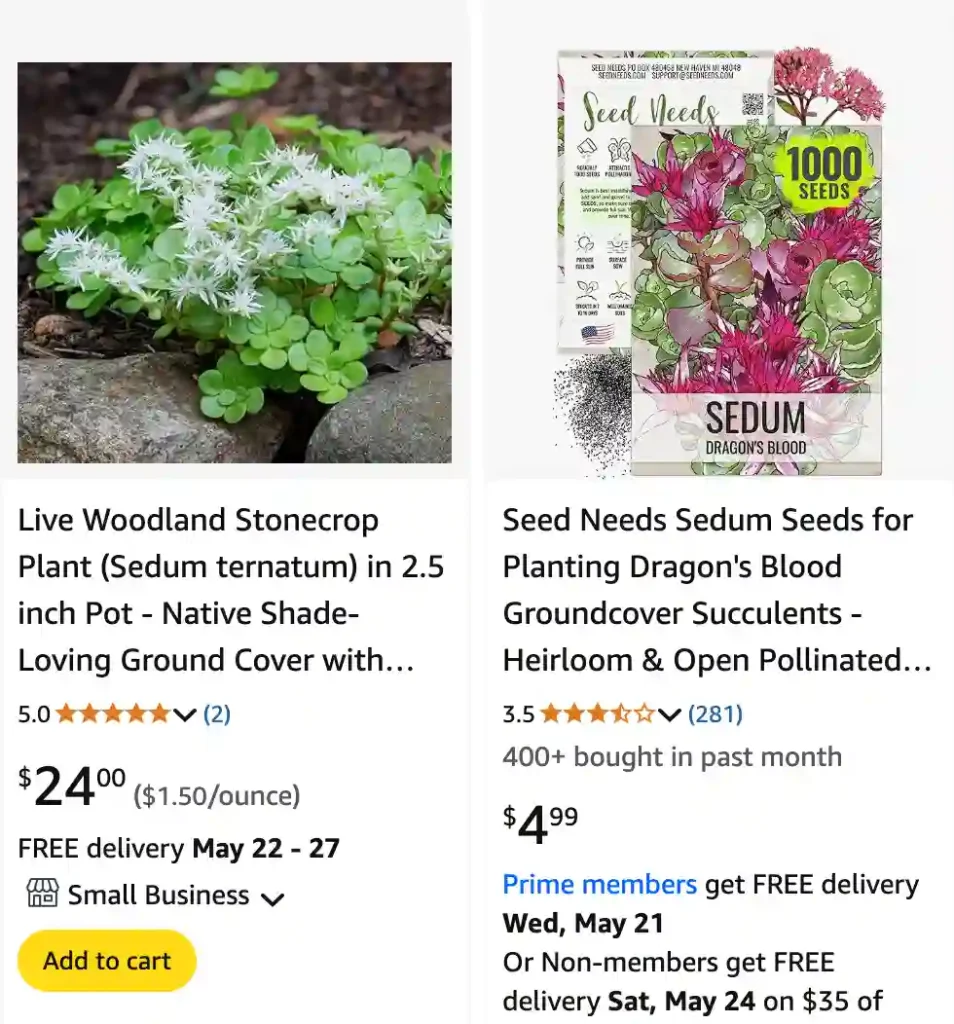
Sedum Ternatum, commonly called Woodland Stonecrop, is a native perennial succulent found across the eastern U.S. It thrives in woodland edges, shady slopes, and rock outcroppings. What sets it apart from other sedums is its tolerance for shade, moist soils, and native ecosystems. It has whorled, glossy green leaves and delicate white star-shaped flowers that bloom in late spring.
I grow mine in part-shade and dappled sunlight. It’s one of the few succulents I trust to grow under deciduous trees where other plants struggle.
How Does Sedum Ternatum Compare to Other Sedums?
This is a great question. Most sedums—like Sedum spurium or Sedum album—crave full sun and dry, sandy soil. Sedum Ternatum breaks that mold. It grows in shade to partial sun, tolerates moist soil, and stays evergreen in mild winters.
It’s slower growing than some of the mat-forming types but blends better into woodland gardens, native plant beds, or pollinator habitats. I’ve also noticed it doesn’t sprawl wildly like Sedum reflexum or become woody and sparse like Sedum spectabile.
Can Sedum Ternatum Be Used as Ground Cover?
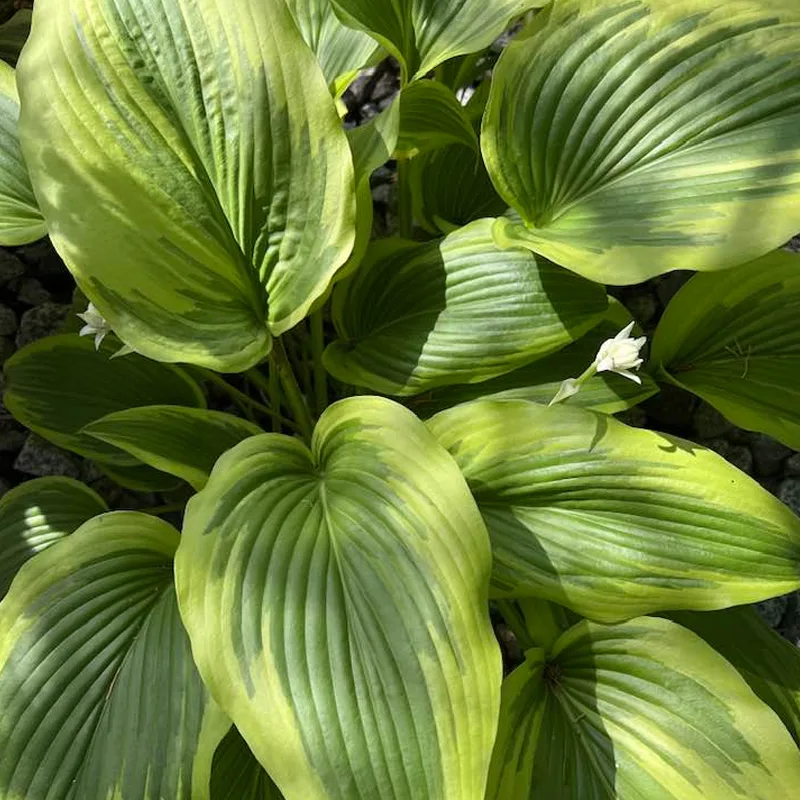
Absolutely, and I often recommend it for that purpose—especially in shade gardens. It forms a dense, low mat of foliage that suppresses weeds. It spreads by shallow rhizomes but won’t choke out other natives. I use it to underplant my ferns, heuchera, and hostas.
It’s also great on slopes, especially where erosion is a concern. While it doesn’t spread as aggressively as something like Ajuga reptans, it fills in reliably over time.
Is Sedum Ternatum Deer Resistant?
In my experience, yes—deer tend to ignore it. That’s a huge win for woodland gardens where browsing pressure is high. Rabbits have nibbled mine occasionally, but never enough to cause lasting damage.
Because it’s low-growing and not particularly juicy or fragrant, herbivores tend to walk right past it, which makes it ideal for mixed borders in rural areas.
What Plants Pair Well with Sedum Ternatum?
I’ve had success pairing it with other native woodland perennials like:
- Asarum canadense (Wild Ginger)
- Tiarella cordifolia (Foamflower)
- Aquilegia canadensis (Wild Columbine)
- Carex pensylvanica (Pennsylvania Sedge)
- Phlox divaricata (Woodland Phlox)
These plants match its moisture and light preferences. I avoid pairing it with aggressive groundcovers like Vinca minor or Lamium, which can outcompete it.
Does Sedum Ternatum Attract Pollinators?
Yes! Its white, star-shaped flowers are magnets for native bees, hoverflies, and even butterflies. I’ve spotted small solitary bees visiting mine early in the season, before most other perennials have bloomed. This makes it an excellent early nectar source for pollinators.
It’s part of what makes it ecologically valuable—it supports local food webs.
Can Sedum Ternatum Grow Indoors?
It can survive indoors in a bright window, but it’s not ideal. It prefers outdoor soil conditions, natural humidity cycles, and cooler winters. I’ve tried overwintering cuttings in containers, and while they don’t die, they don’t exactly thrive either.
If you want an indoor sedum, I’d recommend something like Sedum morganianum (Burro’s Tail) or Sedum rubrotinctum (Jelly Bean Plant) instead.
How Do You Propagate Sedum Ternatum?
Propagation is simple. I do it by division or by rooting stem cuttings:
- Division: In early spring or fall, I dig and separate a clump and replant it a few inches apart.
- Cuttings: Take a short stem and press it into moist soil. Keep it shaded and damp, and it roots quickly.
Because it’s rhizomatous, even a small piece can start a new patch. No rooting hormone needed.
Is Sedum Ternatum Good for Eco-Friendly Landscaping?
Yes, and I think more people should be using it. It’s native, non-invasive, low maintenance, and beneficial to wildlife. It doesn’t need fertilizer, barely needs water once established, and doesn’t require mowing or pruning.
In terms of biodiversity support and sustainability, it’s a great replacement for turf grass in shady or rocky zones.
Final Thoughts from My Garden
I love Sedum Ternatum for its quiet strength. It’s not showy or loud, but it holds its own through droughts, downpours, and frosts. If you’re into native plant gardening, pollinator support, or just want something that grows where others won’t, give this plant a shot.

If i die, water my plants!