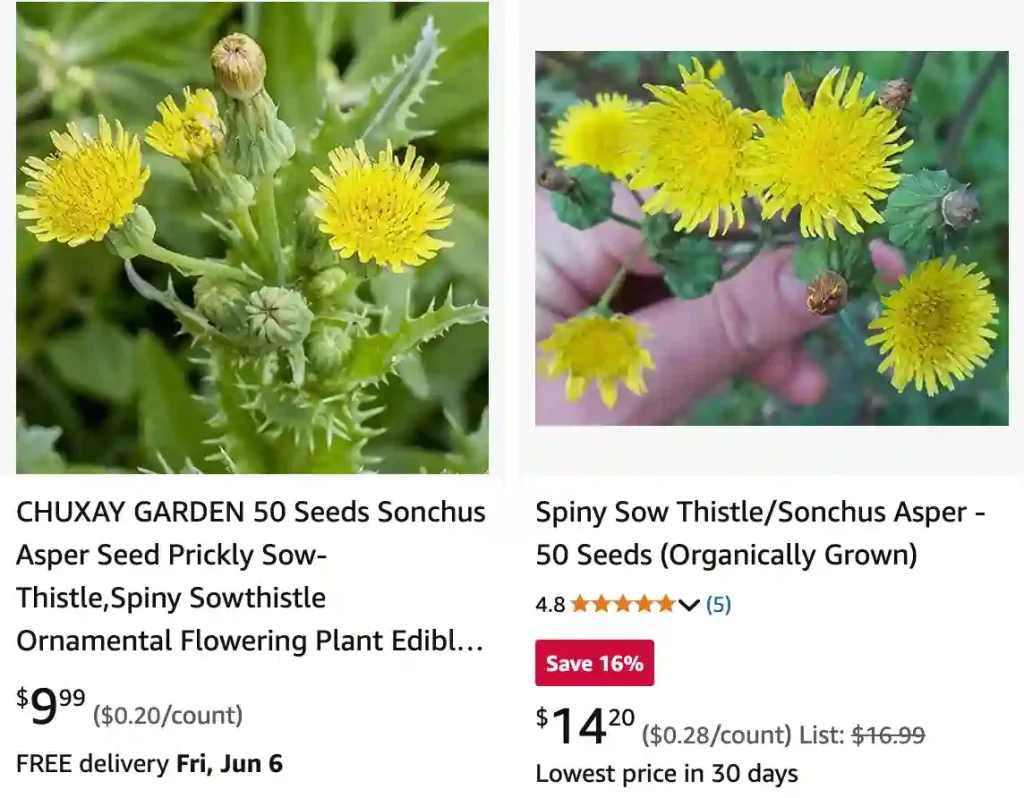
I’ve grown and observed many wild plants, but few fascinate me quite like Sonchus Asper. Known commonly as Spiny Sow Thistle, this weed is more than just a roadside curiosity. It’s tough, fast-growing, and misunderstood. Below, I answer common questions I often get about this curious plant.
106 Species in Genus Sonchus
What Is Sonchus Asper?
Sonchus Asper is a fast-growing, annual or biennial herb in the Asteraceae family. You’ll recognize it by its deeply lobed leaves with sharp, prickly edges and bright yellow dandelion-like flowers. Native to Europe, Asia, and North Africa, it’s now found across most continents, especially in disturbed soils like roadsides, gardens, and vacant lots.
The plant grows upright, usually about 1 to 4 feet tall. The stem is hollow and emits a milky sap when broken—classic behavior for members of the Lactuceae tribe.
Is Sonchus Asper Edible?
Yes, but with caution. Young leaves of Sonchus Asper are edible and often used in traditional Mediterranean diets. I’ve tasted the tender rosettes before they get too spiny—slightly bitter but palatable in salads or boiled like spinach.
However, its sharp spines and latex-like sap make it unappealing for many. As a rule, I always harvest it before flowering. And I avoid plants near roads or polluted sites because they can absorb heavy metals.
How Does Sonchus Asper Compare to Dandelion?
People often mistake Sonchus Asper for dandelions (Taraxacum officinale). Both have yellow flowers, basal rosettes, and grow in the same places. But they’re different in key ways:
- Sonchus Asper has prickly leaves and a taller, more upright growth.
- Dandelion leaves are smoother, and the flower stalks are usually leafless.
- Dandelions are perennials, while Sonchus Asper tends to be annual or biennial.
I find Sonchus Asper to be more aggressive and less refined than dandelion. Yet both are useful as pioneer species in damaged soils.
What Are the Benefits of Sonchus Asper?
Besides being mildly edible, Sonchus Asper offers other benefits:
- Pollinator magnet: Bees and hoverflies love its flowers.
- Soil indicator: It thrives in compacted, nitrogen-rich soils, making it useful for assessing soil health.
- Medicinal value: Traditionally used for liver detox, diuretic support, and inflammation.
While modern science hasn’t confirmed all these uses, the folklore surrounding it is strong—especially in herbal medicine circles.
Is Sonchus Asper Invasive?
Yes. In disturbed soils, Sonchus Asper spreads like wildfire. I’ve seen it take over abandoned lots within a few weeks. Each plant can produce thousands of seeds, which spread via wind, much like dandelion fluff.
If you’re managing a garden or farm, you’ll want to control it early. I usually pull the rosettes by hand before they bolt. Otherwise, they’re tough to eliminate without chemical herbicides.
How Does Sonchus Asper Differ from Sonchus Oleraceus?
This is a good question. Many people confuse Sonchus Asper with Sonchus Oleraceus (common sow thistle). Here’s my quick comparison:
- Sonchus Asper has thicker, shinier, and more spiny leaves.
- Sonchus Oleraceus has softer leaves with shallow lobes.
- Oleraceus is slightly more palatable for foragers and more common in cooler areas.
In my garden, I treat both the same when it comes to management. But for foraging, I prefer Sonchus Oleraceus for its mild taste.
Can I Use Sonchus Asper in Permaculture or Natural Landscaping?
Yes—but with awareness. I’ve used Sonchus Asper as a temporary soil-builder. Its deep taproot breaks compacted ground, drawing up nutrients. But I don’t let it go to seed.
In early spring, I’ll let it grow in rough zones, then chop it for mulch. It decomposes fast and adds organic matter. Just don’t let it become the boss of the yard.
What Plants Compete with Sonchus Asper?
If you want to outcompete Sonchus Asper, I suggest dense, fast-growers like:
- Crimson Clover (Trifolium incarnatum)
- Borage (Borago officinalis)
- Buckwheat (Fagopyrum esculentum)
- Field Mustard (Brassica rapa)
These plants occupy the same disturbed soils and provide more benefits. I’ve had good luck using them in rotation with winter covers to reduce Sonchus Asper seed banks.
Is Sonchus Asper Toxic?
Generally, no. But that latex sap can irritate skin or stomachs in sensitive people or pets. I wear gloves when pulling mature plants. And I don’t recommend feeding it to livestock unless you’re sure it’s young and clean.
Final Thoughts from Ferb Vu
Sonchus Asper is wild, resilient, and surprisingly useful. While I wouldn’t plant it on purpose, I’ve learned not to curse it when it shows up. It teaches me about my soil. It feeds the bees. And when young, it even feeds me.
Managing it takes vigilance, but like many weeds, it has a role in nature’s recovery plan. If you understand it, you can work with it—even benefit from it.

If i die, water my plants!