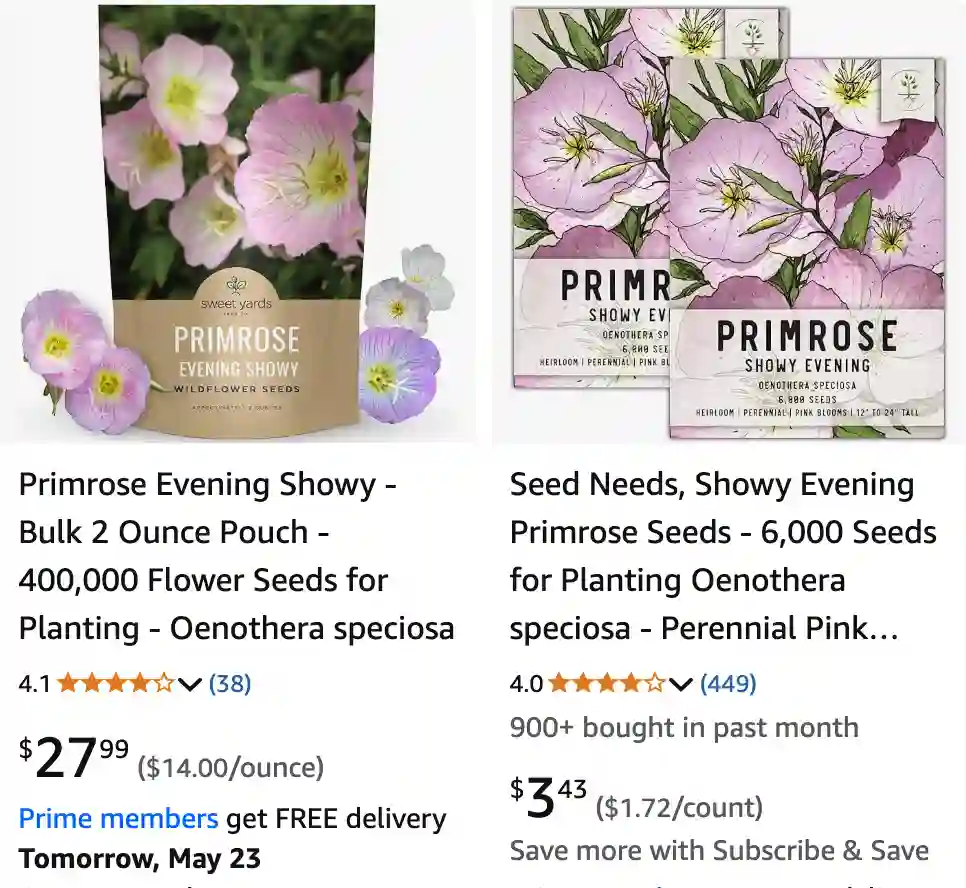
I’ve grown many flowering perennials over the years, but few have surprised me like Oenothera Speciosa, also known as Pink Evening Primrose, Showy Evening Primrose, or Mexican Evening Primrose. This hardy native has taught me a lot about resilience, low-maintenance beauty, and how to balance wild charm in a garden. Here’s everything I’ve learned—answered in clear, direct questions.
165 Species in Genus Oenothera
What Is Oenothera Speciosa?
Oenothera Speciosa is a perennial flowering plant native to North America. It thrives in USDA zones 4–9. The blooms are light pink with yellow centers, opening in the evening and lasting until the next morning, which is how it earned the name Evening Primrose.
I’ve noticed it spreads quickly, often acting like a groundcover. It blooms from late spring through summer, and sometimes longer if conditions are right. The plant grows about 10–24 inches tall and sends out runners underground, which can help it cover space quickly.
Related Semantic Terms: Groundcover, Night-blooming, Pollinator-friendly, Perennial, Wildflower.
How Fast Does It Spread?
Fast. Almost too fast if you’re not careful. I planted one in a corner of my yard, and within two seasons, it had taken over the border garden. It spreads by both seed and underground rhizomes. In favorable conditions—full sun and dry soil—it behaves more like an aggressive wildflower.
To control it, I regularly deadhead spent blooms and edge the bed where it’s planted. That keeps it where I want it, and not in my vegetable garden or my neighbor’s lawn.
Semantic Insight: Invasive potential, Rhizomatic propagation, Groundcover behavior.
Is It Invasive?
Technically, Oenothera Speciosa is not classified as invasive on a federal or state level in the U.S., but in my experience, it behaves like one in garden settings. It’s aggressive, especially in disturbed soils or sunny locations.
It’s a plant that needs boundaries. Plant it in containers or bordered beds. I’ve even used it to stabilize a slope, and it worked beautifully without much maintenance.
How Does It Compare to Evening Primrose (Oenothera Biennis)?
Here’s where people get confused. Oenothera Biennis (the common Evening Primrose) is a biennial and has yellow flowers, not pink. It’s also taller—up to 5 feet—and used more in herbal medicine.
Oenothera Speciosa, on the other hand, is a perennial with pink blooms and grows shorter. If you want a showy, ornamental plant, go with Speciosa. If you’re after a medicinal plant with gamma-linolenic acid (GLA) in the seeds, choose Biennis.
Semantic Comparison: Medicinal value vs. Ornamental value, Biennial vs. Perennial, Height variance.
Does It Attract Pollinators?
Yes—and how! Bees, moths, and butterflies love it. I’ve seen hummingbirds hover nearby too. Since it blooms in the evening and early morning, it serves nocturnal and dawn-active pollinators, which most garden plants ignore.
It’s a great plant for supporting native pollinator networks. Just don’t expect it to be a monarch magnet like milkweed, but it still plays its part in the ecosystem.
What Conditions Does It Prefer?
Here’s the checklist I follow:
- Sunlight: Full sun for best blooms. It tolerates partial shade, but flowers less.
- Soil: Sandy, well-drained, even poor soils. Avoid clay.
- Water: Drought-tolerant. Overwatering leads to root rot.
- pH: Neutral to slightly alkaline.
This is not a plant for pampering. It thrives in places where other plants sulk. I once planted it in gravel near a sidewalk—it still bloomed like crazy.
Is It Good for Xeriscaping?
Absolutely. I’ve used Oenothera Speciosa in xeriscaping projects with success. It handles dry spells like a champ. I paired it with Salvia Greggii, Lavandula, and Sedum for a low-water garden with vibrant color and texture contrast.
Semantic Interoperability: Drought-tolerant species, Water-wise gardening, Xeriscape synergy.
How Do I Maintain It?
Honestly, it doesn’t need much. Here’s what I do:
- Cut back in late summer to prevent legginess.
- Deadhead to control spread and extend bloom time.
- Divide every 2–3 years to thin out dense colonies.
- Watch for runners. They’ll sneak into unwanted areas if ignored.
I also mulch around the base with gravel instead of organic mulch—it matches the native prairie aesthetic and discourages weeds.
Can I Grow It in Containers?
Yes, and I do. Containers are a great way to keep it from spreading. I use terracotta pots with good drainage and only water them when the soil feels dry. It looks amazing spilling over the edge, especially mixed with trailing Verbena or Euphorbia ‘Diamond Frost’.
This strategy also lets me place it on patios and balconies without worrying about aggressive spreading.
Final Thoughts
Oenothera Speciosa is a plant with personality. It’s bold, beautiful, and sometimes a bit wild. I love it for what it is—a resilient native species that provides color, groundcover, and pollinator support with almost no effort.

If i die, water my plants!