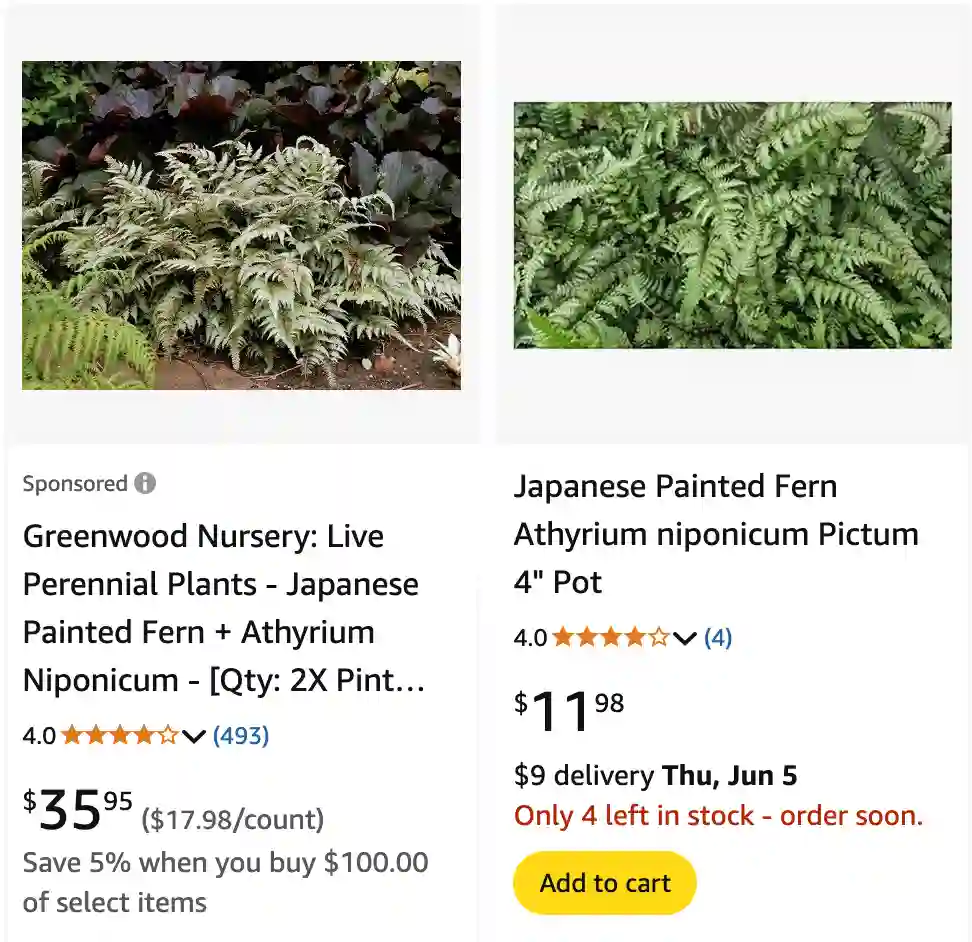
I’ve grown Athyrium Niponicum, also known as the Japanese Painted Fern, for several years now. It’s a shade garden favorite with its unique silvery fronds and purple hues. Whether you’re a seasoned gardener or a curious newbie, here’s everything I know, love, and get asked about this plant.
270 Species in Genus Athyrium
What Is Athyrium Niponicum?
Athyrium Niponicum is a deciduous fern native to East Asia, especially Japan, Korea, and parts of China. It’s part of the Athyriaceae family and thrives in shady, moist environments. The most famous cultivar is ‘Pictum’, known for its silver-gray foliage with burgundy stems.
I often describe it as “shade’s jewelry.” The metallic sheen and delicate arching fronds make it stand out in any woodland or hosta garden.
How Tall and Wide Does It Grow?
On average, it grows about 12 to 18 inches tall and can spread 18 to 24 inches wide. It forms a clump over time but doesn’t become invasive. Mine usually max out around 15 inches in height in part shade.
Is Athyrium Niponicum Invasive?
No. Unlike some ferns that can become a nuisance, Athyrium Niponicum is non-invasive. It grows in tidy clumps and spreads slowly through rhizomes. I’ve never had it pop up in unwanted spots. It’s well-behaved, which makes it perfect for small gardens.
How Much Sun Can It Handle?
It prefers full to part shade. I grow mine under dappled sunlight, and it performs best with morning light and afternoon shade. Direct, hot sun tends to bleach the fronds, especially during dry spells. If you live in a hot zone like USDA 8 or above, try placing it in deep shade with rich, moist soil.
What Type of Soil Does It Need?
I use rich, loamy soil with good drainage. Athyrium Niponicum loves organic matter—compost or leaf mold works wonders. The soil should stay evenly moist, but it shouldn’t be soggy. I always mulch mine with shredded bark to conserve moisture and protect the roots.
Is Athyrium Niponicum Deer Resistant?
Yes, very much so. I live in an area where deer are frequent guests, and they’ve never touched my Japanese Painted Fern. It’s one of the few plants in my shade garden that deer leave alone. That makes it an ideal companion for other deer-resistant shade plants like Brunnera, Heuchera, and Pulmonaria.
Can I Grow Athyrium Niponicum in Containers?
Absolutely. I’ve had great success growing it in ceramic pots and fiberstone containers on shaded patios. The key is to maintain consistent moisture and use a well-draining potting mix. I usually pair it with hostas, ferns, and trailing ivy for texture contrast.
How Does It Compare to Other Ferns?
If you’re choosing between ferns, here’s how Athyrium Niponicum stacks up:
- Vs. Ostrich Fern (Matteuccia struthiopteris): Ostrich Fern is taller and more aggressive. It thrives in wetter conditions but lacks the silver color.
- Vs. Lady Fern (Athyrium filix-femina): Lady Fern is also elegant but doesn’t have the same coloration. I grow both, but Niponicum adds the visual drama.
- Vs. Japanese Holly Fern (Cyrtomium falcatum): Holly Fern is evergreen and leathery, while Athyrium Niponicum is deciduous and feathery. Both have their place, but they offer different aesthetics.
Is Athyrium Niponicum Toxic to Pets?
No. According to the ASPCA, Athyrium Niponicum is non-toxic to dogs and cats. I have pets, and I’m cautious about what I plant. This one is safe.
What’s the Best Companion Plant for It?
Here are some of my go-to companions:
- Hosta – for bold foliage contrast.
- Heuchera (Coral Bells) – for vibrant leaf colors.
- Tiarella (Foamflower) – for delicate flowers and texture.
- Brunnera macrophylla – especially ‘Jack Frost’ for silver-on-silver elegance.
- Astilbe – for fine, feathery flowers above the fern.
These plants all share similar soil and light needs, making garden design seamless.
How Do I Propagate Athyrium Niponicum?
The best way is through division in early spring or fall. I dig up the clump, separate the rhizomes by hand or with a clean knife, and replant immediately. Each division should have at least one frond and a good root section. Water well after planting.
What USDA Zones Is It Hardy In?
It’s hardy in zones 3 to 8. I’ve grown it successfully in zone 6b, where winters dip below freezing. Just mulch the crown in late fall to protect it.
Does It Die Back in Winter?
Yes, it’s deciduous. Don’t worry if it disappears in fall—it’s just going dormant. I cut back the fronds once they brown and wait for the elegant new growth in spring. The fresh fronds unfurl in a silvery spiral that’s worth the wait.
Final Thoughts
If you want a fern that’s more than just green, Athyrium Niponicum is your answer. It’s low-maintenance, visually striking, non-toxic, and perfect for shade gardens. Over the years, it’s become a cornerstone of my shade landscape, especially when planted en masse or in naturalized woodland borders.

If i die, water my plants!