1. Introduction: Unveiling the Enigmatic Iron Cross Begonia
The realm of unique houseplants offers a captivating escape, transforming mundane indoor spaces into vibrant sanctuaries. Among these botanical treasures, some plants distinguish themselves not by their flamboyant blooms, but by the sheer artistry of their foliage. It is within this fascinating category that Begonia masoniana, widely and affectionately known as the Iron Cross Begonia, truly shines. This plant is a testament to nature’s intricate designs, captivating enthusiasts with its extraordinary visual appeal.
Begonia masoniana is formally recognized by its botanical name, yet its common moniker, “Iron Cross Begonia,” immediately conjures an image of its most striking feature. This dual nomenclature ensures both scientific precision and broad popular recognition. The plant’s allure stems from its vibrant, often bright to deep green leaves, which are famously adorned with a bold, dark chocolate-brown, cross-like pattern near the main veins. This distinctive marking, reminiscent of the German Iron Cross, deepens in color as the foliage matures, adding to its mystique and visual depth.
Beyond its striking coloration, the Iron Cross Begonia offers a unique tactile experience. Its leaves are described as “wrinkled, leathery,” and “densely covered in hair,” possessing a “thick, rough texture, and velveteen hairs” that make them “irresistible to touch”. Terms such as “bullate” and “puckered” further emphasize its distinct, textured surface. These combined visual and tactile qualities underscore its primary value as an ornamental foliage plant, making it a highly desirable indoor specimen. It is a plant chosen for its dramatic leaf patterns and textures, rather than its comparatively modest flowers.
The profound visual identity conveyed by the common name “Iron Cross Begonia” is a significant factor in its widespread popularity and its effectiveness in digital search. The immediate mental image created by this descriptive term makes the plant highly recognizable to potential buyers and enthusiasts. This direct visual association transforms “Iron Cross Begonia” into a powerful keyword for search engine optimization. Individuals seeking unique or visually striking plants are naturally drawn to such descriptive terms, which aids in discoverability. For advanced search systems, this clear visual identifier facilitates accurate image recognition and the delivery of highly relevant visual search results. The plant’s inherent aesthetic appeal positions it not merely as a botanical specimen, but as a dynamic, living piece of art, contributing significantly to its status as an “extremely popular” choice and a “desirable plant feature” for its “ornamental foliage”.
The compact stature of Begonia masoniana further enhances its appeal, allowing for versatile placement in various indoor settings, from desktops to terrariums. This report embarks on a unique “time-lapse” narrative, offering a personal and detailed journey through the life and care of this extraordinary plant, from its earliest stages to its full, thriving majesty.
2. The Iron Cross Begonia: A Botanical Masterpiece
The Begonia masoniana stands as a botanical marvel, distinguished by a suite of unique biological attributes that set it apart within the diverse Begonia genus. Understanding these characteristics is fundamental to successful cultivation.
Characteristics & Features
At its core, Begonia masoniana is classified as a rhizomatous, perennial herb. This means it grows from a thickened, horizontal underground stem, known as a rhizome, from which new sections sprout, contributing to its spreading, mounded habit. It typically forms dense, upright clumps, reaching heights of approximately 25 to 70 centimeters (10-28 inches).
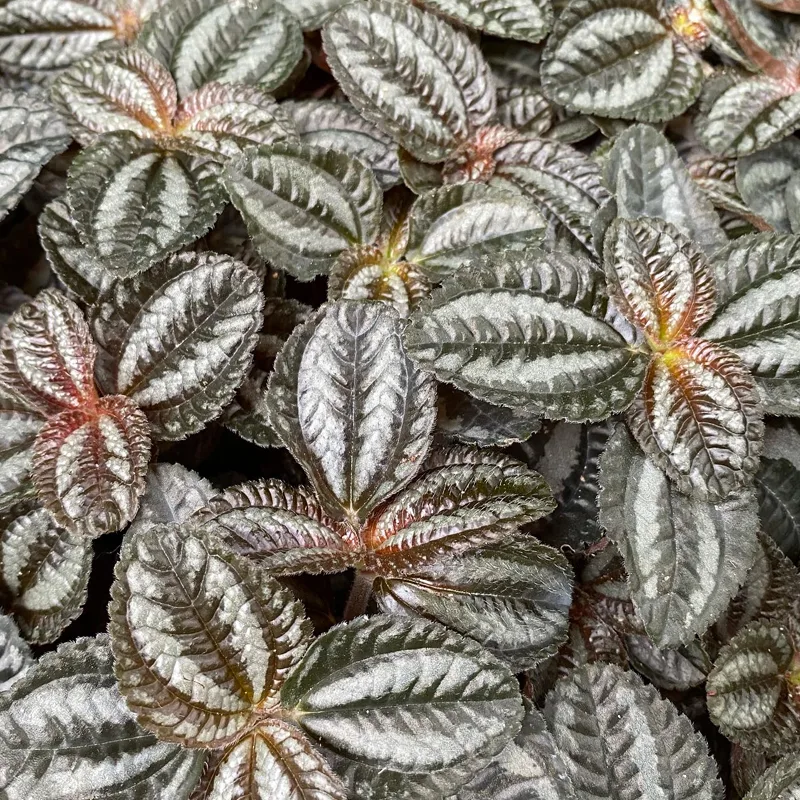
The foliage is undeniably the plant’s most captivating feature. The leaves are large, asymmetrical, and broadly ovate to round. Their vibrant base color, ranging from bright to deep green, is dramatically contrasted by the distinctive dark chocolate-brown or brownish-burgundy cross-shaped marking positioned centrally near the main veins. This pattern often appears reddish when the leaves are young, gradually deepening in hue as they mature. An additional layer of visual interest is provided by the reddish-purple underside of the leaves. The texture of these leaves is equally remarkable, described as “wrinkled, leathery,” and “densely covered in hair” (hirsute). Further descriptions include a “thick, rough texture,” “velveteen hairs” , and a “bullate, puckered leaf surface” , all contributing to their unique tactile appeal.
While primarily cultivated for its striking foliage, Begonia masoniana does produce flowers. These are small, pale green or pink-flushed white, and unisexual, with both male and female flowers found within the same cluster. They are arranged in erect, branched inflorescences known as panicles. Despite their presence, the plant is “cultivated mainly for its foliage effect” , and some cultivation guides even suggest removing the flowers when they bloom to redirect the plant’s energy towards more vigorous foliage growth. This practice recognizes that the plant’s aesthetic value lies predominantly in its leaves, and by preventing energy expenditure on seed production, the plant can allocate more resources to developing larger, more vibrant, and more intensely patterned foliage. This understanding helps gardeners achieve the best possible results, aligning their efforts with the plant’s inherent strengths.
Origin & Habitat
Tracing the origins of Begonia masoniana provides crucial insights into its optimal care requirements. This species is native to a region stretching from China (specifically the Guangxi province) to Vietnam. Its natural habitat consists of dry, subtropical to tropical forests, where it is frequently found growing on limestone rocks or amidst shallow leaf litter. Critically, it thrives in shaded, humid environments characteristic of the forest floor.
This understanding of the plant’s ecological niche provides a direct blueprint for its successful cultivation. The plant’s natural adaptation to shaded forest floors explains its inherent need for bright, indirect light indoors, as direct sunlight would cause leaf scorch, a common issue for plants evolved in such environments. Similarly, the “humid environments” of its native biome directly dictate the high humidity levels required for its health in a home setting. Furthermore, its prevalence on “limestone rocks or shallow leaf litter” clarifies the necessity for well-drained, porous, and organically rich soil, which prevents rhizome rot in waterlogged conditions. The plant’s tropical origin also explains its sensitivity to cold temperatures and its preference for consistently warm conditions. By aligning cultivation practices with these natural conditions, gardeners can move beyond simply following instructions to a deeper, more intuitive comprehension of the plant’s needs. This holistic perspective empowers them to diagnose issues more effectively; for instance, crispy leaves might immediately suggest a lack of humidity or excessive light, mirroring conditions found in a dry, exposed environment rather than a shaded, humid forest floor.
The etymology behind the plant’s name adds a historical layer to its story. The genus Begonia was named in honor of Michel Bégon, a 17th-century French patron of botany. The species name,
masoniana, commemorates Benjamin Mason, who introduced it to European cultivation. Notably, it was brought to England from Singapore in 1952, marking its entry into broader horticultural appreciation.
Distinguishing the Iron Cross: Begonia masoniana vs. Rex Begonias & Other Types
A common point of confusion arises when distinguishing Begonia masoniana from other members of the vast Begonia genus, particularly Rex Begonias. While Begonia masoniana is frequently, though incorrectly, referred to as a Rex Begonia, it is important to clarify that it is classified in the related section Coelocentrum, distinct from the Begonia rex-cultorum hybrids. Both are rhizomatous and celebrated for their striking foliage, but key differences exist.
Table 1: Begonia masoniana vs. Other Common Begonia Types
| Begonia Type | Botanical Name Example | Primary Ornamental Feature | Key Leaf Characteristics | Growth Form | Typical Mature Size (Height) | Dormancy Cycle | Light Preference |
| Iron Cross Begonia | B. masoniana | Foliage | Vibrant green with distinct dark brown cross, wrinkled, hairy, bullate texture, reddish-purple underside | Rhizomatous | 25-70 cm (10-28 in) | Evergreen/No Dormancy | Bright Indirect, Partial Shade |
| Rex Begonia | B. rex-cultorum | Foliage | Boldly variegated with silver, pink, purple, red, or bronze; often two or more distinct colors and patterns | Rhizomatous | 15-45 cm (6-18 in) | Evergreen/No Dormancy | Bright Indirect |
| Wax Begonia | B. semperflorens | Both | Glossy, round, often green or bronze; waxy appearance | Fibrous-rooted | 15-30 cm (6-12 in) | Often Annual | Sun or Shade Adaptable |
| Cane Begonia | B. maculata | Both | Highly asymmetric, wing-shaped, often spotted or speckled; bamboo-like stems | Cane-like | 60-150 cm (2-5 ft) | Evergreen/No Dormancy | Bright Indirect, Partial Shade |
| Tuberous Begonia | B. tuberhybrida | Flowers | Varied, often green; grown from tubers | Tuberous | 30-60 cm (1-2 ft) | Winter Dormant | Partial Shade to Shade |
Key distinctions between B. masoniana and Rex Begonias primarily lie in their foliage patterns and textures. B. masoniana is characterized by its distinct “iron cross” pattern and a bullate, hairy texture. Rex Begonias, while also possessing striking patterns, are typically known for “boldly variegated leaves with shades of silver, pink, purple, red, or bronze” , often displaying “two or more distinct colors in striking contrasts and patterns”. A specific differentiating feature is that
B. masoniana “does not present the border of the leaves edged in black,” unlike some similar species such as B. variegata. In terms of growth habit,
B. masoniana forms upright clumps up to 70 cm , while Rex Begonias are generally more compact. Regarding temperature, both prefer warmth, but Rex Begonias “don’t like especially hot temperatures” , whereas
B. masoniana thrives between 18-24°C and can tolerate up to 35°C , though sustained temperatures above 27°C (80°F) can be problematic. Both
B. masoniana and Rex Begonias are generally evergreen and do not typically enter a winter dormancy period like tuberous begonias.
To provide broader context, the Begonia genus is remarkably diverse, encompassing several major classifications:
- Wax Begonias (Semperflorens Group): These are common bedding plants, recognized by their glossy, often green or bronze, round leaves and abundant small flowers in shades of red, pink, and white. They are frequently grown as annuals.
- Cane-like Begonias: Distinguished by their erect, bamboo-like stems and asymmetric, often “wing-shaped” leaves, leading to the popular “angel wing begonia” moniker. They are valued for both their foliage and pendulous flower clusters.
- Tuberous Begonias: These varieties grow from tubers and are primarily celebrated for their large, showy flowers. They typically enter a period of winter dormancy, during which the tubers are often stored.
- Shrub Begonias: Characterized by producing numerous shoots from the soil, forming a full, bushy plant, often with unique leaves and white flowers.
- Trailing-Scandent Begonias: Ideal for hanging baskets, these plants are known for their cascading habit and an array of white or pink flowers.
Popular Cultivars
Within the Begonia masoniana species, several popular cultivars offer slight variations in growth habit or appearance, allowing enthusiasts to choose a plant that best fits their aesthetic and spatial needs.
- Begonia masoniana ‘Rock’: This is a compact selection, typically reaching only 25–30 cm (10-12 inches) in both height and width. Its diminutive size makes it “ideal for tabletops, terrariums, or plant shelves”. It retains the rugged, bullate leaf texture and bold color contrast characteristic of the species.
- Begonia masoniana ‘Mountain’: A slightly taller cultivar, ‘Mountain’ can grow up to 40 cm (16 inches) tall. It is distinguished by “very deep red margins” on its textured, pubescent leaf blades, which develop a unique gloss when exposed to sunlight.
- Begonia masoniana ‘Criss Cross’: This variant features heart-shaped leaves of bright green, edged in brownish-burgundy, with the characteristic iron-cross-like patterns superimposed upon them.
- Begonia masoniana ‘Iron Cross Red’: Similar to the classic form, this variant introduces a more pronounced reddish hue within its markings, creating a visually captivating red and green contrast that makes a bold statement.
- Begonia masoniana ‘Emerald Jewel’: For those preferring a more subtle aesthetic, ‘Emerald Jewel’ offers leaves with muted greens and a less pronounced cross pattern. Its softer hues make it an excellent textural backdrop for other, more vividly colored plants.
3. Cultivating Your Iron Cross Begonia: A Gardener’s Time-Lapse Journey
My journey with the Iron Cross Begonia began not with a grand purchase, but with a simple leaf. I remember the day I first brought home my Begonia masoniana, its distinctive ‘Iron Cross’ pattern already hinting at the botanical masterpiece it would become. Over the months and years, I’ve watched it transform, learning its rhythms and quirks. This isn’t just about following instructions; it’s about understanding a living being and providing the conditions it craves. Let me share my time-lapse journey with you, from its humble beginnings to its thriving maturity.
Chapter 1: The Genesis – From Tiny Beginnings
My journey often starts with a small plantlet, but for the Iron Cross Begonia, I’ve found immense joy and success in starting from a single leaf. It’s truly magical to witness new life emerge from such a small piece. Whether you’re starting from scratch or want to multiply your existing plant, the Iron Cross Begonia offers several rewarding propagation paths. I’ve tried them all, and each has its charm.
Leaf Cuttings: My Favorite Method This is where the magic truly begins. For rhizomatous begonias like our Iron Cross, leaf cuttings are incredibly effective. I select a healthy, mature leaf – one that’s vibrant and firm. I then turn the leaf over and, with a sterile razor blade, make small cuts through the underside veins, about a quarter of the way from the petiole (leaf stem). Some prefer wedge-shaped cuttings, which also work beautifully. I then place the leaf, top-side up, onto a prepared bed of moist, sterile growing mix – a blend of peat-free compost and horticultural grit or perlite works wonders. To ensure good contact between the cut veins and the medium, I gently weigh down the leaf with a few small pebbles or even hairpins. The most crucial step is covering the pot with plastic wrap or a humidity dome. This creates the essential high-humidity environment needed for rooting. I keep this little nursery in a bright spot with indirect light, ensuring temperatures stay consistently above 70°F (21°C). Patience is key here; new plants typically begin to form in about three to four weeks, and in six to eight weeks, these tiny ‘plantlets’ are usually ready for their own individual pots.
Rhizome Division: For Mature Plants As my Iron Cross Begonia matures and forms a dense clump, I often opt for rhizome division during repotting in spring. I carefully remove the plant from its pot and gently separate the rhizomes, ensuring each new section has at least one growing point and some roots. Each division then receives its own new pot with fresh soil.
Stem Cuttings: A General Begonia Method While less common for B. masoniana specifically, many begonias can be propagated from stem cuttings. I take 2-4 inch cuttings from healthy stems, remove the lower leaves, and plant them in moist soil. Like leaf cuttings, maintaining high humidity helps immensely.
Seed Propagation: The Ultimate Challenge (and Reward) Starting from seed is the most challenging, but incredibly rewarding, way to grow begonias. The seeds are minuscule, almost like dust, and require light to germinate effectively. I sow them indoors about three months before the last expected frost , gently spreading them on the surface of a moist seed-starting mix. Consistent warmth, ideally 70-75°F (21-24°C), often with bottom heat, is crucial. Germination can take 15-21 days , and the seedlings are notoriously slow-growing, taking 6 months to a year to reach maturity and flower. It’s a test of patience, but seeing those tiny, patterned leaves emerge is truly a triumph.
Chapter 2: Establishing Roots – The First Few Months
Once my plantlets are established or a new plant is acquired, the focus shifts to providing the ideal environment for robust growth.
Soil: The Foundation of Life The right soil is non-negotiable for the Iron Cross Begonia. It needs a mix that’s both well-draining and moisture-retentive, mimicking its natural forest floor habitat. My go-to recipe usually involves a base of high-quality potting soil mixed with generous amounts of perlite and either coco coir or peat moss. I often aim for a ratio of about 60% potting mix to 40% perlite/vermiculite. Other excellent additions include fine orchid bark, compost, or worm castings to enrich the mix and improve aeration. The goal is a light, airy, ‘fluffy’ mix that allows for good air circulation around the roots. Crucially, always use a pot with drainage holes to prevent waterlogging, which is a death sentence for this plant’s rhizomes. For rhizomatous types like this, shallow pots are often better as their roots stay near the soil surface. The ideal soil pH is slightly acidic to neutral, between 5.5 and 6.5.
Light: The Gentle Glow The Iron Cross Begonia thrives in bright, indirect light. This means a spot near an east or west-facing window is often ideal, where it receives filtered light rather than harsh, direct sun. Direct sunlight, especially the intense afternoon sun, can easily scorch its delicate leaves, causing them to turn crispy, develop white or yellow patches, or even brown spots between the veins. Conversely, insufficient light can lead to leggy, stretched growth and faded leaves, or even prevent flowering. I rotate the pot every few weeks to ensure all sides of the plant receive even light exposure, promoting balanced growth. During cooler months or in low-light environments, supplementing with a grow light can provide the necessary illumination.
Watering: The Delicate Balance Watering is perhaps the most critical aspect of Iron Cross Begonia care, and it requires a delicate touch. These plants prefer consistently moist soil but absolutely abhor sitting in water. Overwatering is the leading cause of root rot and other fungal diseases, which can quickly lead to yellowing, mushy leaves, stem rot, and ultimately, plant death. I always allow the top inch (or two, or even three to five centimeters) of soil to dry to the touch before watering again. When I do water, I do so thoroughly, allowing excess water to drain away completely from the bottom of the pot. It is vital to avoid wetting the leaves, as this can lead to fungal infections like leaf spot and powdery mildew. Using non-calcareous water at room temperature is also recommended. During the winter months, when the plant’s growth naturally slows, I reduce watering frequency even further.
Humidity: A Tropical Embrace Given its tropical forest origins, the Iron Cross Begonia absolutely thrives in high humidity. Insufficient humidity is often indicated by brown leaf tips and margins, or crispy leaves. To provide the ideal humid environment, I employ several strategies: placing potted plants on a tray of wet pebbles (ensuring the pot sits on the pebbles, not in the water) , using a room humidifier , or grouping plants together to create a localized humid microclimate. While misting can provide temporary relief, it’s not a long-term solution and can even contribute to fungal issues if not done carefully. Adequate air circulation is always important, even in humid conditions, to prevent fungal diseases like mildew and botrytis.
Temperature: The Warm Zone The Iron Cross Begonia prefers warm temperatures, ideally ranging between 18-24°C (65-75°F). It is sensitive to cold drafts and temperatures below 12-15°C (55°F). Prolonged exposure to temperatures approaching freezing can be detrimental. While it can tolerate up to 35°C, sustained temperatures above 27°C (80°F) can be problematic, potentially causing the plant to “self-destruct”. During winter, I ensure it’s kept away from cold windows and drafts, maintaining a slightly cooler but still warm environment, generally above 13°C (55°F).
Chapter 3: Maturing Gracefully – The Ongoing Care
As the Iron Cross Begonia matures, consistent care becomes a rewarding routine, ensuring its continued vibrancy and health.
Feeding: Nourishing Growth During its active growing season (spring and summer), the Iron Cross Begonia benefits from regular fertilization. I use a balanced liquid fertilizer, often with an N-P-K ratio like 10-10-10 or 23-19-14, diluted to half or quarter strength. This is typically applied every two to four weeks. For plants grown primarily for their foliage, a fertilizer slightly higher in nitrogen can be beneficial. It is crucial to water the plant before fertilizing to prevent root burn and aid nutrient absorption. Over-fertilizing is a common mistake that can lead to salt buildup in the soil, damaging roots and causing yellowing leaves or stunted growth. I reduce or cease fertilization during the winter months when the plant’s growth naturally slows. Signs that the plant needs fertilizing include slow growth, yellowing leaves, or pale leaf color.
Pruning: Shaping for Health and Form Regular pruning is essential for maintaining the Iron Cross Begonia’s compact shape, encouraging bushier growth, and removing any unhealthy parts. I pinch off new growth when the plant is young to promote branching rather than leggy, stretched-out stems. As the plant matures, if it becomes bushy or overgrown, I thin out up to a third of its stems to improve air circulation and aesthetic appeal. I also promptly remove any dead, damaged, or discolored leaves and stems using clean, sharp scissors or shears, cutting just below the affected area. This practice not only maintains the plant’s appearance but also prevents the spread of potential diseases. For flowering begonias, deadheading (removing spent blooms) encourages the plant to produce more flowers and conserves energy that would otherwise go into seed production. However, for
Begonia masoniana, which is primarily grown for its foliage, some growers remove flowers to redirect energy to leaf development.
Repotting: Giving Room to Grow The Iron Cross Begonia is a moderate to fast grower and benefits from repotting every 1-2 years, or when it visibly outgrows its current container. Signs that repotting is needed include roots growing out of drainage holes, the plant becoming top-heavy, slowed growth, or frequent wilting despite adequate watering. Spring is the ideal time for repotting, as the plant is entering its active growing season. I choose a pot that is only slightly larger (1-2 inches in diameter) than the previous one, ensuring it has good drainage holes. When repotting, I gently remove the plant from its old pot, shake off excess soil, and place it in the new pot with fresh, well-draining potting mix, being careful not to disturb the roots too much.
Chapter 4: Overcoming Challenges – Troubleshooting and Resilience
Even with the best care, plants can sometimes face challenges. Understanding common issues and how to address them is crucial for the long-term health of your Iron Cross Begonia.
Common Problems and Their Solutions
- Yellowing Leaves: This is a classic sign of overwatering, especially if the leaves are mushy or at the base of the plant. It can also indicate nutrient deficiency (particularly nitrogen or potassium) , or environmental stress like sudden temperature changes. The solution involves adjusting watering practices to allow the topsoil to dry between waterings, ensuring proper drainage, and assessing fertilization needs.
- Crispy Leaf Edges or Whole Leaves: This typically points to insufficient humidity, underwatering, or too much direct sunlight. The remedy involves increasing humidity through pebble trays or humidifiers, adjusting watering frequency to keep the soil consistently moist (but not soggy), and moving the plant to a spot with bright, indirect light.
- Leggy Growth: This is a clear indicator of insufficient light. Relocating the plant to a brighter spot with indirect light and pinching back tips to encourage bushier growth can correct this.
- Root Rot/Stem Rot: Caused by overwatering and poor drainage, leading to waterlogged soil. Symptoms include mushy stems, blackened roots, wilting, and overall plant collapse. Unfortunately, once severe root rot sets in, it is often too late to save the plant. Prevention is key: ensure excellent drainage, allow soil to dry between waterings, and use well-aerated potting mixes.
- Fungal Diseases (Powdery Mildew, Leaf Spot, Botrytis): These often manifest as white patches, or yellow, brown, or black spots on leaves. High humidity combined with poor air circulation or wet foliage are common culprits. Treatment involves improving air circulation, removing affected leaves, and, if necessary, applying fungicides like copper-based sprays or neem oil. Avoiding overhead watering is also crucial.
Pest Management Iron Cross Begonias can be susceptible to common houseplant pests. Regular inspection, especially of the undersides of leaves, is the best defense.
- Mealybugs: These appear as small, white, cotton-like masses, often found in leaf axils. They feed on plant sap, leading to stunted growth and damage. Treatment involves isolating the plant, spraying with a hose to dislodge them, and applying diluted rubbing alcohol or insecticidal soap.
- Spider Mites: Indicated by tiny white or yellow dots (stippling) on leaves and delicate webbing, especially between leaves and stems. They thrive in dry conditions. Treatment includes cleaning the plant to remove webs, trimming damaged foliage, and applying insecticidal soap or horticultural oil. Increasing humidity can also deter them.
- Thrips: Tiny, winged insects that cause wilting, brown or silver streaks, and pitted leaves, particularly on new growth. Pruning damaged growth, spraying with water to dislodge, and weekly applications of insecticidal soap are effective.
- Aphids: These sap-sucking insects can cause yellowing or drooping leaves and leave a sticky residue (honeydew). They can be wiped off with a damp cloth or sprayed with a mixture of water and mild dish soap, neem oil, or insecticidal soap.
Preventive care is paramount: quarantine new plants, inspect regularly, provide optimal light and water, ensure good air circulation, and use sterile potting mix.
Conclusion
The Begonia masoniana, or Iron Cross Begonia, stands as a testament to the captivating beauty found within the plant kingdom’s diverse foliage. Its distinctive, textured leaves, adorned with a striking dark cross pattern, make it an unparalleled ornamental plant for indoor environments. Understanding its botanical characteristics, particularly its rhizomatous growth habit and its origins in humid, shaded subtropical forests, is not merely academic; it provides the fundamental principles for successful cultivation. This deep connection between its natural habitat and its care requirements allows for a more intuitive and effective approach to gardening, enabling enthusiasts to predict and address its needs proactively.
While its small, pale flowers are secondary to its magnificent leaves, the plant’s primary value as a foliage specimen dictates a cultivation strategy focused on maximizing leaf health and vibrancy. Practices such as removing flowers to redirect energy towards foliage development are not arbitrary rules but rather a direct application of this understanding, leading to a more aesthetically pleasing and robust plant.
The journey of cultivating an Iron Cross Begonia, whether from a tiny leaf cutting or a mature division, is a rewarding one that demands attention to detail in light, watering, humidity, temperature, soil composition, and nutrient provision. By adhering to the specific needs of this unique begonia type – providing bright, indirect light, maintaining consistently moist yet well-drained soil, ensuring high ambient humidity, and protecting it from temperature extremes – gardeners can foster a thriving specimen. Vigilance against common pests and diseases, coupled with timely intervention, further ensures its longevity and beauty. The Iron Cross Begonia, with its dramatic visual presence and relatively straightforward care once its specific preferences are understood, remains a cherished addition to any plant collection, offering a continuous display of nature’s intricate artistry.

If i die, water my plants!