I. Introduction: Discovering the Allure of Begonia Rex ‘Pink Charming’
The Begonia Rex ‘Pink Charming’ stands as a truly captivating houseplant, celebrated for its stunning, vibrant, and intricately patterned foliage that transforms any indoor space into a living work of art. Unlike many flowering plants, the primary appeal of Rex Begonias lies in their leaves, which exhibit a remarkable array of colors, textures, and shapes. This emphasis on ornamental foliage means that the plant’s value is deeply rooted in its aesthetic contribution to home decor. Its visual impact is consistently described with terms such as “spectacular,” “stunning,” “vibrant,” and “mesmerizing,” underscoring its role as a decorative centerpiece rather than merely a botanical specimen.
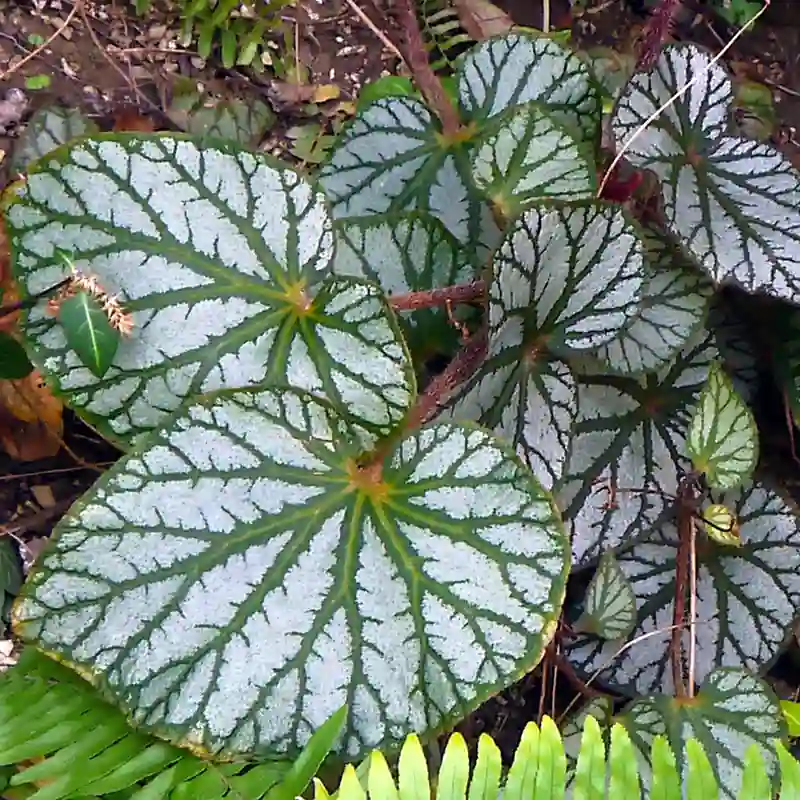
Specifically, the ‘Pink Charming’ cultivar distinguishes itself with asymmetrical silver-green foliage elegantly edged with pink, and leaves that appear to sparkle under light. It is recognized as a part of the eye-catching Rex Begonia Shadow King Series, characterized by bright pink foliage adorned with striking dark purple veins and serrated edges. This unique combination of features makes ‘Pink Charming’ a standout choice for those seeking to infuse their interiors with distinctive botanical beauty. This comprehensive guide will delve into the botanical foundations, detailed care requirements, common challenges, and comparative aspects of the Begonia Rex ‘Pink Charming’, empowering enthusiasts to successfully cultivate this enchanting plant and maintain its vibrant display.
II. Botanical Profile: Understanding Your ‘Pink Charming’
To truly master the care of the Begonia Rex ‘Pink Charming’, an understanding of its botanical background is essential. This knowledge provides the foundation for replicating its preferred natural environment indoors.
Family and Origin
The Begonia Rex ‘Pink Charming’ belongs to the extensive Begoniaceae family. While many begonias originate from tropical areas of South America, the Rex Begonia group, to which ‘Pink Charming’ belongs, traces its wild species parentage (
B. rex) to the rocky, forested valleys and slopes of northeastern India, southern China, and Vietnam. This tropical heritage fundamentally shapes its environmental needs, particularly its preference for high humidity and stable temperatures.
Classification and Distinctive Features
The name ‘Begonia rex-cultorum’ refers to a collective group of cultivated begonias, all of which include the wild species B. rex in their genetic lineage. ‘Pink Charming’ itself is a hybrid, meaning it is a cultivated variety not found growing naturally in the wild. Despite its unique cultivated origins and specific aesthetic traits, ‘Pink Charming’ largely requires similar care to other Rex Begonias. This consistency in fundamental care principles across the Rex Begonia group allows for a unified approach to cultivation, reassuring growers that the general guidelines for Rex Begonias are directly applicable to this specific cultivar.
The distinctive features of Begonia Rex ‘Pink Charming’ include:
- Foliage: Its most striking characteristic is its asymmetrical silver-green foliage, beautifully edged with pink. The leaves possess a unique quality, appearing to sparkle in the light, adding to their allure.
- Colors: The foliage displays vibrant pink hues, intricately adorned with dark purple veins and serrated edges.
- Growth Habit: It typically maintains a small, compact shape. To encourage this desired form and promote bushier growth, regularly pinching the tips of the stems is recommended.
- Size: ‘Pink Charming’ generally measures between 6 to 10 inches (15-25 cm) tall from the soil line to the top of the foliage. Other Rex Begonias can mature slightly larger, typically ranging from 12 to 18 inches (30-45 cm) in both height and width, or specifically 20-30 cm (8-12 inches) for some cultivars.
- Flowers: While Rex Begonias are primarily celebrated for their showy foliage, ‘Pink Charming’ does produce small, pink flowers held in loose clusters atop upright stalks. However, these blooms are generally less showy or dainty compared to the bold leaves.
General Characteristics of Rex Begonias
Rex Begonias are classified as rhizomatous perennials, meaning they grow from a thickened stem structure known as a rhizome. Their leaves exhibit immense variation in color, texture, and size, often featuring sparse hairiness and prominent veins. It is important to note that while they are rhizomatous, they are often categorized separately from other rhizomatous begonias due to their bold leaf patterns and more specific growing requirements.
Important Note on Toxicity
A critical consideration for any plant owner is safety. Begonias, including all Rex Begonias, are toxic if ingested. The tubers are considered the most poisonous part of the plant. They pose a particular risk to pets, and it is strongly advised to keep Begonia Rex ‘Pink Charming’ out of reach of small children and animals to prevent accidental ingestion.
III. The Art of Cultivating ‘Pink Charming’: A Detailed Care Guide
Cultivating the Begonia Rex ‘Pink Charming’ successfully involves a careful balance of environmental factors. The plant’s well-being is highly dependent on maintaining a delicate equilibrium, where extremes in any care aspect can lead to distress. This necessitates an observational approach, allowing the plant’s subtle signals to guide adjustments rather than adhering to rigid rules.
Light Requirements
The Begonia Rex ‘Pink Charming’ thrives in bright, indirect light. Ideal placement is near an east or north-facing window. If a south or west-facing window is the only option, the plant should be positioned at least one meter (a few feet) back from the window, or sheer curtains should be used to diffuse the intense light. Direct, hot sunlight is detrimental, as it can easily scorch or burn the delicate leaves, leading to irreversible damage.
Observing the plant’s foliage can provide clues about its light exposure. If the vibrant colors of its leaves begin to fade, it often indicates insufficient light. Conversely, brighter light tends to enhance red tones, while lower light conditions can cause the silver sheen to become more prominent. During winter months, if plants do not receive adequate light, they may enter a dormant phase, characterized by leaf drop. For optimal and even growth, especially if light comes from a single direction, rotating the plant a quarter turn weekly is beneficial. These plants also adapt well to cultivation under fluorescent lights.
Watering Wisdom
Achieving the correct watering regimen is paramount for the Begonia Rex ‘Pink Charming’. It requires consistent moisture, but the key is moderation; both overwatering and underwatering can lead to significant problems. Overwatering is a frequent cause of root rot, which can be fatal to the plant.
The general rule is to allow the top inch (or 2-4 inches, or simply the surface) of the potting mix to dry to the touch before rewatering. A simple finger test can help determine moisture levels. When watering, apply water directly to the soil level, avoiding wetting the foliage, as this can increase susceptibility to powdery mildew. Water thoroughly until excess water drains from the base of the pot, indicating that the entire soil volume has been moistened. During autumn and winter, or if the plant enters dormancy, watering should be reduced slightly as its growth slows.
Signs of incorrect watering include wilted leaves, browned edges, or crispy edges from too little water, and soft, mushy leaves or yellowing from too much water. Repeated wilting can weaken the plant over time.
Humidity is Harmony
High ambient humidity is arguably one of the most critical environmental factors for the Begonia Rex ‘Pink Charming’ to thrive, closely mimicking the moist atmospheres of its native tropical forest habitat. This plant is an excellent candidate for enclosed environments like terrariums or vivariums, where consistent high humidity can be easily maintained.
For plants grown outside of these controlled settings, several methods can effectively increase humidity around the plant:
- Placing the pot on a bed of moistened clay balls or pebbles, ensuring the pot itself does not sit directly in water.
- Using a room humidifier nearby.
- Grouping several plants together to create a localized microclimate with higher humidity.
A crucial caution is to avoid directly spraying or misting the leaves. While the plant loves humidity, direct water on the foliage can lead to unsightly stains, mold, and significantly increase the risk of powdery mildew, a common fungal issue. Ensuring good air circulation is also vital, as neglecting ventilation in humid conditions can exacerbate mildew problems. Crispy leaf edges are a common indicator that the plant is not receiving sufficient humidity.
Temperature Preferences
Begonia Rex ‘Pink Charming’ prefers consistent, moderate temperatures, ideally thriving within a range of 16-24°C (60-75°F). As a tropical native, it is highly sensitive to cold drafts and sudden temperature fluctuations, which can be detrimental or even fatal, leading to leaf drop. Therefore, it is best to avoid placing the plant near frequently opened doors or windows where drafts are common.
Growth tends to slow considerably when temperatures fall below 16°C (60°F). Many Rex Begonia cultivars may enter a period of dormancy during fall or winter, especially if grown in cooler conditions or without supplemental lighting. For
B. rex specifically, a minimum winter temperature of 13°C (55°F) is required for survival.
Soil & Potting Perfection
The ideal potting mix for Begonia Rex ‘Pink Charming’ is light, rich, well-aerated, and, critically, well-draining. A recommended blend often includes standard houseplant potting soil amended with perlite, peat moss, and a small amount of vermiculite to ensure both moisture retention and proper aeration for the fine root system. A peat-based mix or one formulated for African violets is also suitable.
Proper drainage is non-negotiable to prevent root rot, so selecting pots with drainage holes is essential. For rhizomatous species like Rex Begonias, shallow, wide pots are generally preferred. When choosing a container, consider how its color might complement or contrast with the plant’s vibrant foliage for an enhanced visual presentation. Given the fine nature of begonia roots, it is important not to pack the potting mix too densely when planting.
Feeding for Flourish
During its active growth period, typically spring and summer, the Begonia Rex ‘Pink Charming’ benefits from regular fertilization. A balanced liquid fertilizer, such as a 10-10-10 or 23-19-14 formula, diluted to quarter strength, should be applied every two to four weeks. As autumn approaches and growth naturally slows, the amount of fertilizer should be significantly reduced or stopped entirely throughout the winter months. It is crucial to avoid over-fertilizing, as this can lead to leaf burn and other detrimental effects.
Pruning for Prosperity
Pruning the Begonia Rex ‘Pink Charming’ serves multiple purposes beyond mere aesthetics; it actively promotes healthier, more compact growth and helps prevent issues associated with damaged or diseased leaves. Regular removal of wilted or dead leaves is important for plant hygiene and vigor. Lightly pinching the tips of the stems encourages the plant to branch out, contributing to a bushier and more desirable compact shape. If the rhizome grows too long for its container or develops unsightly bare sections, it can be cut back to encourage new leaf development and potential branching.
Repotting Rituals
Repotting is a necessary ritual for the long-term health of Begonia Rex ‘Pink Charming’. It is generally recommended to repot annually in the spring, or every 1-2 years, or when the plant shows signs of being root-bound. A root-bound plant will have roots densely filling the pot or circling around the inside.
When repotting, select a new pot that is only slightly larger than the current one. Choosing a pot that is too large can lead to excess soil retaining too much moisture, increasing the risk of root rot. This process also provides an opportunity to refresh the substrate, supplying the plant with renewed nutrients and improved aeration.
IV. Propagation: Expanding Your ‘Pink Charming’ Collection
One of the rewarding aspects of cultivating Begonia Rex ‘Pink Charming’ is the ease with which it can be propagated, allowing enthusiasts to expand their collection or share with others. This inherent resilience and capacity for multiplication means a single healthy plant can become the source for many more, fostering a deeper engagement with the hobby.
Rhizome Division
The most common and effective method for propagating rhizomatous begonias like Rex Begonias is through rhizome division. This process is best performed in spring when the plant is actively beginning new growth. It involves carefully dividing the thickened rhizome, ensuring that each new portion bears one or more growing points. These divided sections can then be potted individually to grow into new plants. Additionally, rhizome cuttings can be taken and rooted to produce new specimens.
Stem Cuttings
While stem cuttings are more frequently used for fibrous-rooted or cane-stemmed begonias, they can also be applied to Rex Begonias. For rhizomatous varieties, cuttings may need to be longer than 10cm (4 inches) to ensure they include a leaf node at the base, which is crucial for successful rooting.
Dormancy and Rejuvenation
If a Begonia Rex ‘Pink Charming’ enters a period of winter dormancy, characterized by reduced growth or leaf drop, new leaves will typically emerge in the spring. This period of renewed growth presents an opportune time for propagation, as the plant is naturally primed for new development. The ability of these plants to rejuvenate after dormancy further underscores their robust, regenerative capacity, making them a long-term companion for plant lovers.
V. Troubleshooting Common ‘Pink Charming’ Challenges
Even with diligent care, Begonia Rex ‘Pink Charming’ can occasionally encounter challenges. Understanding common issues and their solutions is vital for maintaining a healthy and vibrant plant. The symptoms often provide clues, but it is important to remember that many problems can stem from multiple underlying causes, requiring a diagnostic approach to identify the true culprit.
Pest Patrol
Rex Begonias are susceptible to several common houseplant pests, including mealybugs, spider mites, aphids, thrips, and whiteflies.
- Identification: Spider mites often manifest as small yellow or whitish stippling (spots) on the foliage, where chlorophyll has been removed, and can create unsightly webbing in heavy infestations. Mealybugs appear as fluffy, white, cottony masses, typically in the crooks of leaves or along stems.
- Prevention: The best defense against pests is proactive care. Keeping the plant well-groomed, promptly removing dead leaves, and clearing any debris from the soil surface helps eliminate hiding spots and breeding grounds. Ensuring good air circulation around the plant also discourages pest proliferation.
- Natural Remedies: For mealybugs, wiping the affected areas with a cotton ball dipped in rubbing alcohol can be effective. Spider mites and aphids can often be treated with insecticidal soap or neem oil. A simple homemade solution of water with a few drops of dish soap can also be sprayed on affected areas.
Disease Defense
Fungal infections are among the most common diseases affecting Rex Begonias.
- Common Diseases: Powdery mildew and botrytis fungal infections are frequent concerns. Additionally, stem rot and rhizome rot are serious issues almost always caused by overwatering or persistently soggy soil conditions.
- Prevention: To prevent powdery mildew, avoid getting the leaves wet when watering. Crucially, provide ample good air circulation and ventilation around the plant, especially in humid environments. Promptly removing any dead leaves also helps. The most effective way to prevent root and stem rots is to ensure proper watering techniques and well-draining soil.
- Treatment: For powdery mildew, improving air circulation and removing affected leaves are immediate steps. A homemade mixture of one tablespoon of baking soda, half a teaspoon of liquid soap, and one gallon of water can be sprayed on affected areas every few days until the mildew clears. In commercial settings, systemic fungicides may be used as a preventative measure.
Decoding Leaf Signals: Common Problems & Solutions
Understanding the signals your Begonia Rex ‘Pink Charming’ sends through its leaves is key to effective troubleshooting. Many symptoms can be attributed to multiple factors, highlighting the interconnectedness of care elements. This requires a holistic assessment of the plant’s environment.
| Symptom | Likely Cause(s) | Solution(s) |
| Brown/Crispy Leaf Edges | Low humidity, Underwatering | Increase ambient humidity (pebble tray, humidifier), Adjust watering frequency to keep soil consistently moist but not soggy |
| Yellow Leaves | Overwatering, Nutrient deficiencies, Pests, Low light levels | Allow soil to dry more between waterings, Ensure good drainage, Fertilize during growing season, Inspect for and treat pests, Increase light if too dim |
| Wilting/Leaf Drop | Overwatering, Underwatering, Too little light, Low humidity, Sudden environmental changes (drafts, temperature shifts), Pests | Assess soil moisture and adjust watering, Increase light, Improve humidity, Ensure stable temperature and avoid drafts, Inspect for and treat pests |
| Soft/Mushy Leaves | Overwatering, Underwatering (less common) | Check soil moisture; if soggy, allow to dry out. If persistent, repot into fresh, well-draining soil. Ensure pot has drainage holes |
| Curling Leaves | Too much light, High heat | Move plant to a spot with bright, indirect light (e.g., further from window), Ensure temperatures are within ideal range |
| Stunted Growth | Insufficient light, Nutrient deficiency | Move plant to a brighter spot (indirect light), Fertilize during growing season |
| White Powdery Patches on Leaves | Powdery mildew (fungal infection) | Improve air circulation, Remove affected leaves, Treat with baking soda/soap solution |
| Fluffy Blobs in Crooks of Leaves | Mealybugs (pests) | Wipe off with alcohol-soaked cotton swabs, Treat with insecticidal soap or neem oil |
When troubleshooting, it is important to systematically assess all environmental factors. For instance, while crispy leaf edges might suggest low humidity, simply misting the leaves could lead to mildew if air circulation is poor. Instead, a comprehensive approach involves addressing humidity through pebble trays or humidifiers while simultaneously ensuring good airflow. This diagnostic thinking, considering the interplay of light, water, humidity, and temperature, is crucial for long-term plant health.
VI. ‘Pink Charming’ in Context: Comparisons and Companions
Understanding where Begonia Rex ‘Pink Charming’ fits within the broader plant world, particularly among other begonias, helps highlight its unique appeal and informs optimal placement and pairing.
Rex Begonias vs. Other Begonia Types
The primary distinction of Rex Begonias, including ‘Pink Charming’, is their cultivation primarily for their spectacular and often boldly variegated foliage. This sets them apart from many other begonia types, such as Interspecific, Boliviensis, Reiger, Wax, Cane-stemmed, and Fibrous-rooted begonias, which are typically grown more for their abundant and showy flowers.
While all begonias share some commonalities, Rex Begonias often have more specific growing requirements. They demand higher humidity and stable temperatures, and they are particularly sensitive to direct sunlight, which can scorch their delicate leaves. In contrast, some other types, like fibrous-rooted or cane begonias, might require heavier feeding. Reiger begonias, though showy, are considered fussier and often short-lived indoors. In terms of hardiness, Rex Begonias are tender perennials, typically cold hardy only in USDA Zones 10-11 (or 10-12), meaning they are commonly grown as annuals outdoors or, more frequently, as indoor houseplants in cooler climates. This contrasts with some cold-hardy varieties like
Begonia grandis. This distinct focus on foliage and specific environmental needs carves out a unique niche for Rex Begonias within the diverse Begonia genus.
‘Pink Charming’ vs. Other Rex Begonia Cultivars
The Begonia Rex ‘Pink Charming’ is celebrated for its asymmetrical silver-green foliage edged with pink, its sparkling leaves, and bright pink hues with dark purple veins and serrated edges, all contributing to its compact form. However, it is important to recognize that ‘Pink Charming’ is just one cultivar within an incredibly diverse group of Rex Begonias. This group showcases an astonishing range of colors, textures, and patterns, making them highly sought after by collectors.
Examples of this diversity include:
- ‘Fireworks’: Features deep purple-black veins over a silver leaf with pink and purple edges, creating an “exploding” pattern.
- ‘Escargot’: Known for its strikingly spiraled leaves with a silver-green band over ivy green and red undersides.
- ‘Iron Cross’: Displays roundish silver leaves with a distinct green center and edging.
- Jurassic™ ‘Watermelon’: Characterized by heart-shaped leaves with a rosy-pink center and white spots.
- ‘Ruby Slippers’: Stands out with large, irregularly shaped leaves in a bright ruby pink with a black center, a rare color combination in foliage.
- ‘Salsa’: Has smaller, pointed leaves with a dark green border, frosty silver, a dark fuchsia center, and dark green veins.
- ‘Smokey Eyes’: Features a silver-gray leaf with a smoky purple edge that swirls into the center.
- ‘Yamileth’: Displays green-black leaves that transition to silver towards the edges.
Despite these vast visual differences, a unifying characteristic is that most Rex Begonias, including ‘Pink Charming’, share similar core care requirements, such as a preference for bright indirect light, high humidity, and well-draining soil. This consistency simplifies care for enthusiasts who wish to collect multiple varieties. The sheer variety available demonstrates the aesthetic versatility of Rex Begonias, allowing them to fit into diverse interior design schemes. Their suitability for terrariums and general indoor cultivation further highlights their adaptability to controlled environments, solidifying their popularity as houseplants.
Companion Plants
When selecting companion plants for Begonia Rex ‘Pink Charming’, the goal is to choose species that share similar environmental preferences while offering contrasting textures or complementary colors to create a cohesive and visually appealing display.
Excellent indoor companion plant suggestions include:
- Caladiums: With their vibrant, heart-shaped leaves, Caladiums echo the bold colors of Rex Begonias and share similar light and humidity requirements.
- Ferns: The delicate, lacy fronds of ferns provide a beautiful textural contrast to the bold, patterned leaves of Rex Begonias, and both thrive in humid, low-light environments with consistently moist soil.
- Polka Dot Plant (Hypoestes phyllostachya): Its speckled leaves add a playful element that complements the intricate patterns of Rex Begonias.
- Peace Lily (Spathiphyllum): The broad, green leaves and elegant white flowers of Peace Lilies offer a calming, neutral backdrop that allows the vibrant Begonia foliage to stand out.
- Spider Plant (Chlorophytum comosum): Its arching, variegated leaves create a dynamic textural contrast and add height to an arrangement.
- Fittonia (Nerve Plant): The intricate veining of Fittonia leaves harmonizes well with the detailed patterns of Rex Begonias, contributing to a cohesive and colorful display.
- Pilea (Aluminum Plant): With its small, textured leaves and silvery accents, Pilea creates a balanced visual pairing with Rex Begonias.
- African Violets (Saintpaulia): These plants provide small pops of color and share the same affinity for high humidity and bright, indirect light as Rex Begonias.
For outdoor settings in suitable climates (USDA Zones 10-11), or as seasonal container plants, pairing ‘Pink Charming’ with plants like Ajuga (Bugleweed) or Japanese-painted fern can create striking color contrasts. These pairings enhance the visual impact of the ‘Pink Charming’, allowing its unique characteristics to shine while creating a harmonious botanical arrangement.
VII. Conclusion: Enjoying Your Vibrant ‘Pink Charming’
The Begonia Rex ‘Pink Charming’ is a truly exceptional houseplant, offering unparalleled visual appeal through its stunning, intricately patterned foliage. Successful cultivation hinges on providing a consistent environment: bright, indirect light that avoids scorching direct sun; regular but measured watering, allowing the soil surface to dry between applications to prevent root rot; consistently high humidity, ideally through pebble trays or humidifiers rather than direct misting; and stable, moderate temperatures. These requirements, while specific, are manageable with careful observation and adjustment, transforming plant care into an engaging and rewarding practice.
The journey of nurturing this plant is deeply satisfying. Its ability to transform interiors with its unique and captivating foliage makes it a living testament to the beauty of the botanical world. By understanding its botanical background, mastering its care nuances, and proactively addressing potential challenges, enthusiasts can ensure their Begonia Rex ‘Pink Charming’ not only survives but truly flourishes, becoming a vibrant and enduring centerpiece in any plant collection.

If i die, water my plants!