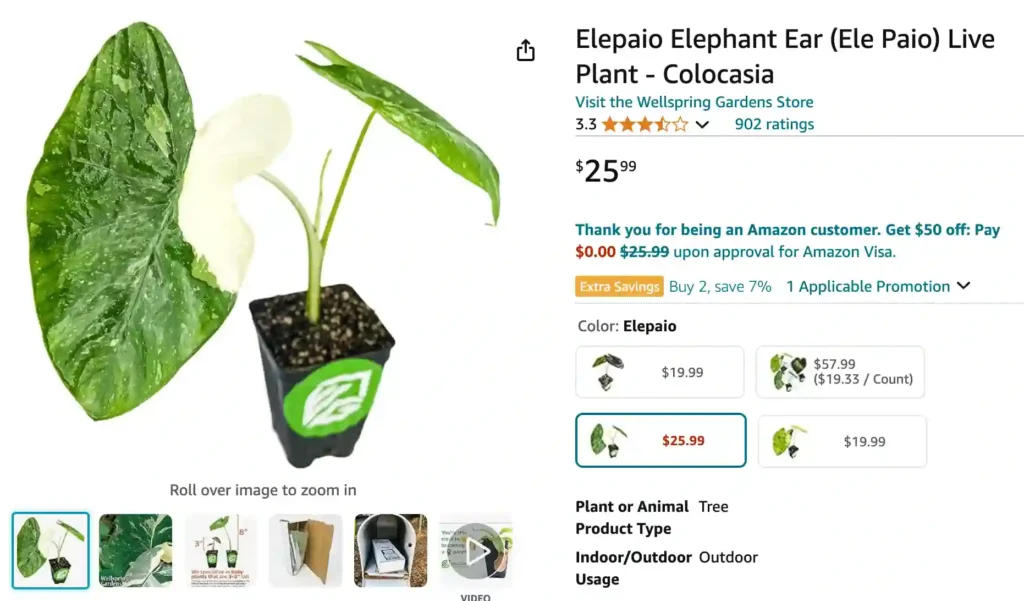
Introduction: Why Colocasia ‘Milky Way’ is a Horticultural Marvel
For plant enthusiasts seeking a truly distinctive and enchanting foliage plant, the Colocasia ‘Milky Way’, also affectionately known as the Elepaio Elephant Ear, is an absolute showstopper. This captivating hybrid within the Araceae family stands out with its large, heart-shaped leaves that display a mesmerizing interplay of deep green, generously splashed with creamy white to light green spots and blotches. The unique variegation evokes the ethereal glow of a starlit night sky, adding a touch of cosmic wonder to any indoor or outdoor space.
This comprehensive guide will delve into everything you need to know about the Colocasia ‘Milky Way’, from its alluring features and essential care requirements to insightful comparisons with other popular Colocasia varieties. Master the art of cultivating this magnificent specimen, ensuring it thrives and becomes a graceful, out-of-this-world focal point in your botanical collection.
What is Colocasia ‘Milky Way’? Unveiling Its Cosmic Foliage
The Colocasia ‘Milky Way’ is a remarkable hybrid cultivar within the Colocasia genus, celebrated for its unique and highly ornamental foliage. Its most captivating feature is the striking variegation on its large, heart-shaped leaves: a deep green base adorned with an artistic scattering of creamy white to light green speckles, dots, and larger splashes. This distinct pattern gives the impression of a galaxy of stars against a dark night, hence its evocative name.
Like all elephant ears (also commonly known as Taro, Dasheen, or Eddo), ‘Milky Way’ belongs to the Araceae family and is primarily grown for its aesthetic appeal. Unlike some of its colossal Colocasia relatives, ‘Milky Way’ maintains a more manageable growth habit, typically reaching a mature height of 2−4 feet (0.6−1.2 meters), with individual leaves spanning 1−2 feet (0.3−0.6 meters) wide. This makes it an ideal choice for smaller gardens, mixed container plantings, or as a vibrant indoor specimen where space might be a consideration. Its lush, uniquely patterned appearance adds a sophisticated and exotic flair.
Colocasia ‘Milky Way’ vs. Other Colocasia Varieties: A Celestial Comparison
While ‘Milky Way’ brings its unique speckled beauty, understanding how it contrasts with other popular Colocasia varieties can highlight its specific charm and inform your plant selection.
- ‘Milky Way’ vs. ‘Mojito’ (Colocasia esculenta ‘Mojito’): Both ‘Milky Way’ and ‘Mojito’ are prized for their speckled variegation, but their patterns differ. ‘Mojito’ typically features irregular, darker green to black splashes and blotches on a lighter lime-green background, creating a more chaotic, almost tie-dye effect. ‘Milky Way’ boasts more defined, brighter white to cream speckles on a deep green, resembling scattered stars or paint splatters rather than large, integrated blotches. The contrast in ‘Milky Way’ is often sharper.
- ‘Milky Way’ vs. ‘Morning Dew’ (Colocasia esculenta ‘Morning Dew’): ‘Morning Dew’ features lighter green to gold speckles on a rich green leaf, resembling dew droplets. While both are speckled, ‘Milky Way’ has more prominent, often brighter, creamy white speckles that stand out more dramatically against its darker green background, truly earning its “milky way” moniker. ‘Morning Dew’s’ variegation is generally more subtle and diffuse.
- ‘Milky Way’ vs. Solid-Colored Colocasias (e.g., ‘Black Magic’, ‘Lime Zinger’): The most obvious distinction is the striking variegation. ‘Milky Way’ stands apart from solid-colored varieties like the intensely dark ‘Black Magic’ or the vibrant ‘Lime Zinger’ by its unique speckled pattern. While those offer bold, uniform colors, ‘Milky Way’ provides a more complex, textural, and visually dynamic interest with its dappled leaves.
- ‘Milky Way’ vs. Alocasia Varieties (e.g., Alocasia ‘Polly’, Alocasia macrorrhiza ‘Stingray’): While both are “elephant ears,” Colocasia and Alocasia have key differences. Colocasias (like ‘Milky Way’) typically have leaves that point downwards or outwards from the petiole (stem), whereas Alocasias’ leaves tend to point upwards. ‘Milky Way’ is also more tolerant of consistently moist soil and can be grown in boggier conditions than most Alocasias, which prefer to dry out more between waterings. The variegation patterns also vary greatly between the genera.
‘Milky Way’ is celebrated for its unique, starlit variegation, setting it apart from both solid-colored and other variegated Colocasia varieties, offering a distinct and captivating aesthetic for collectors and garden enthusiasts.
Essential Care Guide for Colocasia ‘Milky Way’: Expert Tips for Optimal Health
To ensure your Colocasia ‘Milky Way’ not only survives but truly thrives and displays its stunning, speckled leaves to their fullest potential, adherence to these specific and vital care guidelines is paramount:
1. Light Requirements: Maximizing Variegation
Colocasia ‘Milky Way’ thrives in bright, indirect light or partial shade. Adequate bright light is crucial for the variegation to be most pronounced and vibrant; too little light can cause the white speckles to fade and the plant to appear less striking. While its green leaves can tolerate some gentle morning sun, prolonged exposure to harsh afternoon sun is detrimental and can lead to scorching, faded colors, or stress. In warmer climates (USDA Zones 8-11), dappled shade, especially during the peak sun hours of the day, is ideal. If cultivating indoors, a location near a bright window (north or east-facing preferred) that receives ample ambient light but avoids direct, intense sun is perfect.
2. Watering Schedule: Consistently Moist, Never Soggy
These are exceptionally thirsty plants, particularly during their active growing season (typically spring through fall). ‘Milky Way’ demands consistently moist soil, but it is absolutely critical to avoid waterlogging. Deep watering is crucial: water thoroughly until you see excess water draining freely from the bottom of the pot. Allow the top inch or two of the soil to dry out slightly between waterings to prevent the soil from becoming perpetually soggy, which is detrimental and can lead to root rot. During its dormant period (if experienced, usually in cooler months), significantly reduce the frequency of watering. Overwatering is the primary cause of root rot, a fatal condition for Colocasias, while chronic underwatering will manifest as drooping, yellowing, and eventually crispy leaves. Its love for consistent moisture means it’s often a great candidate for bog gardens or areas with consistent soil moisture outdoors, provided drainage prevents stagnant conditions.
3. Soil Mix: The Foundation for Robust Growth
A well-draining, rich, and slightly acidic to neutral potting mix is absolutely essential for the robust health and vigorous growth of your ‘Milky Way’. A high-quality, custom-blended mix typically includes:
- High-quality potting soil: Provides a base of nutrients and organic matter.
- Perlite or coarse sand: Crucial for enhancing drainage and preventing compaction, ensuring good aeration for the roots.
- Peat moss or coco coir: Improves moisture retention while contributing to the slightly acidic pH preferred by Colocasias.
- Compost or worm castings: Enriches the soil with vital organic nutrients, promoting lush and vibrant foliage.
This precise combination ensures excellent aeration for the roots, proper drainage to prevent waterlogging, and adequate moisture retention, closely mimicking the fertile, humid environments of its natural tropical habitat.
4. Humidity Needs: Replicating a Humid Haven
Like the vast majority of tropical plants, Colocasia ‘Milky Way’ absolutely thrives in high humidity. Aim for a consistent relative humidity level between 60-80%. Low humidity levels, especially in dry indoor environments, are a common cause of crispy leaf edges, stunted growth, and can significantly increase the plant’s susceptibility to common houseplant pests. To effectively increase ambient humidity:
- Use a pebble tray: Place a tray filled with pebbles and water beneath the pot, ensuring the bottom of the pot itself is not submerged in the water to prevent root rot.
- Group plants together: Creating a cluster of plants naturally increases the localized humidity through transpiration.
- Utilize a humidifier: An electric humidifier is the most effective and consistent way to maintain ideal humidity levels indoors, especially during winter months with indoor heating.
- Mist the leaves: While this offers only temporary and superficial relief, occasional misting can provide a brief humidity boost and help clean dust from the leaves.
5. Temperature Range: Tropical Warmth is Essential
‘Milky Way’ prefers consistently warm temperatures between 65∘F and 85∘F (18∘C and 29∘C). It is definitively not frost-tolerant and will suffer significant, often irreversible, damage or outright die if exposed to temperatures consistently below 50∘F (10∘C). If you are growing ‘Milky Way’ outdoors in a climate that experiences freezing temperatures (USDA Zones 7 or below), it is imperative to either bring the plant indoors as a houseplant for the winter or carefully dig up the corms for proper overwintering before the first anticipated frost. Consistent warmth is key for robust growth and maintaining its beautiful foliage.
6. Fertilization: Fueling Lush and Speckled Leaves
During the active growing season (typically spring and summer, when the plant is actively putting out new leaves), feed your ‘Milky Way’ with a balanced liquid fertilizer every 2-4 weeks. A formula with an NPK ratio like 20-20-20, diluted to half strength as per the product instructions, is often highly suitable. The “balanced” aspect ensures comprehensive nutrient delivery for both vibrant foliage and strong root development. As the plant enters its cooler, dormant months (fall and winter), significantly reduce or completely cease fertilization. Over-fertilization is a common mistake that can lead to nutrient burn, manifested as brown leaf tips and margins.
7. Propagation: Multiplying Your Celestial Gems
Colocasia ‘Milky Way’ can be effectively and easily propagated by division of its corms (tubers) or rhizomes. This method is the most common and successful way to create new plants from an existing one and is best performed when repotting or at the beginning of the growing season.
- Method: The ideal time for division is in the spring, just as new growth is beginning to emerge. Carefully unpot the plant and gently separate the smaller corms (often referred to as “offsets” or “pups”) or sections of the rhizome from the main mother corm/rhizome. It is crucial to ensure that each separated offset has at least one discernible “eye” or growth point (a small bud from which new leaves will emerge).
- Planting: Plant each offset in its own individual pot, filled with a suitable, well-draining potting mix (as described in the soil section). Ensure that the top of the corm is just below or at the soil surface.
- Care: After planting, keep the soil consistently moist (but not waterlogged) and provide the new plants with warm temperatures and bright, indirect light. With proper care, new foliage should begin to emerge within a few weeks. This process can significantly expand your collection or allow you to share with fellow enthusiasts.
8. Pests and Diseases: Vigilance for a Healthy Plant
While generally robust and resilient, ‘Milky Way’ can occasionally be susceptible to common houseplant pests and certain environmental diseases. Regular inspection is key to early detection and effective treatment:
- Pests: Keep a watchful eye for notorious pests such as spider mites (look for fine webbing and tiny red dots on undersides of leaves), aphids (small, soft-bodied insects often clustered on new growth), mealybugs (fuzzy white cotton-like masses in leaf axils), and whiteflies (tiny white insects that fly when disturbed). Inspect your plant regularly, paying close attention to the undersides of leaves and new growth. Treat any infestations promptly with an appropriate horticultural oil, such as insecticidal soap or neem oil, following product instructions carefully.
- Diseases: The most common disease issue for Colocasias is root rot, which is almost always a direct consequence of chronic overwatering and poor drainage. Ensure your potting mix is well-draining and that you allow the topsoil to dry slightly between waterings. Fungal leaf spots can sometimes occur in conditions of excessively high humidity combined with poor air circulation; improving airflow around the plant can help prevent this.
Troubleshooting Common Colocasia ‘Milky Way’ Issues
Understanding the subtle signs your plant is giving you can help diagnose and correct problems quickly, ensuring its continued vibrancy:
- Yellowing Leaves: This is a very common symptom and can indicate either overwatering (leading to root rot, where leaves yellow and feel mushy) or underwatering (leaves yellow, droop, and feel crispy). Always check the soil moisture first and adjust your watering schedule. It can also point to a potential nutrient deficiency (especially nitrogen, leading to overall yellowing) or simply be the natural aging process of older, lower leaves, which is normal.
- Crispy Leaf Edges or Tips: Almost always a clear sign of low humidity or inconsistent watering. Increase ambient humidity (using methods described above) and ensure your watering schedule is consistent, preventing the soil from drying out completely for extended periods. This is often more pronounced in dry indoor environments.
- Dull or Fading Speckles/Color: If your ‘Milky Way’s’ vibrant white speckles or green color appear less pronounced, it’s often a sign of insufficient light. Move your plant to a location that receives brighter, indirect light to encourage optimal coloration and intensity of variegation.
- Drooping Leaves: A dramatic droop in leaves is typically a strong indicator of underwatering, meaning the plant isn’t getting enough moisture. However, it can also paradoxically be a sign of severe overwatering leading to root rot, which prevents water uptake and causes wilting. Always check the soil moisture deeply before watering again.
- Small New Leaves: This can indicate insufficient light, inadequate fertilization, or simply the plant settling into a new environment. Ensure optimal conditions for continued growth.
Where to Find Colocasia ‘Milky Way’: Sourcing Your Specimen
Colocasia ‘Milky Way’ is a popular and increasingly available cultivar. You can typically find it through various channels:
- Online plant retailers: Many reputable online nurseries specializing in tropical and aroid plants frequently stock ‘Milky Way’, offering the convenience of direct shipping to your door. Search for specific aroid nurseries or larger online plant marketplaces.
- Specialty nurseries and garden centers: Check with local independent nurseries or garden centers that focus on exotic, rare, or tropical plant varieties. They often have unique selections not found in big box stores and can offer local advice.
- Plant swaps and enthusiast groups: Participating in local or online plant swap groups and forums can be a great way to find divisions or cuttings from fellow plant enthusiasts, often at a lower cost or even for trade. This can also be a good way to get established plants from a trusted source.
Is Colocasia ‘Milky Way’ Toxic? A Crucial Safety Note
Yes, like all members of the Araceae plant family (which includes other popular houseplants like Philodendrons, Pothos, Alocasias, and other Colocasias), Colocasia ‘Milky Way’ is toxic if ingested. It contains insoluble calcium oxalate crystals, which are microscopic, needle-shaped structures. If consumed, these crystals can cause significant irritation, a burning sensation, and swelling of the mouth, throat, and digestive system. While generally not fatal, ingestion can lead to severe discomfort and requires attention.
It is absolutely crucial to keep this plant, especially its corms (tubers) and leaves, out of reach of curious pets (cats, dogs, etc.) and small children. If ingestion is suspected, seek immediate veterinary or medical attention. Always wear gloves when handling or repotting your Colocasia if you have sensitive skin, as some individuals may experience mild skin irritation from contact with the sap.
Conclusion: Embrace the Celestial Beauty of ‘Milky Way’
The Colocasia ‘Milky Way’ is a truly magnificent and captivating plant that offers unparalleled speckled beauty and cosmic flair. With its striking green leaves adorned with white splashes, combined with relatively straightforward care requirements once understood, it’s an excellent and rewarding choice for both experienced plant enthusiasts looking to expand their unique collection and those new to the world of exotic plants. By diligently providing the right balance of light, water, humidity, and an appropriate soil mix, you can cultivate this stunning elephant ear into a thriving and graceful addition to your indoor jungle or outdoor tropical oasis. Its unique and vibrant presence is guaranteed to draw admiration and elevate any space it inhabits.
Frequently Asked Questions (FAQs) About Colocasia ‘Milky Way’
Q: How big does Colocasia ‘Milky Way’ get? A: Colocasia ‘Milky Way’ is a more compact grower compared to some other elephant ears, typically reaching heights of 2−4 feet (0.6−1.2 meters) tall with individual leaves spanning 1−2 feet (0.3−0.6 meters) wide when grown in optimal conditions, making it suitable for various spaces.
Q: Does Colocasia ‘Milky Way’ need full sun? A: No, it does not. Colocasia ‘Milky Way’ thrives in bright, indirect light or partial shade. Direct, harsh afternoon sun can scorch its leaves and cause its vibrant white speckles to fade. Adequate bright, indirect light is crucial for prominent variegation.
Q: Can I grow ‘Milky Way’ indoors? A: Absolutely! Colocasia ‘Milky Way’ can be successfully grown indoors, provided you can meet its requirements for sufficient bright, indirect light and maintain consistently high humidity levels, especially during dry indoor seasons. Place it near a humidifying source or group it with other plants.
Q: Why are my ‘Milky Way’ leaves turning yellow? A: Yellowing leaves are a common symptom with multiple potential causes. Most frequently, it’s a sign of improper watering – either chronic overwatering (which can lead to root rot) or severe underwatering. Always check the soil moisture thoroughly. Other causes can include a nutrient deficiency or simply the natural shedding of older, lower leaves as the plant grows.
Q: How do I overwinter Colocasia ‘Milky Way’ in cold climates (e.g., USDA Zone 7 and below)? A: In regions that experience freezing temperatures, you’ll need to dig up the corms before the first hard frost. After digging, clean off any excess soil, allow them to air dry for a few days until the surface is dry to the touch, and then store them in a cool, dry, dark, and frost-free location (e.g., packed in peat moss, vermiculite, or newspaper) until spring.
Q: Is ‘Milky Way’ considered a low-maintenance plant? A: While ‘Milky Way’ has specific environmental needs regarding light, water, and humidity, it’s generally considered relatively straightforward to care for once you understand and consistently provide its preferred conditions. It’s not a “set it and forget it” plant, but its rewarding display makes the effort worthwhile.
Q: What is the ideal potting mix for ‘Milky Way’? A: A well-draining, rich, and slightly acidic to neutral potting mix is ideal. A good mix typically includes high-quality potting soil, perlite or coarse sand for drainage, and peat moss or coco coir for moisture retention and acidity, enriched with compost or worm castings.

If i die, water my plants!