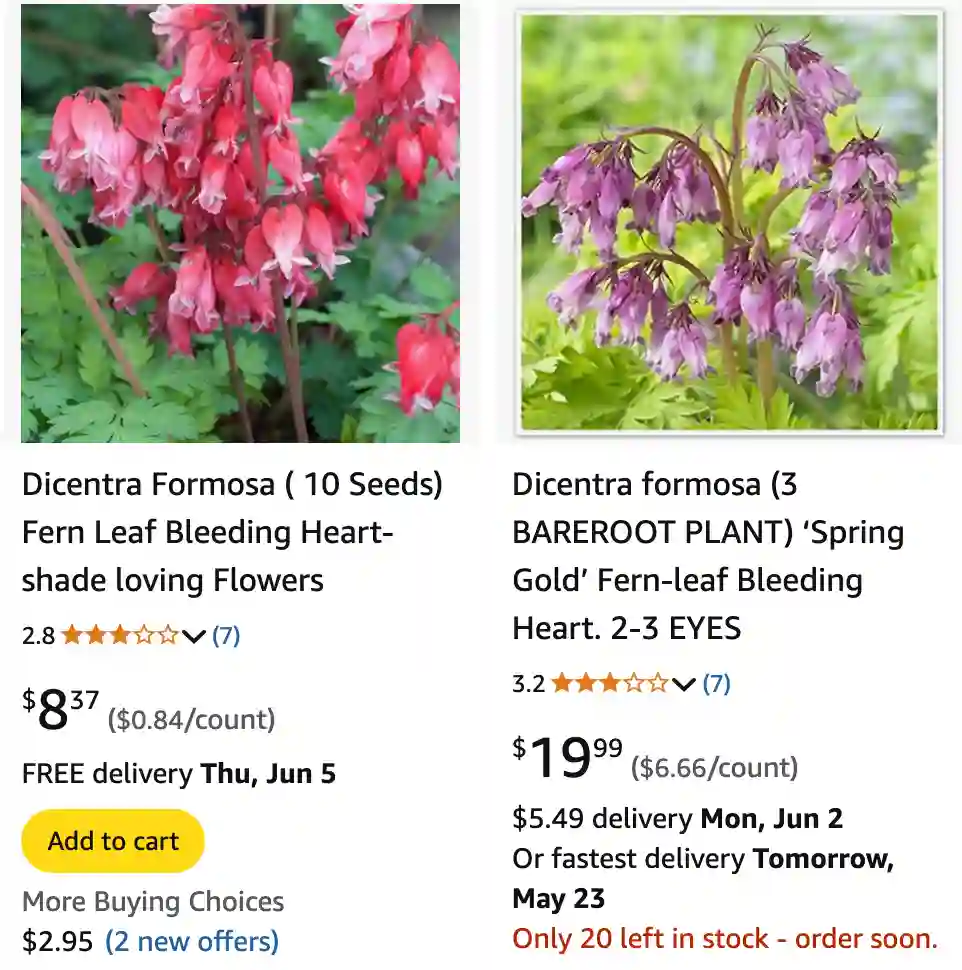
Hello, I’m Ferb Vu, and today I want to share everything I know about Dicentra Formosa. This plant has been a favorite of mine for quite some time. It’s a lovely native perennial with delicate, heart-shaped flowers and a unique charm that makes it stand out in any garden. If you’re thinking about growing it or just curious, I’ve put together a detailed FAQ that covers common questions, comparisons with related plants, and my own observations. Let’s dive in.
What Is Dicentra Formosa and Where Does It Come From?
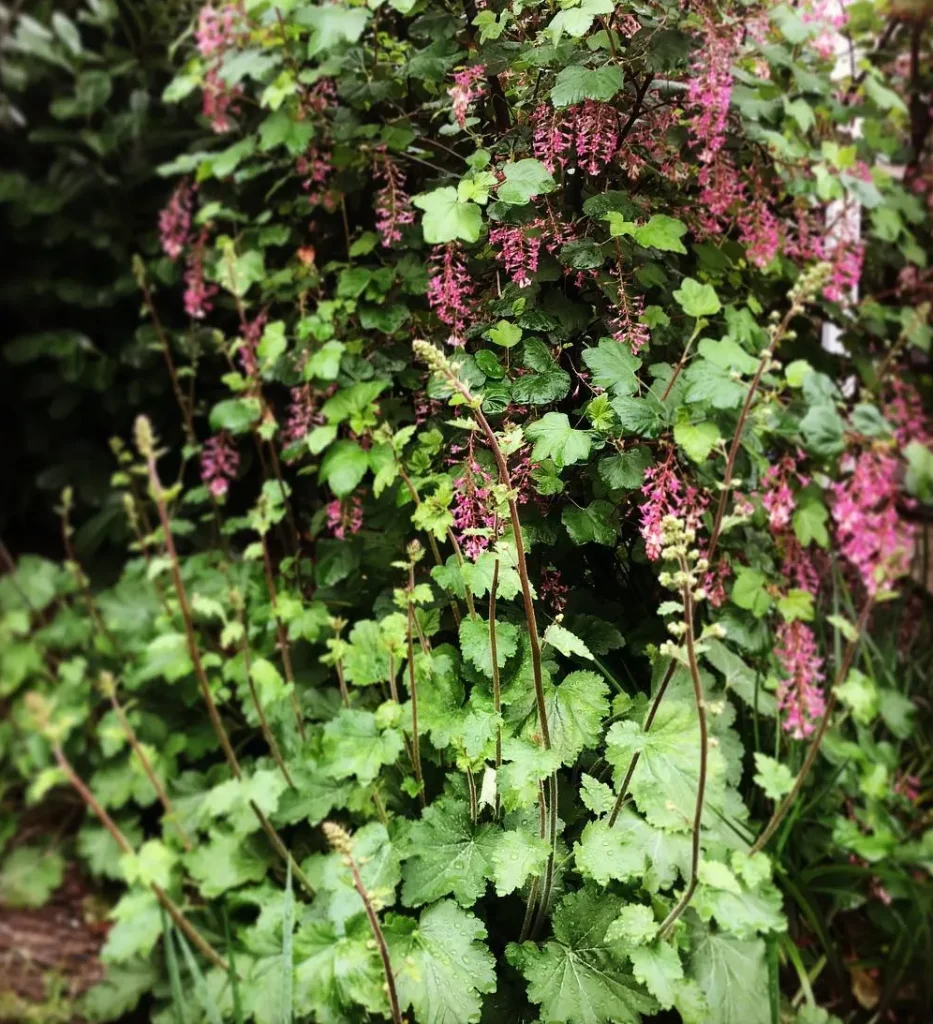
Dicentra Formosa, often called the Western Bleeding Heart, is a perennial native to the Pacific Northwest of the United States. It thrives in shady, woodland environments and has heart-shaped, pink to pale lavender flowers that bloom from spring through summer. The plant’s foliage is fern-like, adding soft texture to shaded garden spots.
From my experience, Dicentra Formosa feels at home in cooler, moist climates, but it can adapt to a range of garden conditions as long as it avoids intense direct sun. I love how it brightens up shaded areas where other plants struggle.
How Does Dicentra Formosa Differ from Dicentra Spectabilis?
People often confuse Dicentra Formosa with its more famous cousin, Dicentra Spectabilis (the classic bleeding heart). Here’s how I see the differences:
- Flower Size & Shape: Dicentra Spectabilis has larger, more dramatic flowers that are bright pink with white tips. Dicentra Formosa’s flowers are smaller and more subtle, usually softer pink or lavender.
- Growth Habit: Formosa tends to be more compact and bushy, growing about 1 to 2 feet tall, while Spectabilis can grow taller and more sprawling.
- Hardiness: I find Dicentra Formosa hardier and better suited to warmer climates and drier conditions once established.
- Bloom Time: Formosa tends to bloom longer, sometimes into early summer, whereas Spectabilis usually finishes blooming earlier in spring.
Personally, I prefer Dicentra Formosa because its more delicate look and longer blooming season make it perfect for naturalistic shade gardens.
What Are the Best Growing Conditions for Dicentra Formosa?
I always recommend planting Dicentra Formosa in partial to full shade with well-drained, humus-rich soil. It does best in cooler, moist environments but tolerates some dryness once mature.
Here are some tips from my own gardening experience:
- Keep the soil consistently moist, especially during the growing season.
- Mulch well to retain moisture and protect roots.
- Avoid full, hot afternoon sun as it can cause the foliage to yellow and the plant to wilt.
- Fertilize lightly in spring with a balanced fertilizer or compost to encourage healthy growth.
If you live in a hot climate, placing it near taller shrubs or trees for shade works well. I’ve had success growing it under deciduous trees where it gets morning sun but is shaded midday.
How Do I Propagate Dicentra Formosa?
Propagation is straightforward if you know the right timing. I usually propagate Dicentra Formosa by division in early spring or fall. Here’s how I do it:
- Dig up a mature clump carefully.
- Separate the root clumps with clean, sharp tools.
- Replant divisions immediately in prepared soil.
You can also propagate it by seed, but that takes longer and requires patience. Seeds need cold stratification to germinate well, so division is my go-to method for quick results.
What Wildlife Does Dicentra Formosa Attract?
I’ve noticed that Dicentra Formosa is great for attracting pollinators like bumblebees and hummingbirds. The tubular shape of the flowers makes them especially appealing to these visitors. It doesn’t attract deer or rabbits much, which is a bonus in my area.
Additionally, because it’s a native plant, it supports local ecosystems better than many exotic garden plants. That’s something I really appreciate—it feels like I’m doing my part for the environment by growing it.
How Does Dicentra Formosa Compare to Other Shade Perennials Like Tiarella or Heuchera?
I often get asked how Dicentra Formosa stacks up against other shade-loving perennials like Tiarella (foamflower) or Heuchera (coral bells). Here’s my take:
- Tiarella: Both thrive in shade and have delicate flowers, but Tiarella has more frothy, star-shaped blooms and interesting foliage patterns. Dicentra’s flowers are more defined and heart-shaped.
- Heuchera: Known mostly for colorful foliage, Heuchera adds strong leaf color to shady gardens, while Dicentra Formosa is more about soft greens and flower shapes. I often plant them together because they complement each other well.
- Bloom Time: Dicentra Formosa’s flowers last longer, providing continuous interest, while Heuchera’s flowers tend to be shorter-lived but vibrant.
I personally mix Dicentra with these other perennials for a layered, dynamic shade garden.
Does Dicentra Formosa Go Dormant? How Should I Care for It in Winter?
Yes, Dicentra Formosa typically goes dormant in late summer or early fall when the foliage dies back. In my experience, this is normal and not a sign of poor health. The plant stores energy in its roots for the next growing season.
During dormancy, I let the soil dry out slightly but don’t let it completely dry. Mulching helps protect roots during colder months. In very cold climates, additional mulch or leaf litter can protect it from freezing temperatures.
Are There Any Common Pests or Diseases I Should Watch For?
From what I’ve seen, Dicentra Formosa is fairly pest-resistant. Occasionally, slugs or snails might nibble on the foliage, especially in damp gardens. I use organic slug bait or manual removal to control them.
Powdery mildew or fungal issues are rare if you provide good air circulation and avoid overhead watering. Healthy soil and proper spacing help prevent disease.
Can Dicentra Formosa Be Used in Landscaping Designs?
Absolutely. I’ve used Dicentra Formosa in woodland garden designs, shady borders, and naturalized areas. Its delicate, heart-shaped flowers and ferny foliage add softness and charm.
It pairs wonderfully with ferns, hostas, and other native shade perennials. I’ve also found it works well near streams or shaded rock gardens.
Final Thoughts
Growing Dicentra Formosa has been a rewarding experience for me. Its graceful blooms and adaptability make it a great choice for shady, cool gardens. It’s a resilient native that supports local pollinators and adds a unique beauty wherever it grows.

If i die, water my plants!