What Is Dorstenia Foetida?
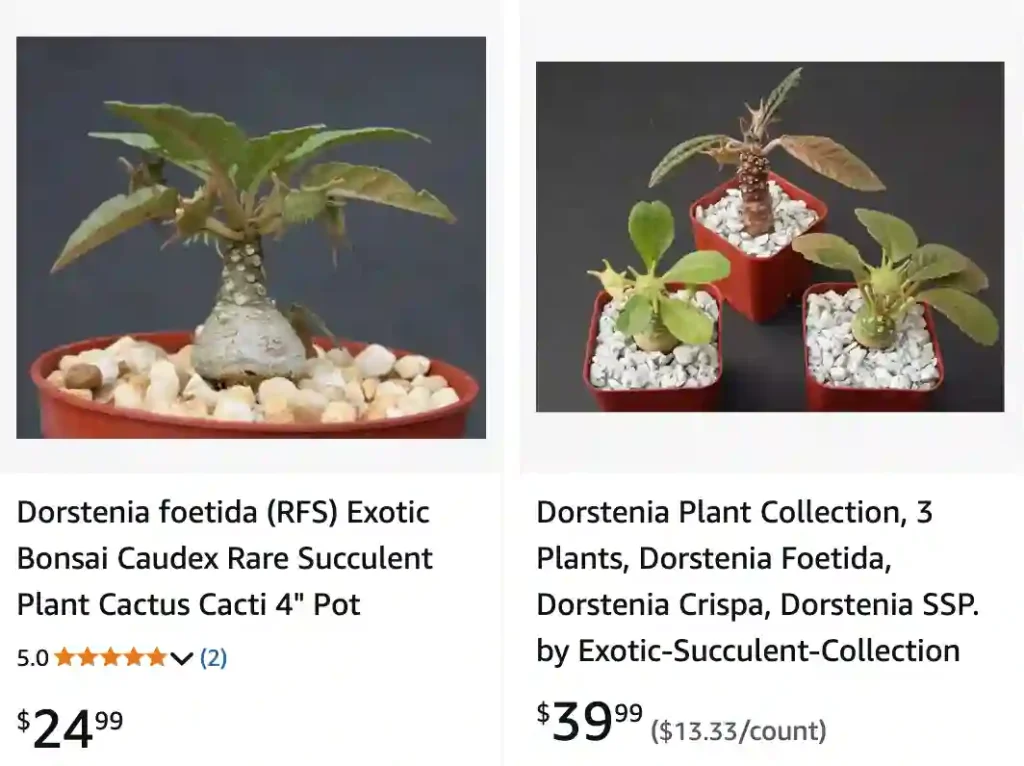
Dorstenia Foetida is one of the most fascinating plants I’ve grown. It belongs to the Moraceae family—the same family as figs and mulberries. Native to the Horn of Africa and the Arabian Peninsula, this plant thrives in arid environments. What makes it unique is its alien-like appearance, with a thick caudex, twisting stems, and funky disc-shaped flowers.
In simple words, it’s a succulent oddball with style. It looks like something from a sci-fi garden, yet it’s surprisingly easy to care for. I grow it indoors on a sunny windowsill and give it plenty of air circulation.
How Do I Care for Dorstenia Foetida?
Light: I give my plant bright, indirect light. It can handle some morning sun but not scorching afternoon rays.
Water: I water it only when the soil is bone dry. Overwatering is a death sentence. This plant stores water in its caudex.
Soil: I use a cactus mix blended with pumice or perlite. Fast drainage is key.
Humidity and Temperature: It loves warmth—think 65°F to 85°F (18°C to 29°C). I keep it away from cold drafts and never let it freeze.
Fertilizer: I feed it once a month during the growing season using a diluted balanced fertilizer.
Is Dorstenia Foetida a Caudiciform?
Yes, and that’s what makes it special. Caudiciform plants store water in their swollen stems or roots, known as a caudex. Dorstenia Foetida is a classic example. Its bulbous base is not just for show—it’s survival gear. It lets the plant handle dry spells without blinking.
I’ve found that it adds architectural charm to my succulent display. It looks like a mini bonsai tree crossed with a desert alien.
Does Dorstenia Foetida Smell Bad?
The name “Foetida” means foul-smelling, but don’t worry—it’s not that bad. In fact, I’ve never noticed any stench. Some say the flowers have a slight musky odor, but nothing offensive. It’s not like a Stapelia or a corpse flower.
How Does Dorstenia Foetida Compare to Adenium (Desert Rose)?
Great question—I’ve grown both. Here’s my take:
| Feature | Dorstenia Foetida | Adenium (Desert Rose) |
|---|---|---|
| Caudex | Compact and knobby | Thick, often larger |
| Flowers | Greenish, alien-like | Bright and showy |
| Water Needs | Very low | Low |
| Growth Habit | Short, spreading stems | Tall, upright branches |
| Toxicity | Non-toxic (mild) | Toxic to pets and humans |
If you want a quiet conversation starter, go with Dorstenia. For showy blooms, Adenium wins. I keep both on the same shelf—they contrast well.
Why Is Dorstenia Foetida Considered a “Living Sculpture”?
Its twisted stems and disc-shaped inflorescences look like something crafted by an artist. Each plant grows in its own weird way, like a fingerprint. I love the unpredictable shapes—it never grows the same way twice. It embodies the semantic idea of morphological novelty, a fancy term for “weird looks that evolve for function.”
Is It Safe Around Pets?
Dorstenia Foetida is generally not considered toxic. I have cats, and they’ve never bothered it. Still, I always err on the side of caution. While it’s not listed on the ASPCA’s toxic plant list, any plant can cause minor irritation if chewed. Keep it out of reach.
How Fast Does Dorstenia Foetida Grow?
It’s a slow grower, especially when young. In spring and summer, it pushes out new leaves and strange flowers. In winter, it rests. Don’t panic if it drops leaves—it’s just going dormant.
I repot mine every 2–3 years. The caudex grows slowly but steadily. Some growers train it into bonsai shapes, which I may try soon.
How Do I Propagate It?
From seed—it’s not the easiest, but it works. The flowers self-pollinate and produce tiny seeds. Sometimes, they fling seeds across the room like a tiny cannon. I collect them and sow them on moist cactus mix.
No stem cuttings here—it’s seed or nothing. I’ve managed to sprout a few over time, but patience is key.
What Pests or Problems Should I Watch For?
Mostly fungus gnats if I overwater. Once, I spotted mealybugs, but I handled them with neem oil and isolation. Avoid soggy soil and drafty windows. Rot is your worst enemy.
Other than that, Dorstenia Foetida is tough. It doesn’t beg for attention—it thrives on neglect.
Why I Recommend Dorstenia Foetida?
If you love the unusual and want a low-maintenance houseplant, this one delivers. It’s rare, bold, and full of character. It embodies traits of both succulents and bonsai, with just a hint of tropical strangeness.
I’ve grown over 200 plants, and this is one I always show off. It’s living proof that small plants can have big personalities.
Related Plants I Like
- Dorstenia Gigas – A giant cousin with a thicker trunk.
- Pseudolithos – Even stranger, if you can believe it.
- Euphorbia Obesa – A similar caudex form, more spherical.
- Ariocarpus – Another slow-growing oddball for collectors.
Final Thought:
Dorstenia Foetida isn’t everyone’s taste, but it fits mine. It’s sculptural, compact, and weird in the best way. If you want a plant that grows like no other, give this one a shot. You’ll love the adventure.

If i die, water my plants!