What Is Dragon Grass?
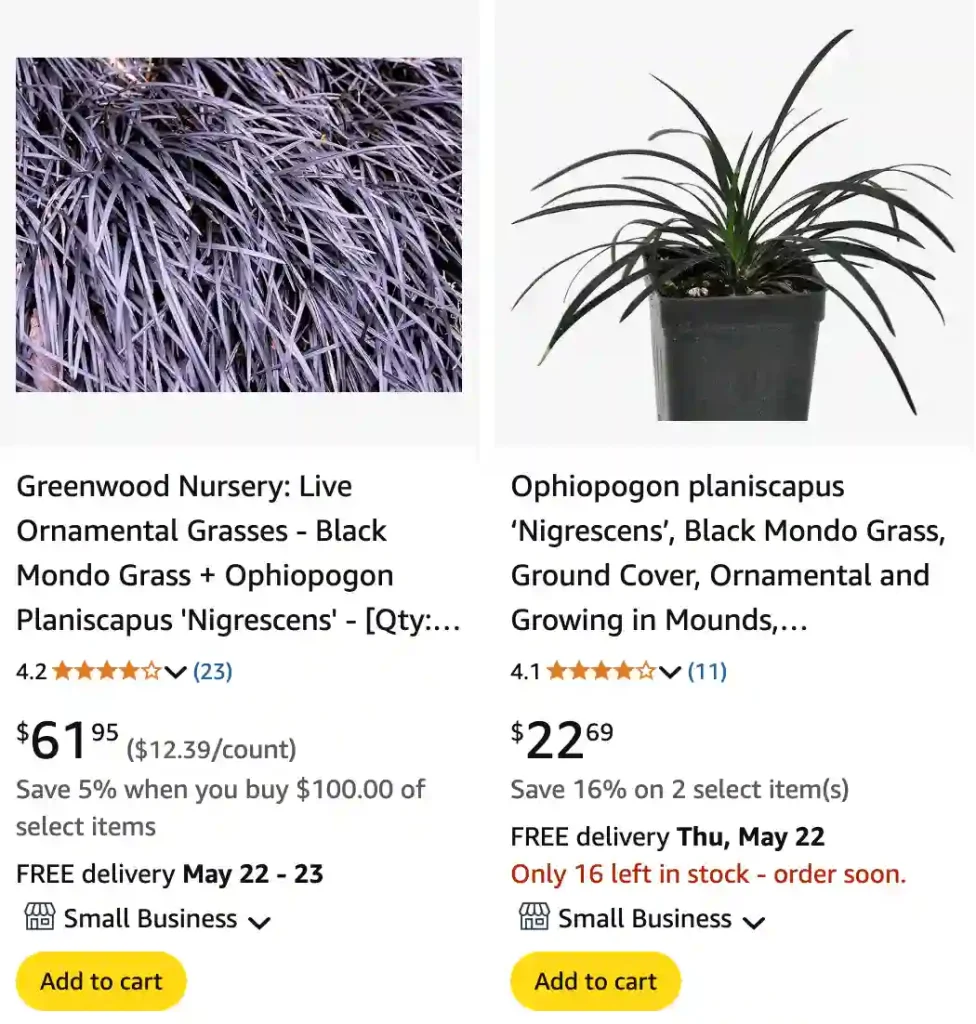
I’ve grown many ornamental grasses, but Dragon Grass—formally known as Ophiopogon Planiscapus ‘Nigrescens’—has always stood out. It’s not a true grass. Instead, it’s a monocotyledonous perennial in the asparagus family. What makes it special is its deep purple-black foliage that almost looks like charcoal satin in the sun. It forms low tufts or mounds, only 6 to 12 inches tall, and spreads through underground stolons.
I love using Dragon Grass as a groundcover or as a dramatic contrast plant in my mixed borders. It’s evergreen in warmer zones and semi-evergreen where winters bite harder. To me, it’s one of the most underrated plants for modern garden design.
Is Dragon Grass the Same as Black Mondo Grass?
Yes—Dragon Grass is the common name many people use for Black Mondo Grass, and they both refer to Ophiopogon Planiscapus ‘Nigrescens’. Sometimes, I’ve heard people confuse it with Liriope or even dwarf fountain grass, but Dragon Grass is in a class of its own.
Unlike true ornamental grasses, this plant has strap-like leaves and produces lavender flowers followed by black berries. The color alone sets it apart from anything else in my shade garden.
Where Does Dragon Grass Grow Best?
I’ve grown it in USDA zones 6 through 10. In my experience, it thrives in partial shade to full shade, though I’ve also had success in dappled sunlight. While it can handle full sun, especially in cooler climates, the foliage tends to fade or scorch in intense afternoon rays.
The ideal soil? Moist, well-draining, and slightly acidic. Dragon Grass doesn’t like soggy roots or heavy clay. I always amend clay with compost and coarse sand to get the drainage right.
How Fast Does Dragon Grass Spread?
Not fast—but not annoyingly slow either. It’s a moderate spreader through underground runners. I usually plant them 6–8 inches apart if I want a dense mat in a couple of seasons. It’s polite in mixed beds, meaning it won’t overtake your Heucheras or Hostas.
When I use it in Japanese-inspired designs, I often mass it for that elegant carpet effect. It pairs beautifully with Ferns, Hakonechloa, and Ajuga.
How Do I Maintain Dragon Grass?
I love how low-maintenance it is. In early spring, I give it a once-over to remove any winter-damaged leaves. I cut the foliage back lightly if needed, but not too much—this plant keeps most of its structure year-round.
If it gets too crowded or starts forming thick clumps, I divide it in spring or fall. I’ve done this successfully every 3–4 years. It bounces back quickly and gives me free plants to tuck in elsewhere.
Is Dragon Grass Drought Tolerant?
Yes, to a point. Once established, it handles dry shade well, especially under trees where other plants struggle. I always water new plantings for the first season to help the roots settle. After that, it’s fairly independent. It’s not a desert plant, but it holds its own during dry spells.
I’ve even seen it thrive under Japanese Maples and Camellias, where the canopy blocks rainfall.
Can I Grow Dragon Grass in Containers?
Absolutely—I do it all the time. Its compact, clumping habit makes it perfect for container gardens. I’ve combined it with Coral Bells (Heuchera), Dwarf Conifers, and Sedum for moody, contrast-driven pots.
Use a well-draining potting mix and make sure your containers have drainage holes. In colder zones, you might want to overwinter containers in a protected spot or bury them in the ground to prevent root damage.
How Does Dragon Grass Compare to Liriope?
Good question. I’ve grown both, and here’s what I’ve noticed:
| Feature | Dragon Grass (Ophiopogon) | Liriope (Liriope Muscari) |
|---|---|---|
| Foliage Color | Jet-black to deep purple | Green or variegated |
| Height | 6–12 inches | 12–18 inches |
| Spread Rate | Moderate | Faster, more aggressive |
| Flower Color | Pale lilac | Violet to lavender |
| Sun Tolerance | Part to full shade preferred | Tolerates full sun better |
Dragon Grass is more refined, more niche. Liriope is great for mass plantings or tough areas, but Dragon Grass brings more design sophistication.
Is Dragon Grass Deer and Rabbit Resistant?
Thankfully, yes. I’ve had no issues with deer or rabbits nibbling on my Dragon Grass. That’s a win in my book, especially since I live near a wooded area where critters roam freely. Its leathery leaves just don’t appeal to them.
What Are Good Companion Plants?
Over the years, I’ve paired Dragon Grass with:
- Japanese Forest Grass (Hakonechloa Macra ‘Aureola’) – the gold and black combo is striking.
- Heuchera ‘Obsidian’ or ‘Caramel’ – for foliage contrast and layered textures.
- Hosta ‘June’ or ‘Blue Mouse Ears’ – soft foliage beside the sharp black blades.
- Pulmonaria and Epimedium – shade lovers that complement its slow spread.
Can I Use Dragon Grass as a Lawn Alternative?
Yes, but it’s more for ornamental patches or accent strips rather than full-on lawn replacement. It’s too slow-growing and expensive to cover large areas like turf. But if you want a dark, velvety carpet around stepping stones or in tight corners, it’s unbeatable.
Final Thoughts
If you’re after a plant that breaks the mold, you can’t go wrong with Dragon Grass. Ophiopogon Planiscapus ‘Nigrescens’ brings drama, elegance, and resilience to shady spots. It plays well with others but doesn’t blend into the background.
For me, it’s become a must-have—whether I’m building a moody woodland scene or adding contrast to a modern patio pot. You plant it once, and it rewards you for years.

If i die, water my plants!