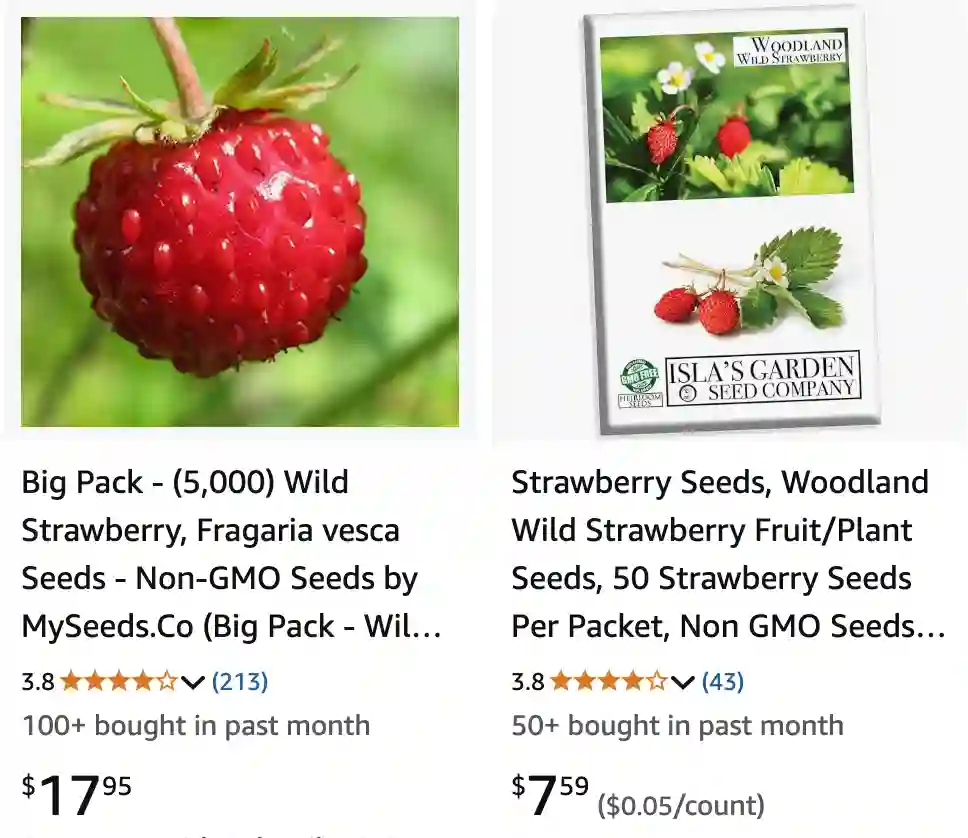
I’m Ferb Vu, and I’m here to clear up some common questions about a delightful little plant: Fragaria Vesca. You might know it by its more common name, the wild strawberry or woodland strawberry. It’s not the big, juicy strawberries you buy at the grocery store, but it’s an equally charming and, dare I say, often more flavorful relative. Let’s dive into some of your most pressing questions about this botanical gem.
Is Fragaria Vesca Edible?
Absolutely, unequivocally, yes! Fragaria Vesca is not only edible but also quite delicious. I’ve personally foraged for these tiny red gems in woodlands and meadows, and the flavor is intensely sweet and aromatic, far more complex than many cultivated varieties. They are small, often no bigger than your thumbnail, but they pack a powerful punch of strawberry essence. Think of it as a concentrated burst of summery goodness.
Beyond the fruit, the leaves of Fragaria Vesca are also edible and often used to make a pleasant, mild tea. I’ve brewed many cups, and it’s a lovely, caffeine-free beverage with a slightly earthy, subtly sweet flavor. Some even use the leaves in salads, though I find them a bit tough for raw consumption unless very young and tender. The roots, while not commonly eaten, have been used in traditional medicine, but I stick to the more palatable parts.
One important note, however, is to always be certain of your identification before consuming any wild plant. While Fragaria Vesca is easily recognizable, especially when fruiting, there are always look-alikes in the plant world. If you’re unsure, consult a reliable field guide or an experienced forager. My general rule is: when in doubt, leave it out.
Fragaria Vesca vs. Fragaria Virginiana: What’s the Difference?
This is a fantastic question, and one that often causes confusion. Both Fragaria Vesca and Fragaria Virginiana are native to North America (and F. Vesca also to Europe and Asia), and both produce delicious strawberries. However, there are some key distinctions I’ve observed.
The most noticeable difference, at least to my eye, is the size and habit of the plant itself. Fragaria Vesca, or the woodland strawberry, tends to be a bit more delicate. Its runners are usually thin and spread gracefully, forming loose clumps. The fruits are generally smaller, often conical, and detach easily from the calyx (the green leafy part at the top of the berry). When you pick a ripe Fragaria Vesca berry, it comes off cleanly, leaving the calyx on the plant. This is a very helpful identification trick I’ve learned.
Fragaria Virginiana, or the wild strawberry, on the other hand, often has stouter runners and forms denser patches. Its fruits are typically rounder and slightly larger than those of F. Vesca. The crucial difference, from a picking perspective, is that the fruit of Fragaria Virginiana tends to cling to the calyx when picked. You often pull off the entire berry with the calyx still attached. This characteristic alone is often enough to differentiate the two in the field.
Flavor-wise, both are excellent, but I find Fragaria Vesca to have a more intense, almost floral aroma, while Fragaria Virginiana can be slightly tarter, though still very sweet. They also tend to prefer slightly different habitats, with F. Vesca often found in shadier woodlands and F. Virginiana more commonly in open fields and disturbed areas. Both are valuable additions to any natural landscape, providing food for wildlife and a treat for the discerning human palate.
Other Common Questions About Fragaria Vesca
People often ask about the growing conditions for Fragaria Vesca. From my experience, it thrives in well-drained soil with partial to full sun, though it tolerates some shade, especially in hotter climates. It’s remarkably adaptable and can often be found growing happily along forest edges, in clearings, and even as a groundcover in gardens. It’s a fantastic plant for a naturalized area or a “wild” section of your garden, as it requires minimal care once established.
Another frequent query concerns its propagation. Fragaria Vesca spreads readily by runners, sending out new plantlets that root where they touch the soil. You can easily divide these new plantlets to transplant them elsewhere, or simply let them naturalize. It can also be grown from seed, though this takes more patience. I’ve found that fresh seeds germinate best, but it’s still a slower process than transplanting runners.
Finally, some wonder about pests and diseases. Generally, Fragaria Vesca is quite resilient. Birds are probably its biggest “pest” – they love the berries as much as I do! Slugs and snails can sometimes be an issue, especially in damp conditions, but I’ve rarely seen anything truly devastating to a healthy patch. It’s a tough little plant that generally takes care of itself, making it a joy to observe and, of course, to taste.
In conclusion, Fragaria Vesca is a charming and valuable plant. It’s edible, delicious, relatively easy to grow, and provides a fascinating contrast to its wild cousin, Fragaria Virginiana. So, next time you’re out exploring, keep an eye out for this delightful woodland dweller. You might just discover your new favorite wild treat.

If i die, water my plants!