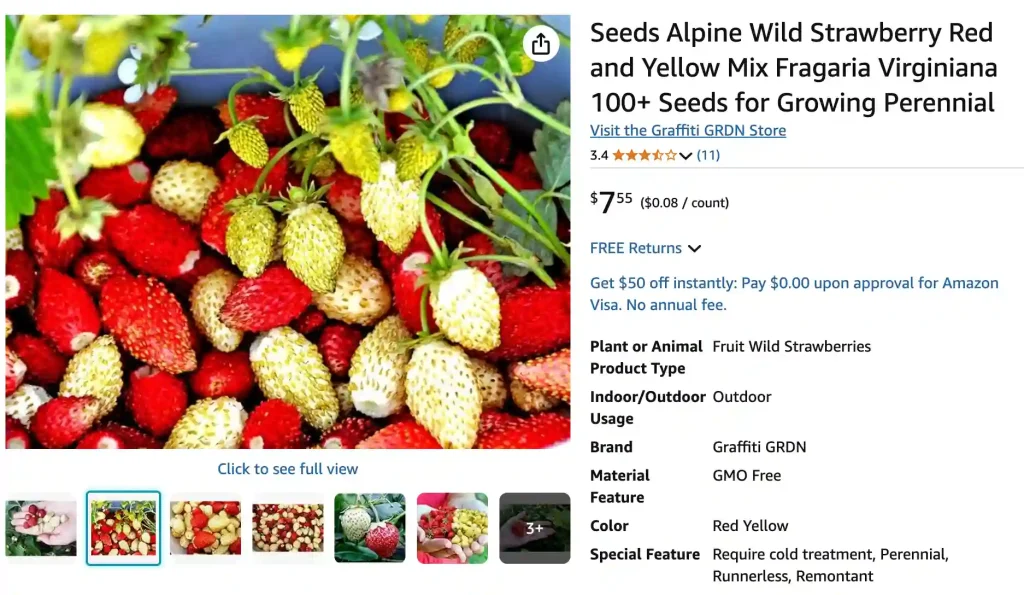
Hey there, I’m Ferb Vu, and today I want to chat about a fascinating little plant that often gets overlooked in the world of berries: Fragaria Virginiana. You might know it better as the wild strawberry, and it’s a true gem of the North American landscape. I’ve spent a fair bit of time exploring these native wonders, and I often get questions about them. So, I thought I’d put together a quick FAQ to clear up some common curiosities.
What exactly is Fragaria Virginiana?
Simply put, Fragaria Virginiana is one of the parent species of our modern cultivated strawberries. It’s a native North American perennial, meaning it lives for more than two years. You’ll often find it growing in fields, woodlands, and along roadsides. Unlike its domesticated cousins, the fruits are smaller, but what they lack in size, they more than make up for in flavor. I’ve found that the taste is incredibly intense, a concentrated burst of sweet and tangy strawberry goodness that’s far more aromatic than anything you’ll buy in a supermarket. Its resilience and ability to thrive in various conditions always impress me.
How can I identify Fragaria Virginiana?
Identifying Fragaria Virginiana is fairly straightforward once you know what to look for. The leaves are trifoliate, meaning they come in sets of three, with serrated edges. They tend to be a bit smaller and more rounded than the leaves of garden strawberries. The flowers are white with five petals, appearing in spring. The fruit, when it ripens, is small, often conical, and a vibrant red. One key differentiator I look for is how the achenes, or seeds, are embedded. On Fragaria Virginiana, the achenes are typically sunken into the fruit, giving it a somewhat dimpled appearance. This contrasts with some other wild strawberries where the seeds are more superficial.
Are the berries edible?
Absolutely, and deliciously so! The berries of Fragaria Virginiana are completely edible and, as I mentioned, incredibly flavorful. They’re a fantastic snack if you’re foraging, or they can be used in jams, pies, or just enjoyed fresh. I’ve personally made some incredible wild strawberry tarts with them, and the flavor always shines through. Just remember to always be 100% sure of your identification before consuming any wild plant. While Fragaria Virginiana is safe, there are other look-alikes that aren’t.
Where does Fragaria Virginiana typically grow?
This hardy plant has a wide native range across North America, from Canada down into the United States. It’s quite adaptable and can be found in a variety of habitats, including open woods, clearings, meadows, and disturbed areas. I’ve encountered it thriving in both sunny spots and partial shade, though I find the sunnier locations tend to produce more abundant and sweeter fruit. It prefers well-drained soil but isn’t overly picky. Its adaptability is one of its most remarkable traits.
How does Fragaria Virginiana reproduce?
Like many strawberries, Fragaria Virginiana reproduces both by seeds and by runners. Runners are those slender stems that creep along the ground, rooting at nodes to form new plants. This is an incredibly effective method for them to spread and colonize an area. I’ve watched a single plant send out numerous runners in a season, quickly forming a small patch. Birds and other animals also play a role in seed dispersal after consuming the berries. This dual strategy contributes to its widespread presence.
Fragaria Virginiana vs. Fragaria Vesca
This is a question I get asked quite often, and it’s an important distinction to make. While both are wild strawberries and share many similarities, there are key differences between Fragaria Virginiana and Fragaria Vesca, often known as the woodland or European wild strawberry.
The most noticeable difference, to me, is their native range. Fragaria Virginiana is indigenous to North America, while Fragaria Vesca is native to Europe and Asia, although it has naturalized in other parts of the world. From a botanical perspective, they also differ in their ploidy level. Fragaria Virginiana is diploid, meaning it has two sets of chromosomes, while Fragaria Vesca is hexaploid, with six sets. This genetic difference impacts their characteristics and how they interact in hybridization.
When it comes to the fruit, Fragaria Virginiana typically has those sunken achenes I mentioned earlier, giving the berry a somewhat pitted appearance. Fragaria Vesca, on the other hand, usually has seeds that are more superficial, sitting on the surface of the fruit. In terms of taste, both are delicious, but I find Fragaria Virginiana to have a slightly more intense and complex flavor profile, perhaps a bit sweeter and more aromatic. The growth habit can also differ slightly; while both produce runners, Fragaria Virginiana can sometimes be a bit more vigorous in its spreading.
What are some ecological benefits of Fragaria Virginiana?
Beyond its delicious fruit, Fragaria Virginiana offers several ecological benefits. It serves as an important food source for wildlife, including birds, small mammals, and even insects, which are attracted to its nectar-rich flowers. Its spreading habit helps with erosion control, particularly on slopes, by stabilizing the soil with its network of roots and runners. I’ve also noticed it acting as a good groundcover, suppressing weeds and contributing to the overall health of the understory in woodland environments. Its presence indicates a healthy, biodiverse ecosystem.
Can I grow Fragaria Virginiana in my garden?
Absolutely! If you’re looking for a native, low-maintenance groundcover that also provides delicious berries, Fragaria Virginiana is an excellent choice for a home garden. It’s quite adaptable and generally pest-resistant. I’ve found it thrives in a sunny or partially shaded spot with well-drained soil. You can propagate it from seed, though it can take some time, or more easily by transplanting runners from an existing plant. Once established, it requires minimal care and will reward you with those incredibly flavorful berries year after year. It’s a fantastic addition to a native plant garden or even as an edible landscape element.
I hope this little FAQ has shed some light on the wonderful world of Fragaria Virginiana. It’s a plant that truly embodies the spirit of wild beauty and deliciousness, and I encourage you to seek it out and appreciate its unique charm!

If i die, water my plants!