The story of the soybean, or Glycine max, is a testament to the power of a single plant to shape human history, agriculture, and industry. Over a period of four months, this humble, bushy annual transforms from a tiny seed into a biological marvel. This report chronicles that journey, intertwining a personal account of a season’s growth with a detailed scientific examination of its history, biology, and profound impact on our world.
The Sowing: Month 1
The ground is still cool from the receding chill of winter, but the promise of longer days is palpable. I am in the garden, turning the soil and preparing a plot for the season’s crop. The earth, a well-drained loam, is a perfect canvas, its texture rich and fertile. As I prepare to sow, I am reminded of the immense history contained within each small, unassuming seed. I press them into the soil, a simple act that connects my hands to thousands of years of human civilization. The weeks that follow are a lesson in patience, a time of quiet anticipation as the earth warms and the first signs of life are expected.
The Genesis of the Soybean
The plant I have sown, Glycine max, holds a significant place in the botanical world. It is an erect, bushy herbaceous annual that can grow up to 1.5 meters tall, and its official taxonomy places it within the tribe Phaseoleae of the legume and pea family, Fabaceae. This lineage is notable, as the Phaseoleae tribe contains numerous other agronomically important species. The genus
Glycine is further divided into two subgenera: Glycine and Soja. Our cultivated soybean, G. max, belongs to the subgenus Soja, alongside its wild progenitor, G. soja.
Historical and cytological studies suggest that G. soja, a species native to central China, is the ancestor of cultivated soybeans. The process of domestication, which is believed to have occurred between 4,000 and 9,000 years ago in China, led to remarkable morphological changes in the plant. Comparative research on wild and cultivated soybeans reveals that domestication resulted in a significant increase in seed size, pod size, and leaf area, while simultaneously decreasing the number of seeds per plant, overall plant height, and branching. The evolutionary relationship between
G. soja and G. max is complex and still under investigation, with some research suggesting a common ancestor from which they diverged about 0.27 million years ago.
From its ancient origins, the soybean embarked on a journey of global expansion. It was introduced to Europe by the 1700s, to North America in 1765, and to Central and South America in the mid-1900s. The earliest records of its cultivation in Canada date back to 1893, where it was initially grown as a hay crop before transitioning to a commercial oilseed after World War II disrupted trade routes. This disruption of trade, which created an immediate need for edible fats and oils in the United States, was a key driver of the crop’s success. The proportion of Canadian cropland dedicated to soybeans increased consistently from 0.4% in 1961 to 5.9% in 2016, a trend that mirrors its global ascendancy.
This history of global expansion reveals a fascinating trend in agricultural dominance. Following World War II, the United States dominated world soybean production, growing more than 75% of the global crop from the 1950s through the 1970s. However, this changed dramatically in the mid-1970s when a worldwide shortage of feed protein prompted the initiation of large-scale soybean production in several South American countries, particularly Argentina and Brazil. By 2014, the United States’ share of world production had fallen to 34%, with Brazil closely following at 30%. This dramatic shift in geographical production was not merely a change of location but a response to global economic forces and a rising demand for animal protein. The widespread expansion of soybean cultivation in South America, particularly in the Amazon region, is directly linked to the increased demand for livestock feed, which in turn has raised complex questions about deforestation and its environmental consequences. The story of the soybean, therefore, becomes a barometer for the intricate relationship between global economic needs and large-scale environmental change.
The Foundation for Growth: Cultivation and Early Development
The success of a soybean crop begins with the proper foundation. The plant thrives in warm temperate climates with adequate rainfall or irrigation, and it requires fertile, well-drained soils. The optimal soil conditions are a well-drained loam with a pH range of 6.0 to 7.5, with the best yields occurring in soils with a pH of 6.5 or above. The seeds must be planted at a precise depth of 1 to 1.5 inches to ensure firm contact with the soil and prevent them from drying out. A planting depth of up to 2 inches is acceptable, but deeper planting can hinder emergence if soil crusting is a factor. For fields with a limited history of soybean cultivation, it is recommended to use an inoculum of the correct strain of
Bradyrhizobium bacteria mixed with the seed before planting to ensure proper nitrogen fixation.
The first two weeks are a period of rapid and critical development. The plant’s life begins in the vegetative stages (V), which are divided into distinct substages. The VE (Emergence) stage occurs when the elongation of the hypocotyl brings the cotyledons out of the soil surface. This is often referred to as the “poking through” phase. This is a crucial window, and it is a time when the plants are susceptible to diseases that thrive in cool, wet conditions, making fungicide seed treatments a recommended practice to ensure a healthy and even stand. Following emergence, the plant enters the
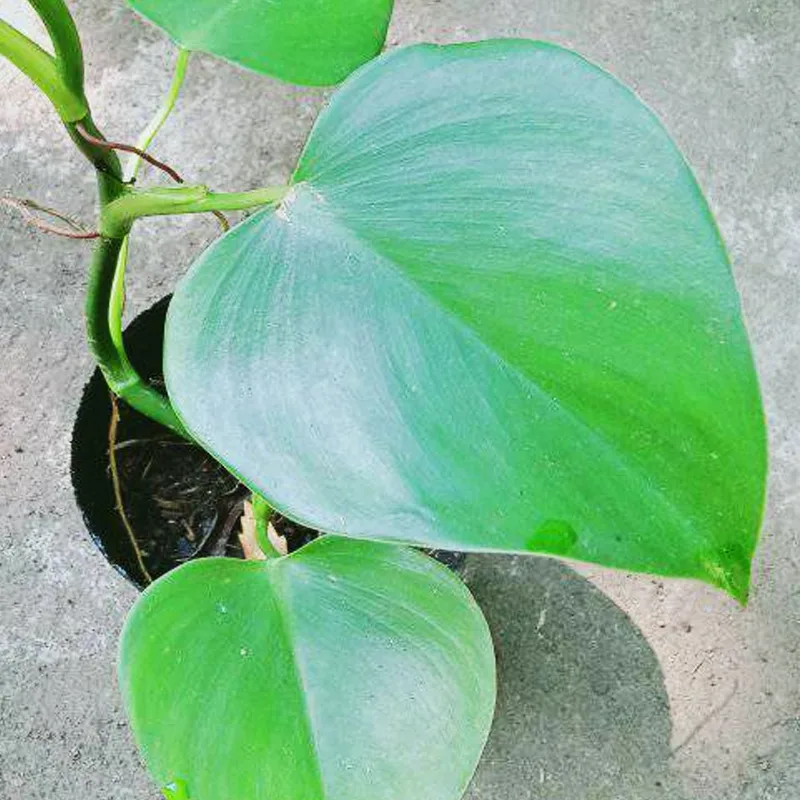
VC (Cotyledon) stage. This stage is marked by the unrolling of the first pair of unifoliate leaves, located on the first node just above the cotyledons. A leaf is considered “fully developed” when the leaf at the node directly above it has expanded to the point where its leaflet edges are no longer touching. These first leaves are unique; all subsequent true leaves will be trifoliate, or compound leaves with three leaflets.
The Green Sprout: Month 2
The initial period of anticipation has passed, and the garden is now a vibrant sea of green. The young plants, once just a pair of cotyledons, have begun to produce their first true leaves. The distinctive trifoliate clusters are a welcome sight, a clear signal that the plants are healthy and growing vigorously. Each new node that appears is a step forward, and I spend time checking the roots for the tell-tale nodules that signify a healthy partnership between the plant and the soil. This is the period of establishing the plant’s structural foundation, a time when its energy is focused entirely on growth and building a robust canopy.
The Engine of Vegetative Growth
The soybean’s vegetative growth continues in a predictable progression. The stages that follow VC are designated numerically as V1, V2, V3, and so on, up to V(n), where (n) represents the number of nodes on the main stem with a fully developed trifoliate leaf. A new node can appear every 3 to 5 days up to the V5 stage, and every 2 to 3 days thereafter, depending on the variety and environmental conditions. In determinate soybean varieties, most of this vegetative growth is completed before flowering begins, while indeterminate varieties continue to grow during the reproductive phase.
A critical biological process that defines the vegetative stage is the plant’s ability to fix atmospheric nitrogen. As a legume, the soybean forms a symbiotic relationship with soil-dwelling bacteria known as Bradyrhizobium japonicum. These bacteria colonize the roots, forming small, visible nodules that become functional and begin fixing nitrogen around the V2 stage. These nodules act as miniature factories, converting atmospheric nitrogen (
N2) into a form the plant can readily use. This ability is a major reason why soybean is such a valuable crop, as it reduces the need for supplemental nitrogen fertilizers and can improve soil fertility for subsequent crops in a rotation.
This natural process, however, is not without its nuances. The plant’s ability to fix nitrogen can be inhibited by an overabundance of available nitrate in the soil. Research has shown that a large amount of soluble nitrogen can cause soybean plants to cease forming nodules, or at least reduce their efficacy. This means that applying conventional nitrogen fertilizers too early can be counterproductive, as it hinders the plant’s innate ability to produce its own nitrogen. Modern agricultural technology has adapted to this biological reality with the development of controlled-release fertilizers, such as ESN. These products are designed to provide additional nitrogen during later, pod-filling stages, when the plant’s demand is high, without interfering with the crucial initial nodule formation and nitrogen fixation process.
Early in the season, young soybean plants must also contend with a range of diseases that can affect stand establishment and health. Common early-season threats include seedling diseases like Pythium and Phytophthora root and stem rot, as well as bacterial blights. These diseases are often favored by cool, wet conditions. Management strategies for these challenges are often preventative and begin before the seeds are even in the ground. The use of fungicide seed treatments, for example, is a widely recommended practice to prevent disease development and ensure that seedlings emerge evenly and develop a strong root system. Improving soil drainage, a fundamental cultural practice, can also help mitigate diseases that thrive in cold, wet soils.
Table 1: Key Soybean Growth Stages – A Comprehensive Lifecycle Guide
| Stage | Abbreviated Stage Title | Description of Key Marker |
| Vegetative Stages | ||
| VE | Emergence | Cotyledons are above the soil surface. |
| VC | Cotyledon | The first pair of unifoliate leaves have unrolled so their edges are no longer touching. |
| V(n) | nth-node | ‘n’ number of nodes on the main stem have fully developed trifoliate leaves, beginning with the unifoliate nodes. |
| Reproductive Stages | ||
| R1 | Beginning Bloom | One open flower is present at any node on the main stem. |
| R2 | Full Bloom | An open flower is present at one of the two uppermost nodes on the main stem with a fully developed leaf. |
| R3 | Beginning Pod | A pod is 5 mm long at one of the four uppermost nodes on the main stem with a fully developed leaf. |
| R4 | Full Pod | A pod is 2 cm long at one of the four uppermost nodes on the main stem with a fully developed leaf. |
| R5 | Beginning Seed | A seed is 3 mm long in a pod at one of the four uppermost nodes on the main stem with a fully developed leaf. |
| R6 | Full Seed | A green seed fills the pod cavity at one of the four uppermost nodes on the main stem with a fully developed leaf. |
| R7 | Beginning Maturity | One normal pod on the main stem has reached its mature pod color (brown or tan). |
| R8 | Full Maturity | 95% of the pods have reached their mature pod color. |
The Flowering Season: Month 3
The garden has undergone a transformation. The dense, green canopy is now dotted with the delicate, self-fertilizing flowers of the soybean plant, which are typically white or a shade of purple. This is the plant’s reproductive phase, a pivot from pure vegetative growth to the critical task of producing fruit. Hot summer days dominate the calendar, and the plants are thirsty. As I tend to the crop, I know that this period is a delicate balance. Too little water now, and the plant’s promise of a rich harvest could be broken.
The Reproductive Push
The transition from vegetative to reproductive growth is a monumental event in the soybean’s lifecycle. It is primarily determined by day length, but temperature also plays a significant role. The process that triggers flowering happens faster at higher temperatures, meaning warm nights can result in earlier blooming. The reproductive stages (R) are marked by the development of flowers, pods, and seeds, with each stage requiring a specific set of characteristics to be met by at least 50% of the plants in a field.
The first reproductive stage, R1 (Beginning Bloom), begins when a single open flower appears at any node on the main stem. This flower is a complex structure, consisting of a calyx tube with five lobes, a corolla of five petals (a banner, two wings, and two keels), a single pistil, and ten stamens (nine fused and one free).
R2 (Full Bloom) follows when an open flower appears at one of the two uppermost nodes on the main stem with a fully developed leaf.
This period of flowering and the subsequent pod-filling phase are highly susceptible to environmental factors, particularly water availability. The research indicates that water applied during the R3 (Beginning Pod) through R5 (Beginning Seed) stages is vital for encouraging “flower and pod retention,” which directly increases the number of seeds per acre and, consequently, the final yield. This highlights a crucial temporal dependency: the success of a soybean crop hinges not just on initial planting conditions but on a farmer’s ability to manage water stress during a very specific, narrow window in the middle of the growing season. For soils that tend to dry out in August, a month that often coincides with this critical reproductive phase, yields can be disappointing without adequate moisture. This reality elevates soybean cultivation from a simple agricultural task to one that requires sophisticated, time-sensitive management.
As the plants flower, they also become vulnerable to a new set of threats. Foliar diseases, caused primarily by fungi and bacteria, become more prevalent in wet, cloudy weather. While many, such as bacterial blight and downy mildew, are typically of minor importance and rarely cause significant yield loss, others, like frogeye leaf spot and soybean rust, can be yield-limiting if they develop early and conditions are favorable. For this reason, management strategies often involve the preventative application of foliar fungicides, particularly at the R3 stage, before lesions have a chance to develop.
The Pod’s Promise: Month 4
The season is drawing to a close, and the most critical phase of the plant’s life is underway. The flowers have given way to plump, fuzzy pods that are swelling with the promise of beans. The plants are heavy and their stems are bending under the weight of their fruit. My focus now is on the maturation of these seeds, a race against time to ensure they reach their full potential before the first frost of autumn. The lush green of the canopy is beginning to fade, and the leaves are showing the first signs of yellowing—a signal that the plant is nearing the end of its life, and the harvest is close at hand.
Maturation and the Path to Harvest
The pod and seed development stages are meticulously categorized, each one marking a significant step toward maturity. R3 (Beginning Pod) is defined by the presence of a 5 mm pod on one of the top four nodes with a fully developed leaf. This is followed by
R4 (Full Pod), where a 2 cm pod is present at the same location, marking the beginning of the most crucial period for plant development and yield determination. This period is characterized by rapid pod and seed growth. The
R5 (Beginning Seed) stage is reached when a seed is 3 mm long in a pod, beginning a period of rapid seed fill. Stress at this stage, such as drought, can result in aborted seeds. The
R6 (Full Seed) stage is achieved when a green seed fills the pod cavity. By this stage, most of the plant’s nutrients have been taken up.
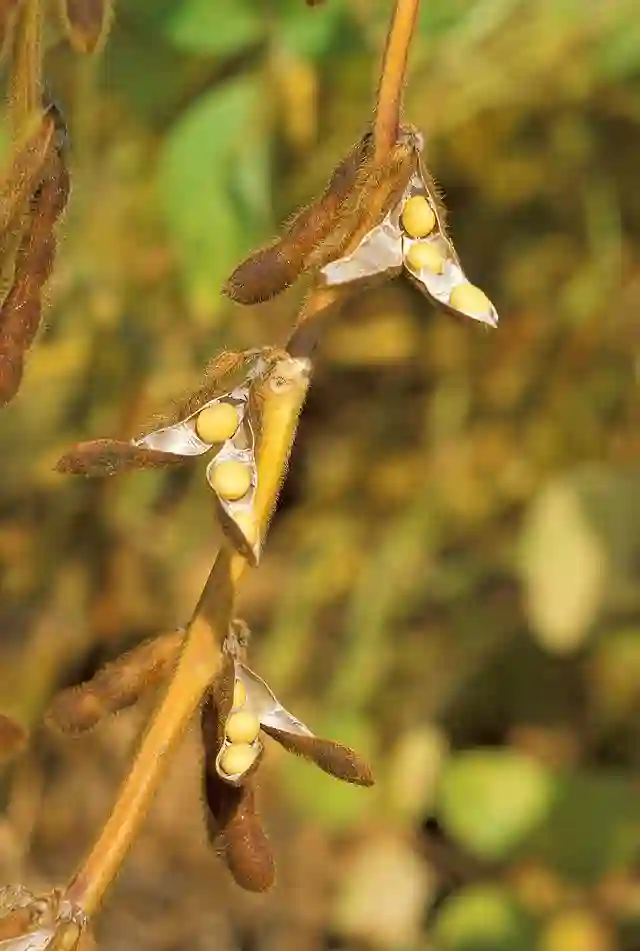
The final two stages of the plant’s life are dedicated to maturity and dry-down. R7 (Beginning Maturity) is defined as the point when one normal pod on the main stem has reached its mature pod color, and rapid leaf yellowing begins. This stage is synonymous with “physiological maturity,” meaning the seed has attained its maximum dry weight and no further dry matter will be accumulated. The period between R7 and R8 is a “dry-down” phase, where seed moisture decreases from approximately 60% to about 13%. This distinction between physiological maturity and full maturity is critical for understanding the impact of a fall frost. A frost or freeze that occurs after the R7 stage will have minimal impact on the final yield, as the seeds have already reached their maximum weight. In contrast, a frost that arrives before R7 can still be devastating. The final stage,
R8 (Full Maturity), is reached when 95% of the pods have turned their mature pod color, typically brown or tan.
Even in these final stages, the plants face challenges. One notable issue is “green stem syndrome,” a condition where the stem remains green at full maturity, often linked to an abnormally low pod or seed set. This can complicate mechanical harvest. Another persistent threat is the Soybean Cyst Nematode (SCN), a microscopic, soilborne pest that can cause severe yield loss. While SCN cannot be eliminated once a field is infested, its population can be managed through a combination of crop rotation with non-host crops and the strategic use of resistant soybean varieties. The nematode is notoriously difficult to contain, as it can be spread over long distances by wind, floodwater, migratory birds, and human activities that move soil on equipment and vehicles.
The Golden Harvest and Beyond: A New Beginning
The season has culminated in a successful harvest. The dry, rattling pods are a satisfying reward for the months of care. As I gather the beans, I reflect on the incredible journey of this plant, from a tiny seed pushing through the soil to a full-grown plant heavy with fruit. It is a cycle of life that has sustained cultures for millennia, but its journey does not end with the harvest. The beans I hold are a testament to the plant’s versatility, and their potential applications are as vast and varied as the history of their cultivation.
The Miraculous Versatility of Soy
The soybean is rightly referred to as a “miracle crop” due to its exceptional nutritional value and staggering versatility. It is a nutritional powerhouse, with a high concentration of protein and oil. A 60-pound bushel of soybeans yields approximately 48 pounds of protein-rich meal and 11 pounds of oil. Soybeans contain significant amounts of high-quality proteins (~40%) and oil (~18%), as well as valuable phytochemicals, soluble fibers, and micronutrients like B vitamins, iron, zinc, and potassium. Unlike most plant proteins, soy is a complete protein, meaning it contains all nine essential amino acids necessary for muscle and bone growth and repair.
Table 2: Nutritional and Health Profile of a Half-Cup of Soybeans
| Nutrient | Amount |
| Calories | 148 |
| Protein | 15.5 g |
| Total Fat | 7.5 g |
| Carbohydrate | 7 g |
| Fiber | 5 g |
| Calcium | 88 mg |
| Iron | 4.4 mg |
| Potassium | 443 mg |
| Zinc | 1 mg |
| Folate | 46 mcg |
Beyond its basic nutritional profile, the consumption of soy has been linked to numerous health benefits. Clinical studies have shown that it can help reduce LDL (“bad”) cholesterol, lower the risk of heart disease, and slow bone loss in postmenopausal women. The plant compounds known as isoflavones, or phytoestrogens, are often at the center of discussions about soy’s health impacts. It is important to note that soyfoods do not contain estrogen; the term “phytoestrogen” simply refers to plant compounds that can have a weak, estrogen-like effect. Extensive clinical evidence indicates that consuming soy does not cause “feminization” or impair fertility in men, and it has even been linked to a lower risk of prostate cancer. For women, the effect is nuanced and depends on their current hormonal state, but research consistently shows that consuming soy, particularly during childhood and adolescence, may offer significant protection against breast cancer. For breast cancer survivors, research indicates that soyfoods are safe and may even be beneficial, with one study showing that consuming at least 10 milligrams of soy isoflavones per day was linked to a 25% lower chance of cancer recurrence.
The story of the soybean’s utility extends far beyond food and human health. While traditionally a staple in East Asian cuisines for products like tofu, soy milk, miso, and soy sauce, a significant portion of the global crop is now used for other purposes. In fact, the livestock industry is the largest consumer of soybean meal, with 97% of U.S. soybean meal being used to feed pigs, poultry, and cattle. However, a more recent and rapidly growing chapter in the soybean’s story is its role as a sustainable alternative to petrochemicals. The sheer breadth of modern industrial uses for soy demonstrates a major thematic shift in global industry: the move away from petroleum-based products toward a bio-based, sustainable economy. This transition is being driven by a growing demand for environmentally responsible solutions. The following table provides a glimpse into the diverse, expanding world of soy-based products.
Table 3: The Expanding World of Soy: Industrial and Consumer Uses
| Category | Examples of Soy-Based Products and Applications |
| Biofuels & Energy | Biodiesel, a clean-burning renewable fuel. Industrial lubricants, hydraulic fluids, and greases. |
| Adhesives & Coatings | Formaldehyde-free plywood and furniture adhesives. Low-VOC paints, varnishes, and inks. Concrete protectants that extend the life of surfaces. |
| Plastics & Ink | Biodegradable plastics and packaging, including drinking straws. Soy-based printing ink for newspapers and magazines that produces more accurate colors and is easier to recycle. |
| Rubber & Textiles | Petroleum oil replacements in tire manufacturing to improve flexibility and durability. Soy protein fibers as a soft, breathable, and biodegradable alternative to synthetic fabrics. |
| Cleaning & Cosmetics | Soy-based solvents for industrial cleaning that are effective without using harsh chemicals. Ingredients in cosmetics and beauty supplies. |
The market breakout of soybean oil reflects this trend, with an estimated 50% going to fuel, 45% to food, and 5% to industrial applications. This data illustrates a clear connection between consumer values and agricultural product development. As the world demands more environmentally friendly alternatives, research and innovation supported by organizations like the U.S. Soy checkoff program continue to bring new soy-based products to market, cementing the plant’s role at the forefront of a greener, more sustainable future. From its ancient roots as a food staple to its modern role as a cornerstone of the bio-economy, the story of
Glycine max is one of enduring utility and remarkable adaptability.

If i die, water my plants!