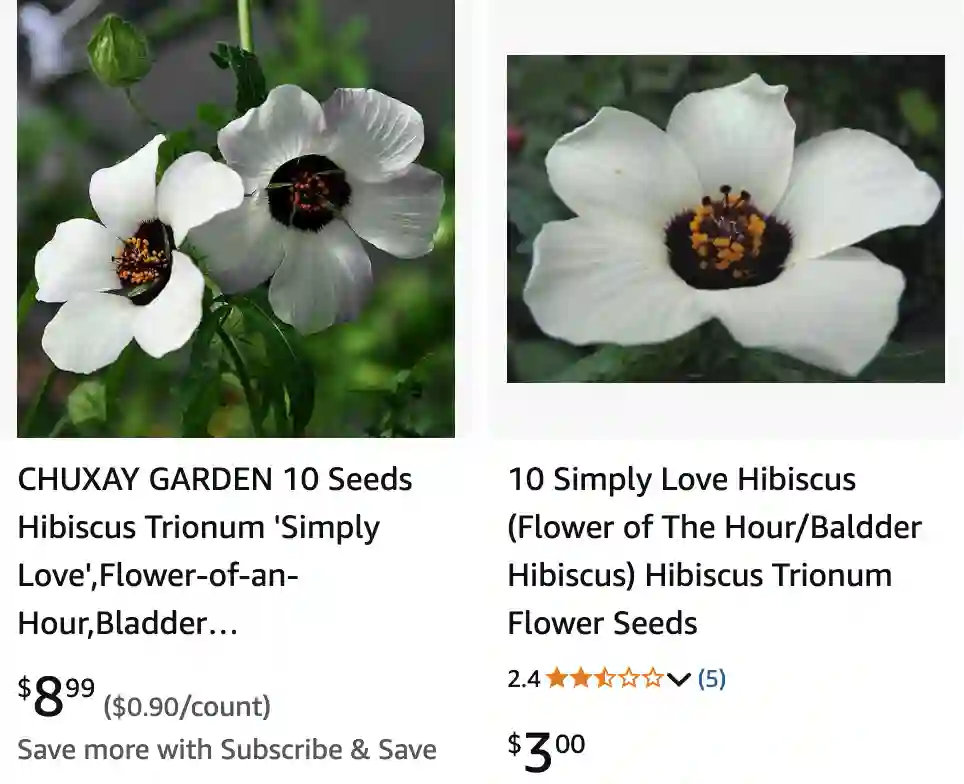
Hibiscus Trionum—also known as Flower-of-an-Hour or Bladder Hibiscus—has always intrigued me. With its papery pale yellow petals, a dark maroon throat, and its brief yet captivating bloom time, it stands out in the garden. But the more I’ve grown and studied it, the more questions I’ve encountered. In this article, I’ll address the most common FAQs about Hibiscus Trionum based on my personal experiences and research.
What Is Hibiscus Trionum?
Hibiscus Trionum is an annual or short-lived perennial herbaceous plant in the Malvaceae family. It’s native to parts of the Mediterranean and Africa but has naturalized in North America, Asia, and Australia. The plant grows about 20 to 50 cm tall, with distinct deeply lobed leaves and inflated seed pods—hence its nickname “Bladder Hibiscus.”
This species thrives in full sun, prefers well-drained soils, and tolerates poor fertility. It blooms from mid-summer to early fall. Each flower opens for only a few hours during the day, adding mystery to its allure. Its ephemeral blooms are a spectacle that I enjoy every season.
Is Hibiscus Trionum a Weed?
This is one of the most frequent questions I get—and it’s a valid one. The answer is: it depends.
In cultivated garden beds, Hibiscus Trionum can be a charming ornamental. However, in agricultural fields and unmanaged areas, it may behave invasively. Its prolific seed production, fast growth, and tolerance to poor soils enable it to colonize disturbed lands.
Farmers and land managers in some regions of the U.S. consider it a weed, especially in row crops and pastures. Still, it’s not classified as a noxious weed in most places. In my own garden, it has never gotten out of control, but I do monitor it closely.
How Do You Grow Hibiscus Trionum?
I’ve grown Hibiscus Trionum both from seeds and by letting it self-sow naturally. Seeds germinate quickly when sown directly in the soil after the last frost. They don’t require stratification.
I prefer planting them in full sun with average garden soil. Avoid overwatering. Once established, the plant is drought-tolerant. It doesn’t need much care, and I rarely fertilize it. However, deadheading spent blooms helps maintain a neat appearance and prevents unwanted self-seeding.
Does Hibiscus Trionum Attract Pollinators?
Yes! Bees, particularly native solitary bees and hoverflies, are regular visitors to its flowers. I’ve even seen small butterflies hovering around it. Because the flowers bloom for such a short time each day, it creates an intense burst of activity in a short window.
Pollination is crucial for seed development, and since the flowers are open for only a few hours, attracting pollinators becomes a biological race. The urgency is fascinating to observe.
Is Hibiscus Trionum Edible or Medicinal?
While Hibiscus Trionum belongs to a family known for medicinal uses—like Hibiscus Sabdariffa—this species isn’t widely used for food or health remedies. That said, its seeds have been used in traditional folk medicine in some cultures. I haven’t used it this way myself, and I’d recommend caution and further research before considering ingestion or topical use.
How Do You Control Its Spread?
Hibiscus Trionum spreads mostly by seed. If you don’t want it to naturalize in your garden or nearby areas, the key is to deadhead before seed pods mature. I collect the seed pods when they dry and store them in paper envelopes for the next season.
If it becomes invasive, shallow hoeing before flowering works well. Its roots aren’t deep. I’ve also mulched heavily around beds where I don’t want it to spread.
Is It Good for Companion Planting?
In my experience, Hibiscus Trionum works well as a filler in flower beds and wildflower meadows. It doesn’t compete aggressively with other plants. I’ve grown it alongside Cosmos, Coreopsis, and Zinnias. The visual contrast is striking, and pollinators benefit from the mixed buffet.
Final Thoughts
Hibiscus Trionum is one of those plants that straddles the line between wildflower and weed. In the right setting, it’s a unique and low-maintenance ornamental with ecological benefits. In the wrong spot, it might become an uninvited guest.
If you’re a curious gardener like me, Hibiscus Trionum is worth a try—but keep an eye on it. With a bit of control and observation, it adds seasonal magic to the garden without becoming a burden.

If i die, water my plants!