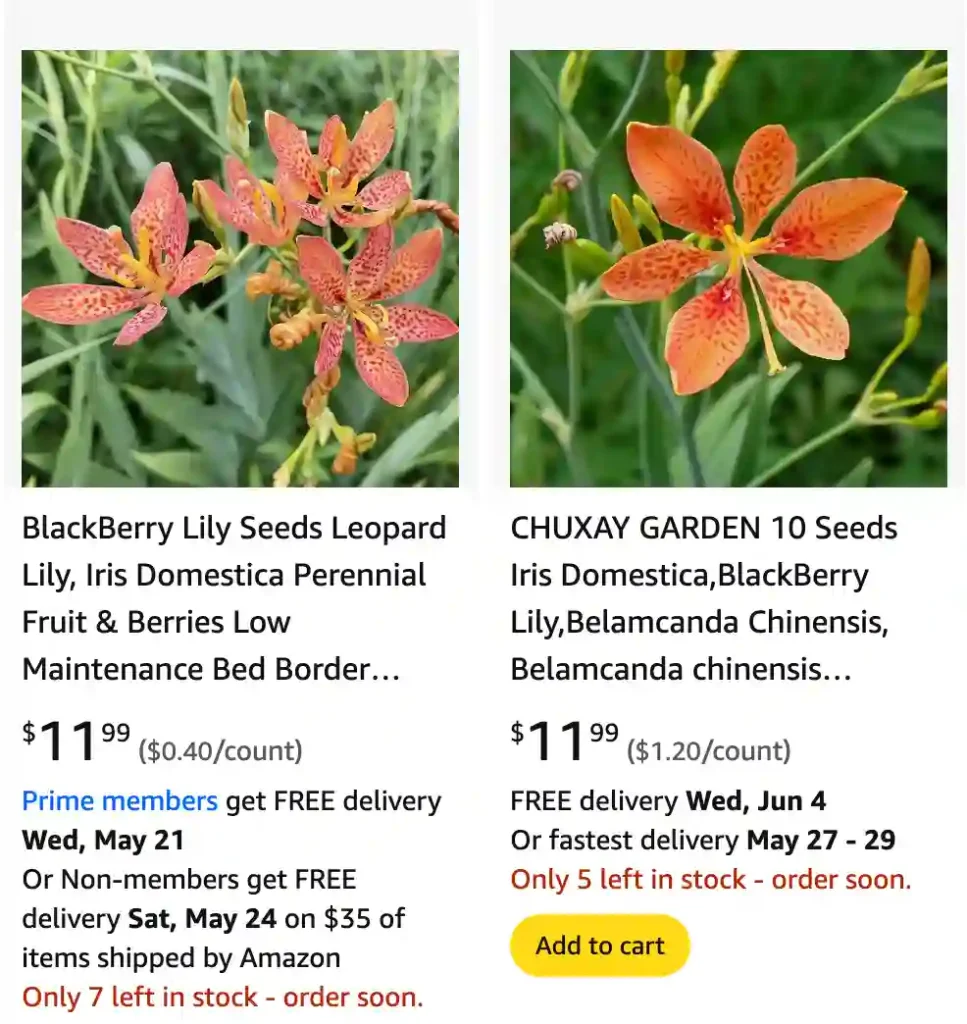
Iris Domestica, once known as Belamcanda Chinensis, is a plant I’ve grown and admired for years. Known as the Blackberry Lily, this species is part of the Iridaceae family and adds a unique flair to any garden. Its vibrant orange flowers with red speckles and later, seed heads that resemble blackberries, make it both ornamental and surprising. Here’s what I’ve learned over time and the answers to questions I often get.
332 Species in Genus Iris
What Is Iris Domestica?
Iris Domestica is a herbaceous perennial native to East Asia, especially China and Japan. It’s not a true lily but belongs to the Iris genus. It grows about 2 to 4 feet tall and features sword-like foliage. The flowers appear in midsummer, typically July or August, followed by shiny black seed clusters in the fall.
Is Iris Domestica Easy to Grow?
Absolutely. This plant is low-maintenance, drought-tolerant, and resilient. It thrives in full sun but can tolerate light shade. I’ve grown it in USDA zones 5 through 10 without much trouble. It prefers well-drained soil, and once established, it hardly needs supplemental water. It’s perfect for borders, wildflower gardens, and even xeriscaping.
How Does Iris Domestica Compare to Daylilies?
A lot of people ask me how Iris Domestica compares to Hemerocallis (Daylilies), and here’s what I’ve noticed:
- Bloom Time: Both bloom in summer, but Daylilies may offer a longer bloom period.
- Foliage: Iris Domestica has more sword-shaped leaves, closer to true Irises.
- Seeds: The blackberry-like seed pods set Iris Domestica apart. Daylilies don’t have this ornamental fruit.
- Care Needs: Daylilies might be a little hardier in tough clay soils. Iris Domestica prefers better drainage.
Can Iris Domestica Be Used Medicinally?
Traditionally, yes. In Chinese medicine, the root of Belamcanda (its former name) was used to treat sore throats and respiratory issues. That said, I grow it for beauty, not medicine. If you’re considering using it medicinally, consult a professional herbalist.
Is It Invasive or Aggressive?
In my experience, no. It self-seeds but not aggressively. If you don’t want it to spread, simply deadhead the flowers before seed pods develop. The seeds drop and germinate easily, so be mindful if you’re growing it near native plant areas.
How Do I Propagate Iris Domestica?
There are two simple methods: seed and division.
- From Seed: Sow in fall for natural stratification or cold-stratify indoors. They’ll germinate in spring.
- By Division: Split the rhizomes in spring or early fall. This keeps clumps healthy and manageable.
I’ve had good luck with both methods, but seed propagation is slow. It can take 1–2 years before the plants flower.
How Does Iris Domestica Compare to Traditional Irises?
Although it carries the Iris name now, it behaves quite differently.
- Growth Form: Most irises grow from rhizomes, and Iris Domestica does too, but it resembles lilies more than bearded Irises.
- Flower Shape: Traditional Irises have complex, three-petal falls and standards. Iris Domestica has six flat tepals that form a star-like bloom.
- Fruiting: Most irises don’t form fleshy fruit. Iris Domestica forms striking black seed clusters, adding year-round interest.
Can I Grow Iris Domestica in Containers?
Yes, and I’ve done it many times. Choose a deep container with drainage holes. Use well-draining potting soil. Container-grown plants may not get as tall, but they’ll still flower beautifully. Water regularly but avoid soggy soil.
Are There Any Pests or Diseases?
Few. Iris Domestica is quite resistant. Sometimes you’ll see:
- Aphids in spring.
- Leaf spot in humid climates.
I rarely treat mine. Good air circulation and avoiding overhead watering keep problems at bay.
How Does Iris Domestica Fit into Garden Design?
It’s incredibly versatile. Here’s how I use it:
- Back of border: Tall enough to provide structure.
- Cut flower gardens: The blooms are short-lived but striking.
- Wildlife gardens: Pollinators love it.
The visual progression from flower to fruit adds seasonal interest, which is rare for herbaceous perennials.
Final Thoughts
Iris Domestica is one of those plants that surprises you. It starts as an exotic flower and ends as a plant with bold, architectural seed pods. It’s easy, striking, and full of character. Whether you’re a collector or a beginner, I recommend giving it a place in your garden.
If you want a tough, showy, and unique perennial, Iris Domestica deserves your attention.

If i die, water my plants!