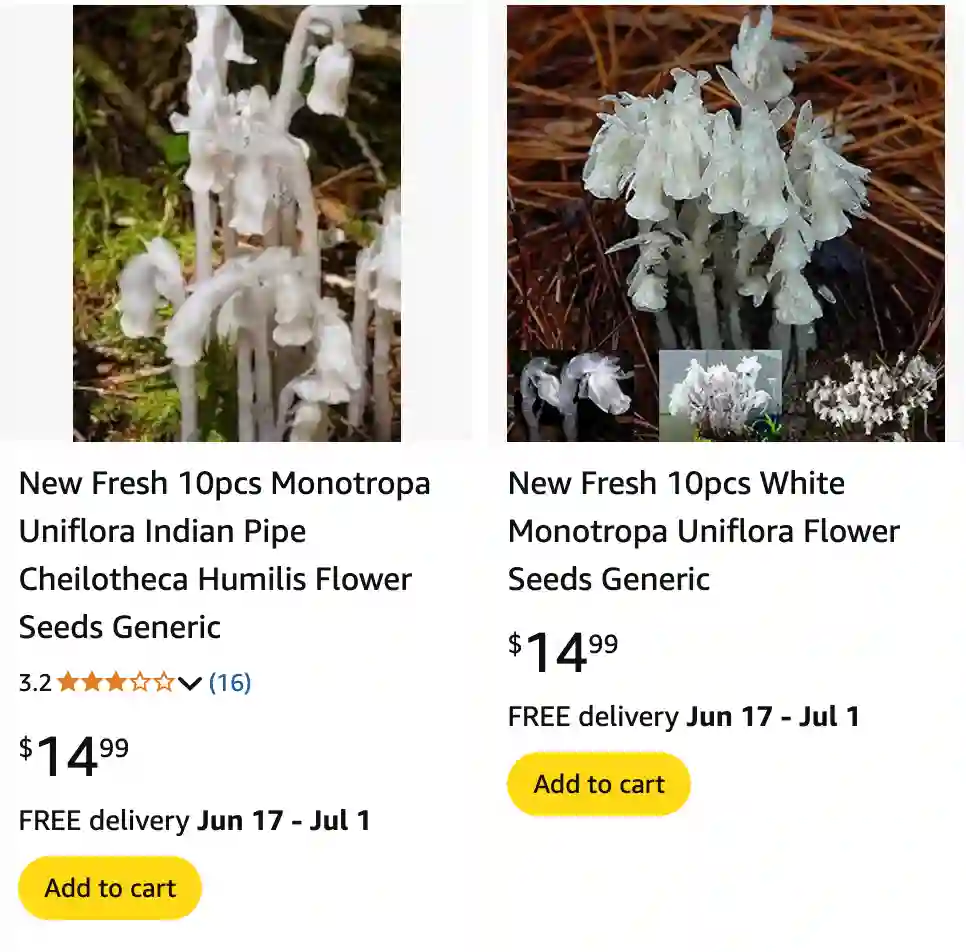
If you’re like me, intrigued by mysterious plants that don’t quite fit the typical mold, then Monotropa Uniflora is a fascinating subject. Also known as the Ghost Plant or Indian Pipe, this unique organism challenges everything you think you know about plants. I’ve spent time researching and observing it, and I’m excited to share answers to some of the most frequently asked questions about Monotropa Uniflora — from how to grow Monotropa Uniflora to whether it’s edible or can be smoked.
What Is Monotropa Uniflora?
Before diving into the FAQs, let me paint a quick picture. Monotropa Uniflora is a perennial plant that doesn’t rely on photosynthesis. Unlike most plants, it lacks chlorophyll, which is why it’s ghostly white. Instead, it’s mycoheterotrophic — it forms a symbiotic relationship with fungi, which themselves connect to tree roots. This chain allows Monotropa Uniflora to obtain nutrients indirectly from trees via fungal partners. This dependency makes it a unique botanical marvel.
How to Grow Monotropa Uniflora?
This is probably the most common question I get. Honestly, growing Monotropa Uniflora is not as straightforward as planting a flower or vegetable. Because it depends on specific fungi and trees for nutrients, cultivating it outside its natural environment is tricky.
From my research and experience, you’d need a forest-like environment with rich, moist, shaded soil. The presence of particular mycorrhizal fungi linked to hardwood trees, such as oaks or beeches, is crucial. Simply planting Monotropa Uniflora seeds or rhizomes won’t work unless the fungal partners are present and thriving.
If you want to try, focus on replicating its natural habitat: acidic, humus-rich forest floors with plenty of leaf litter and moisture. But don’t expect fast or guaranteed results — patience is key, and many attempts fail without the correct fungal network.
Where Does Monotropa Uniflora Grow?
I find this question fascinating because the distribution of Monotropa Uniflora reflects its ecological niche. It grows predominantly in temperate forests across North America, Asia, and parts of Central and South America. In the U.S., it’s commonly found in the eastern woodlands, from the Appalachian Mountains to parts of the Pacific Northwest.
Monotropa Uniflora favors shady, damp environments with abundant decaying organic matter. It’s often spotted beneath dense canopies of hardwood trees where the soil is cool and moist. If you want to spot it in the wild, visit mature forests during late summer or early fall. It emerges suddenly, often in small clusters, with its waxy white flower stalks piercing the leaf litter.
Can You Smoke Monotropa Uniflora?
I have to address this with caution. Some folklore suggests that Monotropa Uniflora has psychoactive or medicinal properties. Historically, indigenous peoples used it in various remedies, but it’s not widely documented as a smoking herb.
In my view, there’s no reliable evidence that smoking Monotropa Uniflora produces any mind-altering effects. Moreover, its safety as a smoking substance is questionable — it may even be toxic if misused. So, I strongly advise against smoking it. Instead, admire it for its rare beauty and ecological role rather than seeking psychoactive effects.
Is Monotropa Uniflora Edible?
This question pops up often, and here’s where many people get confused. Monotropa Uniflora is generally considered inedible. Because it contains compounds that could be toxic or cause stomach upset, consuming it is not recommended.
In my experience and research, no one has documented safe culinary uses for this plant. Plus, given its rarity and ecological importance, harvesting it from the wild isn’t advisable. Instead, let it be part of the forest ecosystem.
Additional Insights on Monotropa Uniflora
- Ecological Role: Monotropa Uniflora is an excellent example of the complexity of forest ecosystems. Its dependence on fungi and trees underscores the interconnectedness of organisms. It acts as an indicator of forest health.
- Reproduction: The plant reproduces through seeds, which are tiny and dust-like, relying on mycorrhizal fungi for germination. This makes natural propagation very delicate.
- Conservation: Because Monotropa Uniflora depends on old-growth forest conditions, deforestation threatens its habitat. I encourage protecting native forests to preserve such unique species.
- Appearance: Its ghostly white stems and nodding flowers are striking, making it a favorite subject for photographers and botanists alike.
Final Thoughts
Monotropa Uniflora is not your average plant. Its ghostly appearance and unusual biology make it a compelling subject for anyone interested in botany, ecology, or natural history. However, it’s also a reminder that not all plants are easy to cultivate or consume. The questions of how to grow Monotropa Uniflora, where it grows naturally, whether it’s edible, or if you can smoke it, all point to the plant’s complexity and the delicate balance it maintains with its environment.

If i die, water my plants!