Introduction: Unveiling the Allure of Monstera Adansonii Albo Variegated
In the vibrant world of houseplants, few specimens command as much attention and admiration as the Monstera Adansonii Albo Variegated. This extraordinary plant, celebrated for its striking white and green patterns and characteristic fenestrations, has become a coveted gem among serious plant collectors and enthusiasts alike. Its rarity and breathtaking aesthetic make it a true statement piece, transforming any indoor space into a tropical sanctuary.
Native to the humid rainforests of Central and South America, the Monstera Adansonii Albo Variegated thrives in conditions that mimic its natural, lush environment. While its exotic beauty might suggest a demanding nature, with the right knowledge and consistent care, this plant can flourish, rewarding its owner with spectacular foliage.
This comprehensive guide is meticulously crafted to be your definitive resource for cultivating a thriving Monstera Adansonii Albo Variegated. We will delve into every essential aspect of its care, from fundamental requirements like light, water, and humidity, to advanced techniques for optimal growth and maintaining its unique variegation. You’ll also find practical, actionable solutions for common issues, ensuring your prized plant remains healthy and vibrant. Join us as we explore the fascinating world of this rare and magnificent plant.
Monstera Adansonii Albo Variegated: A Detailed Overview
Understanding the unique characteristics and background of your Monstera Adansonii Albo Variegated is key to providing it with the best possible care.
Origin and History
Monstera Adansonii, the parent species of this variegated form, originates from the tropical rainforests spanning Southern Mexico to Panama. In its natural habitat, it is a hemi-epiphyte, meaning it begins its life on the forest floor and then climbs larger trees, anchoring itself with aerial roots to reach for sunlight.
The “Albo Variegated” designation refers to the striking white (albo) variegation (varied coloration) that occurs naturally due to a genetic mutation. While the Monstera genus was first formally documented in 1849 , the specific variegated forms like the ‘Albo’ have gained immense popularity more recently due to their unique aesthetic appeal.
Common Names and Botanical Distinctions
Monstera Adansonii is widely known as the “Swiss Cheese Vine” or “Five Holes Plant” due to its distinctive perforated leaves. The variegated form is often specifically referred to as “Monstera Adansonii Albo Variegated” or simply “Monstera Albo Adansonii.”
It’s crucial to distinguish Monstera Adansonii from other popular Monstera species, especially those with variegation:
- Monstera Deliciosa ‘Albo Variegata’: This is a variegated form of the larger Monstera deliciosa, known for its large, deeply split leaves with prominent white patches. While both have white variegation, M. deliciosa is a much larger plant with different leaf shapes and fenestration patterns compared to M. adansonii.
- Monstera Thai Constellation: A lab-created cultivar of Monstera deliciosa, characterized by stable, speckled creamy-yellow variegation that resembles a starry night sky.
- Monstera Adansonii ‘Mint’: Features subtle light green variegation, giving it a “splashed paint” appearance, distinct from the stark white of the ‘Albo’ form.
Understanding these distinctions is vital for accurate identification and providing appropriate care, as each variety may have slightly different needs.
Growth Characteristics and Size
Monstera Adansonii Albo Variegated is a vining plant that can reach heights of 1-2 feet per growing season when provided with optimal conditions. While the green
Monstera adansonii is known for its relatively fast growth, the variegated ‘Albo’ form tends to grow slower due to the reduced chlorophyll in its white sections, which limits its ability to photosynthesize efficiently.
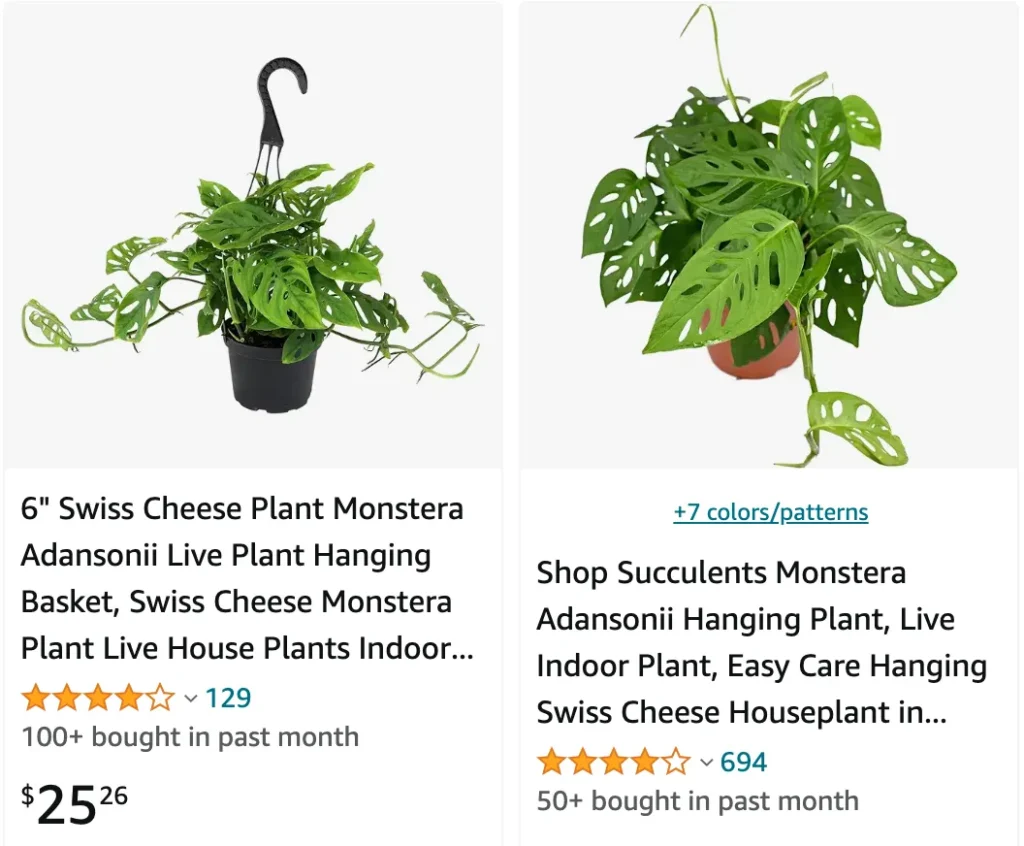
Fenestrations (Leaf Holes/Splits): The characteristic holes in the leaves of Monstera adansonii are present in the ‘Albo’ variety as well. These fenestrations develop as the plant matures and are not only visually striking but also serve a purpose in its natural habitat, allowing light to penetrate to lower leaves and helping the plant withstand strong winds. Providing climbing support like a moss pole can encourage larger leaves and more pronounced fenestrations.
Aerial Roots: Like its non-variegated counterpart, the Monstera Adansonii Albo Variegated produces aerial roots that help it cling to supports and absorb moisture and nutrients from the air. These roots are a normal and healthy part of the plant’s growth.
Toxicity and Edible Fruit
Toxicity: It is important to be aware that Monstera Adansonii Albo Variegated, like other Monsteras, contains insoluble calcium oxalate crystals in its leaves and stems. If ingested, these crystals can cause irritation, swelling, and pain in the mouth and digestive tract, leading to symptoms such as oral irritation, excessive drooling, difficulty swallowing, and vomiting. While typically not fatal, it is crucial to keep this plant out of reach of curious pets and small children.
Edible Fruit: While some Monstera species (like Monstera deliciosa) produce edible fruit when fully ripe, Monstera adansonii is not typically grown for its fruit, and its fruit is generally considered inedible or not produced in cultivation.
Rarity and Value
The Monstera Adansonii Albo Variegated is a highly sought-after and rare plant, which significantly contributes to its high market value. Prices can range from approximately $15 for a small cutting to over $350 for a rooted plant, with some larger specimens fetching even higher prices. Its rarity stems from the fact that its variegation is a natural, yet uncommon, genetic mutation that is difficult to propagate consistently on a large scale. This makes each variegated plant a unique and valuable addition to any collection.
Benefits of Growing Monstera Adansonii Albo Variegated
Beyond its stunning visual appeal, the Monstera Adansonii Albo Variegated offers several benefits for your home and well-being:
- Air Purification: Like many houseplants, it contributes to improved indoor air quality by absorbing harmful pollutants such as formaldehyde, benzene, and trichloroethylene, while releasing fresh oxygen through photosynthesis. Its large leaf surface area enhances this efficiency.
- Humidity Enhancement: Through transpiration, the plant releases water vapor into the air, naturally increasing indoor humidity levels. This is particularly beneficial in dry environments, promoting healthier skin and respiratory function.
- Mood and Productivity Boost: The vibrant presence of plants, including the Monstera Adansonii Albo Variegated, can reduce stress levels, improve mood, and promote relaxation, fostering a connection with nature. Studies suggest that having greenery in the workspace can also enhance concentration and productivity.
- Aesthetic and Decorative Value: Its impressive variegated leaves add a striking tropical and stylish element to any interior design, serving as a vibrant focal point.
- Cultural Significance: In some cultures, Monstera plants are believed to symbolize good luck, prosperity, and positive energy, aligning with Feng Shui and Vastu Shastra principles.
Comprehensive Monstera Adansonii Albo Variegated Care Guide
Providing the right environment and consistent care is paramount for your Monstera Adansonii Albo Variegated to thrive and maintain its stunning variegation.
Light Requirements
Bright, indirect light is the most critical factor for Monstera Adansonii Albo Variegated. The white sections of the leaves lack chlorophyll, making them highly susceptible to sunburn from direct sunlight, which can cause browning or bleaching. Conversely, insufficient light is the primary cause of variegation fading or new leaves emerging entirely green (reversion).
- Placement: Position your plant near an east-facing window for gentle morning sun, or a few feet away from a south or west-facing window. Use sheer curtains to diffuse intense afternoon light.
- Grow Lights: If natural light is limited, supplement with full-spectrum LED grow lights for 8-16 hours daily, ideally during daylight hours. Place them 6-12 inches above the plant.
- Rotation: Rotate the plant periodically to ensure all sides receive even light exposure and prevent leaning.
Watering Guidelines
Proper watering is crucial to prevent common issues like root rot. Your Monstera Adansonii Albo Variegated prefers consistently moist, but not waterlogged, soil.
- Frequency: Water thoroughly when the top 1-2 inches (2.5-5 cm) of soil feels dry to the touch. This typically means watering every 7-10 days, but adjust based on light, temperature, and humidity.
- Method: Water until excess drains from the pot’s drainage holes. Never let the plant sit in standing water, as this leads to root rot.
- Seasonal Adjustment: Reduce watering frequency significantly during fall and winter when growth slows.
- Water Quality: Filtered water or tap water left overnight to dissipate chlorine can be beneficial. Use room-temperature water to avoid shocking the roots.
Ideal Humidity and Temperature
Monstera Adansonii Albo Variegated thrives in high humidity, ideally 60% or higher, mimicking its tropical origins. Low humidity can cause browning or crisping of the white variegated parts of the leaves.
- Humidifier: The most effective method for consistent humidity.
- Pebble Tray: Place the pot on a tray filled with pebbles and water, ensuring the pot’s base is above the water line.
- Grouping Plants: Grouping humidity-loving plants together creates a more humid microclimate.
- Misting: Provides temporary humidity and helps clean leaves, but is not sufficient for long-term needs. If misting, do so in the morning to allow leaves to dry and prevent fungal issues.
Temperature: Maintain a warm, stable environment between 18-27°C (65-80°F). Avoid temperatures below 10-15°C (50-60°F) and sudden fluctuations or cold drafts, which can stress the plant.
Soil Mix and Repotting
Monstera Adansonii Albo Variegated requires a well-draining, airy, and nutrient-rich potting mix with high organic matter content. This ensures proper aeration for the roots and prevents waterlogging.
- Recommended Mix: A common mix includes potting soil, perlite, orchid bark, and coco coir or peat moss. The ideal pH range for the soil is slightly acidic to neutral (5.5-7.5).
- Potting: Always use pots with sufficient drainage holes. Porous materials like terracotta can be beneficial.
- Repotting: Repot every 2-3 years, or when the plant becomes root-bound (roots emerging from drainage holes or soil drying out quickly). Choose a pot only one size larger (2.5-5 cm or 1-2 inches in diameter) to avoid overpotting, which can lead to excess moisture. Spring or early summer is the best time for repotting.
Fertilization Schedule
Monstera Adansonii Albo Variegated requires regular fertilization during its active growing season to support its variegated foliage, which has less chlorophyll.
- Type: Use a balanced liquid fertilizer (e.g., NPK 5-2-3, 10-10-10, or 15-15-15) diluted to half the recommended strength.
- Frequency: Fertilize monthly or every 2-4 weeks during spring and summer.
- Dormancy: Reduce or stop fertilizing entirely during fall and winter when growth slows.
- Caution: Avoid over-fertilizing, as this can lead to chemical burn, salt buildup in the soil, and root damage. If signs of over-fertilization appear (e.g., brown leaf edges), flush the soil with water.
Support and Shaping
As a vining plant, Monstera Adansonii Albo Variegated greatly benefits from support to encourage upright growth, larger leaves, and more fenestrations.
- Methods: Use a moss pole, trellis, or sturdy stake firmly inserted into the pot.
- Shaping: Gently guide aerial roots and stems to climb the support, securing them with soft ties or velcro plant tape. Keep moss poles slightly moist to encourage aerial roots to attach.
- Aerial Roots: While beneficial, aerial roots can be managed. They can be gently directed back into the soil, placed in a vase of water (temporarily), or pruned close to the stem for aesthetics. Avoid permanent submersion in water, as this can lead to root rot.
Pruning for Health and Aesthetics
Pruning helps control the plant’s size, encourages new, bushier growth, and removes dead or damaged leaves to maintain overall health and appearance.
- Method: Always use clean, sharp scissors or pruning shears. Cut just above a node to encourage new growth points.
- Variegation: Pruning solid green leaves can encourage the plant to produce new leaves with more variegation.
- Caution: Avoid removing more than 25-33% of the total leaf mass at once to prevent stressing the plant.
Leaf Cleaning
Regularly cleaning the large, glossy leaves of your Monstera is essential. Dust accumulation can hinder light absorption and efficient photosynthesis. It also helps in early detection of pests.
- Method: Gently wipe both sides of the leaves with a clean, damp cloth or moist paper towel. For a deeper clean, a gentle shower can be used, ensuring leaves dry completely before returning to bright light to avoid sunburn.
Propagating Monstera Adansonii Albo Variegated
Propagating your Monstera Adansonii Albo Variegated is a rewarding way to create new plants, though success rates can vary due to the plant’s rarity and variegation.
Stem Cuttings Method
This is a popular and relatively straightforward method.
- Select a Cutting: Choose a healthy stem segment with at least 2-6 nodes (points where leaves meet the stem, where new roots and shoots will develop) and at least one leaf. If the cutting has an aerial root, it can improve success.
- Cut: Use clean, sharp scissors or a knife to cut about half an inch below a node, ensuring the node is on the cut piece.
- Rooting Hormone (Optional): Dip the cut end into rooting hormone powder or gel (containing auxin) to promote faster and stronger root development.
- Propagation Medium:
- Water: Place the cutting in a jar of filtered water or tap water left overnight. Change the water every few days and gently rinse roots. Roots typically appear within a month.
- Soil/Moss: Plant the cutting in a well-draining, moist potting mix or sphagnum moss, burying the node about 1 inch (2.5 cm) below the surface.
- Care: Keep cuttings in a warm, bright spot (out of direct sunlight) and maintain high humidity.
- Potting: Once roots are well-developed (at least 1 inch long), transfer the cutting to its own pot with appropriate potting mix.
Air Layering Method
This method encourages roots to form on the mother plant before the cutting is taken, often leading to a higher survival rate.
- Process: Select a node on the plant, ideally with an aerial root nearby. Make a small, shallow cut (a few millimeters deep) on the stem just below the node. Wrap the cut, aerial root, and node with a thick layer of moist sphagnum moss, then tightly wrap with plastic wrap. Secure with string or twist ties.
- Care: Keep the moss moist by misting daily until new roots begin to grow through it (this can take several months).
- Cut and Plant: Once roots are sufficiently developed, cut the stem below the rooted node and plant the new rooted section directly into soil.
Troubleshooting Common Care Issues
Your Monstera Adansonii Albo Variegated often “communicates” when something is amiss through changes in its leaves. Understanding these signs helps in timely diagnosis and correction.
Leaf Spotting and Discoloration
- Yellowing Leaves:
- Causes: Most commonly due to improper watering (overwatering causes older, lower leaves to yellow and become mushy; underwatering causes yellowing throughout the plant with crispy texture). Other causes include insufficient light , nitrogen deficiency , or pests.
- Solutions: Adjust watering frequency, ensuring soil dries out between waterings. Provide bright, indirect light. Apply a balanced fertilizer if nutrient deficiency is suspected. Inspect for and treat pests if present.
- Browning Leaves/Crispy Brown Tips:
- Causes: Often due to low humidity , underwatering , or too much direct sunlight causing leaf burn, especially on white parts . Can also be caused by fertilizer burn .
- Solutions: Increase humidity (humidifier, pebble tray). Adjust watering schedule to ensure soil doesn’t dry out too long. Move plant out of direct sunlight. If due to fertilizer, flush the soil with water.
- Drooping/Wilting Leaves:
- Causes: Can be due to both overwatering or underwatering. Also possibly due to root shock from moving/repotting, insufficient light, or excessively cold temperatures.
- Solutions: Check soil moisture thoroughly and adjust watering schedule. Ensure bright, indirect light and stable warm temperatures, away from cold drafts.
Growth Issues
- Slow Growth:
- Causes: Heavy variegation levels (less chlorophyll) , insufficient light , improper watering , nutrient deficiency , root-bound , or cold temperatures.
- Solutions: Provide ample bright, indirect light (supplement with grow lights if needed). Optimize watering and fertilization. Repot if root-bound. Maintain warm temperatures.
- Losing Variegation (Reversion):
- Causes: Primarily severe lack of light , but also stress from sudden environmental changes (temperature/humidity) , age , or genetic factors.
- Solutions: Ensure consistent bright, indirect light. Prune off any solid green leaves to encourage variegated growth. Understand that variegation can be unstable and patterns may vary.
Pest and Disease Control
Monstera Adansonii Albo Variegated is generally robust, but can be susceptible to common houseplant pests and diseases. Regular inspection is key for early detection and treatment.
- Common Pests:
- Mealybugs: White, cottony masses on stems and leaves. Suck sap, causing yellowing.
- Treatment: Dab with cotton swab dipped in 70% isopropyl alcohol. Spray with insecticidal soap or neem oil.
- Spider Mites: Tiny, causing stippling (white spots) and fine webbing.
- Treatment: Increase humidity. Forcefully spray leaves with water. Use insecticidal soap or neem oil weekly.
- Thrips: Small, slender insects causing translucent patches on leaves.
- Treatment: Use blue sticky traps. Spray with neem oil or insecticidal soap.
- Fungus Gnats: Small flying insects, larvae in moist soil.
- Treatment: Allow topsoil to dry between waterings. Use yellow sticky traps. Hydrogen peroxide solution for larvae. Layer of sand on soil surface.
- Mealybugs: White, cottony masses on stems and leaves. Suck sap, causing yellowing.
- Common Diseases:
- Root Rot: Yellowing leaves, mushy stems, foul odor from soil. Caused by overwatering/poor drainage.
- Treatment: Remove plant, trim rotted roots, repot in fresh, well-draining soil. Adjust watering.
- Bacterial Leaf Spot: Dark brown spots with yellow border, sticky ooze.
- Treatment: Avoid low temperatures, overcrowding, increase air circulation.
- Anthracnose (fungal): Yellowing along leaf edges, progressing to brown.
- Treatment: Avoid misting and wounding leaves.
- Rust Fungus: Can be caused by overwatering, insufficient light, high humidity, poor air circulation, un-sanitized tools, or transfer from other plants.
- Treatment: Adjust watering/light, remove affected leaves, use neem oil or fungicides.
- Root Rot: Yellowing leaves, mushy stems, foul odor from soil. Caused by overwatering/poor drainage.
General Prevention: Provide optimal care conditions (light, water, nutrients, humidity, air circulation). Regularly inspect plants and quarantine new ones. Clean leaves regularly.
Conclusion
The Monstera Adansonii Albo Variegated is a truly captivating and rewarding plant for any enthusiast. Its unique white and green variegation, combined with its distinctive fenestrated leaves, makes it a highly prized addition to indoor plant collections. While its rarity and specific needs might seem daunting, with the comprehensive care guidelines outlined in this guide, you are well-equipped to cultivate a healthy and thriving specimen.
By consistently providing bright, indirect light, balanced watering, high humidity, and a well-draining soil mix, you can ensure your Monstera Adansonii Albo Variegated maintains its stunning foliage and continues to grow. Understanding how to troubleshoot common issues and effectively propagate new plants will further enhance your success as a plant parent.
Embrace the journey of caring for this magnificent plant, and it will undoubtedly reward you with its lush beauty and the satisfaction of nurturing a truly special living masterpiece.

If i die, water my plants!