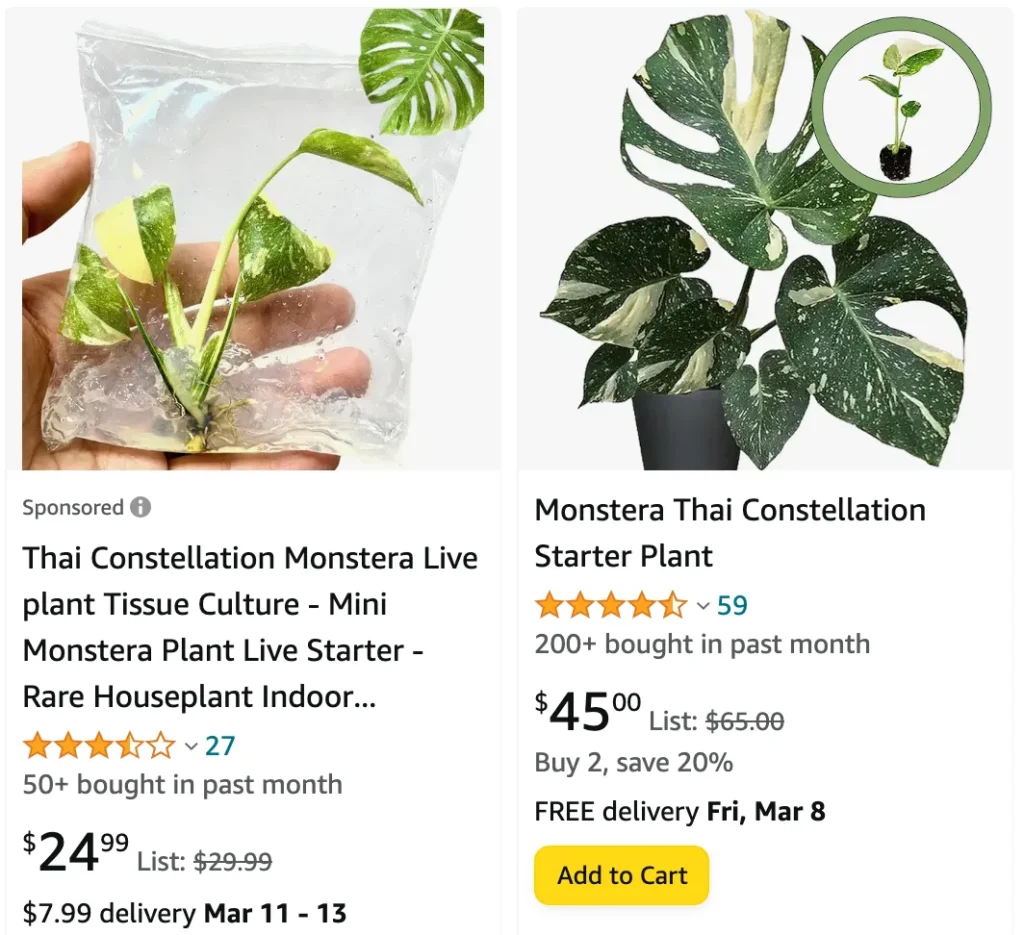
The Monstera deliciosa ‘Thai Constellation’ is a highly sought-after variegated plant, distinguished by its creamy-white, star-like speckles on glossy green leaves. Developed through advanced tissue culture techniques in Thailand, its unique beauty and laborious propagation process contribute to its rarity and premium market value. This report provides an in-depth guide to its characteristics, comprehensive care, propagation methods, common issues, and market dynamics, offering essential insights for successfully cultivating this botanical masterpiece.
1. Introduction to Monstera Thai Constellation: A Celestial Beauty
1.1. What is Monstera deliciosa ‘Thai Constellation’?
The Monstera Thai Constellation, scientifically known as Monstera deliciosa ‘Thai Constellation’, is a highly coveted cultivar of the popular Monstera deliciosa species. It’s lauded for its unique, striking variegated foliage, which features creamy white and light green splatters and speckles that resemble a constellation in the night sky. This celestial beauty has captivated plant enthusiasts worldwide, making it a prized specimen in indoor plant collections.
1.2. Reasons for its High Demand
The extraordinary beauty and rarity of the Monstera Thai Constellation make it a “collector’s dream” and a “natural masterpiece”. Its unique appearance, reminiscent of a “starry night sky,” brings a touch of “celestial magic” to any space, transforming indoor gardens into an “enchanting oasis”. This distinctive appeal, combined with its limited availability, significantly contributes to its high demand and desirability among plant lovers globally.
2. Origins and Distinguishing Characteristics
2.1. Lab-Created Through Tissue Culture
The Monstera Thai Constellation is not a natural mutation found in the wild but rather a product of advanced horticultural science. It was developed through a laboratory-based process known as tissue culture, specifically originating in Thailand. This innovative technique involves carefully manipulating and nurturing small tissue samples from a mother plant under controlled laboratory conditions.
This controlled propagation method ensures that each new plant precisely replicates the desired variegation patterns and characteristics of the parent plant, guaranteeing consistency in its unique appearance. While tissue culture aims to increase accessibility, the “labor-intensive cultivation process” and “extended growth period” involved still contribute to its limited availability and premium price point.
It’s noteworthy that while tissue culture is generally seen as a method to enhance accessibility and mass-produce plants, the situation with the Monstera Thai Constellation is more nuanced. Sources indicate that the process “has made the Monstera Thai Constellation more accessible to plant enthusiasts worldwide”. However, simultaneously, the plant is still described as “expensive and rare”, and even “uncommon” in the market. This suggests that “accessibility” here means the plant can be found in the global market, rather than becoming inexpensive or widely ubiquitous. This apparent contradiction is explained by the fact that even with advanced techniques, producing mature, marketable plants is neither quick nor cheap. The tissue culture process still requires “meticulous care, selective breeding, and a prolonged growth period”. Furthermore, the plant’s inherent slow growth rate further extends the time from tissue culture initiation to market readiness. The high demand from a niche market of collectors, combined with a supply that, while increased by this sophisticated and time-consuming propagation method, remains limited, sustains its premium pricing. This highlights that the plant’s value lies not just in its aesthetic beauty but also in the significant scientific and labor investment required to create and grow it.
2.2. Unique and Stable Variegation
The most striking feature of the Monstera Thai Constellation is its distinctive variegation. The plant’s glossy green leaves are adorned with creamy white or light green patches and speckles that resemble stars, hence its evocative name.
Unlike some other variegated species where the patterns might fade or shift over time, the Monstera Thai Constellation exhibits a “relatively stable and consistent variegation pattern”. This means that the captivating creamy-white splashes on its glossy green foliage tend to remain prominent and unchanged as the plant matures, ensuring its stunning and distinctive appearance throughout its growth cycle. This stability is a significant factor in the plant’s appeal and value.
2.3. Leaf Morphology
The leaves of the Monstera Thai Constellation are large and heart-shaped. As the plant matures, these leaves develop large splits and holes, a process known as fenestration. These irregularly shaped holes and splits are believed to be an adaptation to its rainforest environment, allowing sunlight to penetrate to lower plants, creating its iconic “Swiss cheese” appearance.
2.4. Growth Habit and Rate
The Monstera Thai Constellation grows in a vining fashion. It is an “excellent climber”, utilizing aerial roots to attach itself to supports like moss poles or trellises. Providing such support encourages the development of larger leaves with more pronounced fenestrations.
While Monstera species in general can grow relatively quickly, with the potential to reach up to 2 feet per year under optimal conditions, the Monstera Thai Constellation is notable for its “slow growth rate”. This slower growth rate is attributed to its variegated foliage having less chlorophyll for photosynthesis, making it more challenging to propagate in large quantities for commercial purposes. It can take a significant amount of time before substantial new leaf growth is observed.
2.5. Rarity and Expense
The Monstera Thai Constellation is considered both rare and expensive. Several factors contribute to its premium status:
- Unique Appearance: Its distinctive and visually striking variegated foliage makes it stand out.
- Cultivation Process: The plant’s origin from a “labor-intensive cultivation process” (tissue culture) results in limited availability. Each plant represents “meticulous care, selective breeding, and a prolonged growth period”.
- Slow Growth Rate: Variegated plants, including the ‘Thai Constellation’, often grow slower than their non-variegated counterparts. This slower growth rate makes them less common and harder to mass-propagate.
- High Demand: Its unique appearance has garnered significant attention and demand from plant enthusiasts and collectors, further driving up its price.
3. Comprehensive Care Guide: Nurturing Your Thai Constellation
Cultivating a Monstera Thai Constellation demands meticulous and precise care, making it a “challenging and rewarding” endeavor. Its unique variegation, while beautiful, also makes it more sensitive compared to its all-green counterparts.
To provide a quick and accessible overview of the key care requirements, the following table summarizes the most crucial parameters:
Table 1: Quick Care Guide for Monstera Thai Constellation
| Care Factor | Requirement Description |
|---|---|
| Light | Bright, indirect (e.g., East/West window, South/West window with sheer curtain). Avoid direct sun. Needs 4-6 hours/day. |
| Temperature | Ideally 18-27°C (65-80°F), acceptable 18-30°C (65-85°F). Avoid sudden changes or drafts. |
| Humidity | Prefers 60-80% or higher. |
| Watering | Water when top 1-2 inches or top half of soil is dry. Typically 1-2 weeks/time (growing season), less in winter. Ensure good drainage. |
| Soil | Well-draining, rich in organic matter, airy mix (peat moss, perlite, orchid bark, optional charcoal/coco coir). |
| Fertilization | Balanced liquid fertilizer, diluted by half, monthly in spring/summer. Reduce in fall/winter. |
| Repotting | Approx. every 1-2 years, only slightly increasing pot size (a few centimeters). |
3.1. Light Requirements
The Monstera Thai Constellation thrives in “bright, indirect light”. An ideal placement is near an east or west-facing window, or a few feet away from a south or west-facing window with a sheer curtain. The plant needs “at least 4-6 hours per day” of adequate light.
This is crucial because the variegated portions of the plant contain less chlorophyll, which is essential for photosynthesis. Therefore, the plant needs more overall light than standard green Monsteras to photosynthesize effectively and maintain its vibrant variegation.
However, direct sun exposure, especially harsh afternoon sun, must be avoided as it can “scorch” or “burn” the delicate variegated leaves. The white spots are particularly susceptible to sunburn.
To maintain its shape and variegation, regularly rotating the plant, approximately 90 degrees each month, ensures even light exposure and helps the plant maintain its original shape as it grows towards the light. If natural light conditions are suboptimal, supplementing with a grow light placed 12-18 inches from the plant for 8-12 hours daily can be beneficial.
The primary appeal of the Monstera Thai Constellation lies in its stunning variegation. However, this beauty comes with a peculiar sensitivity. The variegated parts of the leaves have less chlorophyll, which is the pigment responsible for photosynthesis. This creates a dual demand on the plant: it needs “supplemental light” to compensate for reduced photosynthetic capability, but at the same time, these white variegated sections are “more prone to sunburn” and “sensitive to scorching” by direct light. This vulnerability further extends to “extreme temperatures” and “low humidity”.
This implies that the plant demands a very narrow and precise optimal environmental window. It needs high light intensity to maintain its vibrancy and variegation, yet it must be completely shielded from direct light to protect the white, chlorophyll-deficient areas from damage. This inherent fragility explains why care guides consistently emphasize “bright, indirect light” and the necessity of stable temperatures and humidity. The aesthetic value of the plant is inextricably linked to its higher care requirements and sensitivity. This also clarifies that any claims of the plant being “easy to grow” or “low maintenance” are inaccurate. Its beauty demands attention and specific conditions, making it a high-value specimen requiring meticulous care.
3.2. Temperature and Humidity
As a tropical plant, the Monstera Thai Constellation requires a warm and humid environment.
Temperature: The plant thrives in moderately warm temperatures, ideally between 18-27°C (65-80°F). A slightly broader range of 18-30°C (65-85°F) is also suitable, supporting both healthy growth and vibrant variegation. It is crucial to avoid sudden temperature fluctuations and drafts, as temperatures below 13°C (55°F) can cause stress and damage to the leaves and root system, with variegated sections being particularly vulnerable.
Humidity: Higher humidity levels, typically ranging from 60-80%, are preferred by the plant. While the plant “can do well indoors” without a specialized humidifier, signs of stress due to low humidity include crispy brown leaf edges (especially on the more sensitive variegated parts), curled leaves, slower growth, and difficulty in unfurling new leaves, which can result in distorted or stuck new foliage. To boost humidity, methods include using a room humidifier, regularly misting the plant, or placing the plant on a pebble tray with water.
3.3. Watering Practices
The key to watering is maintaining “moderately moist but not waterlogged soil”. The plant prefers the soil to be “slightly dry between waterings”. Water when the top 2.5 cm (1 inch) or 2.5-5 cm (1-2 inches) of the soil feels dry to the touch, or when the top half of the soil is dry.
Frequency: Typically, watering is needed every 1-2 weeks, or approximately once per week during the active growing season (spring and summer). During dormant periods in fall and winter, the growth rate slows, and watering needs decrease to every 2-3 weeks.
Important Considerations: Watering frequency must be adjusted based on environmental factors like temperature, humidity, and light exposure. Dry air causes the soil to dry faster, while humid air keeps the soil moist longer.
Drainage is Crucial: Ensure the pot has adequate drainage holes to prevent water accumulation at the root level. Excess water in the pot’s saucer should be removed. Overwatering is more detrimental than underwatering and can lead to root rot or fungal issues.
3.4. Optimal Soil Mix and Repotting
A “well-draining, organic-rich soil mix” is crucial. A versatile mix commonly includes peat moss, perlite, and orchid bark, with some opting to add a small amount of charcoal to help absorb impurities and maintain soil freshness. The inclusion of chunky materials like orchid bark and perlite creates essential air pockets that allow roots to breathe and excess water to drain freely.
Repotting: Regular repotting is necessary to maintain vigor and continuous growth, typically every 1-2 years or approximately every 2 years. When repotting, the pot size should only be increased by “a few centimeters”. Increasing the size too much means more soil that holds more water, which can lead to root rot.
3.5. Fertilization Strategies
Fertilize the Monstera Thai Constellation with a balanced liquid or water-soluble fertilizer monthly or every 4-6 weeks during its active growing season (spring and summer).
Dilution: Dilute the fertilizer “by half” to prevent over-fertilization, which can lead to salt buildup and potentially cause root damage or “fertilizer burn”. Fertilizer burn manifests as a white crust on the soil surface, brown leaf tips and edges, yellowing, or stunted leaves.
Dormancy: Reduce or avoid fertilizing during dormant periods in fall and winter when the plant’s growth rate significantly slows.
Importance: Proper nutrition is especially critical for maintaining healthy growth, as the variegated sections have less chlorophyll for photosynthesis. Lack of fertilization can manifest as smaller new leaves, slower overall growth, pale foliage, and diminishing variegation over time.
When considering the care guidelines and troubleshooting advice, it becomes clear that various factors are deeply interconnected. For instance, browning leaves can be caused by “overwatering, too much sun, and low humidity”. Root rot is directly caused by “excessive water retention in the soil due to insufficient drainage”. Salt buildup, often from over-fertilization, can lead to symptoms like “burned tips and yellowing at the leaf tips”, which might be mistaken for other issues. Spider mite infestations often signal a “hot and dry growing environment”.
This demonstrates that the plant’s health is a complex, dynamic state of equilibrium. A problem in one aspect (e.g., improper watering) can cascade into issues in other areas (e.g., root rot, nutrient deficiency). Similarly, environmental conditions (temperature, humidity) directly influence the plant’s water uptake capabilities and its susceptibility to pests. This means that addressing a single symptom without considering the holistic care regimen is often ineffective.
Therefore, successful cultivation of the Monstera Thai Constellation necessitates a comprehensive and integrated approach to care. Growers must develop keen observational skills to discern subtle signs of stress and understand the causal relationships between environmental factors and plant health. Troubleshooting requires a holistic diagnostic process, considering all potential contributing elements, emphasizing proactive adjustments and an adaptive care routine rather than a rigid checklist.
4. Growth Habit, Mature Size, and Variegation Dynamics
4.1. Growth Rate and Potential Size
The Monstera Thai Constellation is characterized by its “slow growth rate”. While Monstera species in general can grow up to 2 feet per year, the variegated ‘Thai Constellation’ typically reaches a height of around 2 feet in about two years, indicating a slower pace.
Mature Size: With proper support, such as a moss pole or trellis, this climbing plant can reach “impressive heights,” potentially growing up to 16 feet long. Its leaves can also develop to significant sizes, reaching up to 4 feet in width. This substantial mature size makes it a stunning focal point in any room.
4.2. Fenestration Development
A hallmark of mature Monstera plants, including the ‘Thai Constellation’, is the development of “large splits and holes” (fenestrations) in their large, heart-shaped leaves. These irregularly shaped holes are an adaptation that allows sunlight to penetrate to lower parts of the plant in its natural habitat.
Providing adequate support like a moss pole or trellis encourages the plant to climb, which in turn promotes the development of larger leaves with more pronounced fenestrations. This contributes to the iconic “Swiss cheese” appearance highly valued by collectors.
4.3. Maintaining Variegation
The striking creamy-white variegation is the plant’s most coveted feature. To maintain its vibrant appearance and prevent the variegation from fading, ensuring “adequate light” is crucial. As previously discussed, variegated sections have less chlorophyll and require sufficient bright, indirect light to photosynthesize effectively. Insufficient light can lead to reduced variegation.
5. Propagation Techniques: Expanding Your Collection
Propagating the Monstera Thai Constellation allows enthusiasts to expand their collection or share this unique plant. The best time to propagate is during spring or early summer when the plant is actively growing.
5.1. Stem Cuttings
Propagation via stem cuttings is the most common and effective method.
Select a Healthy Stem: Choose a “thick, well-established stem” that is mature and has fenestrations. It should have 2-3 leaves or 3-5 leaves to provide enough energy for new growth. It’s crucial to select a stem with a “good amount of white” (variegation) to ensure the new plant inherits this desired trait.
Sterilization: Always sterilize your pruning shears or gardening knife with rubbing alcohol between each cut. This prevents the transmission of bacteria or disease.
Make the Cut: Using sterilized shears, cut the chosen stem “right below a node”. A node is the point where a leaf grows from the stem and where aerial roots will eventually develop. Ensure each cutting has at least one node and a healthy leaf.
Rooting Hormone (Optional but Recommended): To encourage faster root development, apply rooting hormone (such as auxin powder) to the cut stem before planting. This stimulates cell division and root production.
Rooting Medium:
- Water Propagation: Place the cutting in a clear jar of water, ensuring the node is submerged. Roots should appear within 2-4 weeks.
- Soil or Sphagnum Moss Propagation: Insert the treated cutting 2.5-7.5 cm (1-3 inches) deep into a loose and airy propagation medium such as perlite, peat moss, or vermiculite. A well-draining soil mix is also suitable.
Environment for Cuttings: Keep cuttings in a bright, indirect light location and maintain a stable, warm environment. Water sparingly at first to prevent rot.
Gradual Acclimation: Once the cutting has developed a sturdy root system and shows new leaf growth (typically 4-8 weeks), it’s time to gradually acclimate it from the sheltered propagation environment to normal indoor conditions. This involves slowly increasing its exposure to ambient environmental conditions while monitoring for signs of stress.
Potting Up the Seedlings: After acclimation, pot up the newly propagated seedlings into individual pots with drainage holes, using a well-draining aroid potting mix. Water when the top few inches of soil are dry and fertilize very sparingly at first as the plant stabilizes.
5.2. Air Layering
Air layering is another effective propagation method. This technique involves wrapping a section of the stem with moist sphagnum moss and securing it with plastic wrap. Once roots have developed within the moss, the section is cut below the rooted area and planted in soil.
5.3. Propagation Troubleshooting
Stem Rot: If cuttings become mushy, dark, or foul-smelling before rooting, it indicates stem rot due to excessive moisture. To prevent this, always use sharp, sterilized tools, plant in airy media, and water minimally at first. Affected cuttings should be removed immediately.
No New Growth: It’s normal for cuttings to take some time to produce new leaves or roots. However, if many weeks pass without noticeable change, the propagation process may have stalled. Solutions include trying a fresh cutting, switching to a different rooting medium, using rooting hormone, avoiding overwatering, and ensuring adequate humidity and bright, indirect light.
6. Troubleshooting Common Issues: Pests, Diseases, and Environmental Stress
The Monstera Thai Constellation, while stunning, can be susceptible to various problems if its specific care requirements are not met. Prompt intervention is crucial for its health.
To aid in quickly diagnosing and addressing common issues, the following table provides a rapid reference for problems, symptoms, and solutions:
Table 2: Common Problems & Troubleshooting for Monstera Thai Constellation
| Problem | Symptoms | Solutions/Treatment |
|---|---|---|
| Overwatering | Yellowing leaves, black/brown spots, mushy stem near base, moldy smell from soil, root rot. | Reduce watering frequency, check drainage, repot with fresh soil, trim rotten roots. |
| Underwatering | Drooping, curled leaves, crispy leaf edges (especially on variegated parts), crispy brown spots, slow growth. | Increase watering frequency, ensure consistent soil moisture. |
| Excess Light Exposure | Yellowing/browning leaves (especially on variegated parts), crispy leaf edges, leaves curling inwards. | Move plant to indirect light, avoid direct sun. |
| Insufficient Light | Reduced variegation, slower growth, smaller new leaves. | Move plant to brighter spot, supplement with grow light. |
| Low Humidity | Crispy brown leaf edges (especially on sensitive variegated parts), curled leaves, slow growth, difficulty unfurling new leaves. | Use humidifier, regular misting, place on pebble tray with water. |
| Cold Stress | Damage to leaves and root system, variegated parts particularly vulnerable. | Ensure temperatures above 13°C (55°F), avoid cold drafts. |
| Salt Buildup | White crust on soil surface, brown leaf tips and edges, yellowing at leaf tips. | Reduce fertilization, proper watering, periodic soil flushing. |
| Nutrient Deficiency | Smaller new leaves, slow growth, pale foliage, reduced variegation, yellowing between veins (iron/magnesium deficiency). | Apply balanced fertilizer, check soil pH. |
| Root-Bound | Stunted growth, roots circling pot. | Repot into a slightly larger pot. |
| Spider Mites | Fine webbing on leaves, tiny moving dots, speckled or yellowing leaves. | Isolate plant, increase humidity, use natural pesticides (neem oil, soap). |
| Thrips | Silver streaks on leaves, black frass spots, distorted new growth. | Isolate plant, use appropriate pesticides. |
| Mealybugs | White, cottony insects on leaves and stems, especially at leaf axils, yellowing leaves, honeydew. | Isolate plant, remove with alcohol-dipped cotton swab, spray with neem oil/soap. |
| Scale | Hard to spot, yellowing leaves, premature leaf drop, honeydew. | Prune affected branches, spray with rubbing alcohol/natural soap/neem oil. |
| Root Rot | Yellowing leaves, mushy stem near base, black/brown, foul-smelling roots. | Remove plant from pot, trim affected roots, repot in fresh well-draining soil, reduce watering frequency. |
| Leaf Spot Disease | Spots on leaves. | (No specific treatment details in sources) |
| Mosaic Virus | (No specific symptom/treatment details in sources) | (No specific symptom/treatment details in sources) |
| Bacterial Infection | (No specific symptom/treatment details in sources) | (No specific symptom/treatment details in sources) |
6.1. Watering Issues
Overwatering: This is more detrimental than underwatering. Symptoms include yellowing leaves, black or brown spots, a mushy stem near the base, a moldy smell from the soil, and ultimately, root rot. Root rot is caused by “excessive water retention in the soil due to insufficient drainage”.
Underwatering: Symptoms include drooping or curled leaves, crispy brown leaf edges (especially on the variegated parts), crispy brown spots, and slower growth.
6.2. Light Issues
Excess Light Exposure: Indicated by yellowing or browning leaves (especially on the variegated parts), crispy leaf edges, or leaves curling inwards for self-protection. This is typically due to direct sunlight causing leaf burn.
Insufficient Light: Can lead to reduced variegation and slower overall growth.
6.3. Humidity and Temperature Stress
Low Humidity Stress: Primarily manifests through aesthetic issues that can impact plant health over time. Signs include crispy brown leaf edges (especially on the more sensitive variegated parts), curled leaves, slower growth, and difficulty in unfurling new leaves, which can result in distorted or stuck new foliage.
Cold Stress: The plant shows stress when exposed to temperatures below 13°C (55°F), which can damage leaves and the root system. Variegated sections are particularly vulnerable to extreme temperatures. Avoid cold drafts.
6.4. Soil Issues
Poor Drainage: A serious issue leading to root rot if the plant is left in waterlogged conditions.
Compacted Soil: Restricts root growth.
Improper pH Levels: Can inhibit nutrient absorption. The ideal soil pH is around 6.5 (slightly acidic to neutral).
Salt Buildup: Often caused by over-fertilization or excessive soil moisture. Symptoms include a white crust on the soil surface, brown leaf tips and edges, and yellowing at the leaf tips. Flushing the soil outdoors can help for larger pots.
Nutrient Deficiency: Can result in smaller new leaves, slower growth, pale foliage, and reduced variegation. This plant is particularly sensitive to iron and magnesium deficiencies, which can cause interveinal chlorosis (yellowing between leaf veins) even in the green sections.
Root-Bound: Occurs when the plant outgrows its current pot size, restricting growth and causing roots to circle the pot’s perimeter.
6.5. Common Pests
Spider Mites: Symptoms include fine webbing on leaves, tiny moving dots, and speckled or yellowing leaves. Infestations often signal a hot and dry growing environment.
Thrips: Look for silver streaks on leaves, black frass spots, and distorted new growth.
Mealybugs: Appear as white, cottony insects, often concentrated on leaves and stems, especially at leaf axils where sap concentration is highest. They are attracted to sweet plant sap.
Scale: Can be hard to spot but cause yellowing leaves and premature leaf drop in heavy infestations. They also leave behind honeydew, a clear sticky substance.
Pest Treatment: Isolate infected plants immediately. Promptly remove affected branches for scale. Spraying affected foliage with rubbing alcohol, natural insecticidal soap, or neem oil can be effective. Increasing humidity can help deter spider mite issues.
6.6. Diseases
Root Rot: This is the most common disease, caused by overwatering and poor drainage. Symptoms include yellowing leaves, a mushy stem near the base, and black/brown, foul-smelling roots. Treatment involves removing the plant from its pot, trimming affected roots, repotting in fresh, well-draining soil, and reducing watering frequency.
Other diseases mentioned include Leaf Spot Disease, Mosaic Virus, and Bacterial Infections.
7. Market Trends and Purchasing
7.1. Price Range and Availability
The Monstera Thai Constellation is considered an “uncommon” Monstera in the market. From March to June 2025 in U.S. online marketplaces, its average price was $29.97 USD. In the most recent quarter, the price of Monstera Thai Constellation ranged from $7.99 USD to $50.00 USD, with most sellers pricing it around $20 USD to $40 USD. The average price over the last few months in the U.S. has been approximately $36.00 USD.
The price trend for the Monstera Thai Constellation has seen significant fluctuations in the recent quarter. The average price in March was $34.37 USD (median $30), sharply dropping to $20.53 USD (median $19.99) in April (a 33% decrease). However, by May, the price surged to $56.18 USD (median $49.99), a 150% increase from the previous month. Subsequently, in June, the price dropped again by 40% to $31.28 USD (median $29.97). Despite these fluctuations, the current price of the Monstera Thai Constellation is considered reasonable and similar in cost to other plants within the Monstera genus.
7.2. Key Vendors
The Monstera Thai Constellation has been available from several websites in the U.S. over the past few months. Recent vendors include The Sill, Home Depot, The Plant Room | City’s Edge Botanicals, Walmart, Plantsome Us, and Plnts.com Usa.
Vendors rated as most affordable over the past few months include Etsy, Amazon, Orange Lake Nursery, Walmart, Thai Exotic Greenery, and Angie’s Planties. For example, Orange Lake Nursery had a lowest price of $7.99 USD and an average price of $13.63 USD, while The Sill had a fixed price of $79 USD. Walmart also offers the plant for $49.97 USD for a 5-inch pot. It should be noted that some more expensive vendors may offer larger Monstera Thai Constellation sizes, and average/median prices include plants of all sizes (wet sticks, cuttings, potted sizes).
7.3. Demand and Interest
The unique appearance of the Monstera Thai Constellation has garnered significant attention and demand from plant enthusiasts and collectors. Despite this, interest over the past year has slightly decreased compared to the previous year.
8. Conclusion
The Monstera deliciosa ‘Thai Constellation’ is truly a botanical masterpiece, celebrated for its unique and stable variegation, reminiscent of a starry night sky. Its origin through advanced tissue culture techniques in Thailand has made it accessible to enthusiasts worldwide, although its laborious propagation process and slow growth rate still maintain its rarity and premium market value.
Cultivating a Monstera Thai Constellation is both a challenging and rewarding endeavor, demanding meticulous care and a deep understanding of its specific needs. The sensitivity of its variegated sections to direct light and extreme environmental conditions necessitates a balanced and precise approach to lighting, temperature, humidity, and watering. Issues such as root rot, nutrient deficiencies, and pest infestations require keen observation and prompt intervention, underscoring the importance of a comprehensive and adaptive care regimen.
With its extraordinary beauty and unique charm, the Monstera Thai Constellation is more than just a plant; it is a living work of art that can transform any indoor space into an enchanting oasis. For enthusiasts willing to invest the necessary time and attention, nurturing this plant will bring immense joy and celestial beauty into their homes.

If i die, water my plants!