I. Introduction: The Luminous Allure of Caladium ‘Moonlight’
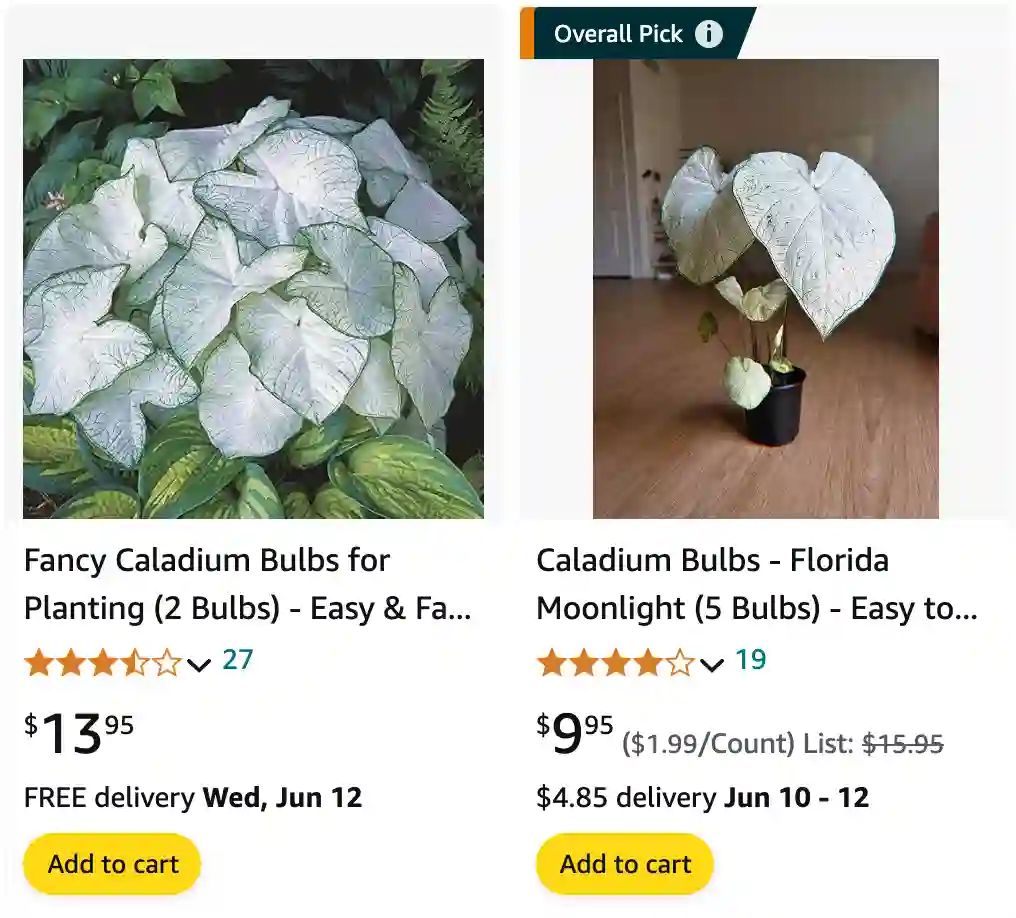
The Caladium ‘Moonlight’ captivates with its ethereal beauty, transforming any space into a realm of serene luminescence. Its striking foliage, characterized by bright white, heart-shaped leaves adorned with delicate pastel green veins and subtle pink flecks, appears to glow effortlessly, particularly when situated in shaded garden areas. This remarkable quality allows it to infuse significant color and drama into environments where many traditional flowering plants might struggle, making it an invaluable asset for both indoor and outdoor horticultural designs. The ability of ‘Moonlight’ Caladium to provide such vibrant visual interest in low-light conditions addresses a common challenge for gardeners, offering a unique and effective solution for enhancing shaded beds, borders, and containers.
Commonly known by endearing aliases such as ‘Angel Wings’ and ‘Heart of Jesus’, the widespread affection for this plant is evident in its popular nomenclature. Botanically, Caladium ‘Moonlight’ is classified as a tropical, tuberous perennial within the Araceae family, a lineage celebrated for its large, distinctive arrowhead or heart-shaped leaves.
This report invites readers to embark on a comprehensive journey, detailing the transformation of ‘Moonlight’ Caladium from a seemingly inert tuber into a vibrant, flourishing display. Through a “time lapse” narrative, the process of nurturing this plant through its full life cycle will be explored, emphasizing the rewarding experience of cultivating its unique beauty. ‘Moonlight’ distinguishes itself among Caladium varieties with its distinct white luminescent coloring and remarkably light, paper-thin leaves, which are accentuated by delicate green veins. This subtle veining contrasts notably with other white cultivars, such as ‘White Christmas’, which feature darker and more prominent veins, underscoring ‘Moonlight’s singular aesthetic appeal.
II. Botanical Deep Dive: Understanding Caladium ‘Moonlight’
Understanding the botanical underpinnings of Caladium ‘Moonlight’ is crucial for its successful cultivation. This plant belongs to the Araceae family, a diverse group known for its distinctive spathe and spadix inflorescences, and is a member of the Caladium genus. The genus is widely recognized for its large, often dramatic, arrowhead or heart-shaped leaves that serve as its primary ornamental feature.
The native habitat of Caladiums is the tropical forests of South and Central America, where they thrive in conditions characterized by high heat and humidity. This foundational ecological knowledge is paramount, as it directly explains the plant’s inherent needs and the specific care practices recommended for its cultivation. The plant’s tuberous structure and deciduous habit are evolutionary adaptations to the distinct wet and dry seasons prevalent in its natural environment, leading to its characteristic dormancy cycle. Understanding this deep ecological connection allows gardeners to move beyond simply following instructions to truly comprehending the plant’s needs, enabling more intuitive and successful cultivation by replicating optimal conditions.
The history of Caladium cultivation traces back to the 1700s, when European horticulturists began cultivating them from tubers for their striking foliage. Their popularity in the United States surged significantly after World War II, following earlier introductions such as Adolph Leitze’s efforts at Chicago’s World Fair in 1893. Today, Lake Placid, Florida, holds the distinction of being the “Caladium Capital of the World,” producing over 90% of the global supply of Caladium tubers. This remarkable commercial dominance signifies a highly concentrated and specialized industry, strongly implying that the vast majority of Caladium varieties available today, including ‘Moonlight’, are the result of extensive and deliberate breeding programs rather than simply wild selections. This industrial-scale cultivation and breeding effort has demonstrably led to the development of specific cultivars, such as the “sun-tolerant” Caladiums, which significantly expand the plant’s versatility and appeal beyond its traditional shade-loving reputation. This understanding helps a gardener appreciate the horticultural science behind the plants they cultivate.
Caladium ‘Moonlight’ is distinguished by its iconic heart-shaped, bright white leaves, which are beautifully adorned with striking pastel green veins and edges, sometimes featuring subtle pink flecks. The leaves are notably light and paper-thin, contributing to their delicate, almost translucent quality. As a tuberous perennial, it is commonly cultivated as a foliage houseplant, exhibiting a clump-forming and deciduous growth habit. The plant typically reaches an ultimate height of 0.5 to 1 meter (approximately 12-18 inches or 30-60 cm) and an ultimate spread of 0.1 to 0.5 meters (12-18 inches or 30-60 cm), usually achieving its full size within 1 to 2 years. While primarily admired for its vibrant foliage, Caladiums can produce a flower structure known as a spadix, surrounded by a yellowish-green spathe. A practical tip for cultivators is that pruning these inconspicuous flowers can redirect the plant’s energy, encouraging more vigorous and lush leaf growth.
A critical safety consideration for any gardener is the inherent toxicity of Caladiums. All parts of the plant are harmful if ingested and can cause skin and eye irritation. This toxicity extends to humans, dogs, cats, and horses, making careful placement essential, especially in households with curious children or pets. This information is not merely a medical disclaimer but a crucial practical consideration for garden and indoor plant design. It dictates the need for careful planning to ensure safety without compromising aesthetic appeal. It is strongly advised to wear gloves and other protective equipment when handling any part of the plant.
III. Caladium vs. Its Cousins: Differentiating Elephant Ears
The term “elephant ear” frequently leads to confusion among gardeners, as it broadly refers to several related plants within the Araceae family, including Caladium, Alocasia, and Colocasia. While these plants share a similar dramatic foliage aesthetic, their specific care requirements and growth habits vary significantly, making proper identification paramount for successful cultivation and avoiding common pitfalls. Misidentifying one for another will almost certainly lead to incorrect cultivation practices and, ultimately, plant failure, as their distinct needs for light and water are not interchangeable. This comparison section is therefore not just informative, but preventative, empowering gardeners to avoid common, costly mistakes.
To aid in precise identification, the key distinguishing features of Caladium, Alocasia, and Colocasia are detailed below:
| Characteristic | Caladium | Alocasia | Colocasia |
| Leaf Orientation | Typically held on slender, upright stalks; heart-shaped blade faces outwards or slightly upwards. | Leaves are held with their tips pointing upwards or horizontally. | Leaves characteristically point downwards. |
| Stem Attachment to Leaf | Stem attaches to the center or near the center of the leaf, forming the classic “heart” or “arrowhead” shape. | Stem appears as a direct extension of the strong central rib running the length of the leaf. | Stem connects at the notch on the rounded end of the leaf, resembling the topmost part of a heart shape. |
| Leaf Texture/Finish | Light and paper thin, often possessing a delicate, almost translucent quality. | Typically has a shiny finish. | Often exhibits a matte finish. |
| Preferred Light | Generally thrives in shade or filtered sun for most varieties; ‘Moonlight’ is sun-tolerant, performing well in full sun to part shade. | Requires indirect bright light; prone to blistering if exposed to direct sun. | Prefers full sun, but benefits from morning sun and afternoon shade in intense southern sun. |
| Water Needs | Needs consistent, even moisture but highly susceptible to soggy or waterlogged conditions; requires well-drained soil. | Requires moisture but prefers fast-draining soil without standing water; overly wet conditions can lead to corm rot. | Demands consistently wet conditions; thrives in boggy areas and is well-suited for pond-side gardens. |
| Typical Height | More compact, growing to 1-2 feet (30-60 cm) tall and wide. | Can achieve significant size, though generally less massive than Colocasia. | Can grow quite large, reaching up to 10 feet tall. |
| Cold Hardiness (USDA Zones) | Perennial in zones 8-11, but often treated as annuals in colder climates due to warm soil requirement for emergence. | Cold-hardy in zones 10 and warmer. | Cold-hardy in zones 8 and warmer. |
While the general rule for Caladiums is a preference for shade, the specific characteristic of ‘Moonlight’ being “sun-tolerant” represents a significant horticultural advancement and a key advantage for this particular cultivar. This trait dramatically expands ‘Moonlight’s versatility, allowing it to thrive in a broader range of light conditions, from full sun to part shade. This is not merely a care fact but a design game-changer, enabling gardeners to integrate ‘Moonlight’ into more diverse garden settings and container arrangements than traditional shade-loving Caladium varieties. This capability allows for a continuous visual flow or color scheme even when light conditions change within a garden bed or container grouping, offering greater creative freedom and broader application for ‘Moonlight’.
IV. The Gardener’s Time Lapse: Nurturing Moonlight Caladium Through the Seasons
As a gardener, few things are as rewarding as witnessing the transformation of a plant, especially one as captivating as Caladium ‘Moonlight’. This section chronicles my personal journey, a “time lapse” of nurturing this remarkable plant from a humble tuber to its full, luminous glory through the changing seasons. The anticipation and joy of watching its ethereal leaves unfurl and grow truly make the effort worthwhile.
Month 1-3: The Awakening (Planting & Early Growth)
My journey began with the careful selection of healthy, firm tubers, which are the very foundation for vigorous growth. The timing of planting is crucial; Caladiums demand warm soil to emerge and thrive. I learned that the best practice is to wait until soil temperatures are consistently above 65°F (18°C) and nighttime air temperatures reliably remain above 60°F. A word of caution from experience: planting too early will invariably stunt the bulbs and can even cause them to rot, a disheartening setback for any gardener.
For the ideal growing medium, I prepared a humus-rich, moist, and well-drained soil mix. Peat soil, I found, is an excellent option for ‘Moonlight’ Caladiums. These plants are remarkably adaptable to various pH levels, thriving in acidic, alkaline, or neutral conditions. The absolute necessity of good drainage cannot be overstated; Caladiums are highly susceptible to waterlogging, which inevitably leads to root rot. I positioned the tubers approximately 5 cm (2 inches) below the soil surface, ensuring they were adequately covered to encourage strong root development.
Initial care after planting is key to coaxing the tubers out of their winter dormancy. I watered sparingly at first, just enough to moisten the soil without making it soggy. Maintaining warm temperatures, ideally around 20°C (68°F), was essential, with an optimal range of 75-85°F proving most effective for rapid emergence. Indeed, temperatures at 75°F or above significantly accelerate the “waking up” process for Caladiums. The moment the first new leaves emerged, typically within seven days under these optimal conditions, was always a thrill – a promise of the vibrant display to come.
Month 4-8: Flourishing Foliage (Active Growth)
During the active growing season, from late spring through summer, my ‘Moonlight’ Caladium truly flourished. Light management for ‘Moonlight’ is nuanced and a significant advantage. Unlike many Caladium varieties that strictly prefer ample shade or filtered sun, ‘Moonlight’ is uniquely “sun-tolerant,” performing exceptionally well in full sun to part shade. However, even for this sun-tolerant cultivar, it is wise to introduce it to full sun gradually, especially if it was previously grown in cloudier conditions, to prevent leaf sunburn. Harsh afternoon sun, even for ‘Moonlight’, can still cause leaf burn or diminish the vibrancy of its delicate colors.
Consistent moisture is paramount during this phase. I ensured the soil remained evenly moist, never allowing it to become waterlogged or, conversely, to dry out completely. The golden rule I followed was to water when the top 2-3 centimeters of soil felt dry to the touch, or when approximately 25% of the soil depth had dried. Crucially, I always allowed excess water to drain completely from the pots. Plants situated in direct sunlight naturally required more frequent watering to compensate for increased evaporation.
Given their tropical origins, Caladiums thrive in a humid environment, ideally with humidity levels of 50% and above. To achieve this, I regularly misted the leaves, placed pots on shallow trays filled with rocks and water, or grouped plants together to create a beneficial microclimate. While maintaining high humidity indoors can be a bit tricky, these methods proved effective.
Regarding nutrition, Caladiums are not considered heavy feeders, but they certainly benefit from a balanced, slow-release fertilizer applied at planting time. For potted plants, which have more limited access to nutrients, I found monthly applications of a water-soluble feed to be ideal for encouraging new leaf production. Alternatively, a 5-10-10 fertilizer every two weeks or a constant feed of 50-100 PPM N (using a 6-6-6 or 20-20-20 formula) or even 300 PPM N weekly, proved beneficial. A key practice is never to apply fertilizer to dry soil; always ensure the soil is damp before feeding. Fertilization is suspended entirely during the fall and winter months when the plant is preparing for or in dormancy.
Maintaining ideal temperatures was also critical. Warm temperatures, within the 75-85°F range, are essential for Caladium health. I diligently avoided cold drafts and sudden temperature fluctuations, as cooler conditions can lead to premature leaf loss or induce dormancy before its natural cycle. As my ‘Moonlight’ Caladium matured and outgrew its container, I made sure to repot it every three years or as needed, providing ample space for its tuberous root system to expand.
Month 9-12: The Winter Rest (Dormancy & Overwintering)
As autumn progressed and temperatures consistently fell below 60°F, I observed the natural signs that my ‘Moonlight’ Caladium was preparing for its winter rest. The foliage began to die back, shriveling and losing its vibrant color. This deciduous habit is a normal and necessary part of the plant’s lifecycle, allowing the tuber to conserve energy for the next growing season. This dormancy is a critical survival mechanism for Caladiums, rooted in their native tropical environments’ seasonal changes, where they adapt to distinct wet and dry periods. For gardeners outside these tropical zones, managing this dormancy correctly becomes the primary challenge for ensuring the plant’s long-term health and perennial success. Improper dormancy management, such as storing bulbs at incorrect temperatures or allowing excessive moisture, directly leads to detrimental outcomes like stunted growth or bulb rot. Understanding and correctly facilitating the dormancy cycle is paramount for the plant’s vigor in subsequent growing seasons.
As the leaves withered, I gradually suspended watering, allowing the plant to naturally dry out and enter its resting period. The approach to overwintering depended on my climate and whether the plant was in the ground or a pot.
In USDA Zones 10-11, where the ground does not freeze, Caladium tubers can be left in the ground. Once the foliage turned completely brown, I simply removed it. Adding a thick layer of mulch helped to insulate the ground and protect the bulbs, which would naturally re-emerge in spring.
For colder climates, I opted to lift and store the tubers. Once fall temperatures consistently dropped below 60°F, I carefully dug up the bulbs, keeping their leaves attached. I gently knocked off most of the soil and then set the bulbs in a dry, well-ventilated space for about a week to allow them to dry thoroughly. Once the leaves had shriveled completely, I cut them off about one inch above the top of the bulb. The dry tubers were then stored in peat moss within a breathable bag, in a warm (60°F+ / 18°C), well-ventilated area throughout the winter. It is crucial to avoid storing them at temperatures below 60°F or above 90°F, as such temperature exposure can cause injury and stunted growth in the subsequent season. A significant consideration for gardeners is that, outside of southern Florida, stored bulbs may not perform as vigorously as fresh ones in subsequent growing seasons due to insufficient carbohydrate accumulation. While Caladiums are botanically classified as perennials, the advice to treat them as annual plants in many climates is a practical implication. The effort involved in properly overwintering tubers—lifting, drying, storing at specific temperatures and humidity, and protecting from pests—can be considerable. The explicit warning that stored bulbs may exhibit diminished returns for the effort, leading to smaller leaves or slower growth, prompts an informed decision about whether to invest in overwintering or simply purchase new tubers each spring, balancing effort, cost, and desired plant performance.
Potted Caladiums offered another overwintering option. I brought them indoors in early fall and, for about a month, kept them actively growing as houseplants by providing bright light and maintaining high humidity, often by placing the pots on saucers filled with pebbles and water. Once the leaves naturally began to fall over, signaling the plant’s readiness for rest, I stopped watering, allowing the plant to dry out and go fully dormant.
As spring approached, with outdoor temperatures consistently suitable again, I prepared my tubers for regrowth. I began watering sparingly and applied a weak fertilizer, gently coaxing the plant to “wake” from its dormancy, ready to unfurl its luminous leaves once more.
V. Cultivation Mastery: Propagation, Pests, and Problem Solving
Achieving mastery in Caladium cultivation extends beyond seasonal care to understanding propagation methods and effectively addressing common challenges. Many issues faced by Caladiums, such as root rot, stunted growth, and leaf burn, are primarily caused by environmental factors or improper initial conditions, rather than solely by pests or diseases. This emphasizes that a proactive approach to care—meticulously meeting the plant’s needs for light, water, temperature, and proper storage—is the most effective form of prevention. Relying solely on reactive treatments after problems emerge is often less successful and more labor-intensive.
Propagation Techniques
The simplest and quickest method for propagating Caladiums is through tuber division. This involves carefully cutting the tuber into several pieces, ensuring that each piece contains at least one “eye” or “knob,” which is where new growth will emerge. A crucial step following division is to allow the cut pieces to dry for a few days, enabling the cut surfaces to “callous over”. This callusing process is vital for preventing rot once the pieces are planted. It is worth noting that smaller tuber pieces may result in initially smaller leaves, requiring more time to reach their full potential size.
Seed propagation is a significantly longer process, primarily undertaken by those interested in hybridizing new Caladium varieties. This method presents a botanical challenge: Caladiums are “protogynous plants,” meaning their female parts become receptive to pollen before their male parts shed pollen. This biological characteristic makes self-pollination impossible, necessitating cross-pollination from different flowers to produce viable seeds. Manual pollination involves several precise steps: first, identifying the receptive female part of the flower, which typically appears pale green to almost yellow and has a bloated base. A small opening must then be carefully made at the bottom of the flower to expose this female part. Pollen, which usually appears on the male part in the morning, is then collected and applied to the receptive female part using a small brush. Successful pollination is indicated by the appearance of dark rings around each developing fruit within about a week, with the fruits typically ripening in approximately one month.
Common Caladium Challenges & Solutions
Cultivating Caladiums can present various challenges, but understanding their root causes allows for effective solutions:
- Bulbs Not Sprouting: This common problem can stem from improper storage conditions, planting the tubers too deeply, or unfavorable cool growing temperatures. The solution lies in ensuring proper storage of bulbs during dormancy and planting them only when soil temperatures are consistently warm, ideally above 70°F (21°C).
- Brown Spots / Leaf Burn: These scorched edges on leaves are often caused by exposure to direct, intense sunlight, particularly problematic for white and pink cultivars that may have been initially grown in cloudier conditions. The remedy involves providing bright, indirect light or filtered sun, and adding shade if the plant is in an overly exposed location. Maintaining high humidity can also play a role in preventing leaf burn.
- Yellowing Leaves: This symptom can signal several issues, including overwatering or poor drainage, which can lead to root problems. Alternatively, yellowing leaves can be a natural indication that the plant is preparing for its dormant phase in late autumn. Solutions include ensuring the plant is in well-drained soil and allowing the top 2-3 cm of soil to dry out between waterings.
- Drooping Leaves: Drooping foliage can indicate a range of issues, from underwatering or overwatering to stress caused by inconsistent temperatures. Similar to yellowing, it can also be a sign of impending dormancy. To address this, check the soil moisture level and adjust watering habits accordingly. Additionally, ensure the plant is situated in a location with consistent temperatures, ideally between 70-85°F (20-30°C) during the day.
- Root Rot: This is a prevalent and serious issue for Caladiums, almost invariably caused by overwatering and inadequate drainage. Symptoms include wilting or yellowing leaves, and sometimes a foul odor emanating from the soil. To salvage a plant affected by root rot, remove the bulb from the soil, carefully trim off any rotting areas, and allow the bulb to dry out completely before replanting. It is paramount to ensure that pots have adequate drainage holes. For fungal pathogens like Fusarium and Pythium, which cause root rot, fungicides such as Medallion (for Fusarium) and Subdue (for Pythium) can be applied as a drench 1-2 weeks after planting or incorporated into the potting soil in granular form.
- Leaf Spots: These can manifest as brown or black spots on the leaves and may be caused by bacterial infections (e.g., Xanthomonas), fungal infections, nutrient imbalances (particularly of Calcium and Potassium), or a soil pH higher than 7.0. To manage leaf spots, ensure good air circulation around plants, keep foliage dry, cut off affected areas, and quarantine the plant to prevent spread. Organic fungicide solutions or bactericides like Agrastrep can also be useful sprays.
- Stunted Growth: This often results from tubers being stored at incorrect temperatures, specifically below 60°F (16°C) or above 90°F (32°C), even if the bulb appears outwardly undamaged.
- Pink Areas in White Cultivars: The appearance of pink areas in predominantly white cultivars like ‘White Christmas’ is typically a stress-related symptom, frequently induced by high temperatures exceeding 100°F (38°C). Cooling the crop should resolve this issue in newly emerging leaves.
The detailed breakdown of common problems and their solutions illustrates a crucial principle: a single symptom, such as yellowing leaves, leaf spots, or drooping, can have multiple potential causes. For instance, yellowing leaves might indicate overwatering, a nutrient imbalance, or simply the onset of dormancy. Similarly, leaf spots could be bacterial, fungal, or nutrient-related. This complexity highlights the interconnected nature of plant health and the necessity for gardeners to engage in careful observation and diagnostic thinking. It is not enough to simply identify a symptom; one must consider the entire care regimen and environmental context to accurately pinpoint the root cause and apply the correct solution. This requires a holistic approach to plant care, emphasizing critical thinking and observation rather than merely applying rote remedies.
Pest Management
Caladiums are generally quite resilient and are “rarely damaged by insects or related pests”. However, they can be susceptible to common houseplant pests such as aphids, spider mites, and mealybugs. Signs of infestation include discolored or deformed leaves, brown spots, yellow mottling, or fine webbing on the foliage.
Effective prevention and treatment strategies include:
- Regular Monitoring: Consistently inspecting plants for early signs of pests or disease, particularly on the undersides of leaves, is key to early intervention.
- Manual Removal: For minor infestations, visible pests can often be wiped off with a damp cloth.
- Organic Sprays: Applying insecticidal soap or a mixture of neem oil, unscented soap, and essential oils is effective. These treatments should be applied regularly, as not all pests may be eliminated in a single application. It is often best to apply these in the evening after the heat of the day has passed.
- Quarantine: If an infested plant is identified, isolating it from other plants is crucial to prevent the spread of pests.
- Chemical Treatments: For more persistent issues, specific treatments like Orthene are recommended for aphid control, or a general all-purpose insecticide can be used when necessary.
- Drastic Measures: In cases of severe and persistent infestations, a more drastic but effective measure is to cut off all affected foliage, thoroughly wash the bulbs, and then restart them in new soil after a brief drying period. This approach can effectively eradicate the pest cycle and provide a fresh start for the plant.
VI. Designing with Moonlight Caladium: Creative Garden & Home Ideas
Caladium ‘Moonlight’ offers remarkable versatility, making it a captivating addition to a wide array of settings. Its suitability extends from being a striking houseplant to a vibrant element in shaded garden beds, an eye-catching border plant, or a stunning focal point in containers. Its relatively compact growth further enhances its adaptability for various design applications.
Companion Planting Strategies
Strategic companion planting can significantly amplify ‘Moonlight’ Caladium’s visual impact. Pairing it with other plants that complement its form, texture, and color can create truly stunning and cohesive garden designs.
For Shade Gardens (Traditional Caladium Use): In shaded areas, where many plants struggle, ‘Moonlight’ Caladium can be paired with a variety of shade-loving companions to create lush, vibrant displays:
- Hostas: Their broad, lush leaves pair beautifully with the heart-shaped foliage of Caladiums, and both thrive in shaded, well-drained areas. Hostas come in a wide range of colors and textures, allowing for creative combinations.
- Ferns: The delicate, feathery fronds of ferns provide a lovely textural contrast that makes Caladiums “pop,” flourishing in the same shaded conditions. Taller varieties can serve as backdrops, while lower-growing ferns can create a vibrant green carpet beneath.
- Begonias: These flowering plants offer rich patterns and colors, thriving in shaded conditions similar to Caladiums, making them brilliant garden companions.
- Coral Bells (Heuchera): Versatile perennials with attractive foliage and bell-shaped flowers, Coral Bells provide multi-seasonal interest and a long bloom time in various colors and forms.
- Astilbe: With their feathery plumes, Astilbes offer an airy, delicate counterpoint to Caladiums’ robust leaves.
- Polka Dot Plant (Hypoestes): A small, mounding annual with heavily splashed leaves, it is excellent for the front of a border or as an edging plant in shaded gardens.
- Coleus (Shade Varieties): These offer an incredible diversity of leaf colors and patterns, thriving in shaded conditions and providing endless possibilities for vibrant combinations.
For Sun-Tolerant ‘Moonlight’ (Expanding Design Options): The unique sun-tolerance of ‘Moonlight’ Caladium is a significant design advantage, allowing it to bridge the gap between traditional shade and sun garden areas. This trait offers unparalleled flexibility in planting schemes that most other Caladium varieties cannot, enabling seamless transitions and innovative combinations across varying light conditions.
- Weigela: This flowering shrub serves as an excellent companion for sun-tolerant Caladiums, offering privacy screening, landscape appeal, and a stunning backdrop for ‘Moonlight’s bold foliage.
- Colocasia (Elephant Ears): These dramatic tropical plants, with their large, bold leaves, can enhance a tropical theme when paired with ‘Moonlight’. Varieties like ‘Black Magic’ or ‘Diamond Head’ offer striking color contrasts with ‘Moonlight’s white foliage.
- Dichondra ‘Silver Falls’: Its fan-shaped silver foliage provides a beautiful contrast and a cascading effect in hanging baskets and planters, thriving in sunny, heat- and drought-tolerant conditions.
- Dusty Miller (Senecio): An “old-school” annual with fuzzy silver foliage, Dusty Miller acts as a versatile garden neutral that “practically glows at dusk and in the moonlight,” making it an elegant partner for ‘Moonlight’.
- Purple Fountain Grass (Pennisetum setaceum): This ornamental grass brings rich color and fabulous texture, making it a top choice for hot, sunny spots and offering amazing contrast when planted with silver plants or complementing reds.
- Sun-loving Coleus varieties: Further expand the color palette and textural possibilities, allowing for dynamic and vibrant displays in brighter areas.
The visual impact of ‘Moonlight’ Caladium is significantly amplified when it is thoughtfully integrated into a larger, cohesive garden design. This goes beyond merely describing the plant’s beauty to exploring its full aesthetic potential through strategic combination with other plants. This approach addresses a common gardener’s need for inspiration and practical guidance on how to create stunning, layered displays, transforming a single plant into a key component of an artistic landscape.
Design Tips for Visual Impact
To maximize the aesthetic appeal of ‘Moonlight’ Caladium in various settings:
- Contrast: Leverage Caladium’s bold texture by pairing it with fine-leafed plants, such as ornamental grasses, for a “knockout combination” that creates visual interest.
- Mass Planting: Planting ‘Moonlight’ en masse can create gorgeous, extra colorful, and dramatic displays, especially in shaded areas where its luminosity truly shines.
- Layering: Utilize taller companion plants as backdrops and lower-growing varieties as vibrant green carpets underneath to create lavish, layered garden beds with depth and dimension.
- Containers: Emphasize their ideal suitability for containers, which allows for flexible placement and easier overwintering, especially in colder climates.
- “Glowing” Effect: Capitalize on the unique quality of white caladiums, particularly ‘Moonlight’, which “practically glow” in shaded areas. This makes them perfect for illuminating dark corners, brightening patios, or creating a luminous effect in evening gardens.
VII. Conclusion: The Enduring Magic of Moonlight Caladium
Caladium ‘Moonlight’ stands as a testament to nature’s artistry, offering striking beauty with its luminous white leaves, delicate green veins, and subtle pink flecks. Its adaptability to varied conditions, especially its unique sun tolerance, alongside its relatively low maintenance requirements, makes it an exceptional choice for a diverse range of garden and indoor settings.
The journey of cultivating ‘Moonlight’ Caladium, from the anticipation of planting a dormant tuber to witnessing its full, vibrant transformation through the seasons, offers profound satisfaction and joy. This “time lapse” experience underscores the intrinsic reward and personal connection derived from gardening. The detailed effort and understanding of its specific care requirements—from managing its dormancy cycle to providing optimal light and moisture—ultimately lead to a truly captivating and evolving display. This fosters a deeper appreciation for the plant’s lifecycle and the gardener’s role in its flourishing, moving beyond mere plant ownership to a nurturing relationship.
With the comprehensive knowledge of its botanical characteristics, differentiation from similar plants, precise cultivation techniques, and effective problem-solving strategies, any gardener can successfully nurture this remarkable plant. Caladium ‘Moonlight’ is more than just a plant; it is a living work of art that promises to infuse any space with its vibrant, luminous presence, rewarding the dedicated cultivator with enduring magic.

If i die, water my plants!