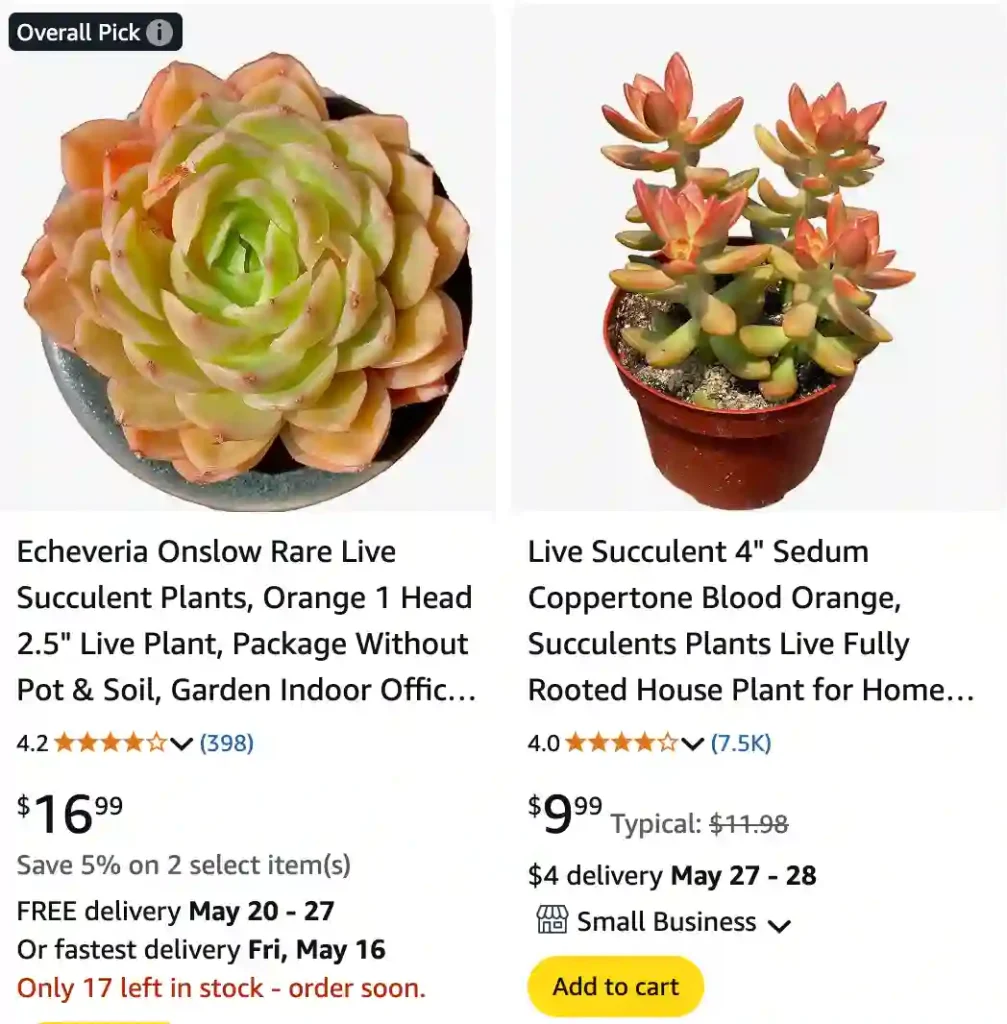
Orange Succulents have taken a vibrant turn in my garden. These stunning plants aren’t just eye-catchers—they’re resilient, low-maintenance, and diverse. I’ve collected, grown, and compared many varieties over time, and in this FAQ, I’ll share everything I’ve learned. Whether you’re wondering what makes them orange or how they stack up against other succulents, I’ve got you covered.
What Are Orange Succulents?
Orange Succulents are plants with fleshy, water-storing leaves that exhibit orange hues—either seasonally, under stress, or naturally. Some turn orange due to sun exposure, while others are bred for their fiery pigments. Common varieties include Sedum adolphii, Graptosedum ‘California Sunset’, Echeveria ‘Orange Monroe’, and Crassula capitella ‘Campfire’.
They belong to various genera: Sedum, Graptopetalum, Echeveria, Crassula, and Aloe. Their coloration is often triggered by environmental conditions like direct sun, drought, or temperature drops.
Why Do Orange Succulents Change Color?
This is one of the most fascinating aspects of Orange Succulents. Their pigments shift due to a botanical response called stress coloring. When exposed to full sun, drought, or cold, succulents produce pigments like carotenoids and anthocyanins.
In Sedum adolphii, for instance, the green leaves turn orange-red in full sunlight. It’s a defense mechanism but also a visual bonus. If the plant becomes too shaded or overwatered, it may revert to green.
Are Orange Succulents Easy to Grow?
Absolutely. Most Orange Succulents are as tough as their greener cousins. They thrive on neglect and flourish with just:
- Bright light or full sun
- Well-draining soil
- Infrequent watering
- Minimal fertilizing
I grow mine in terracotta pots with cactus mix and perlite. They handle heat well and bounce back after dry spells.
Which Orange Succulent Varieties Do I Recommend?
Here are my top picks based on personal experience:
1. Graptosedum ‘California Sunset’
This hybrid has peachy-orange rosettes that intensify in full sun. It grows fast and roots easily from leaves.
2. Crassula capitella ‘Campfire’
Named for its flame-like appearance, this one goes neon-orange in sun. Its stacked leaves and low spread make it ideal for ground cover or shallow pots.
3. Sedum adolphii (Golden Sedum)
One of the easiest to find and grow. It stays golden-green in shade, but turns tangerine in full sun. Perfect for beginners.
4. Echeveria ‘Orange Monroe’
This rare variety is a showstopper. Think rose-shaped leaves with a soft apricot tone. Slow-growing but totally worth the wait.
How Do Orange Succulents Compare to Green or Blue Succulents?
Good question. Here’s how I’d break it down:
| Feature | Orange Succulents | Green Succulents | Blue Succulents |
|---|---|---|---|
| Color Sensitivity | High (sun triggers color) | Low | Medium |
| Heat Tolerance | Excellent | Excellent | Good |
| Rarity | Medium to High | Common | Varies |
| Popular Uses | Accent pieces, color pop | Mass plantings | Cool-toned arrangements |
While green succulents are classic and versatile, orange varieties offer dramatic contrast and seasonal interest. Pairing them with blue-toned Echeverias or silver-leafed Senecios creates striking visual harmony.
Are Orange Succulents Safe Around Pets?
This depends on the species. While many succulents are non-toxic, some—like Crassula and Aloe—can be mildly toxic to cats and dogs if ingested.
In my home, I keep these plants on shelves or windowsills where my pets can’t nibble. Always double-check toxicity with ASPCA’s plant database or use pet-safe options like Haworthia or Sedum species.
Do Orange Succulents Bloom?
Yes, many do! The flowers are often star-shaped and can be yellow, white, or pink, depending on the species. Sedum adolphii, for example, sends up small white blooms in late spring.
However, I mainly grow them for their foliage. The bloom is a bonus, but the orange glow is the main attraction.
Can I Propagate Orange Succulents Easily?
Absolutely. Propagation is part of the fun. Leaf cuttings, offsets, and stem cuttings all work, depending on the variety.
Here’s my quick method:
- Gently twist off a healthy leaf.
- Let it callous over for 1–2 days.
- Place it on dry soil, mist occasionally.
- Wait for roots and tiny rosettes to form.
I’ve propagated California Sunset this way many times. It’s a rewarding process and great for sharing with friends.
How Can I Use Orange Succulents in Design?
I use Orange Succulents to break up monotony in planters and rock gardens. Their fiery hues pair well with neutral-toned pots, white gravel, and rustic wood. Some other design ideas:
- Mix with blue Echeveria ‘Blue Prince’ or Senecio serpens
- Contrast with deep purple Aeonium arboreum ‘Zwartkop’
- Add to living walls or succulent wreaths
They’re perfect for xeriscaping too, thanks to their drought tolerance.
Final Thoughts: Are Orange Succulents Worth It?
Without a doubt—yes. Orange Succulents bring energy, warmth, and a dynamic edge to any plant collection. They’re tough, beautiful, and adaptive. Over the years, they’ve become my favorite for color experimentation and compact beauty.

If i die, water my plants!