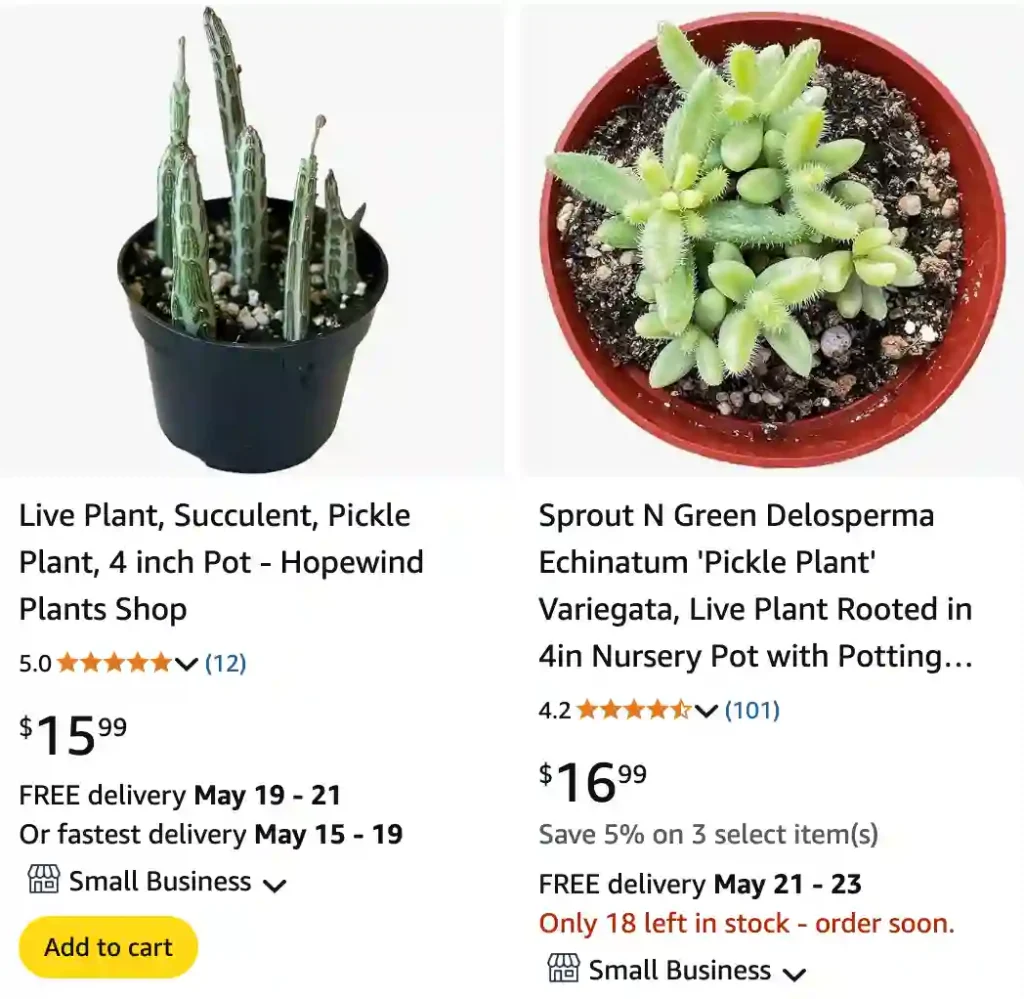
I’ve always had a deep fascination with unusual succulents, and two that stand out in both appearance and personality are the Pickle Plant Succulent – Delosperma Echinatum and Kleinia Stapeliiformis. With their quirky names and textures, they’ve raised a lot of questions from friends, plant lovers, and fellow hobbyists. So, I decided to write this FAQ-style guide from my own experience — how to care for them, propagate them, keep them from dying, and even coax out their beautiful, unexpected blooms.
What Is a Pickle Plant Succulent?
“Pickle Plant” isn’t one specific species. It’s a nickname that refers to two distinctly different succulents:
170 Species in Genus Delosperma
- Delosperma Echinatum – This one has soft, bristly hairs all over its tiny, green, cucumber-like leaves. It’s native to South Africa and belongs to the Aizoaceae family.
- Kleinia Stapeliiformis – A tall, striped, pencil-like succulent from the Senecio genus, though now classified under Kleinia. It looks more like a zebra than a pickle, but somehow it got looped into the name.
55 Species in Genus Kleinia
Despite their differences, both are called “pickle plants” because of their cylindrical growth habits and their green, ridged, and whimsical appearances.
How to Care for Pickle Plant Succulent?
Succulent care for these two pickle plants is quite similar, with a few key differences.
- Light: They both love bright, indirect light. I place my Delosperma Echinatum near a south-facing window, while my Kleinia Stapeliiformis thrives under grow lights. Too much direct sun can cause sunburn, especially for Delosperma.
- Water: Here’s a cardinal rule — less is more. Water only when the soil is bone dry. Overwatering is the main reason behind the dreaded “pickle plant succulent dying” scenario.
- Soil: I use a fast-draining cactus mix with added pumice or perlite. Drainage is everything.
- Humidity: Both prefer dry air. High humidity can lead to rot and pests.
- Temperature: These succulents enjoy warm climates. I bring mine inside during winters, especially if temps drop below 50°F.
How to Propagate Pickle Plant Succulent?
Propagating both types is surprisingly easy.
- Delosperma Echinatum: I snip off a stem cutting, let it callus for a day, then place it in dry soil. In about two weeks, roots begin to form.
- Kleinia Stapeliiformis: This one roots just as easily. I cut one of the pencil-thin stems and let it dry for a couple of days. Then I plant it in well-draining soil and wait. No rooting hormone needed.
Make sure the cuttings are healthy. If they’re squishy or discolored, toss them. Always propagate in the growing season — spring or early summer works best.
What If My Pickle Plant Succulent Is Dying?
I’ve had a few close calls. If your pickle plant succulent is dying, it’s usually due to:
- Overwatering: This is the number one killer. Check the roots — if they’re mushy, it’s root rot.
- Lack of Light: They may stretch and get leggy.
- Pests: Mealybugs love these plants. I spot-treat with neem oil.
- Poor Soil Drainage: Even if you water right, bad soil can ruin everything.
Once I corrected the light and watering issues, most of my plants bounced back. Don’t give up too soon — succulents are tough.
Do Pickle Plant Succulents Bloom?
Yes! A pickle plant succulent bloom is rare but worth the wait.
- Delosperma Echinatum Flower: This plant produces small, daisy-like yellow flowers, usually in late spring. The blooms pop against the spiny leaves like sunshine on fuzz.
- Kleinia Stapeliiformis Flower: It offers a strange, tubular, reddish-orange bloom that looks like a miniature firework. Mine bloomed in early summer, and the scent was mild, almost earthy.
To encourage a pickle plant succulent flower, make sure it’s getting enough light and avoid overfeeding. Too much fertilizer often leads to more foliage, not flowers.
Final Thoughts: Why Grow a Pickle Plant Succulent?
Both Delosperma Echinatum and Kleinia Stapeliiformis are low-maintenance, sculptural plants that bring a lot of personality to a space. They’re great conversation starters and ideal for xeriscaping or container gardens. Plus, if you’re like me and love propagating plants to give as gifts, these make wonderful pass-alongs.
Whether you’re learning how to care for pickle plant succulent, how to propagate pickle plant succulent, or simply trying to rescue one from the brink, trust me — these are rewarding plants. Watch them closely, don’t drown them, and enjoy the quirky charm they bring to your green collection.

If i die, water my plants!