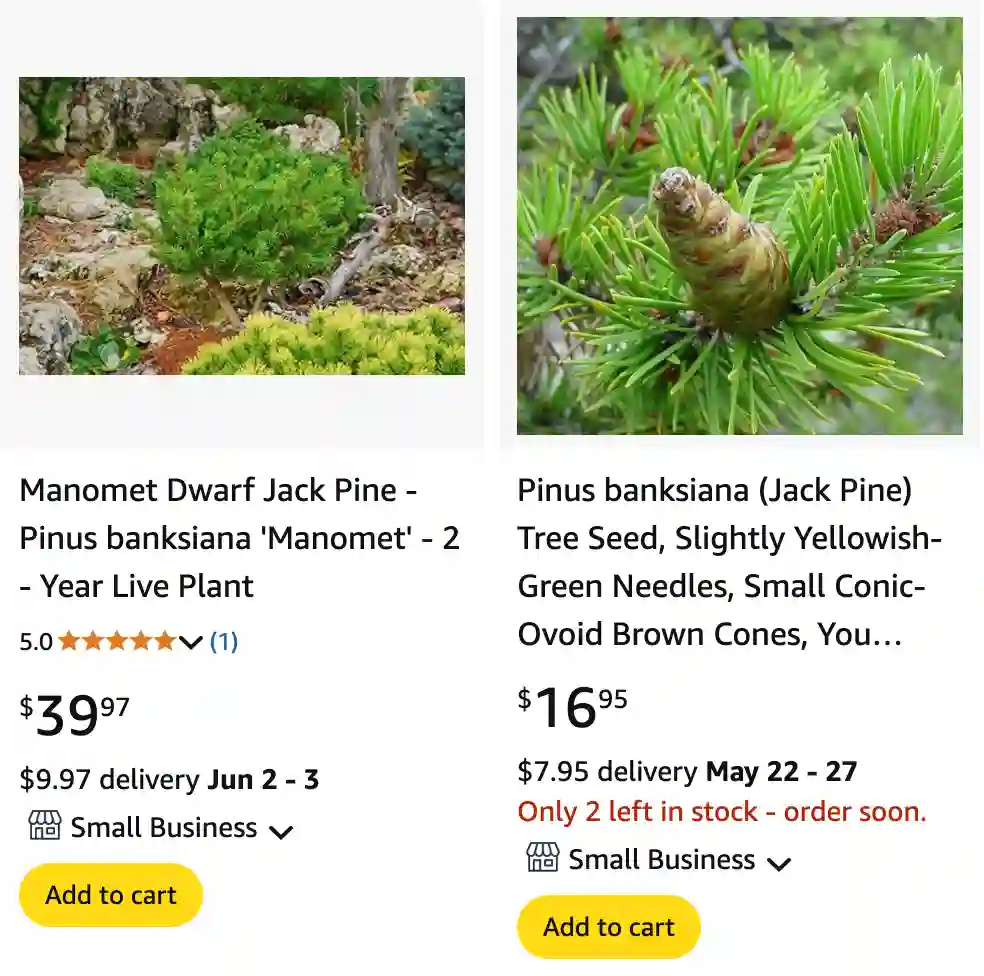
I’ve had the pleasure of working with many conifers, but Pinus Banksiana, or Jack Pine, holds a special place in my landscape experiences. Hardy, rugged, and surprisingly adaptive, this pine deserves more attention in naturalistic and restoration plantings. Below are the most common questions I get—and answer—about this unique North American native.
139 Species in Genus Pinus
What Is Pinus Banksiana?
Pinus Banksiana, commonly called Jack Pine, is a North American conifer in the family Pinaceae. It’s native to Canada and the northern parts of the United States. This pine is known for its irregular shape, scaly bark, and short, twisted needles. I admire its tough nature—it thrives in poor, sandy soils where other trees fail. It’s also a keystone species in boreal forests, contributing to biodiversity and wildfire ecology.
Where Does Jack Pine Grow Best?
In my experience, Jack Pine thrives in dry, sandy, or rocky soils with full sunlight. It tolerates cold winters and drought like a champ. I’ve seen it thrive in USDA zones 2 through 6, especially in areas with acidic soils. It struggles in rich, wet, or shaded conditions. If you’re planning to use it for restoration or erosion control, this pine is a go-to.
How Tall Does Pinus Banksiana Grow?
Typically, Jack Pine grows to about 30 to 50 feet tall, with a spread of 20 to 30 feet. In poor soils, it stays shorter. What I find fascinating is its irregular form—unlike the symmetrical Christmas tree look of Pinus Sylvestris or Pinus Strobus, Jack Pine bends and twists, especially when young. That wild character makes it an excellent candidate for naturalistic designs.
How Fast Does It Grow?
In my observation, Pinus Banksiana grows moderately fast, around 6 to 12 inches per year, depending on soil and sunlight. It’s not as fast as Loblolly Pine (Pinus Taeda) but definitely outpaces White Spruce (Picea Glauca) in poor soils. I use it when I want visible growth within a few seasons, especially in reforestation projects.
What Wildlife Benefits From Jack Pine?
This tree is an ecological workhorse. The Kirtland’s Warbler, an endangered songbird, nests only in young stands of Jack Pine. I’ve also seen deer use it for shelter and squirrels feeding on its cones. Its serotinous cones—those that open after fire—also make it a player in fire-adapted ecosystems. In terms of habitat value, it’s a champion.
How Is It Different From Pinus Contorta?
Great question—I get this one often. Pinus Contorta, or Lodgepole Pine, is its western cousin. Both have serotinous cones and tolerate poor soil, but there are key differences:
- Pinus Banksiana is native to the East and Midwest; Pinus Contorta to the Rockies and Pacific coast.
- Jack Pine needles are shorter and more twisted.
- Lodgepole grows straighter and taller—more ideal for timber.
I’ve used both in restoration, and Jack Pine wins out for tough, sandy inland soils.
Is It Good for Timber or Landscaping?
For timber, Jack Pine isn’t a first pick. Its irregular form and smaller trunk make it less ideal than species like Pinus Resinosa (Red Pine). However, it is harvested for pulpwood and poles in northern forestry operations.
In landscaping, I like using it for naturalized plantings, windbreaks, and wildlife corridors. It’s not your go-to for curb appeal, but in the right setting, it brings structure, resilience, and wildlife support.
How Does It Handle Fire?
Pinus Banksiana is one of the most fire-adapted conifers I’ve planted. Its serotinous cones stay closed until exposed to fire heat, ensuring regeneration after wildfire. I’ve seen entire stands come back stronger after burns. This makes it a vital part of boreal forest regeneration.
Can You Prune or Shape It?
Yes, but with limits. Unlike Pines used in bonsai, Jack Pine doesn’t respond well to heavy pruning. Light shaping can be done when young, but I generally leave it to grow naturally. Its irregular form is part of its wild beauty.
What Are Its Common Pests or Diseases?
From my experience, Jack Pine is relatively low maintenance, but it’s not immune. Watch for:
- Jack Pine Budworm (Choristoneura pinus)
- Root rot in poorly drained soils
- Needle rust and canker diseases
Healthy site selection and spacing prevent most issues.
How Does It Compare to Eastern White Pine?
Here’s a summary from my own plantings:
| Feature | Pinus Banksiana (Jack Pine) | Pinus Strobus (Eastern White Pine) |
|---|---|---|
| Soil Tolerance | Sandy, poor soils | Well-drained, loamy |
| Growth Form | Irregular, twisted | Tall, symmetrical |
| Fire Adaptation | Strong | Moderate |
| Wildlife Value | High (esp. for birds) | High (shelter + food) |
| Timber Use | Pulpwood, poles | Premium softwood |
If I’m restoring land or working in extreme climates, I go with Jack Pine. For formal or ornamental use, Eastern White Pine wins.
Final Thoughts
Pinus Banksiana may not be the showiest pine in your nursery, but it’s one of the toughest. As Ferb Vu, I’ve used it in reforestation, wildlife management, and low-input landscapes. If you have poor soils, cold winters, or a love for rugged natives, this conifer won’t disappoint.
Its semantic richness spans climate resilience, fire ecology, wildlife interaction, and northern landscape design. It deserves a spot in the conversation—and in more gardens.

If i die, water my plants!