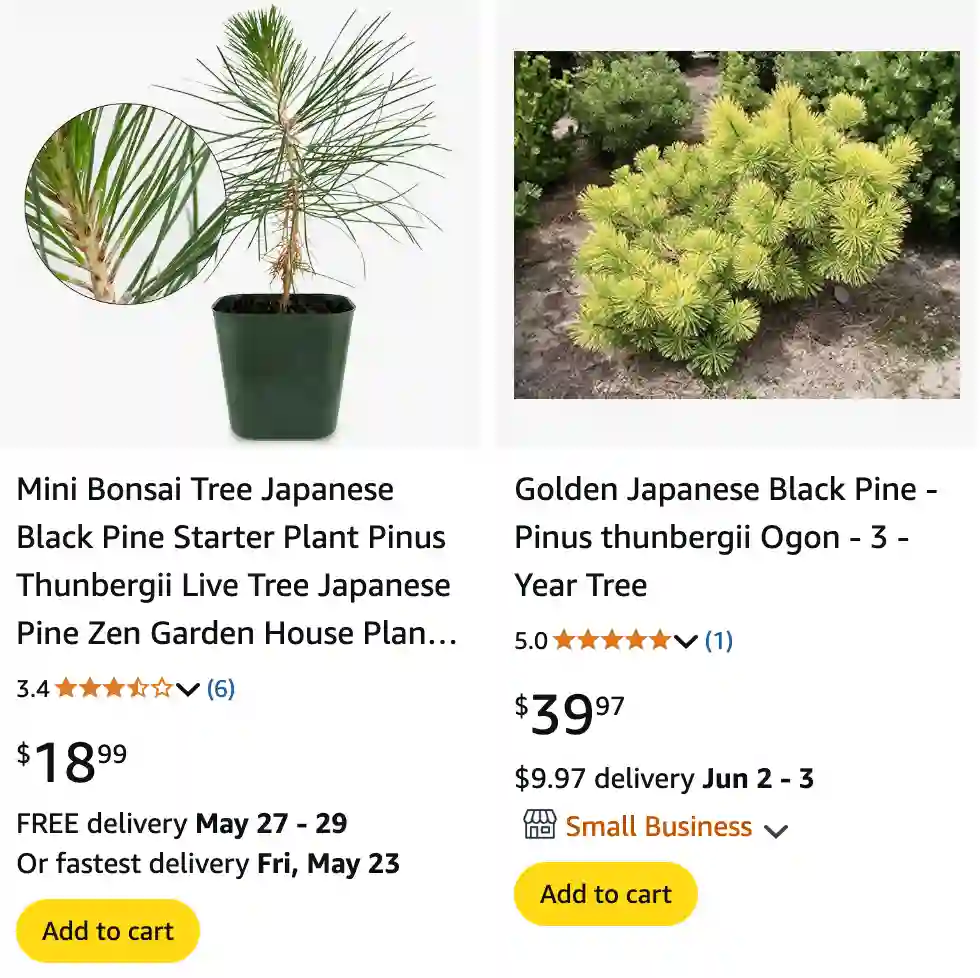
I’ve spent years exploring different pines, but Pinus Thunbergii, also known as the Japanese Black Pine, stands out. It’s rugged, sculptural, and resilient—a tree that truly earns its place in a garden or landscape. Whether you’re interested in bonsai or coastal windbreaks, this pine has something for you. Here are the most common questions I get—and ask—about this fascinating conifer.
139 Species in Genus Pinus
What Is Pinus Thunbergii?
Pinus Thunbergii is a coastal pine species native to Japan and South Korea. It thrives in poor soils, salt spray, and high winds. That’s why I admire it—it doesn’t just survive; it thrives under tough conditions. It has dark green needles in bundles of two, rugged bark, and a naturally irregular shape, which gives it character in the landscape.
I use it both as a large landscape tree and a bonsai specimen. In both roles, its architectural form, dense branching, and salt tolerance make it invaluable.
Semantic Entities: Japanese Black Pine, coastal pine, evergreen conifer, salt-tolerant tree, bark texture, bonsai species.
How Does Pinus Thunbergii Compare to Pinus Nigra?
Both Pinus Thunbergii (Japanese Black Pine) and Pinus Nigra (Austrian Pine) are dark-needled, tough trees, but they have key differences. In my yard, Pinus Thunbergii has a more irregular form. Pinus Nigra tends to grow denser and more pyramidal when young.
Pinus Nigra also suffers more from fungal issues like Diplodia tip blight. In contrast, Pinus Thunbergii stands stronger in coastal environments. If you’re dealing with salt winds or sandy soils, go with Thunbergii every time.
Semantic Entities: Pinus Nigra, Austrian Pine, Diplodia tip blight, coastal landscape, evergreen conifer comparison.
Is Pinus Thunbergii Good for Bonsai?
Absolutely. This species is a classic in bonsai culture, especially in Japanese tradition. I find its rugged bark, strong apical dominance, and back-budding ability make it ideal. You can wire it hard, prune it back, and it still comes back strong.
But here’s the catch: timing is everything. I decandle in early summer to promote ramification. Needle plucking and careful root pruning in spring give me the best results.
Semantic Entities: bonsai techniques, decandling, apical dominance, Japanese bonsai culture, needle plucking, root pruning.
How Big Does Pinus Thunbergii Grow?
Out in the open, this pine can reach 20 to 40 feet tall and 20 feet wide, depending on conditions. In exposed coastal sites, it stays shorter and more wind-swept. I’ve seen it act like a large shrub along seashores. In protected areas, though, it becomes a towering, noble tree.
In bonsai pots, of course, it can stay small for decades. But even then, the trunk thickens with age and shows off that signature bark.
Semantic Entities: growth habit, tree size, wind-swept form, bonsai dimensions, mature bark, landscape architecture.
Is Pinus Thunbergii Deer Resistant?
Yes. In my experience, deer leave this pine alone. The needles are sharp and unpalatable. That said, when deer are desperate, they may still browse tips or bark on young trees. I always use physical barriers for saplings in high-pressure areas.
Semantic Entities: deer resistance, wildlife management, browsing pressure, tree protection, ornamental conifer.
Can Pinus Thunbergii Grow in Containers?
Yes, and not just for bonsai. I’ve had success growing Pinus Thunbergii in large patio containers as a sculptural focal point. The trick is excellent drainage and root pruning every couple of years.
I recommend using a gritty mix with components like pumice and lava rock. Fertilize lightly and monitor for scale insects, especially Pine needle scale, which can sneak in when airflow is limited.
Semantic Entities: container gardening, root pruning, pumice soil, pine needle scale, drainage, urban landscaping.
How Does It Compare to Pinus Densiflora?
This is a great question. I’ve grown both. Pinus Densiflora (Japanese Red Pine) has a lighter, airier look. Its needles are thinner, its bark turns a lovely reddish-orange, and it tends to grow more upright and less gnarled.
In contrast, Pinus Thunbergii is darker, bolder, and more rugged. For bold coastal forms, I prefer Thunbergii. For elegant park-style plantings, Densiflora shines.
Semantic Entities: Pinus Densiflora, Japanese Red Pine, bark color, aesthetic contrast, landscape use, tree comparison.
What Are Its Soil and Sunlight Requirements?
Full sun is essential. If you try growing Pinus Thunbergii in shade, you’ll get leggy growth and poor needle retention. It also thrives in sandy, well-drained soils, and tolerates drought once established.
In my sandy garden, I’ve never had issues with root rot, but clay soils can cause problems. If your site holds water, plant it on a mound.
Semantic Entities: full sun requirement, sandy soil, drought tolerance, mound planting, drainage, needle retention.
Is Pinus Thunbergii Invasive?
Not at all. I’ve grown it for years and never seen it spread beyond where I planted it. Unlike some fast-growing conifers, Pinus Thunbergii is not invasive. It produces cones, but the seedlings rarely naturalize unless in very specific conditions.
Semantic Entities: invasive species, cone production, naturalization, ecological impact, non-invasive landscape plant.
Final Thoughts
Pinus Thunbergii isn’t just another pine. It’s an emblem of coastal resilience and sculptural beauty. Whether you’re working with large landscapes or intricate bonsai containers, it offers unmatched character. I’ve grown many conifers, but few have such presence and grit.
For those of you considering a pine that can thrive where others fail, give this one a shot. You won’t regret it.

If i die, water my plants!