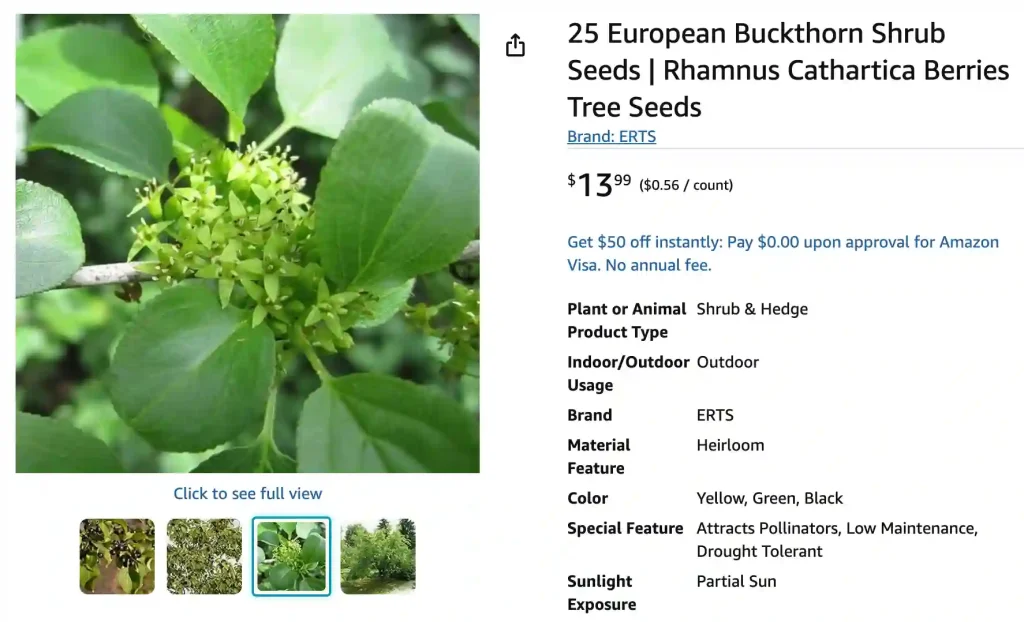
Hi, I’m Ferb Vu, and I want to share my experience and knowledge about Rhamnus Cathartica, commonly known as Common Buckthorn. This plant has a complicated reputation, and I’ve had my own journey understanding its nature, uses, and impact. If you’re curious about this species or wondering how it stacks up against other plants, this FAQ will cover the most common questions I get.
What Is Rhamnus Cathartica?
Rhamnus Cathartica, or Common Buckthorn, is a deciduous shrub or small tree native to Europe and parts of Asia. It was introduced to North America and other regions as an ornamental and for hedging, but quickly became invasive in many ecosystems. The plant can grow up to 20 feet tall and has thorny branches, which can be a nuisance in gardens.
What really stands out about this plant is its dense growth habit and the dark berries it produces. Those berries attract birds, which help spread the seeds widely.
Why Is Rhamnus Cathartica Considered Invasive?
From my experience and what I’ve researched, Common Buckthorn is invasive mainly because it outcompetes native plants. Its early leaf-out in spring shades out smaller plants, and its dense thickets make it hard for native seedlings to grow.
Moreover, the berries produce chemicals that inhibit the growth of other plants around it—a phenomenon called allelopathy. I’ve noticed this myself when trying to cultivate native wildflowers near buckthorn patches; they often struggle or fail to thrive.
How Does Rhamnus Cathartica Compare to Native Shrubs?
Compared to native shrubs like Spiraea or Viburnum, Buckthorn grows faster and forms thicker thickets. While native shrubs generally support a diverse range of insects and birds, Buckthorn’s ecological value is limited. It supports fewer native butterflies and pollinators.
On the other hand, the dense canopy of Buckthorn provides nesting sites for some bird species, but overall, it tends to reduce biodiversity rather than enhance it. If you want a more environmentally friendly garden, native shrubs are my recommendation.
What Are the Identification Features of Rhamnus Cathartica?
I find identifying Buckthorn easier once you know what to look for:
- Leaves: Simple, oval, and glossy with finely toothed edges, arranged opposite on the branches.
- Thorns: Small but sharp, found at branch tips.
- Bark: Dark gray-brown with irregular cracks.
- Berries: Small, black, and round, appearing in late summer to fall.
These details help distinguish it from similar plants like native Rhamnus alnifolia or Frangula alnus (Glossy Buckthorn), which can confuse beginners.
Is Rhamnus Cathartica Toxic?
Yes, but not extremely so. The berries contain anthraquinones, which act as laxatives and can cause digestive upset in humans and pets if ingested in large quantities. Birds eat the berries without harm, which is why the seeds spread so effectively.
I always advise caution around kids and pets and avoid letting them eat any part of the plant. The sap can also cause mild skin irritation in sensitive individuals.
Can Rhamnus Cathartica Be Used in Landscaping?
While Buckthorn was once popular for hedges and privacy screens due to its dense growth, I now avoid it because of its invasiveness. Many municipalities and environmental groups recommend removing it from yards and replacing it with native species.
If you want a fast-growing hedge, better alternatives include native species like Caragana arborescens (Siberian Pea Shrub) or Cornus sericea (Red-osier Dogwood), which offer similar benefits without harming local ecosystems.
How Do You Control or Remove Rhamnus Cathartica?
Removing Buckthorn is a big challenge. I’ve learned that simple cutting won’t solve the problem, as the plant resprouts vigorously. Here’s what worked for me:
- Cut and Treat: Cut the stem close to the ground, then immediately apply a systemic herbicide to the stump to prevent regrowth.
- Pulling Seedlings: For young plants, hand-pulling works if done early before roots develop deeply.
- Repeated Effort: You must monitor the site for several years to remove new sprouts and seedlings.
Mechanical removal combined with targeted herbicide application is the most effective approach. It’s labor-intensive but worth it to restore native plant communities.
How Does Rhamnus Cathartica Affect Soil and Native Plants?
Common Buckthorn affects soil chemistry by increasing nitrogen levels, which can favor other invasive plants. The leaf litter decomposes quickly, changing the nutrient cycling compared to native forests.
From my observation, areas dominated by Buckthorn have reduced native plant diversity. This disrupts the entire food web, from soil microbes to large mammals.
What Wildlife Uses Rhamnus Cathartica?
While Buckthorn is invasive, it does provide some wildlife benefits:
- Birds feed on its berries, especially during fall and winter.
- Dense thickets offer cover for small mammals and birds.
However, these benefits come at a cost to native ecosystems. In my view, it’s a trade-off not worth making when native plants can support a richer and healthier environment.
How Does Rhamnus Cathartica Compare to Frangula Alnus?
Glossy Buckthorn (Frangula Alnus) is often confused with Common Buckthorn. From my experience:
- Frangula Alnus has smooth, unbranched stems without thorns.
- Its leaves are more rounded and have smooth edges.
- It tends to grow in wetter soils compared to Rhamnus Cathartica.
Both are invasive and problematic, but Glossy Buckthorn spreads in slightly different habitats and can be harder to spot due to the lack of thorns.
Should I Plant Rhamnus Cathartica?
Personally, I would strongly advise against planting Rhamnus Cathartica. Its invasiveness causes more harm than good. If you want a tough, fast-growing shrub for privacy or erosion control, there are many native or non-invasive alternatives that are safer for your local environment.
If you currently have it on your property, I recommend starting a removal plan. Replant the cleared areas with native shrubs or trees to restore balance.
Final Thoughts on Rhamnus Cathartica
Rhamnus Cathartica is a species that taught me a lot about invasive plants and ecosystem health. While it can seem like a useful, fast-growing shrub, its long-term effects on biodiversity and native plant communities are negative.
Managing it requires effort, but the payoff is a healthier, more resilient landscape. I encourage you to learn to identify and manage this plant wisely and to choose natives when planting.

If i die, water my plants!