As someone who’s spent quite a bit of time with succulents, I’ve developed a real fondness for Sedum Lineare. It’s a fascinating plant that stands out in my collection for its unique look and easy care. If you’re curious about it or wondering how it stacks up against other succulents, here’s a detailed FAQ based on my personal experience growing Sedum Lineare.
What Is Sedum Lineare and Why Should I Grow It?
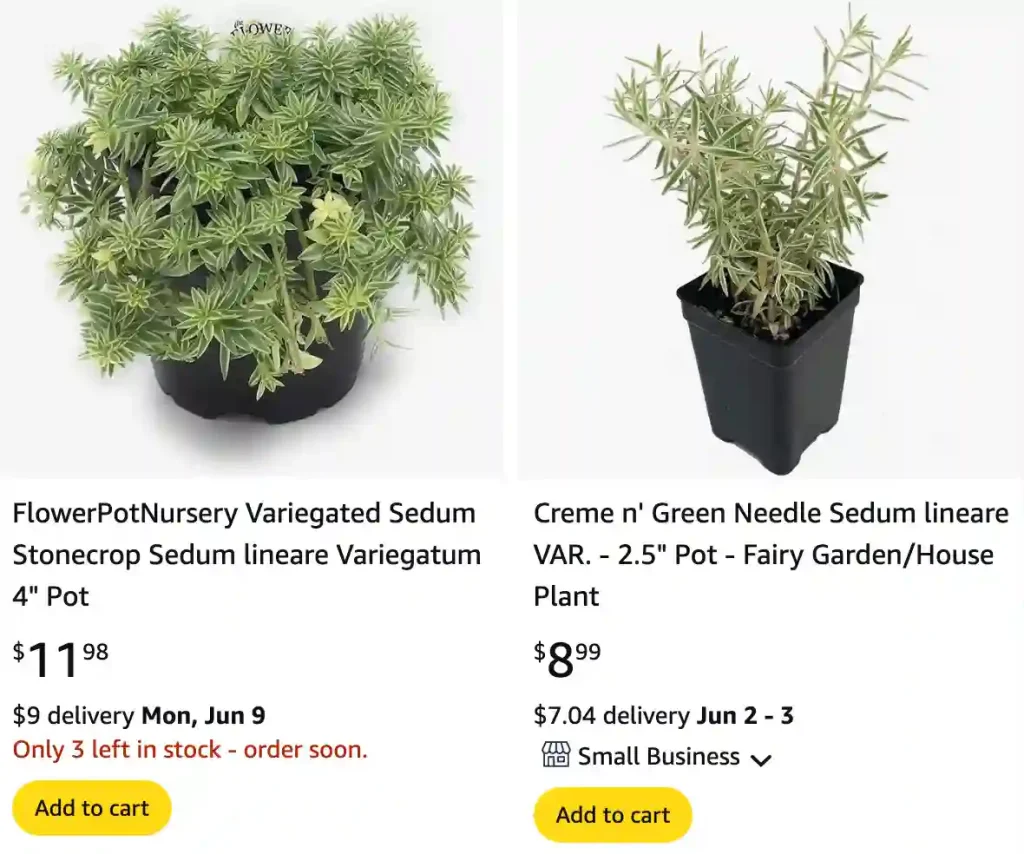
Sedum Lineare, also known as the Needle Leaf Stonecrop, is a type of succulent native to East Asia. Its long, slender, needle-like leaves are unlike most other Sedum species, which often have rounder, plumper foliage. What drew me to it was its elegant, grass-like appearance that adds a minimalist vibe to any succulent garden.
From my experience, Sedum Lineare is incredibly resilient and low maintenance. It thrives both indoors and outdoors, tolerating drought well and preferring bright light. If you want a succulent that’s visually distinct and tough, this plant is a great choice.
How Do I Care for Sedum Lineare?
Sedum Lineare is quite forgiving, which makes it ideal if you’re new to succulents. Here’s what I learned:
- Light: It loves bright, indirect sunlight. I’ve placed mine near a south-facing window and it flourishes. Too little light and it can stretch out and lose its compact form.
- Water: This plant prefers a “soak and dry” watering method. I water mine thoroughly, then wait until the soil dries out completely before watering again. Overwatering is its biggest enemy and can cause root rot.
- Soil: Well-draining soil is key. I use a cactus/succulent mix and add extra perlite to boost drainage. This helps keep the roots happy and prevents sogginess.
- Temperature: Sedum Lineare likes warm temperatures but can handle a bit of cold. I’ve noticed it does best between 60-80°F (15-27°C). It’s not frost-tolerant, so bring it inside if it gets below freezing.
How Does Sedum Lineare Compare to Other Sedums?
I’ve grown quite a few Sedum species, and Sedum Lineare stands out for a few reasons:
- Leaf Shape: Unlike common Sedums with chubby leaves (like Sedum Morganianum or Sedum Rubrotinctum), Sedum Lineare has thin, needle-like leaves. This gives it a more architectural, linear look.
- Growth Habit: It grows upright in neat clusters, making it great for adding vertical interest. In contrast, many Sedums tend to spread out or trail.
- Texture and Color: Its leaves are smooth, bright green, and sometimes take on a slight blue tint in bright light. This differs from the waxy or fuzzy textures of some other Sedums.
If you want a succulent that breaks the mold with a sleek, spiky look, Sedum Lineare is a refreshing choice.
Can Sedum Lineare Be Grown Indoors?
Yes! I grow mine indoors, and it does very well. The key is providing enough light. If natural light is limited, you can use a grow light for 6-8 hours daily. I keep mine on a sunny windowsill with good airflow, and it thrives without much fuss.
One thing I noticed is that indoors, it grows a bit slower than outdoors but stays compact and healthy. Also, because indoor environments tend to be less humid, watch out for drying out but don’t overcompensate with watering.
How Do I Propagate Sedum Lineare?
Propagation is one of the easiest parts of growing Sedum Lineare. I’ve propagated mine through stem cuttings and leaf cuttings with great success.
- For stem cuttings, I cut a healthy stem about 3-4 inches long, let it callous for a day or two, then plant it in well-draining soil. Roots form in about 2-3 weeks.
- For leaf cuttings, gently twist off a leaf, let it dry, then place it on top of the soil. After a few weeks, small roots and new growth will appear.
Propagation lets you multiply your plants quickly, and I love sharing cuttings with friends.
Is Sedum Lineare Drought-Tolerant?
Yes, very much so. As a succulent, Sedum Lineare stores water in its leaves, allowing it to survive periods without water. In my experience, it handles dry spells better than many other succulents. That said, occasional watering keeps it looking lush and vibrant.
Does Sedum Lineare Flower? What Do Its Flowers Look Like?
Yes, Sedum Lineare does flower, typically in late summer or fall. Its flowers are small, star-shaped, and yellow or pale green, appearing in clusters. I find the flowers delicate and subtle, adding a nice touch without overshadowing the foliage.
Can Sedum Lineare Be Used in Landscaping or Containers?
Absolutely. I’ve used Sedum Lineare in container gardens, rock gardens, and even as a ground cover in small patches. Its upright growth and neat clusters make it ideal for adding texture and height contrast to mixed succulent arrangements.
Because it’s drought-tolerant and low maintenance, it’s perfect for xeriscaping or low-water gardens. Just keep it out of heavy shade, and it’ll perform well.
How Does Sedum Lineare Handle Pests and Diseases?
I’ve found Sedum Lineare to be fairly pest-resistant. Occasionally, mealybugs or aphids might appear, but they’re easy to manage with insecticidal soap or neem oil. Root rot from overwatering is a bigger risk, so proper watering and drainage are crucial.
Final Thoughts on Sedum Lineare
From my perspective, Sedum Lineare is a unique, attractive, and resilient succulent that deserves more attention. Its slender, needle-like leaves offer a fresh aesthetic compared to typical chunky succulents, and its easy care makes it a fantastic plant for beginners and seasoned growers alike.

If i die, water my plants!