I’ve spent a lot of time growing and studying Sempervivum Tectorum, also known as Common Houseleek or Hens and Chicks. This little alpine succulent has stolen my heart and found its place in nearly every crack, crevice, and container I own. Here are the most common questions I get about it—answered from my own experience.
65 Species in Genus Sempervivum
What Is Sempervivum Tectorum?
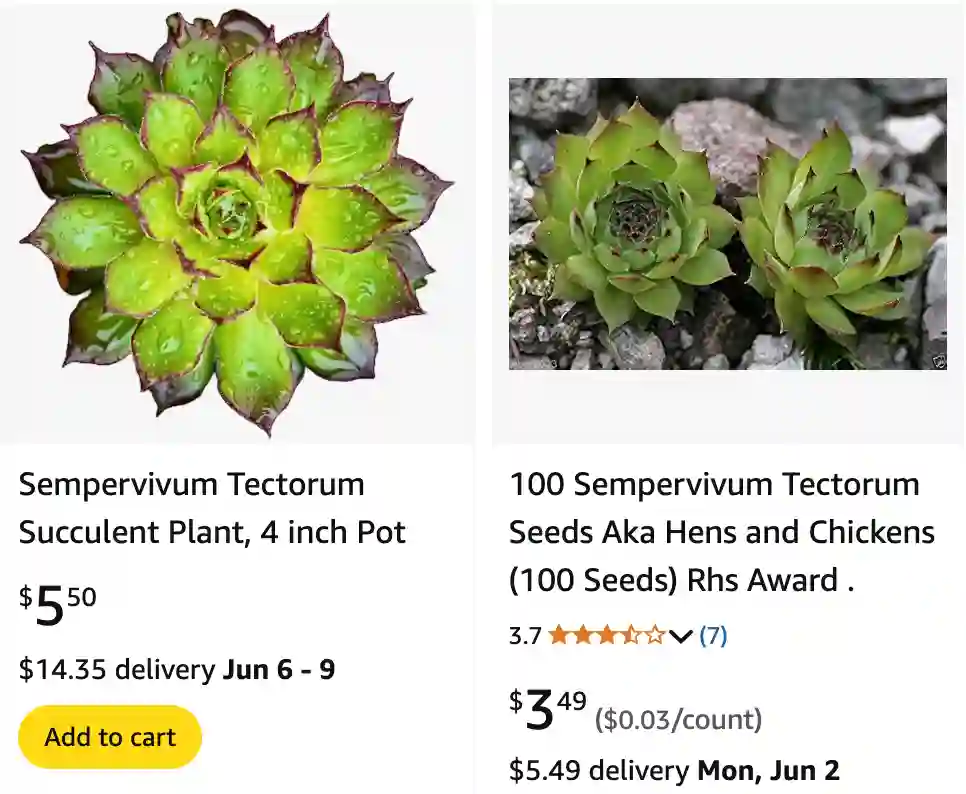
Sempervivum Tectorum is a cold-hardy succulent in the Crassulaceae family. Its name means “always alive,” and it lives up to it. Native to the mountains of Southern Europe, this plant forms tight rosettes that resemble tiny artichokes. They multiply quickly through offsets (the “chicks”), forming dense, mat-like clusters around the mother rosette (the “hen”).
How Do I Grow Sempervivum Tectorum?
I always tell folks—keep it simple. This plant thrives on neglect. Here’s what works best for me:
- Soil: I use gritty, well-drained soil. A cactus mix with perlite or sand works great.
- Sun: Full sun brings out its best color—reds, greens, and purples.
- Water: Less is more. I water only when the soil is bone dry.
- Climate: It handles frost, snow, and heat, which is rare for a succulent.
Its roots are shallow, so it loves containers, stone walls, and roof tiles (hence the name “Tectorum”).
Can I Grow Sempervivum Tectorum Indoors?
Yes, but I don’t recommend it long-term. Indoors, it tends to stretch and lose its compact shape. It needs cold dormancy in winter to stay healthy. A bright windowsill may work, but outdoors is better for color and vigor.
What’s the Difference Between Sempervivum Tectorum and Echeveria?
I get asked this a lot. Both look similar—rosette shapes, fleshy leaves—but here’s what I’ve noticed:
| Feature | Sempervivum Tectorum | Echeveria |
|---|---|---|
| Cold Hardiness | Yes, down to -30°F | No, frost-sensitive |
| Leaf Texture | Coarser, often hairy | Smooth and soft |
| Growth Habit | Offsets in clusters | Slower to pup |
| Blooming Behavior | Dies after flowering | Usually keeps growing |
| Native Habitat | Europe (Alpine) | Central America |
I grow both, but my Sempervivum always survives winter without fuss.
Does Sempervivum Tectorum Die After Flowering?
Yes. It’s monocarpic, which means each rosette flowers once and then dies. But don’t panic—the offsets live on. I’ve watched a hen send out a dozen chicks before blooming, so there’s always new growth ready to take over.
The blooms are star-shaped, pinkish-purple, and beloved by bees and pollinators.
How Do I Propagate Sempervivum Tectorum?
Easiest thing ever. I gently pull a chick from the base, let it callous for a day, then plant it in dry soil. That’s it. No rooting hormone, no misting. Within weeks, it establishes roots and starts growing.
This plant is perfect for mass plantings, xeriscaping, or vertical gardens.
How Do I Prevent Rot or Overwatering?
This is a big one. The fastest way to kill a Sempervivum is to baby it. Here’s my advice:
- Use terra cotta pots or raised beds.
- Avoid overhead watering—water at the base.
- Let the soil dry out completely before watering.
- If you live in a humid area, add coarse sand to your mix.
Trust me—less care is better.
Can I Mix Sempervivum Tectorum with Other Succulents?
Yes, but be smart. I pair mine with Sedum, Delosperma, and Jovibarba—other hardy types that thrive in similar conditions. Avoid tropical succulents like Haworthia or Graptopetalum if you plan to overwinter them outside.
The key is matching light, drainage, and temperature tolerance.
What Are Common Problems?
It’s a tough plant, but here are issues I’ve faced:
- Stretching: Not enough light. Move it to full sun.
- Rot: Too much water or poor drainage. Fix the soil fast.
- Mealybugs: Rare, but they do show up. I use isopropyl alcohol or neem oil.
Thankfully, most problems are easy to solve with better conditions.
Why Is It Called a Medicinal Plant?
Sempervivum Tectorum has been used in folk medicine for centuries. I’ve read about its use in treating burns, warts, and insect bites—similar to Aloe Vera. It contains soothing compounds and astringents. While I don’t use it medicinally, I love the idea of growing something with deep herbal roots.
What’s the Best Time to Plant Sempervivum Tectorum?
I plant in spring or early fall, when the weather is mild. This gives the roots time to establish before winter or summer heat. It’s a fast grower, so you’ll see pups forming by the second month.
Final Thoughts
Sempervivum Tectorum is a plant I never get tired of. It’s low-maintenance, beautiful year-round, and resilient. It blends well with rock gardens, zen landscapes, or container arrangements. Whether you’re in the mountains or the suburbs, this plant adapts.

If i die, water my plants!