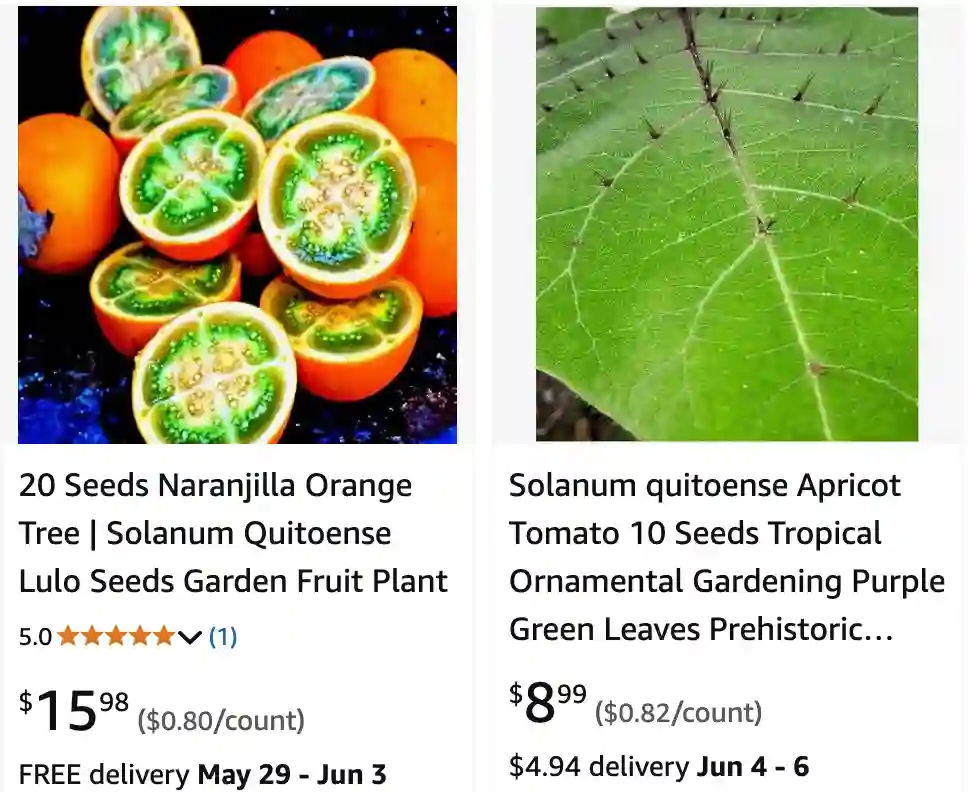
Hello! I’m Ferb Vu, and I want to share my personal insights on Solanum Quitoense, a fascinating and lesser-known plant that many people call by its common name, Naranjilla. It’s a tropical fruit-bearing plant that’s caught my attention because of its exotic look and unique taste. If you’re curious about it too, here are some common questions I’ve gathered, answered based on my hands-on experience and research.
1238 Species in Genus Solanum
What Is Solanum Quitoense and Where Does It Come From?
Solanum Quitoense is a tropical perennial plant native to the Andean regions of Ecuador, Colombia, and Peru. It belongs to the Solanaceae family, the same family that includes tomatoes, eggplants, and potatoes. What I love about this plant is its intriguing fruit — round, about the size of a small tomato, covered with fine, fuzzy hairs and a bright orange skin. The fruit has a citrusy, tangy flavor that reminds me of a mix between pineapple and lemon.
Because of its origin, the plant thrives in humid, subtropical climates, usually found at elevations between 1,500 and 2,500 meters. Growing it outside these zones can be tricky, but I’ve had success cultivating it indoors in a greenhouse with controlled humidity and temperature.
How Do You Care for Solanum Quitoense?
In my experience, Solanum Quitoense requires a few specific care steps:
- Light: It prefers bright, indirect sunlight. Direct sun can scorch its leaves.
- Temperature: Ideal temperatures range between 60°F and 75°F. It doesn’t tolerate frost well.
- Water: Keep the soil consistently moist but not waterlogged. Overwatering can lead to root rot.
- Soil: Well-draining, fertile soil rich in organic matter works best.
- Humidity: Moderate to high humidity mimics its native environment.
- Fertilizer: I feed mine with balanced fertilizer every 4–6 weeks during the growing season.
One challenge I faced was pest control. Aphids and spider mites occasionally attack, so I use natural insecticidal soap or neem oil to keep them at bay.
What Does Solanum Quitoense Fruit Taste Like?
The fruit’s flavor is what made me fall for Solanum Quitoense. When ripe, the pulp inside is juicy, bright green, and aromatic. It has a tart, citrusy flavor, somewhat similar to a blend of rhubarb, lime, and pineapple, with a subtle sweetness. You can eat it fresh or use it in juices, smoothies, or desserts. The seeds are edible but a bit crunchy.
If you like exotic fruits with a tangy kick, you’ll appreciate the complexity of this fruit. It’s also rich in vitamin C and antioxidants, making it both tasty and nutritious.
How Does Solanum Quitoense Compare to Other Solanaceae Plants?
I’ve grown tomatoes and eggplants before, and here’s how I see Solanum Quitoense stacking up:
- Tomato (Solanum lycopersicum): Tomatoes are more forgiving with their care and produce larger fruits. Solanum Quitoense fruit is smaller but more aromatic and tangy.
- Eggplant (Solanum melongena): Eggplants are mostly savory vegetables, while Solanum Quitoense is a sweet-tart fruit. Eggplants tolerate drier soil; Solanum Quitoense needs consistent moisture.
- Cape Gooseberry (Physalis peruviana): Both fruits have a similar tangy flavor, but Cape Gooseberry fruits are smaller and enclosed in papery husks. I find Naranjilla fruit juicier and less sweet.
If you’re familiar with tropical fruit plants, Solanum Quitoense offers a unique twist with its combination of Solanaceae traits and tropical fruit characteristics.
Can Solanum Quitoense Be Grown Outside Tropical Climates?
This is a common question I get from fellow gardeners. In temperate zones, Solanum Quitoense can be grown indoors or in greenhouses. It requires stable temperatures and higher humidity than typical houseplants. I use a humidifier and keep the plant away from heating vents in winter to mimic its native environment.
If you want to try growing it outdoors, it’s best to do so in USDA zones 9-11, where temperatures rarely drop below 50°F. Frost will kill the plant quickly, so protect it well during cold spells.
How Long Does It Take for Solanum Quitoense to Produce Fruit?
From my experience, it takes about 1 to 1.5 years for Solanum Quitoense to start fruiting from seed. If you buy a young plant, it might fruit sooner. The plant blooms with star-shaped purple flowers before fruit sets. Patience is key with this one, but once it starts fruiting, it continues producing for several months.
Are There Any Common Problems When Growing Solanum Quitoense?
Yes, a few problems stood out to me:
- Pests: Aphids, spider mites, and whiteflies are common pests. Regular monitoring and natural treatments help keep them in check.
- Fungal diseases: High humidity without airflow can lead to fungal issues like powdery mildew.
- Fruit drop: Sometimes, young fruits drop prematurely, which can be caused by irregular watering or temperature stress.
- Slow growth: If your plant seems to grow slowly, it might need more nutrients or better light.
I learned to keep a close eye on humidity, watering schedule, and airflow to avoid most problems.
How Do You Propagate Solanum Quitoense?
Propagation is straightforward from seeds. The seeds need to be fresh and soaked in warm water for 24 hours before planting. Sow them in moist seed-starting mix and keep warm (around 70°F). Germination can take 2 to 4 weeks.
I’ve also tried stem cuttings with some success by rooting cuttings in a humid environment under indirect light.
What Makes Solanum Quitoense Worth Growing?
For me, Solanum Quitoense is more than just a curiosity. It’s a rewarding plant that offers unique fruit flavors, ornamental appeal with its large, fuzzy leaves and purple flowers, and an interesting connection to South American tropical biodiversity.
If you enjoy experimenting with tropical fruits or want to add something rare to your garden, this plant is a great choice. Just remember: it needs patience, consistent care, and the right environment.

If i die, water my plants!