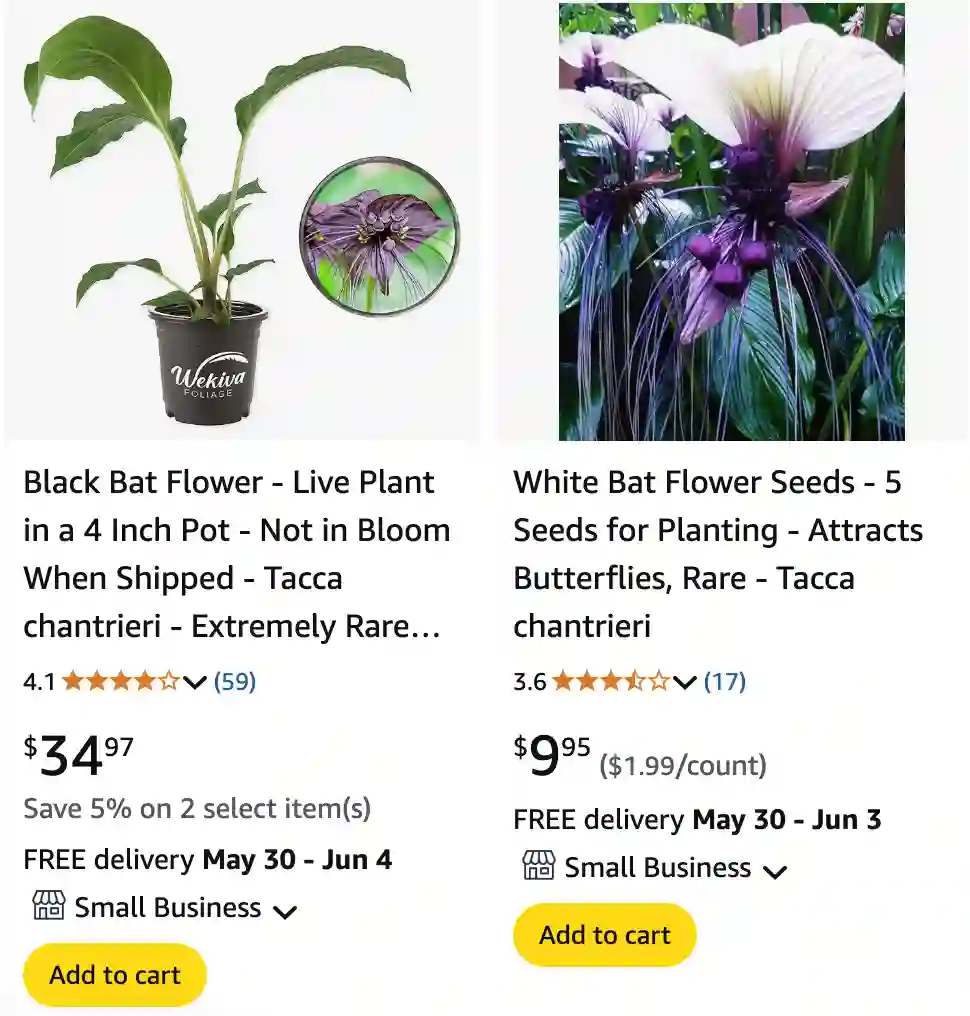
I’ve always had a fascination for the exotic. Among the many plants I’ve nurtured, none has drawn more attention—and questions—than Tacca Chantrieri, also known as the Bat Flower. With its dark, bat-shaped blooms and long, whisker-like filaments, it’s a conversation starter in any tropical garden. It wasn’t easy at first, but once I understood its needs, this plant flourished under my care.
Let me walk you through the most common questions I get about Tacca Chantrieri. Whether you’re curious about growing it, propagating it from seed, or concerned about its toxicity, I’ve got you covered.
How to Grow Tacca Chantrieri?
When I first asked myself how to grow Tacca Chantrieri, I underestimated just how sensitive this plant can be. This isn’t your average shade-loving tropical—it demands specific conditions to thrive.
Light and Temperature:
I keep mine in a bright, indirect light spot. Direct sun burns its broad leaves. It loves warmth—ideally between 70°F and 85°F. When temperatures dip below 60°F, growth slows, and leaves start drooping.
Humidity and Watering:
Humidity is non-negotiable. I maintain 60–80% humidity using a humidifier and by placing the pot over a water-filled pebble tray. Watering is delicate. I keep the soil evenly moist but never soggy. Letting it dry out causes stress, while waterlogged roots lead to rot.
Soil and Fertilizer:
I use a chunky, well-draining mix: orchid bark, perlite, peat, and a bit of compost. Feed it with a diluted balanced liquid fertilizer every two weeks in the growing season (spring through summer). Come winter, I stop fertilizing entirely.
Repotting and Dormancy:
Every two to three years, I repot mine to refresh the mix and allow space for the rhizome to expand. It goes semi-dormant in cooler months, so I reduce watering, but never let the soil dry out completely.
How to Grow Tacca Chantrieri From Seed
Now, if you’re wondering how to grow Tacca Chantrieri from seed, let me warn you—it takes time and patience.
Seed Collection and Preparation:
After blooming, mine occasionally produces seed pods. Once they dry and split, I collect the seeds and soak them in warm water overnight to soften their hard coating.
Sowing the Seeds:
I sow them in a sterile mix of sphagnum moss and perlite. I press them into the surface without covering them. They need light to germinate. I place the tray in a warm spot (around 80°F), cover it with a humidity dome, and keep it consistently moist using a mist spray.
Germination Time:
The waiting game is real. Some seeds take 8–12 weeks to sprout. Others don’t show signs until 6 months later. I’ve had better success when I kept the environment consistently warm and humid.
Transplanting:
Once the seedlings grow two to three leaves, I move them into small pots with the same well-draining tropical mix I use for mature plants. Patience is key—they grow slowly in the first year.
Is Tacca Chantrieri Poisonous?
One of the most frequent questions I get is, is Tacca Chantrieri poisonous? The answer: it’s not considered highly toxic, but caution is wise.
While not officially listed as poisonous by major toxic plant databases, the rhizome and sap may cause skin irritation in sensitive individuals. I always wear gloves when handling the roots or repotting. Also, I don’t let my pets nibble on the leaves—just in case. Better safe than sorry.
Why Is My Tacca Chantrieri Not Blooming?
This one stumped me too when I started. If your Bat Flower isn’t blooming, the most likely reasons are:
- Low light: It needs bright, indirect light.
- Too much water or poor drainage: Root rot halts blooming.
- Lack of nutrients: Underfed plants rarely flower.
- Pot-bound rhizomes: It may need room to grow.
Once I corrected my care routine, I was rewarded with eerie, beautiful blooms every summer.
Does Tacca Chantrieri Need a Dormant Period?
Absolutely. In fall and winter, growth slows or stops. Some leaves yellow and drop. Don’t panic—that’s normal. I reduce watering and stop fertilizing but maintain humidity. In spring, it bounces back with fresh growth. Respecting its natural rhythm has made a huge difference.
Final Thoughts
Growing Tacca Chantrieri has been one of the most rewarding botanical experiences of my life. From figuring out how to grow Tacca Chantrieri from seed to understanding its blooming cycles, it challenged me—but also captivated me. If you’re into rare, dramatic, and otherworldly plants, this one is worth the effort.

If i die, water my plants!