FAQs About Arkansas Black Apple Tree – Malus Domestica ‘Arkansas Black’
As a plant enthusiast with a deep love for unique fruit trees, the Arkansas Black Apple Tree—Malus domestica ‘Arkansas Black’—stands out as one of the most fascinating apples I’ve ever grown. This variety isn’t just attractive; it’s tough, flavorful, and carries a long history rooted in the American South. I’ve compiled answers to the most frequently asked questions I’ve encountered about this tree. Whether you’re planning to plant one or already have, I hope my insights help you get the most from your Arkansas Black Apple experience.
43 Species in Genus Malus – Crabapple
What Makes Arkansas Black Apple Trees Special?
The Arkansas Black Apple Tree is a true heirloom variety that originated in the 1800s in Benton County, Arkansas. What makes it truly special is the fruit’s deep red—almost black—skin, which darkens as it matures. The apples are firm, tart, and incredibly dense when first picked but mellow beautifully after several months in storage. In fact, this is one of the few apples that improves in flavor as it ages. I like to think of them as the “fine wine” of apples.
When Do Arkansas Black Apple Trees Bloom?
One of the first questions I had before planting mine was, “When do Arkansas Black Apple Trees bloom?” In my zone, which is USDA Arkansas Black Apple Tree Growing Zone 5 to 8, they bloom in mid to late spring. That’s usually around April or early May depending on the year. The blossoms are pale pink to white and attract bees like magnets. If you’re a fan of spring garden aesthetics, these blossoms won’t disappoint.
What About Arkansas Black Apple Tree Pollinators?
The Arkansas Black Apple Tree Pollination process requires some planning. These trees are not self-pollinating. To produce a good crop, you’ll need compatible Arkansas Black Apple Tree Pollinators nearby. I’ve had great success pairing mine with Granny Smith, Fuji, and Golden Delicious. These varieties bloom around the same time and ensure cross-pollination. Without a pollinator, you might see flowers but no fruit.
A good tip: Keep pollinators within 50 to 100 feet of your Arkansas Black for best results. If you’ve got bees visiting both trees, you’re on the right track.
How Big Do Arkansas Black Apple Trees Get?
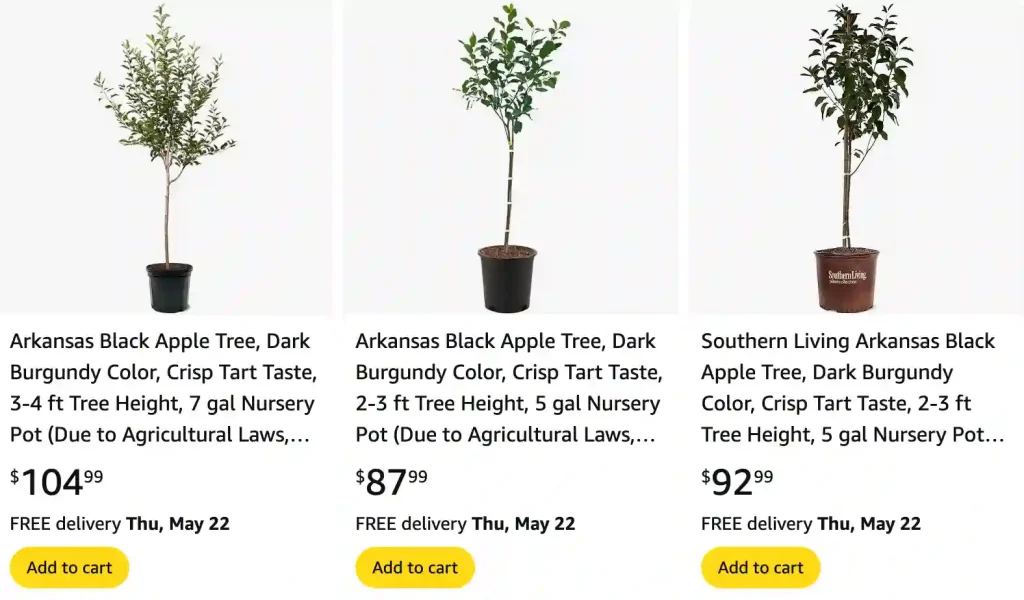
Size is another critical factor when planning your orchard or backyard space. Arkansas Black Apple Tree Size depends on the rootstock it’s grafted onto. A standard tree can reach up to 25 feet tall and wide. Mine is on semi-dwarf rootstock, so it stays around 15 feet, which is much more manageable. Dwarf varieties stay even smaller, topping out around 10 feet. Choose based on your space and how much fruit you want to harvest.
Pruning annually keeps the size in check and helps with air circulation, disease prevention, and light penetration. I prune mine in late winter before new growth begins.
What Growing Conditions Do They Prefer?
The Arkansas Black thrives in USDA Zones 5 through 8. This Arkansas Black Apple Tree Growing Zone range includes much of the continental U.S., from the Midwest to parts of the South and Pacific Northwest. I’ve found that they prefer full sun—at least six hours of direct light daily—and well-drained soil with a slightly acidic pH. Clay-heavy soil needs amending with compost or sand.
Good airflow and proper spacing between trees are crucial for preventing fungal issues like apple scab and cedar apple rust. I also mulch around the base to retain moisture and keep weeds at bay.
How Long Before I Get Fruit?
Patience is key. From planting, it takes around 2 to 5 years before you’ll see your first harvest, depending on rootstock and growing conditions. My tree began fruiting lightly in year three, with full yields by year five. And let me tell you—it was worth the wait. Few apples match the flavor complexity of a well-ripened Arkansas Black.
Bonus Tip: When to Harvest?
You’ll want to pick Arkansas Black apples in October, once the fruit has turned dark red or almost black. The apples are quite hard at harvest but soften in storage. I store mine in a cool basement or fridge for two to three months before eating. They become sweeter, less acidic, and their tannins mellow beautifully.
Final Thoughts
The Arkansas Black Apple Tree is not for the impatient gardener. But if you’re looking for a heritage apple with striking looks, long storage potential, and a layered flavor profile, you won’t be disappointed. With the right Arkansas Black Apple Tree Pollinators, correct planting zone, and attention to pruning and soil, you’ll be rewarded with one of the most unique apples nature has to offer.
If you’re ever wondering When Do Arkansas Black Apple Trees Bloom, how to handle Arkansas Black Apple Tree Pollination, or just need a reminder of the ideal Arkansas Black Apple Tree Growing Zone, come back to this guide. I’ve walked the orchard rows. Now you can too—with confidence.

If i die, water my plants!