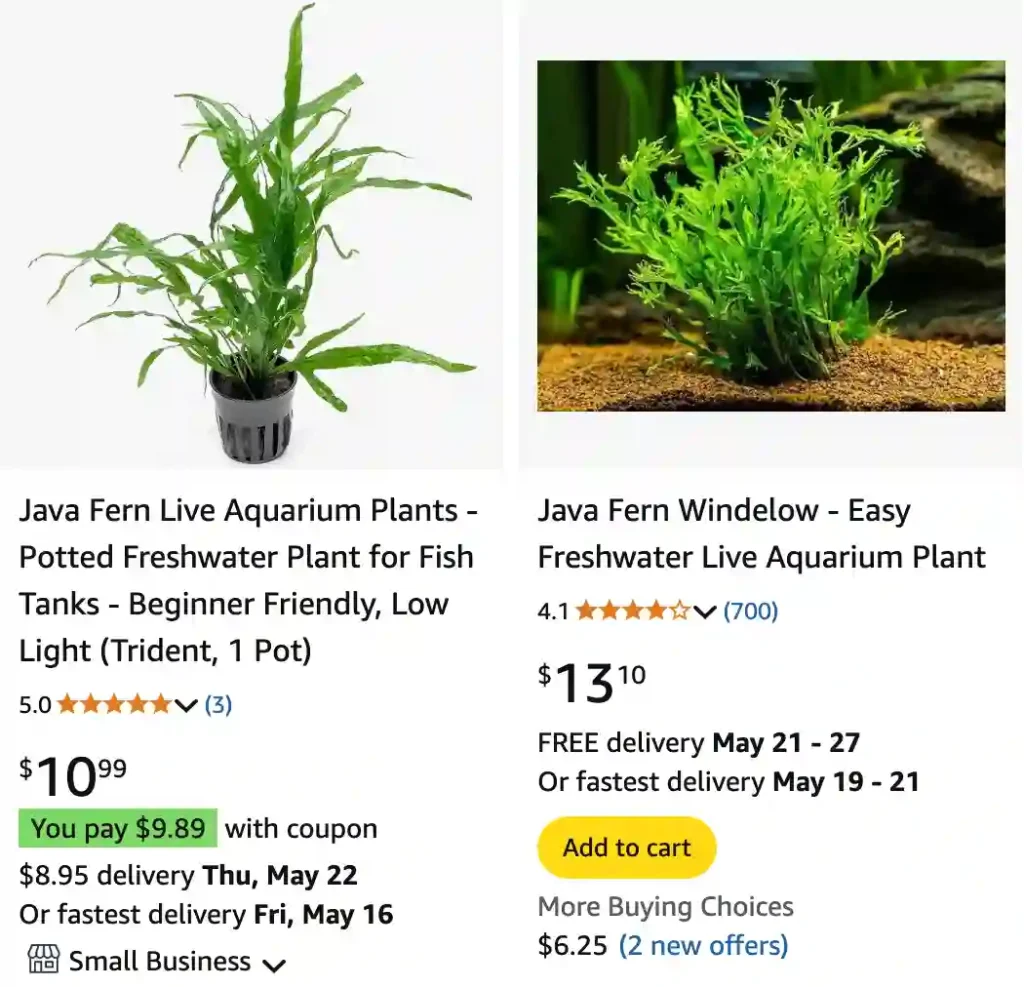
I’ve worked with many aquatic plants, but Trident Java Fern (Microsorum Pteropus ‘Trident’) remains one of my favorites. It’s elegant, hardy, and perfect for low-tech setups. Its thin, forked leaves give any aquascape a wild, organic look. Whether you’re just starting out or deep into planted tanks, Trident adds something special.
Below are common questions I’ve gotten or asked myself when working with this beautiful epiphytic aquatic fern.
What Is Trident Java Fern?
Trident Java Fern is a cultivar of Microsorum Pteropus. What sets it apart is its unique, narrow leaves that split like a trident. Some leaves have three forks. Some have five. It’s unpredictable in the best way.
Native to Southeast Asia, this plant grows along streams and rivers, often clinging to driftwood or rocks. In the aquarium hobby, it’s a gem. It thrives in low light. It doesn’t need CO₂. And it grows slowly, which means less trimming.
Semantic Entities: Aquatic fern, Microsorum Pteropus, epiphyte, low-light plant, slow-growing aquarium plant.
How Do I Plant Trident Java Fern?
You don’t bury the roots. Ever. Like all Java Ferns, Trident has a rhizome—a horizontal stem from which the roots and leaves grow. If you bury it, the rhizome will rot.
I always tie or glue mine to driftwood, lava rock, or ceramic media. Over time, the roots grip the surface. Once it anchors, you can remove the tie.
Tips:
- Use cotton thread, fishing line, or aquarium glue.
- Give it a few weeks to attach before removing supports.
How Is It Different from Narrow Leaf Java Fern?
Great question. I’ve kept both. Here’s how I compare them:
| Feature | Trident Java Fern | Narrow Leaf Java Fern |
|---|---|---|
| Leaf Shape | Multi-forked, wild, split | Thin, straight, simple |
| Texture | More delicate appearance | Rigid and uniform |
| Growth Habit | Slightly bushier | Upright and tight |
| Aesthetic Appeal | Natural, jungle-like | Clean and structured |
Trident feels more “untamed.” I use it in nature-style aquascapes, while Narrow Leaf suits Iwagumi or Dutch-style tanks better.
How Fast Does It Grow?
Slow. That’s both a curse and a blessing. I don’t have to trim it every week, but it does test my patience. Under optimal conditions—moderate light, stable nutrients, and maybe a dash of CO₂—it sends out new leaves faster. But don’t expect a jungle overnight.
Pro tip: Add root tabs nearby even if it’s not planted. The roots absorb nutrients from the water and surrounding surfaces.
Can I Use It in Low-Tech Aquariums?
Yes. And I do all the time. This is where Trident shines. I’ve kept it in tanks with no CO₂, basic sponge filters, and weak lights. It just grows slower.
That said, if you add CO₂ and better lights, it becomes fuller and richer in green. But it never becomes needy. That’s why I recommend it to beginners and pros alike.
Semantic Tags: Low-tech aquarium, non-CO₂ plants, beginner-friendly aquarium plant, adaptable ferns.
Does It Work in High-Flow Tanks?
Yes, within reason. In my 40-gallon river tank, Trident ferns hold up well to current. Their roots cling tight. But if the flow is too strong, the leaf tips might break.
If you plan to add it to a fast-flow or hillstream setup, anchor it well and place it in low-to-medium current areas.
How Do I Propagate Trident Java Fern?
Trident Java Fern propagates in two ways:
- Rhizome Division – I just cut the rhizome into chunks. Each must have at least a few leaves and roots. Then I reattach.
- Adventitious Plantlets – Tiny ferns grow on old leaf tips. When they get a few leaves and roots, I pluck and replant them.
I always keep these baby ferns in a low-flow nursery zone. They’re sensitive at first.
Is Trident Java Fern the Same as Windelov?
No. Windelov Java Fern is another Microsorum cultivar with frilly leaf tips. Trident splits further down the leaf, giving a more dissected, “chaotic” look. Windelov is more decorative, while Trident feels more natural.
In my scapes, I use Windelov for accent points and Trident for background flow.
What Fish or Inverts Go Well with It?
Trident Java Fern is tough. I’ve had it with:
- Shrimp – Especially Amano and Cherry Shrimp.
- Plecos – They don’t munch on it like they do softer plants.
- Cichlids – Even some dwarf species leave it alone.
- Snails – Nerites and Mystery snails clean the leaves without harming them.
If you have plant-nibblers like goldfish or larger barbs, Trident may survive, but I wouldn’t bet on it.
Why Should I Choose Trident Over Other Java Ferns?
If you want something unique yet manageable, Trident hits that sweet spot. It doesn’t need liquid dosing. It doesn’t mind shade. It fills space without overgrowing. The forked leaves dance in the current. It’s not just a plant—it’s a statement.
Compared to standard Java Fern, Trident is more sculptural. Compared to Windelov, it’s more wild. Compared to Narrow Leaf, it’s more layered. I often pair them together for depth.
Final Thoughts
I never get tired of watching Trident Java Fern sway in the water. It gives my tanks a dynamic, forested feel. It’s not flashy. It’s not high-maintenance. But it has character.
If you’re building a planted tank—especially a low-tech one—give Microsorum Pteropus ‘Trident’ a shot. It just might become your favorite too.

If i die, water my plants!