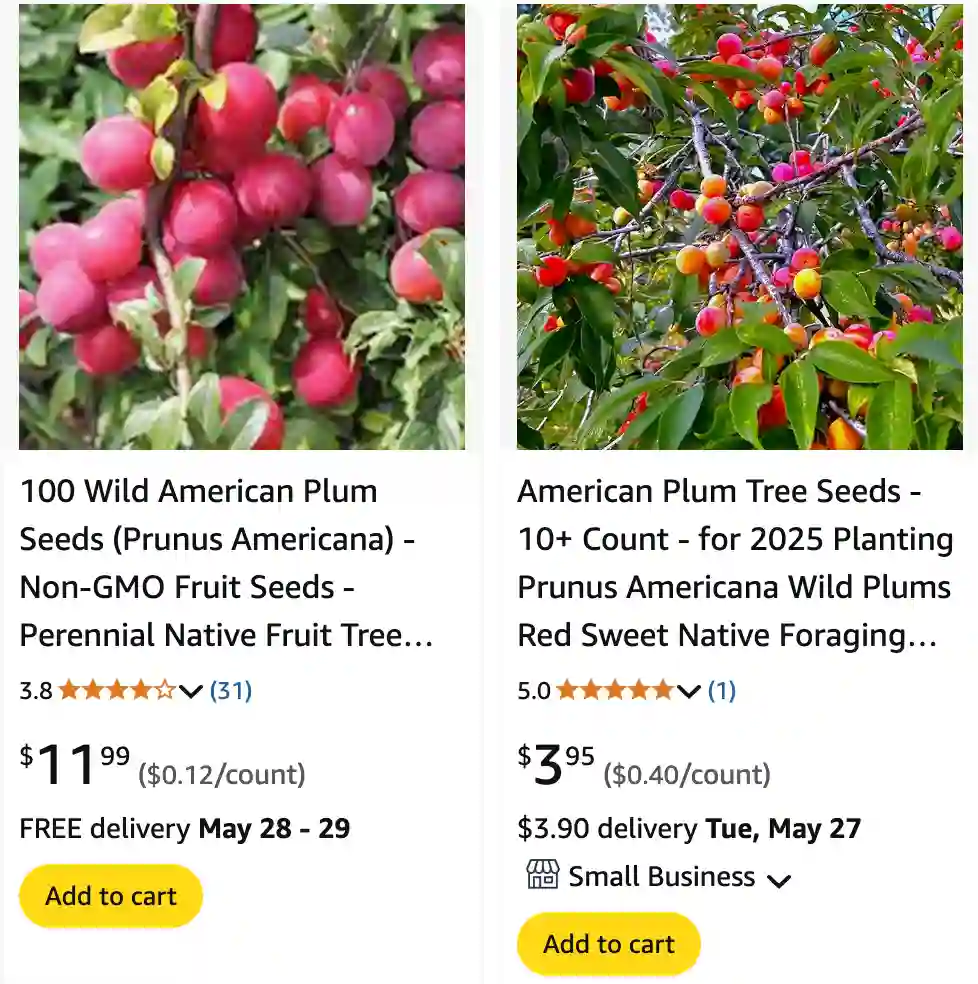
Prunus Americana, also known as the American Plum, holds a quiet power in the native landscape. I’ve grown it, pruned it, picked from it, and sometimes even argued with its suckers. Here’s everything I’ve learned—raw, useful, and straight from my dirt-covered hands.
390 Species in Genus Prunus
What Is Prunus Americana?
Prunus Americana is a deciduous shrub or small tree native to North America. It’s part of the Rosaceae family and produces small, tart plums. Mine grows about 15 feet tall, with spreading branches that turn golden in fall. It flowers in spring—small white blooms that attract bees like magnets. By late summer, I harvest fruit that’s perfect for jams, jellies, and wildlife.
How Do You Grow Prunus Americana?
I grow mine in full sun. It tolerates partial shade, but the fruit production drops. It prefers loamy, well-drained soil, but I’ve had luck even in clay with some compost mixed in. Hardy in USDA Zones 3 to 8, it handles cold winters better than most fruit trees.
Watering is moderate—once a week unless there’s a drought. It doesn’t need fertilizer unless the growth looks stunted. When pruning, I keep the center open for airflow and remove any crossing branches or suckers that pop up from the base.
What’s the Difference Between Prunus Americana and Prunus Domestica?
Ah, the classic American Plum vs. European Plum comparison. I’ve grown both. Prunus Domestica (European Plum) is the one you often find in supermarkets—larger, sweeter, and bred for commercial farming. Prunus Americana, by contrast, is wild at heart. Its fruit is smaller and more tart, but it makes up for that with rugged resilience and native beauty.
American Plum also suckers more aggressively. I use that to my advantage for a hedge or windbreak. Domestica grows more like a formal orchard tree—clean lines, fewer surprises.
Is Prunus Americana Edible?
Yes, and I eat it often. The fruit has a thin skin and juicy yellow flesh with a single stone. It’s tart when raw, so I typically cook it into preserves, wine, or fruit leather. Wildlife loves it too. I’ve seen foxes, raccoons, and birds gather around mine in late summer.
Just remember, the seeds contain amygdalin, a compound that can release cyanide in large amounts. Don’t chew or crush the pits. That’s true for all stone fruit in the Prunus genus.
Does Prunus Americana Attract Pollinators?
Absolutely. The spring blossoms are a beacon for native bees, bumblebees, and even mason bees. I’ve also seen early butterflies like Mourning Cloaks on mine. If you care about pollinator health and biodiversity like I do, this is a great plant. It also supports native caterpillars—part of the Lepidoptera lifecycle—which means more birds in your yard come summer.
Can You Use Prunus Americana as a Hedge?
Yes, and I have. It suckers like mad, which can be annoying if you want a tidy tree, but perfect if you want a natural fence. I’ve planted them 5 feet apart and let them grow wild. The dense thicket keeps deer out and creates nesting habitat for birds. Just prune it once a year to shape it and remove any dead wood.
How Does It Compare to Amelanchier or Cornus?
If you’re choosing between Prunus Americana, Amelanchier (Serviceberry), or Cornus (Dogwood), here’s my take:
- Prunus Americana – Best for fruit, wildlife value, and hedging.
- Amelanchier – Better ornamental value; its fruit is sweet and early.
- Cornus – Beautiful flowers and fall color, but fruit isn’t as useful.
All three are great native choices, but Prunus Americana has the most rugged edge. It’s a bit of a scrappy survivor—like an understory rebel that keeps giving.
Is It Disease or Pest Resistant?
Pretty good, but not bulletproof. I’ve seen black knot fungus on mine once, which I pruned out immediately. Aphids and Japanese beetles show up occasionally. I avoid chemicals and just spray neem oil or introduce ladybugs. Its native resilience really shines compared to exotic fruit trees, which often need more care.
How Long Does It Take to Bear Fruit?
From seed, it can take 3 to 5 years. If you’re planting from bare root or a young tree, maybe 2 to 3 years. Mine started producing in year three. Keep the tree healthy, and it will reward you. I thin the fruit when it’s heavy to keep the branches from snapping.
Does It Hybridize Easily?
Yes, and that’s part of the fun. Prunus Americana cross-pollinates with other Prunus species. I’ve seen hybrids with Prunus nigra (Canada Plum) and even Prunus salicina (Japanese Plum). These hybrids sometimes have larger or sweeter fruit. If you’re into edible landscaping, that’s worth exploring.
Final Thoughts: Why I Keep Growing Prunus Americana
I grow Prunus Americana because it connects me to the land. It’s not fussy. It feeds birds and bees. It gives fruit without a fuss. In an age of imports and ornamentals, it’s a native anchor. It teaches patience, resilience, and reward.
Whether you want fruit, beauty, habitat, or a thorny hedge with purpose, American Plum offers it all. No fluff, no pretense—just roots in the ground and something to bite into at the end of summer.

If i die, water my plants!