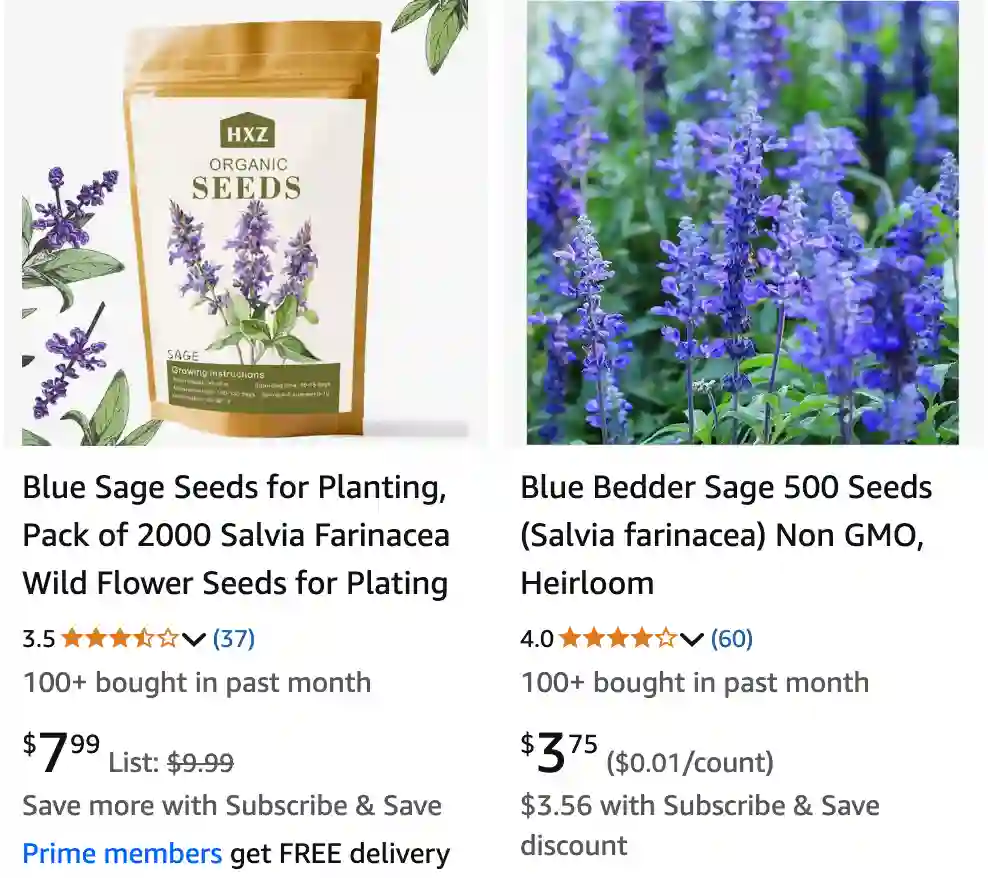
I’m Ferb Vu, and Salvia Farinacea has become one of my favorite go-to plants for vibrant color and garden resilience. Also known as Mealycup Sage, this perennial salvia brings bold blue to purple flower spikes and thrives in the heat. Here, I’ve compiled answers to the most common questions I get about this plant—from growth habits to comparisons with other salvias and pollinator-friendly perennials.
1050 Species in Genus Salvia
What Is Salvia Farinacea?
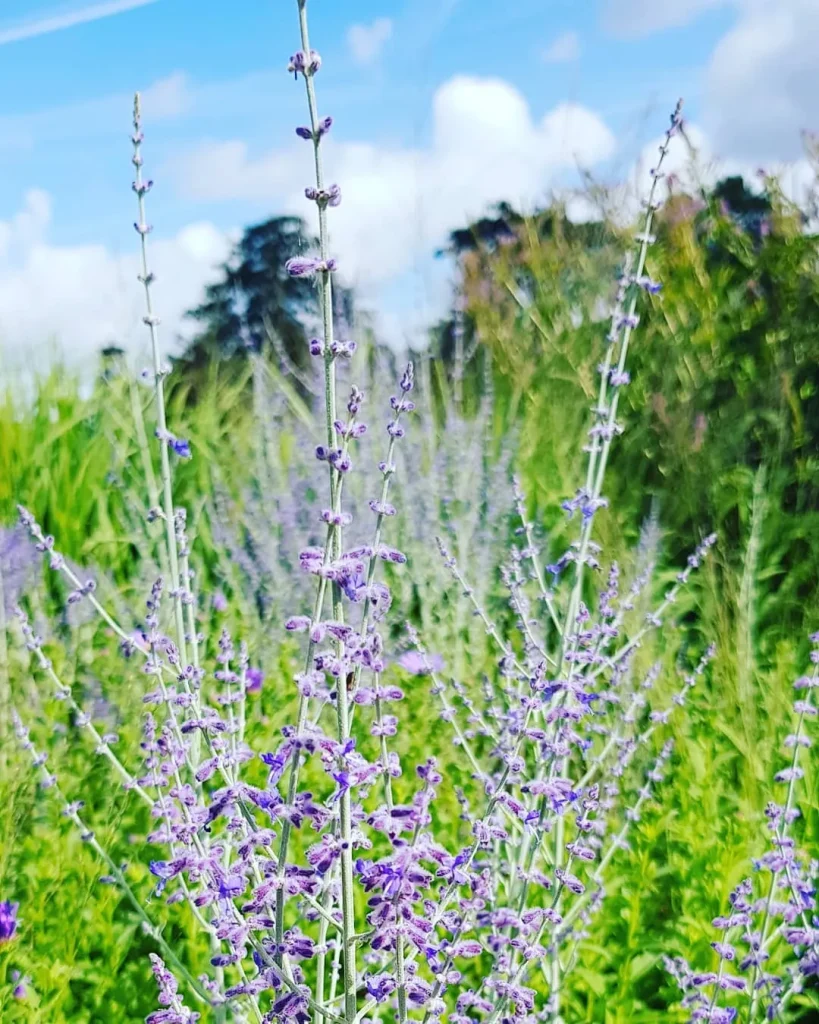
Salvia Farinacea is a herbaceous perennial native to Texas and Mexico. It belongs to the Lamiaceae (mint) family. What I love most is its velvety, spire-like blooms. The flowers range from cobalt to deep violet, sometimes with silvery tones—hence the name “Mealycup.”
Its leaves are lance-shaped, textured, and slightly aromatic. While technically a tender perennial, in my experience, it acts like an annual in colder USDA zones (below 8). I treat it as an annual in frosty areas but it’s evergreen in milder climates.
How Tall and Wide Does It Grow?
Typically, Salvia Farinacea reaches about 18 to 30 inches in height, and spreads roughly 12 to 18 inches wide. That’s a compact form, perfect for front borders, pollinator beds, or container plantings. I often pair it with taller Salvia Guaranitica or plant it along pathways for a tidy, floral display.
Does Salvia Farinacea Attract Pollinators?
Absolutely. It’s a magnet for bees, butterflies, and hummingbirds. The tubular flowers are rich in nectar, and I’ve noticed monarchs especially love hovering around them. Unlike some salvias, it also holds its bloom for months—usually from late spring through fall—which means long-term food for pollinators.
Is It Drought Tolerant?
Yes, and that’s one of the main reasons I recommend it for xeriscaping. After the roots establish, it thrives in dry, poor soil, and full sun. I rarely water my Farinacea once it’s settled in. Its drought resistance rivals that of Lavandula (lavender) or Gaillardia (blanket flower).
How Does Salvia Farinacea Compare to Salvia Splendens?
I get this question a lot. Here’s the key breakdown:
- Salvia Farinacea: More subtle in bloom color (blue/purple), elegant, drought-tolerant, and supports wildlife.
- Salvia Splendens (Scarlet Sage): Flashier, usually red, more moisture-loving, often grown as an annual.
Personally, I find Farinacea more refined and easier to integrate into mixed borders. It also blends better with other prairie plants like Echinacea and Coreopsis.
Can It Survive Winter?
In USDA zones 8 to 10, yes. Mine returned in spring after mild winters. But in colder zones, it’s best treated as an annual or overwintered indoors. I’ve also had success mulching heavily in late fall to give it a chance at returning the next season.
What Varieties Do I Recommend?
Over the years, I’ve tried several cultivars. Here are my favorites:
- ‘Victoria Blue’: Deep indigo blooms, compact and tidy.
- ‘Evolution’: Comes in white and violet forms. Good for containers.
- ‘Henry Duelberg’: Tough, larger, and fantastic for mass planting. It was discovered growing wild in Texas!
Each cultivar has its strengths, but they all share that classic upright structure and pollinator appeal.
Can I Grow It in Pots?
Yes, and I often do. Choose a pot at least 12 inches wide, and make sure it has drainage holes. Use a light, well-draining soil mix. I like to mix in perlite or coarse sand for added aeration. In containers, they may need more frequent watering—especially during hot, dry spells.
Is Salvia Farinacea Edible or Medicinal?
While it belongs to the sage family, Salvia Farinacea isn’t used in cooking like Salvia Officinalis (culinary sage). It’s more ornamental. I wouldn’t consume it. However, its value lies in ecosystem support and garden biodiversity.
What Problems Should I Watch For?
It’s surprisingly trouble-free. Here’s what I’ve encountered:
- Powdery mildew: Only in humid conditions with poor air circulation.
- Whiteflies and aphids: Rare, but manageable with insecticidal soap.
Deadheading spent flowers promotes reblooming and keeps plants looking fresh. I do it weekly during the growing season.
What Plants Pair Well With Salvia Farinacea?
My favorite companions include:
- Rudbeckia Hirta: The gold contrasts beautifully with the purple blooms.
- Gaura Lindheimeri: Adds airy movement.
- Sedum ‘Autumn Joy’: Similar drought tolerance and bloom overlap.
These combinations provide a dynamic planting palette with strong seasonal color and structure.
Final Thoughts: Why I Keep Growing Salvia Farinacea
Salvia Farinacea checks all my boxes: low-maintenance, high-impact, wildlife-friendly, and heat-loving. Whether you’re a beginner or seasoned gardener, this salvia is a sure win. It thrives in harsh conditions, brings life to your garden, and rarely asks for anything in return.
In a time when climate adaptability matters more than ever, Salvia Farinacea proves itself—season after season.

If i die, water my plants!