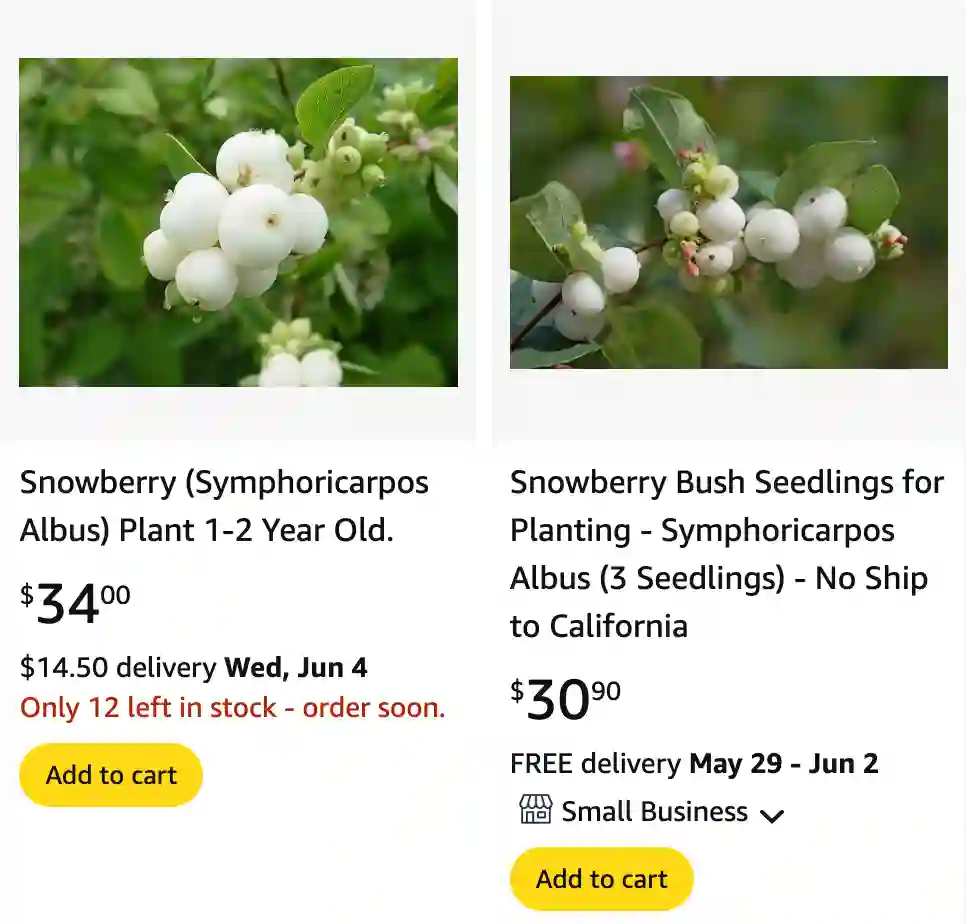
I’ve spent years growing and observing native plants in my garden, and Symphoricarpos Albus, better known as Common Snowberry, is one that keeps surprising me. This deciduous shrub, part of the Caprifoliaceae family, stands out for its resilience, wildlife value, and those beautiful white berries that look like snowballs. In this FAQ, I’ll share what I’ve learned—clearly, concisely, and based on real experience.
15 Species in Genus Symphoricarpos
What Is Symphoricarpos Albus?
Symphoricarpos Albus is a deciduous shrub native to North America, especially in the Pacific Northwest, Rocky Mountains, and Great Plains. It thrives in woodland edges, stream banks, and even dry open slopes. The name “Symphoricarpos” comes from Greek, meaning “fruits together,” which refers to the clustered white drupes it bears in fall.
It grows about 3 to 6 feet tall, forms dense thickets, and spreads by rhizomes. The foliage is a soft, dull green—nothing flashy—but the white berries steal the show in autumn.
Why Should I Grow Symphoricarpos Albus?
I grow it because it’s low-maintenance and ecologically valuable. The plant supports native bees, hummingbirds, and provides winter food for birds like grouse and quail. I’ve even seen deer nibble the tender shoots in early spring.
Plus, it’s drought-tolerant, handles poor soils, and grows in both sun and shade. If you need a plant that fills a tough spot—like a dry slope or under a tree canopy—this is a great choice.
Is Symphoricarpos Albus Invasive?
That’s a fair concern. While it’s aggressive in its native range, I don’t call it invasive. It spreads by suckers, yes, but not in a way that chokes out other native vegetation when grown in appropriate settings. In fact, it plays a key role in erosion control and habitat restoration.
However, if you garden in a small space, be prepared to prune regularly or use root barriers. In my experience, it behaves well when kept in check.
How Do I Care for Symphoricarpos Albus?
This is one of the easiest shrubs I’ve ever grown. Here’s my basic care routine:
- Soil: Tolerates clay, sand, and loam. Prefers well-drained soil but can handle periodic flooding.
- Sun: Full sun to part shade. It flowers better in sun.
- Water: Once established, it’s drought-tolerant. I water during dry spells in the first year.
- Pruning: Late winter or early spring. I cut back older stems to rejuvenate growth and shape the plant.
It’s virtually pest- and disease-free in my zone (I’m in USDA Zone 7), and I rarely have to fuss over it.
How Does Symphoricarpos Albus Compare to Symphoricarpos Orbiculatus?
I’ve grown both, and they each have their charm. Symphoricarpos Orbiculatus, or Coralberry, has rosy-pink berries instead of white. It’s native to the Eastern U.S., while Albus is more Western-centric.
In my experience:
- Albus is better for cooler climates and drier soils.
- Orbiculatus thrives in moist woods and has a more refined shape.
- Wildlife uses both, but Albus attracts more birds in the winter because its white berries are more persistent.
I personally prefer Albus for its bold contrast in the winter landscape.
Are the Berries of Symphoricarpos Albus Poisonous?
Yes, they are. The berries contain saponins and can cause mild gastrointestinal symptoms if ingested. That said, they’re not deadly, and most animals, including kids and pets, find them unpalatable due to their bitter taste.
Still, I always advise caution. I’ve never had an issue with my pets or local wildlife, but I don’t recommend planting it near children’s play areas.
Is It a Good Choice for a Wildlife Garden?
Absolutely. I consider it a keystone species in my native plant section. Its flowers feed pollinators like native bees, moths, and hoverflies, and the dense thickets provide shelter for small birds and mammals. The berries offer winter food when other resources are scarce.
It also contributes to plant-pollinator networks, increasing the biodiversity resilience of your landscape.
Can I Use Symphoricarpos Albus in Landscaping?
Yes, and I do. I’ve used it:
- In naturalized borders
- On erosion-prone slopes
- As a foundation plant in low-input landscapes
It pairs well with Amelanchier alnifolia, Ribes sanguineum, and Spiraea douglasii. If you’re going for a Pacific Northwest native garden, it’s a must-have.
What’s the Best Time to Plant Symphoricarpos Albus?
Fall is best. The roots get time to settle in before the heat of summer arrives. I’ve also had success planting in early spring, as long as I keep it well-watered until established.
I avoid planting in peak summer. Like many native shrubs, it resents transplant shock when it’s hot.
Final Thoughts
If you’re looking for a tough, wildlife-friendly, and visually striking shrub, Symphoricarpos Albus checks every box. It’s a low-maintenance, climate-resilient, and ecologically beneficial plant that belongs in any sustainable garden.

If i die, water my plants!