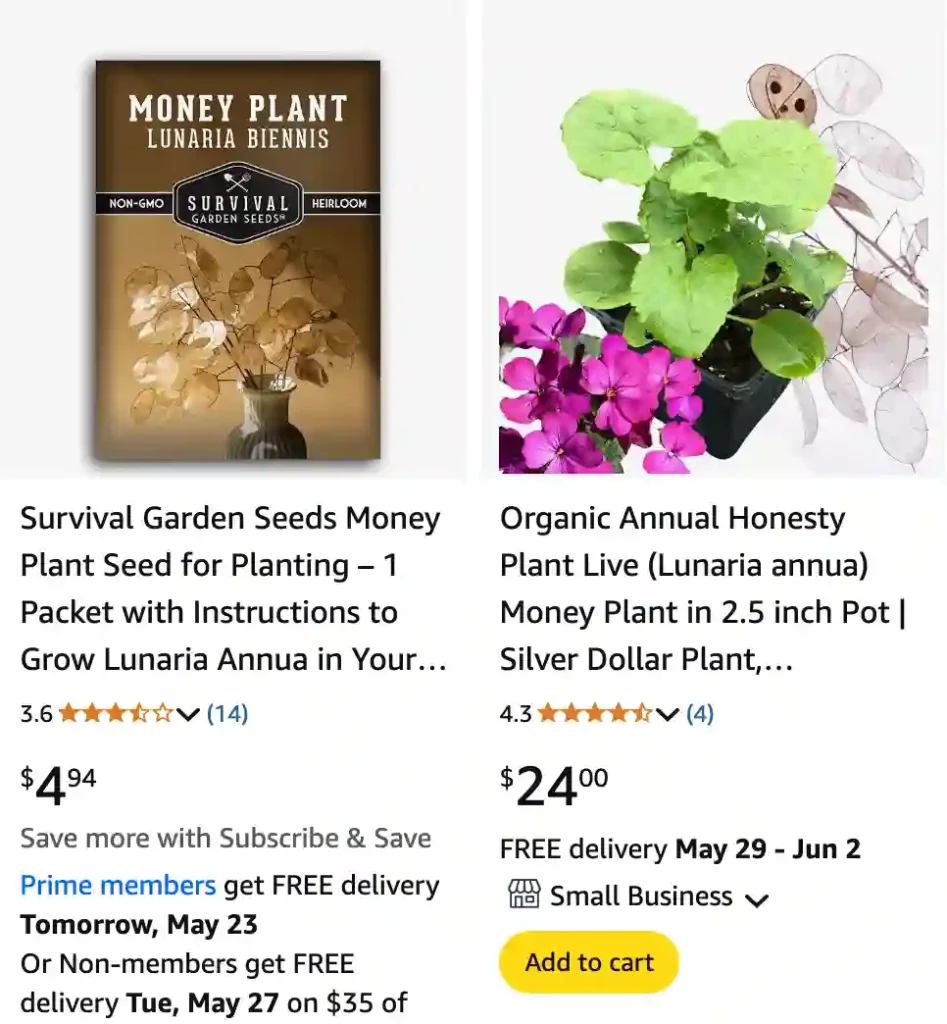
Hey, it’s Ferb Vu here! I want to share what I’ve learned about Lunaria Annua, a beautiful and unique plant I’ve grown and enjoyed for a while. Many people know it as the Silver Dollar plant, Honesty, or Money Plant. It’s a fascinating garden favorite because of its striking seed pods and easy-care nature. In this FAQ article, I’ll answer the common questions I get about Lunaria Annua and compare it briefly with similar plants.
What Is Lunaria Annua and Why Is It Called Silver Dollar Plant?
Lunaria Annua is a biennial flowering plant. It belongs to the Brassicaceae family, the same family as mustard and cabbage. The name “Lunaria” comes from the Latin word luna, meaning moon, which perfectly describes its silvery, round seed pods that look like little moons or silver coins.
People often call it the Silver Dollar plant because those translucent, papery seed pods resemble silver coins. Another common name is Honesty, referencing the seed pods’ see-through nature.
How Do I Grow Lunaria Annua? Is It Easy to Care For?
Yes! I’ve found Lunaria Annua pretty low-maintenance. It prefers full sun to partial shade and well-draining soil. It thrives in temperate climates but can tolerate a bit of cold once established. Since it’s a biennial, it spends the first year growing leaves, then flowers and produces seed pods in the second year before dying.
I usually start it from seed, sowing directly into the garden in early spring or fall. It germinates easily without much fuss. One tip: don’t overcrowd the plants because they like good air circulation.
What Makes Lunaria Annua Different From Other Annual or Biennial Garden Plants?
Compared to other biennials like foxglove or sweet William, Lunaria Annua stands out because of its seed pods. Most biennials bloom and then produce ordinary seed pods that quickly dry and scatter seeds. Lunaria’s pods are decorative even after flowering. They dry into flat, silver discs, which I often use in dried flower arrangements.
Unlike many garden plants that need constant care, Lunaria requires little watering once established and no heavy feeding. It’s both ornamental and functional since it self-seeds easily, so I rarely have to replant.
How Does Lunaria Annua Compare to Lunaria Rediviva?
Good question! Lunaria Rediviva is a close relative of Lunaria Annua, but with a few differences. Lunaria Rediviva is a perennial, meaning it lives and blooms for multiple years, unlike Lunaria Annua, which is biennial.
The seed pods of Lunaria Rediviva tend to be smaller and less showy than Lunaria Annua. Also, Lunaria Annua blooms more prolifically and produces bigger, more dramatic seed pods, which is why it’s more popular for ornamental use.
If you want a plant that comes back year after year with less effort, Lunaria Rediviva might be your pick. But if you want bold, silver seed pods that are great for crafts, Lunaria Annua is the better choice.
Can Lunaria Annua Be Grown Indoors?
I’ve tried growing Lunaria Annua indoors, but it’s a bit tricky. It prefers outdoor conditions with plenty of natural light and fresh air. Indoors, the seed pods don’t develop as fully because of lower light and humidity control.
If you want to try it inside, place it near a bright window or under grow lights. Keep the soil moist but not soggy. Still, for the best growth and beautiful seed pods, outdoor planting is ideal.
What Are Common Pests or Diseases That Affect Lunaria Annua?
From my experience, Lunaria Annua is relatively pest-resistant. However, it can attract aphids, especially when grown near other Brassicas. Slugs and snails might nibble on young leaves, so I keep an eye on that during wet seasons.
Fungal diseases like powdery mildew can occur if the plants are too crowded or if humidity is high. Good air circulation and proper spacing help prevent this.
How Do I Harvest and Use Lunaria Annua Seed Pods?
Harvesting is one of my favorite parts of growing Lunaria Annua. When the flowers fade, the seed pods start developing. I wait until the pods turn papery and silvery, usually late summer or early fall. Then I cut the stems and hang them upside down in a dry, ventilated place to finish drying.
The dried pods are fantastic for floral arrangements, wreaths, and crafts. They add a natural shimmer and unique texture that few plants provide. I also save seeds from the pods to plant the next season.
Is Lunaria Annua Toxic to Pets or Humans?
From what I’ve researched and observed, Lunaria Annua is non-toxic to humans and pets, which is a relief if you have curious cats or dogs. Still, I avoid letting pets chew on any plant just to be safe.
How Does Lunaria Annua Compare to Other Decorative Seed Pod Plants?
There are several plants prized for their seed pods, like Nigella damascena (Love-in-a-Mist) or Papaver somniferum (Poppy). I find Lunaria Annua unique because its seed pods are flat and silvery, unlike the round or spiky pods of others.
Nigella pods have a spiky, balloon-like shape with a delicate lacy flower, while poppy pods are globe-shaped with a crown-like top. Lunaria’s translucent, disc-shaped pods offer a modern, minimalist look perfect for dry arrangements.
Can Lunaria Annua Help Pollinators?
Absolutely! The purple to white flowers of Lunaria Annua attract bees and butterflies. In my garden, I’ve noticed plenty of pollinator activity around them during the blooming season. This makes it a great choice if you want to support local pollinators while adding beauty.
Final Thoughts on Growing Lunaria Annua
I’ve enjoyed growing Lunaria Annua for its simplicity, unique seed pods, and pollinator benefits. It’s a versatile plant that adds interest to any garden or dried flower project. If you want a low-maintenance biennial that brings a bit of shimmer and charm, I highly recommend giving this one a try.

If i die, water my plants!