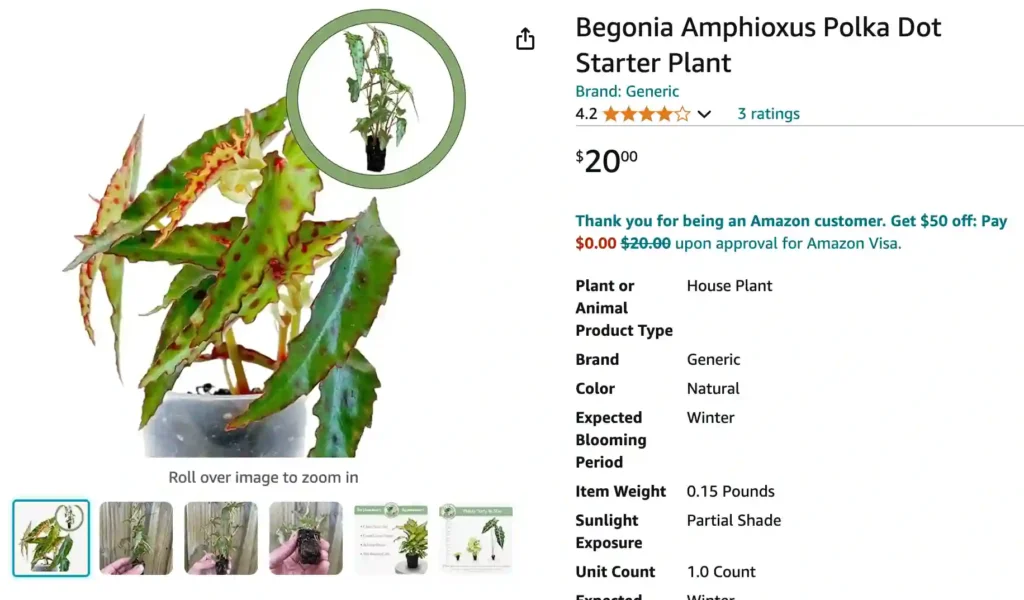
Begonia amphioxus is a truly unique and highly prized Begonia species, a rare gem for plant enthusiasts and a star in the world of terrarium plants. Native to the limestone cliffs of Sabah, Malaysia, in Borneo, this distinctive Begonia is celebrated for its extraordinary lance-shaped leaves, sharply pointed at both ends, and adorned with striking crimson or maroon dots. Its delicate, almost translucent flowers, typically soft pink or greenish-white, add a subtle charm to its already captivating appearance. Begonia amphioxus thrives in very specific, high-humidity conditions, making it a compelling challenge and a rewarding addition for collectors with controlled indoor environments.
Unveiling the Uniqueness: Characteristics of Begonia amphioxus
Begonia amphioxus belongs to the Petermannia section of Begonias, characterized by its adaptation to unique microclimates, often on rocky substrates in humid forests. Its name, “amphioxus,” is Greek for “pointed at both ends,” perfectly describing its distinctive leaf shape.
Key Characteristics of Begonia amphioxus:
- Distinctive Lance-Shaped Leaves: The most striking feature is its long, narrow, lance-shaped leaves that taper to a sharp point at both the base and the apex. They are typically bright to olive green with a shiny surface.
- Crimson Polka Dots: The leaves are famously adorned with small, vibrant crimson or maroon dots scattered across the upper surface, resembling intricate polka dots. A reddish border often frames the leaf margin.
- Compact, Shrub-like Growth: It typically maintains a relatively small and compact, shrub-like growth habit, reaching heights of 10−16 inches (25−40 cm). This size makes it ideal for terrariums and smaller displays.
- Delicate Flowers: It produces small, almost translucent flowers, ranging from soft pink to greenish-white, which emerge from the leaves or stems. While not as showy as some other Begonias, their delicate beauty is appreciated.
- Origin: Endemic to Sabah state, Malaysia, in Borneo, where it grows in light shade on limestone, either at the base of cliffs or on top of outcrops in moist, shaded rainforests. This limestone habitat suggests a preference for well-draining conditions and possibly a tolerance for slightly higher pH in its substrate.
Comprehensive Care Guide for Begonia amphioxus
Successfully cultivating Begonia amphioxus requires meticulously replicating the warm, humid, and consistently moist but well-drained conditions of its native limestone rainforest cliffs. This makes it primarily a plant for enclosed environments.
1. Light Requirements
- Bright, Indirect Light to Light Shade: Begonia amphioxus thrives in bright, indirect light or light shade. This mimics the dappled sunlight it receives under a dense forest canopy.
- Avoid Direct Sunlight: Direct sun, especially harsh midday and afternoon sun, will quickly scorch its delicate leaves, causing irreversible damage and fading of its vibrant red dots.
- Optimal Placement: Indoors, a north-facing window is an excellent place to keep it. If placed near an east or west-facing window, ensure the light is filtered (e.g., with sheer curtains or by positioning it further away).
- Artificial Light: It can benefit from artificial grow lights, but ensure they are not too intense or placed too close, as overheating can also cause damage.
2. Watering
- Consistently Moist, Never Soggy: This Begonia requires its substrate to be consistently moist but absolutely never waterlogged. Its sensitivity to root rot is high.
- Allow Top Inch to Dry Slightly: Water when the top 1 inch (2.5 cm) of the soil feels dry to the touch. Due to its high humidity needs and potentially porous substrate (if mimicking limestone), it may require consistent watering.
- Thorough Soaking and Drainage: When watering, do so thoroughly until water drains freely from the bottom of the pot. Always use containers with excellent drainage holes and promptly empty any excess water from saucers.
- Avoid Wetting Foliage: It is crucial to water at the substrate level and avoid letting water sit on the leaves, as this can easily lead to bacterial leaf spots or fungal issues.
3. Soil and Potting
- Very Loose, Aerated, and Well-Draining Substrate: Begonia amphioxus demands a highly specialized, airy, and very well-draining substrate that allows for rapid drainage while still retaining some moisture. Its natural growth on limestone suggests a need for excellent root aeration and potentially a slightly higher pH.
- Recommended Mix: A good mix typically includes components like sphagnum moss (long-fiber), perlite (heavy ratio), pumice, orchid bark, coco coir, and possibly some coarse sand or a small amount of lime grit to mimic its limestone habitat. Avoid heavy, dense potting soils.
- pH Preference: Generally prefers slightly acidic to neutral soil, though its limestone habitat may indicate a tolerance for slightly higher pH.
- Pot Selection: Use pots with excellent drainage. Given its compact, shrub-like growth, choose a pot appropriate for its size, ensuring it allows for consistent moisture without being waterlogged.
4. Temperature & Humidity
- Consistent Warm Temperatures: Begonia amphioxus thrives in warm temperatures, with an ideal range generally between 65∘F and 75∘F (18∘C to 24∘C). Some sources suggest it can tolerate up to 85∘F (30∘C) but prefers cooler nights (60∘F or 16∘C). It is not frost-hardy and will suffer below 50∘F (10∘C).
- Avoid Fluctuations and Drafts: Protect the plant from sudden temperature fluctuations and cold drafts, as consistency is vital for this delicate species.
- Extremely High Humidity is Essential: This is the most critical factor for its survival and thriving. Begonia amphioxus requires very high humidity levels, ideally between 70% and 100% relative humidity. Lower humidity will quickly lead to crisped or yellowing leaf edges and overall plant decline.
- Best Environment: It is highly recommended to grow this plant exclusively in a closed terrarium, greenhouse, or plant cabinet where consistently high humidity can be maintained. Normal household humidity is entirely insufficient for its long-term health.
- Airflow: Despite the need for extreme humidity, gentle, minimal airflow (not strong direct fans) is important within the enclosed environment to prevent stagnant air and associated fungal issues.
5. Fertilization
- Moderate, Diluted Feeding: Fertilize Begonia amphioxus moderately during its active growing season (spring and summer) to support its growth.
- Recommended Regimen: Use a balanced, water-soluble liquid fertilizer, diluted to a very weak solution (e.g., quarter strength or less). Apply monthly or every 4−6 weeks. Over-fertilization can lead to leaf burn and root damage.
- Reduce in Dormancy: Reduce or cease fertilization entirely during cooler, less active periods.
6. Pruning and Maintenance
- Minimal Pruning: Begonia amphioxus generally requires minimal pruning due to its compact growth habit.
- Maintain Tidiness: Promptly remove any dead, dying, or yellowing leaves to maintain plant health and appearance. This is crucial for preventing fungal issues, especially in high-humidity environments.
- Sterile Tools: Always use clean, sharp, sterilized tools for any pruning to prevent the introduction and spread of pathogens.
Propagation: Multiplying the Lancet-Leaf Beauty
Begonia amphioxus can be effectively propagated through leaf cuttings or stem cuttings. Seed propagation is also possible but less common for home growers. Successful propagation depends entirely on providing a warm, high-humidity environment.
- Leaf Cuttings (Most Common & Effective):
- Select Leaves: Choose a healthy, mature leaf without any signs of damage.
- Preparation: Make a clean cut through the leaf stalk (petiole), about 1 inch (2.5 cm) from the base. Small cuts can be made along the veins on the underside of the leaf to encourage root growth.
- Rooting Medium: Insert the leaf stalk into a moist, well-draining rooting mix (e.g., sphagnum moss, perlite, or a light seed-starting mix). Ensure the cuts are facing down.
- Environment: Provide very high humidity (e.g., within a sealed plastic bag or terrarium) and warm, bright, indirect light.
- Rooting: Tiny new plantlets will emerge from the leaf veins within a few weeks. Once they develop roots and a few true leaves, they can be carefully separated and potted individually.
- Stem Cuttings:
- Select Cuttings: Choose healthy stem sections with at least one node.
- Rooting: Insert the cutting into a moist, well-draining rooting medium (e.g., sphagnum moss or a specialized Begonia mix). Rooting hormone can be used.
- Environment: Maintain very high humidity and warm, bright, indirect light. Roots typically develop within a few weeks.
- Division: For mature, established plants, division can be an effective method. Gently remove the plant from its pot and carefully separate the plant into sections, ensuring each has a healthy root system and a few leaves. Repot each division in fresh substrate.
Common Pests and Diseases
Begonia amphioxus is delicate and sensitive to environmental imbalances, making it susceptible to certain issues if its specific needs are not met.
- Pests:
- Spider Mites: These can be a significant threat, especially if humidity drops even slightly. Watch for webbing and stippling on leaves.
- Mealybugs, Aphids, Thrips: Inspect regularly. Treat with appropriate, gentle insecticides.
- Diseases:
- Root Rot / Crown Rot: The most prevalent and serious issue, almost always due to overwatering or poorly draining substrate. Leads to wilting, yellowing leaves, and mushy stems. This plant is extremely sensitive to soggy conditions.
- Powdery Mildew: White, powdery spots on leaves and stems. Favored by high humidity with poor air circulation and cool temperatures. Improve airflow, avoid overhead watering.
- Bacterial Leaf Spot: Dark, water-soaked spots on leaves, often due to water sitting on foliage. Avoid overhead watering.
- Leaf Drop: Can be caused by sudden temperature changes, insufficient humidity, or inconsistent watering.
- Environmental Stress (Non-Pathogenic Issues):
- Crispy/Browning Leaf Edges: Almost always a sign of insufficient humidity.
- Yellowing Leaves: Often indicates overwatering or nutrient deficiency.
Prevention is Key: Maintaining extremely consistent and optimal environmental conditions (high humidity, stable temperature, gentle airflow, precise watering) is the best defense. Immediate isolation and treatment are vital at the first sign of any issue.
Design Ideas and Display for Begonia amphioxus
The unique leaf shape and vibrant spotting of Begonia amphioxus make it a fascinating focal point for specialized indoor displays, particularly within controlled environments.
- Terrariums: This is the ideal and most recommended setting. A closed terrarium provides the stable, extremely high humidity and filtered light it absolutely requires, allowing its unique foliage to truly flourish.
- Plant Cabinets/Ikea Greenhouse Cabinets: These setups offer the perfect microclimate, providing precise control over humidity, temperature, and light, making them ideal for showcasing this rare species.
- Collector’s Specimen: Best displayed as a standalone piece where its intricate leaf details can be appreciated up close. Its rarity and specific demands make it a prized possession.
- Pairing: Within a terrarium, it can be paired with other small, high-humidity-loving plants that provide textural contrast, such as miniature ferns, mosses, or other rare small Aroids. Its unique leaf shape makes it a striking contrast to broad-leafed plants.
Begonia amphioxus vs. Other Popular Begonia Types
Understanding where Begonia amphioxus fits within the diverse Begonia genus highlights its unique attributes, particularly its distinct leaf morphology and extreme humidity requirements.
- Begonia amphioxus (Petermannia Section):
- Key Differentiator: Unique lance-shaped leaves pointed at both ends, with crimson/maroon polka dots; requires extremely high humidity.
- Foliage: Striking, decorative leaves, primary ornamental feature.
- Flowers: Small, delicate, soft pink or greenish-white.
- Growth Habit: Compact, shrub-like.
- Root System: Fibrous.
- Light: Bright, indirect light to light shade.
- Humidity: Extremely high (70-100%) is crucial.
- Primary Use: Terrariums, plant cabinets, collector’s plant.
- Begonia darthvaderiana (Petermannia Section):
- Key Differentiator: Dramatic near-black leaves with a sharp lime-green/silvery edge; dark red undersides; highly demanding extreme humidity (90-100%).
- Foliage: Striking, velvety, asymmetrical, oblong-ovate.
- Flowers: Small, deep red, inconspicuous.
- Growth Habit: Erect stem, shrub-like.
- Light: Low to intermediate, bright indirect; sensitive to direct sun.
- Primary Use: Advanced collector’s plant for terrariums/plant cabinets; a challenge to grow.
- Begonia ‘Darthvaderiana x malachosticta’ Hybrid:
- Key Differentiator: Combines dark leaves with green/yellowish spots and a distinct green margin; deep red undersides; very high humidity.
- Foliage: Unique spotted pattern inherited from malachosticta on a dark background.
- Growth Habit: Bushy.
- Humidity: Extremely high (80-100%) crucial, but may be slightly more forgiving than pure darthvaderiana.
- Primary Use: Advanced collector’s plant for terrariums/plant cabinets.
- Begonia malachosticta:
- Key Differentiator: Velvety, pale to olive green leaves with striking pink to pinkish-purple spots; red undersides/petioles; sensitive to overly wet substrate despite high humidity.
- Foliage: Unique spotted texture.
- Humidity: High humidity, but care needed with substrate moisture.
- Distinction: Lacks the overall dark base coloration and distinct leaf shape of amphioxus.
- Begonia Ferox (Rhizomatous):
- Key Differentiator: Glossy green leaves with prominent, dark, conical bullae (spikes); rhizomatous; requires very high humidity.
- Foliage: Unique, textured, almost prehistoric appearance.
- Light: Bright, indirect light to semi-shade.
- Humidity: Very high (70-90%) is crucial.
- Primary Use: Advanced collector’s plant for terrariums/plant cabinets, unique foliage specimen.
- Begonia U514 (Unidentified Rhizomatous Species):
- Key Differentiator: Foliage plant with bronze new growth transforming to dark green, reddish-purple undersides; rhizomatous.
- Light: Bright, indirect light.
- Humidity: Medium to high (50-60%) preferred.
- Care: Requires soil to dry relatively between waterings.
- Distinction: Lacks the unique leaf shape and spotting of amphioxus.
- Begonia Thelmae (Trailing/Scandent):
- Key Differentiator: Delicate trailing/vining habit; relatively small, often textured leaves; dainty white/pale pink flowers; demands very high humidity.
- Foliage: Small to medium, ovate to heart-shaped, subtle texture/color.
- Flowers: Small, white/pale pink.
- Growth Habit: Trailing, vining, can be scandent.
- Root System: Fibrous.
- Light: Bright, indirect light.
- Humidity: Extremely high (70%+) is crucial.
- Primary Use: Terrariums, hanging baskets, specialized indoor displays.
- Rex Begonias ( Begonia rex-cultorum – Rhizomatous):
- Key Differentiator: Grown for highly ornamental, often metallic, variegated, intricately patterned foliage; wide range of non-iridescent colors.
- Foliage: Highly diverse patterns, textures, and colors.
- Flowers: Small, inconspicuous.
- Growth Habit: Compact to spreading, grows from creeping rhizomes.
- Light: Bright, indirect light.
- Humidity: Prefer high humidity.
- Primary Use: Houseplants for decorative foliage, terrariums.
Toxicity of Begonias
Important Note: All Begonias, including Begonia amphioxus, contain insoluble calcium oxalates, making them toxic to pets (dogs and cats) if ingested. The highest concentration of these toxic compounds is generally found in the roots. Ingestion can lead to:
- Intense burning and irritation of the mouth, tongue, and throat.
- Excessive drooling.
- Vomiting.
- Difficulty swallowing.
- Lack of appetite.
While usually not life-threatening due to the immediate discomfort that deters further ingestion, it’s crucial to keep these plants out of reach of curious pets and small children. In rare, large ingestions, more severe symptoms like kidney failure have been reported. For humans, the toxicity is generally considered mild, but ingestion of any plant material is not recommended. Always contact a veterinarian immediately if you suspect your pet has ingested any part of the plant.
Conclusion
Begonia amphioxus is a truly captivating and visually stunning Begonia species, a testament to the extraordinary diversity of Bornean rainforests. Its unique lance-shaped, polka-dotted leaves make it an unparalleled ornamental specimen. While it demands precise and consistent environmental conditions, particularly extremely high humidity and careful watering, the reward is a miniature living masterpiece. For advanced plant enthusiasts and terrarium hobbyists dedicated to providing its specific needs, Begonia amphioxus offers a challenging yet immensely fulfilling cultivation experience, transforming any enclosed space into a vibrant botanical showcase.

If i die, water my plants!