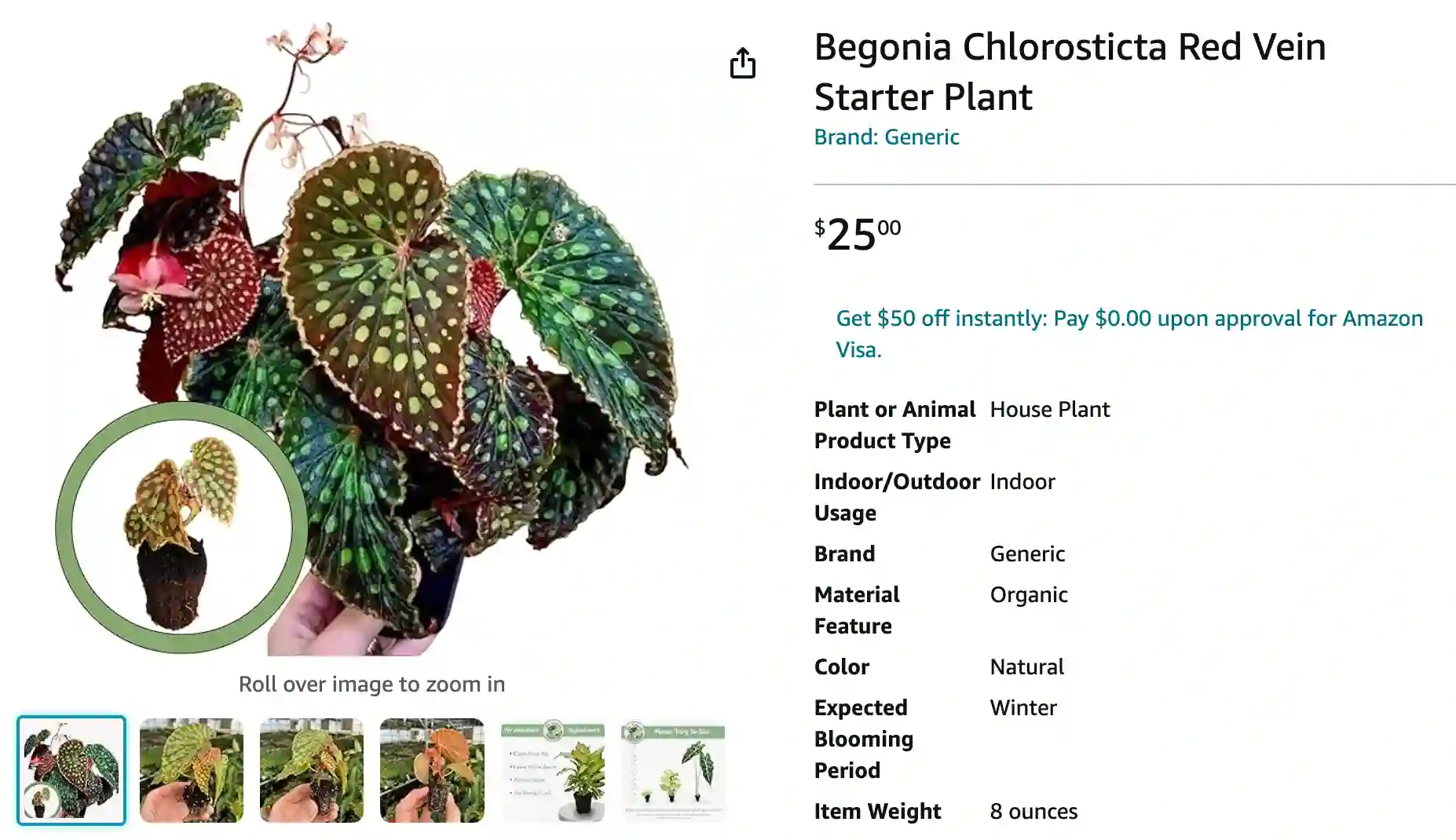
Begonia malachosticta, also known as the Polka-Dot Begonia, is a captivating and highly sought-after species renowned for its extraordinarily vibrant and unique foliage. Native to the humid rainforests of northeast Borneo (specifically the Sandakan District in Sabah, Malaysia), this Begonia features striking deep green leaves adorned with a mesmerizing pattern of bright pink to reddish-purple polka dots. These distinctive spots, combined with red undersides and petioles, create a truly eye-catching display. While it does produce subtle pale green to white or pink flowers, Begonia malachosticta is primarily cherished as a foliage plant, making it a prized possession for collectors and enthusiasts who can provide its specific, high-humidity environmental needs, typically within terrariums or plant cabinets.
Unveiling the Spotted Beauty: Characteristics of Begonia malachosticta
Begonia malachosticta is an herbaceous plant that can reach heights of up to 20 inches (50 cm), occasionally growing taller. It grows naturally on and around limestone slopes in its native habitat, suggesting a preference for well-draining conditions and possibly a tolerance for slightly higher pH.
Key Characteristics of Begonia malachosticta:
- Vibrant Polka-Dotted Foliage: The most prominent feature is its mid-dark green, asymmetrical leaves adorned with numerous round, vibrant pink to pinkish-purple spots on the upper surface. The term “malachosticta” literally means “velvet-spotted,” reflecting the unique texture of these dots.
- Contrasting Undersides and Stems: The undersides of the leaves and the petioles (leaf stems) are a contrasting red or reddish-brown, adding another layer of visual interest.
- Velvety Texture: The leaves are often described as velvety, especially the spots, which may even be slightly curved forward, making them particularly striking.
- Leaf Size: Leaves are typically asymmetrical, measuring 3−10 inches (7−25 cm) long by 1−2 inches (2−5 cm) wide.
- Growth Habit: It has an upright growth form, making it suitable for container cultivation as a decorative indoor plant. It can grow surprisingly large for a specialized Begonia.
- Subtle Flowers: Produces pale green to white or pale pink flowers, which are generally inconspicuous and not the main ornamental draw.
- Unique Leaf Resilience: Interestingly, mature specimens can develop thick and resilient leaves, almost succulent-like, allowing them to cope better with slightly drier substrate conditions (though still requiring high ambient humidity). This can make care for larger plants an “advanced” level.
Comprehensive Care Guide for Begonia malachosticta
Successfully cultivating Begonia malachosticta requires meticulously replicating the warm, humid, and consistently moist but well-drained conditions of its native rainforest habitat, particularly its limestone growing sites.
1. Light Requirements
- Bright, Indirect Light to Partial Shade: Begonia malachosticta thrives in bright, indirect sunlight. This mimics the filtered light it receives under the dense canopy of a rainforest.
- Avoid Direct Sunlight: Direct sun, especially harsh midday and afternoon sun, will scorch its delicate leaves, causing irreversible damage and fading of its vibrant pink spots. Intense light can also cause the foliage to become dull.
- Optimal Placement: Indoors, position it near an east or north-facing window. If placed near a south or west-facing window, use sheer curtains or position the plant further back to diffuse intense light.
- Color Development: Adequate bright, indirect light is essential for its unique pink spotting to be vibrant and well-pronounced.
2. Watering
- Consistently Moist, Never Waterlogged: This Begonia requires its substrate to be consistently moist but absolutely never waterlogged. Its roots are highly susceptible to rot, a common cause of plant demise.
- Allow Surface to Dry Slightly: Allow the top 1 inch (2.5 cm) of the soil to dry before watering again. For larger, more mature specimens, some growers find it prefers to be kept slightly drier in the terrarium compared to other Begonias from the same region, to prevent fungal infections in its stems.
- Thorough Soaking and Drainage: When watering, do so thoroughly until water drains freely from the bottom of the pot. Always use containers with excellent drainage holes and promptly empty any excess water from saucers.
- Avoid Wetting Foliage: It is crucial to water at the substrate level and avoid letting water sit on the leaves. Regular misting directly on the leaves is generally not recommended, as water droplets can easily lead to bacterial leaf spots or fungal issues like powdery mildew. If misting is used, ensure leaves dry quickly and air circulation is good.
- Water Quality: Ideally, use rainwater that is not too cold and low in lime, as it comes from limestone regions.
3. Soil and Potting
- Very Loose, Aerated, and Well-Draining Substrate: Begonia malachosticta demands a highly specialized, airy, and very well-draining substrate that allows for rapid drainage while still retaining some moisture. Its natural growth on limestone slopes implies a need for excellent root aeration and a porous medium.
- Recommended Mix: A good mix typically includes components like high-quality houseplant soil with humus content, amended with sphagnum moss, perlite, orchid bark, pumice, or leca. A mix specifically designed for Begonias from limestone soils is ideal. Avoid heavy, dense, or water-retentive potting soils.
- pH Preference: Generally prefers slightly acidic to neutral soil, though its limestone habitat may indicate a tolerance for slightly higher pH.
- Pot Selection: Use pots with excellent drainage. Choose a pot appropriate for its upright growth habit, ensuring it allows for consistent moisture without being waterlogged. Repotting may be needed every two years or when it outgrows its pot.
4. Temperature & Humidity
- Consistent Warm Temperatures: Begonia malachosticta thrives in consistent warm temperatures, ideally between 60∘F and 80∘F (16∘C to 27∘C). Optimal is 68−77∘F (20−25∘C) with a slight nighttime drop of around 5∘C (9∘F). It is sensitive to cold drafts and should not be exposed to temperatures below 59∘F (15∘C). Prolonged temperatures over 86∘F (30∘C) are also not ideal.
- Avoid Fluctuations: Protect the plant from sudden temperature fluctuations, as consistency is vital.
- High Humidity is Essential: This is a critical factor for its survival and vibrancy. Begonia malachosticta prefers high humidity, ideally above 70%, with some sources recommending 80%+.
- Best Environment: It is highly recommended to grow this plant in a closed terrarium, plant cabinet, or greenhouse where consistently high humidity can be maintained. Normal household humidity is often insufficient, leading to crispy leaf edges.
- Airflow: Despite the need for high humidity, good, gentle air circulation is vital to prevent stagnant air and associated fungal issues.
5. Fertilization
- Moderate, Diluted Feeding: Fertilize Begonia malachosticta moderately during its active growing season (spring through summer) to promote growth and flowering.
- Recommended Regimen: Use a balanced liquid fertilizer every month, diluted to a weak solution (e.g., quarter strength). Avoid high concentrations that can burn the leaves.
- Reduce in Dormancy: Minimize fertilizer application in late fall and winter as growth slows during dormancy.
6. Pruning and Maintenance
- Pruning for Shape and Health: Prune regularly to encourage bushier growth and remove any dead or yellowing leaves. Pinch back stem tips to promote branching.
- Remove Withered Flowers: Promptly remove spent or withered flowers to redirect energy to foliage and overall plant health.
- Sterile Tools: Always use clean, sharp, sterilized tools for any pruning to prevent the introduction and spread of pathogens.
Propagation: Multiplying the Polka-Dot Beauty
Begonia malachosticta can be propagated through stem cuttings, leaf cuttings, division, or seed. Stem and leaf cuttings are the most common methods for home growers.
- Stem Cuttings:
- Select Cuttings: Choose healthy stem sections.
- Rooting Medium: Insert into a moist, well-draining rooting medium (e.g., sphagnum moss or light Begonia mix).
- Environment: Provide warm temperatures, bright indirect light, and high humidity (e.g., within a clear plastic bag or terrarium).
- Leaf Cuttings:
- Method: Cut a healthy leaf from the parent plant. You can insert the petiole (leaf stem) into a moist rooting medium, or cut the leaf into sections containing major veins and lay them flat on the surface.
- Environment: As with stem cuttings, very high humidity and warm, indirect light are essential.
- Division: For mature plants, division of the plant clump or rhizome during repotting can also be an effective propagation method.
Common Pests and Diseases
Begonia malachosticta is generally a robust species, but its preference for specific, high-humidity conditions can make it susceptible to certain issues if not managed properly.
- Pests:
- Mealybugs, Spider Mites, Aphids, Thrips, Whiteflies: Inspect plants regularly, particularly under leaves and on new growth. Treat with appropriate, gentle insecticides like neem oil or insecticidal soap. Spider mites, in particular, can thrive in dry conditions, which is often a sign that humidity is too low for the plant’s needs.
- Sucking Insects: This plant is generally associated with sucking insects.
- Diseases:
- Root Rot / Crown Rot: The most prevalent and serious issue, almost always due to overwatering or poorly draining substrate. Leads to wilting, yellowing leaves, and mushy stems. This plant is sensitive to waterlogging.
- Powdery Mildew: White, powdery spots on leaves and stems. Favored by high humidity with poor air circulation and cool temperatures. Improve airflow, avoid overhead watering.
- Leaf Spot (Bacterial or Fungal): Dark, water-soaked spots on leaves. Can be caused by water sitting on foliage or inconsistent watering. Avoid overhead watering.
- Grey Mold (Botrytis blight): Fuzzy gray or brownish patches, often on decaying plant matter or in damp, cool, crowded conditions. Remove affected parts and improve ventilation.
Prevention is Key: Maintaining extremely consistent and optimal environmental conditions (high humidity, stable temperature, gentle airflow, precise watering), using well-draining substrate, and regular inspection are the best defenses. Promptly address any issues to prevent them from spreading.
Design Ideas and Display for Begonia malachosticta
The vibrant polka dots and rich green foliage of Begonia malachosticta make it an exceptional focal point for specialized indoor displays, particularly where its unique beauty can be enhanced by controlled conditions.
- Terrariums: This is an ideal and highly recommended setting. A closed terrarium provides the stable, high humidity and filtered light it absolutely requires, allowing its unique spotted foliage to truly flourish and exhibit its best coloration.
- Plant Cabinets/Ikea Greenhouse Cabinets: These setups offer the perfect microclimate, providing precise control over humidity, temperature, and light, making them ideal for showcasing this rare species.
- Display Cases/Cloches: Smaller specimens can be grown in decorative glass cloches or bell jars on a shelf, creating a living art piece that protects them from ambient household conditions.
- Collector’s Specimen: Best displayed as a standalone piece where its intricate leaf details can be appreciated up close. Its rarity and specific demands make it a prized possession.
- Pairing: Within a terrarium, it can be paired with other small, high-humidity-loving plants that provide textural or color contrast, such as fine-leafed ferns, mosses, or other rare miniature Aroids.
Begonia malachosticta vs. Other Popular Begonia Types
Understanding where Begonia malachosticta fits within the diverse Begonia genus highlights its unique attributes, particularly its distinctive spotting and high humidity requirements.
- Begonia malachosticta:
- Key Differentiator: Mid-dark green leaves with vibrant pink/reddish-purple polka dots; velvety texture; red undersides/petioles; requires high humidity.
- Foliage: Striking, spotted, highly ornamental.
- Flowers: Small, subtle (pale green to white or pink).
- Growth Habit: Upright.
- Root System: Fibrous.
- Light: Bright, indirect light to partial shade.
- Humidity: High (70%+) is crucial.
- Primary Use: Terrariums, plant cabinets, collector’s plant.
- Begonia darthvaderiana:
- Key Differentiator: Dramatic near-black leaves with a sharp lime-green/silvery edge; dark red undersides; highly demanding extreme humidity (90-100%).
- Foliage: Striking, velvety, asymmetrical, oblong-ovate, with a narrow marginal rim.
- Flowers: Small, deep red, inconspicuous.
- Growth Habit: Erect stem, shrub-like.
- Light: Low to intermediate, bright indirect.
- Primary Use: Advanced collector’s plant for terrariums/plant cabinets; a challenge to grow.
- Distinction from B. malachosticta: B. darthvaderiana has an overall darker leaf color with a rim, rather than distinct polka dots, and has even higher humidity requirements.
- Begonia ‘Darthvaderiana x malachosticta’ Hybrid:
- Key Differentiator: Combines dark leaves with green/yellowish spots and a distinct green margin; deep red undersides; very high humidity.
- Foliage: Unique spotted pattern inherited from malachosticta on a dark background from darthvaderiana.
- Growth Habit: Bushy.
- Humidity: Extremely high (80-100%) crucial.
- Primary Use: Advanced collector’s plant for terrariums/plant cabinets.
- Begonia Ferox (Rhizomatous):
- Key Differentiator: Glossy green leaves with prominent, dark, conical bullae (spikes); rhizomatous; requires very high humidity.
- Foliage: Unique, textured, almost prehistoric appearance.
- Flowers: Small, white, inconspicuous.
- Growth Habit: Compact, grows from creeping rhizomes.
- Light: Bright, indirect light to semi-shade.
- Humidity: Very high (70-90%) is crucial.
- Primary Use: Advanced collector’s plant for terrariums/plant cabinets, unique foliage specimen.
- Distinction from B. malachosticta: B. ferox has prominent three-dimensional bullae, which B. malachosticta lacks, instead having flat spots.
- Begonia U514 (Unidentified Rhizomatous Species):
- Key Differentiator: Foliage plant with bronze new growth transforming to dark green, reddish-purple undersides; rhizomatous.
- Foliage: Large, round, glossy leaves with lighter green veins and dark undersides.
- Flowers: Small, inconspicuous, pink.
- Growth Habit: Compact, growing from a rhizome.
- Light: Bright, indirect light.
- Humidity: Medium to high (50-60%) preferred.
- Distinction from B. malachosticta: B. U514 lacks the distinct polka dots and vibrant pink/red coloring of B. malachosticta.
- Begonia Thelmae (Trailing/Scandent):
- Key Differentiator: Delicate trailing/vining habit; relatively small, often textured leaves; dainty white/pale pink flowers; demands very high humidity.
- Foliage: Small to medium, ovate to heart-shaped, subtle texture/color.
- Growth Habit: Trailing, vining, can be scandent.
- Root System: Fibrous.
- Light: Bright, indirect light.
- Humidity: Extremely high (70%+) is crucial.
- Primary Use: Terrariums, hanging baskets, specialized indoor displays.
- Distinction from B. malachosticta: B. thelmae has a trailing habit and lacks the distinct polka dots.
- Begonia amphioxus (Petermannia Section):
- Key Differentiator: Unique lance-shaped leaves pointed at both ends, with crimson/maroon polka dots; requires extremely high humidity.
- Foliage: Striking, decorative leaves, primary ornamental feature, but with a distinct lancet shape.
- Flowers: Small, delicate, soft pink or greenish-white.
- Growth Habit: Compact, shrub-like.
- Light: Bright, indirect light to light shade.
- Humidity: Extremely high (70-100%) is crucial.
- Primary Use: Terrariums, plant cabinets, collector’s plant.
- Distinction from B. malachosticta: While both have polka dots, B. amphioxus has very narrow, lance-shaped leaves and usually brighter red dots, whereas B. malachosticta has broader, more ovate leaves with pinker dots.
- Rex Begonias ( Begonia rex-cultorum – Rhizomatous):
- Key Differentiator: Grown for highly ornamental, often metallic, variegated, intricately patterned foliage; wide range of non-iridescent colors.
- Foliage: Highly diverse patterns, textures, and colors; can have silver or pink tones but generally lack the precise polka-dot pattern.
- Flowers: Small, inconspicuous.
- Growth Habit: Compact to spreading, grows from creeping rhizomes.
- Light: Bright, indirect light.
- Humidity: Prefer high humidity.
- Primary Use: Houseplants for decorative foliage, terrariums.
Toxicity of Begonias
Important Note: All Begonias, including Begonia malachosticta, contain insoluble calcium oxalates, making them toxic to pets (dogs and cats) if ingested. The highest concentration of these toxic compounds is generally found in the roots. Ingestion can lead to:
- Intense burning and irritation of the mouth, tongue, and throat.
- Excessive drooling.
- Vomiting.
- Difficulty swallowing.
- Lack of appetite.
While usually not life-threatening due to the immediate discomfort that deters further ingestion, it’s crucial to keep these plants out of reach of curious pets and small children. In rare, large ingestions, more severe symptoms like kidney failure have been reported. For humans, the toxicity is generally considered mild, but ingestion of any plant material is not recommended. Always contact a veterinarian immediately if you suspect your pet has ingested any part of the plant.
Conclusion
Begonia malachosticta is a truly captivating and visually stunning Begonia species, a testament to the extraordinary diversity of Bornean rainforests. Its unique polka-dotted foliage and contrasting colors make it an unparalleled ornamental specimen. While it demands precise and consistent environmental conditions, particularly high humidity and careful watering, the reward is a living masterpiece. For advanced plant enthusiasts and terrarium hobbyists dedicated to providing its specific needs, Begonia malachosticta offers a challenging yet immensely fulfilling cultivation experience, transforming any enclosed space into a vibrant botanical showcase.

If i die, water my plants!