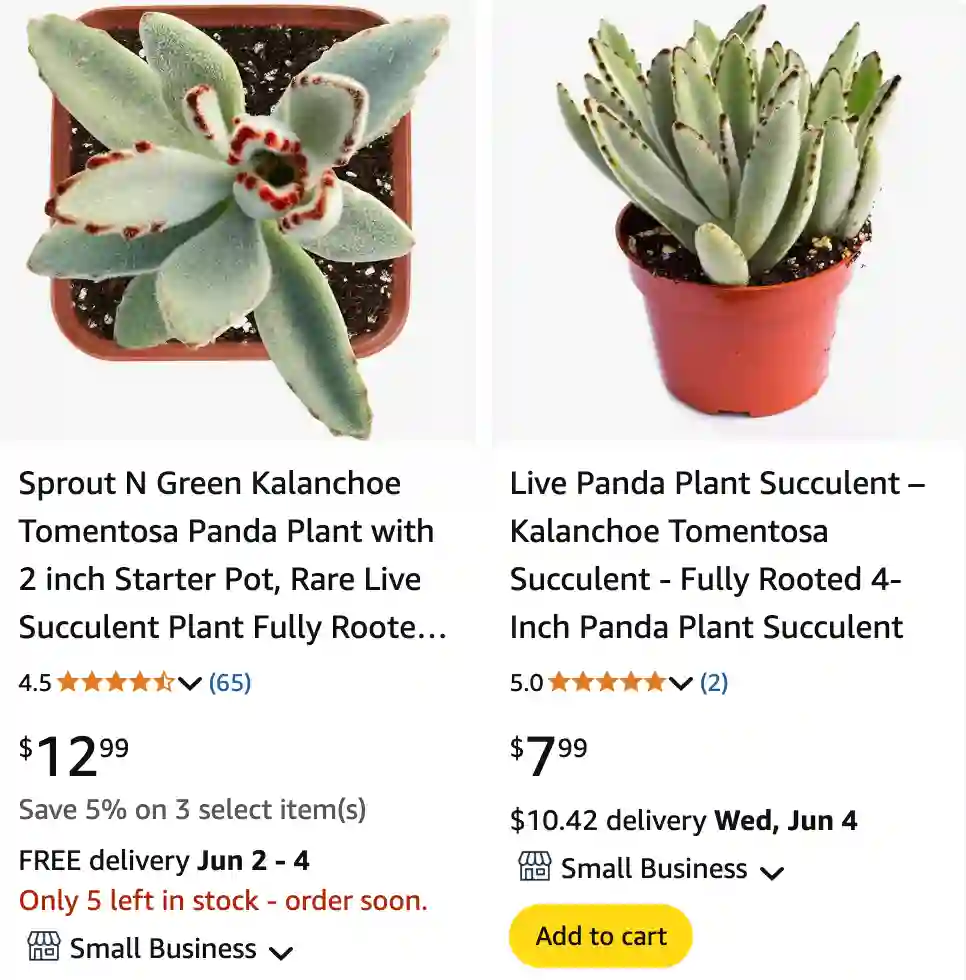
Kalanchoe Tomentosa, or “Panda Plant,” is one of those succulents that quietly becomes a favorite. I’ve grown it, experimented with its care, and even compared it with similar species. Here’s everything I’ve learned in the form of frequently asked questions—short, honest, and based on personal experience.
184 Species in Genus Kalanchoe
What Is Kalanchoe Tomentosa?
Kalanchoe Tomentosa is a succulent native to Madagascar. Its fuzzy, silver-green leaves are edged in rusty-brown spots, giving it a panda-like appearance—hence the nickname “Panda Plant.” It belongs to the Crassulaceae family, which includes other drought-tolerant species like Jade Plant (Crassula Ovata) and Echeveria.
The leaves are coated in tiny hairs, giving the plant a velvety texture. This tomentose surface (yes, that’s where it gets its species name) protects it from sun and moisture loss.
How Do I Care for My Kalanchoe Tomentosa?
Here’s my no-nonsense care routine:
- Light: Bright, indirect sunlight. Morning sun is best. Avoid harsh afternoon rays unless the plant is acclimated.
- Water: I let the soil dry out completely between waterings. Overwatering is the fastest way to kill it.
- Soil: Well-draining cactus mix. I add perlite or pumice for extra aeration.
- Temperature: Between 60°F and 75°F (15°C–24°C). It doesn’t like frost.
- Fertilizer: Once a month during growing season (spring and summer), diluted half-strength.
Is Kalanchoe Tomentosa Toxic?
Yes. Like many other succulents in the Crassulaceae family, Kalanchoe Tomentosa is toxic to pets. My cat learned that the hard way. I now keep it on high shelves or in hanging planters, away from curious paws.
How Fast Does It Grow?
Slow. In ideal conditions, it can reach about 18 inches tall (45 cm), but it takes years. This isn’t a plant you grow for instant gratification. But once it settles in, it grows steadily—more so during spring and summer.
Can I Propagate Kalanchoe Tomentosa Easily?
Yes. This is one of the easiest succulents to propagate. I usually take leaf cuttings or stem tips and let them callous over for 2–3 days. Then I place them in dry soil. Roots form in a few weeks, and new growth appears not long after.
Tip: Don’t overwater the new cuttings. Less is more.
How Does It Compare to Kalanchoe Beharensis?
Kalanchoe Tomentosa and Kalanchoe Beharensis both have fuzzy leaves, but they’re not twins.
- Beharensis (aka Velvet Elephant Ear) is larger and more tree-like, often growing up to 6 feet tall.
- Tomentosa stays compact, making it ideal for tabletops and windowsills.
- Both are drought-tolerant, but Beharensis needs even more space and light.
If you’re short on space, stick with Tomentosa.
Is It Better Than Echeveria or Jade Plant?
It depends on what you want.
- Echeveria: Rosette-shaped, vibrant, but less forgiving of overwatering.
- Jade Plant: Hardy, classic, but less ornamental.
- Kalanchoe Tomentosa: Fuzzy, unique, compact—great for tactile appeal.
Personally, I love Tomentosa for its texture. It adds variety to my succulent shelf.
Why Are the Leaves Drooping or Falling Off?
From my experience, this happens due to:
- Overwatering (the most common culprit)
- Low light
- Sudden temperature drops
- Root rot
I always check the roots first. If they’re mushy, it’s time to cut losses and start propagating from healthy parts.
Can It Be Grown Indoors Year-Round?
Yes, and that’s one of its strengths. I’ve had mine thrive indoors with a grow light and good air circulation. It doesn’t need high humidity, which makes it ideal for dry homes or apartments.
Does It Flower?
Rarely indoors. In nature or greenhouses, Kalanchoe Tomentosa produces tubular yellowish-orange blooms. I’ve never seen it flower at home, and honestly, I don’t mind. Its leaves are the real show.
How Do I Style or Display It?
Here’s how I do it:
- Containers: Terra cotta or clay pots work best. They allow moisture to evaporate.
- Grouping: I group mine with other fuzzy succulents like Echeveria ‘Doris Taylor’ or Sedum ‘Frosty Morn.’
- Top dressing: I use white pebbles or lava rocks to keep things clean and add contrast.
The fuzzy leaves pair well with smooth surfaces, so minimalist pots highlight its texture.
Final Thoughts from Me
Kalanchoe Tomentosa isn’t the flashiest succulent, but it earns its keep with durability, character, and touchable charm. It’s a great starter for beginners but unique enough to keep veterans interested. I’ve had mine for years and still admire it regularly.

If i die, water my plants!