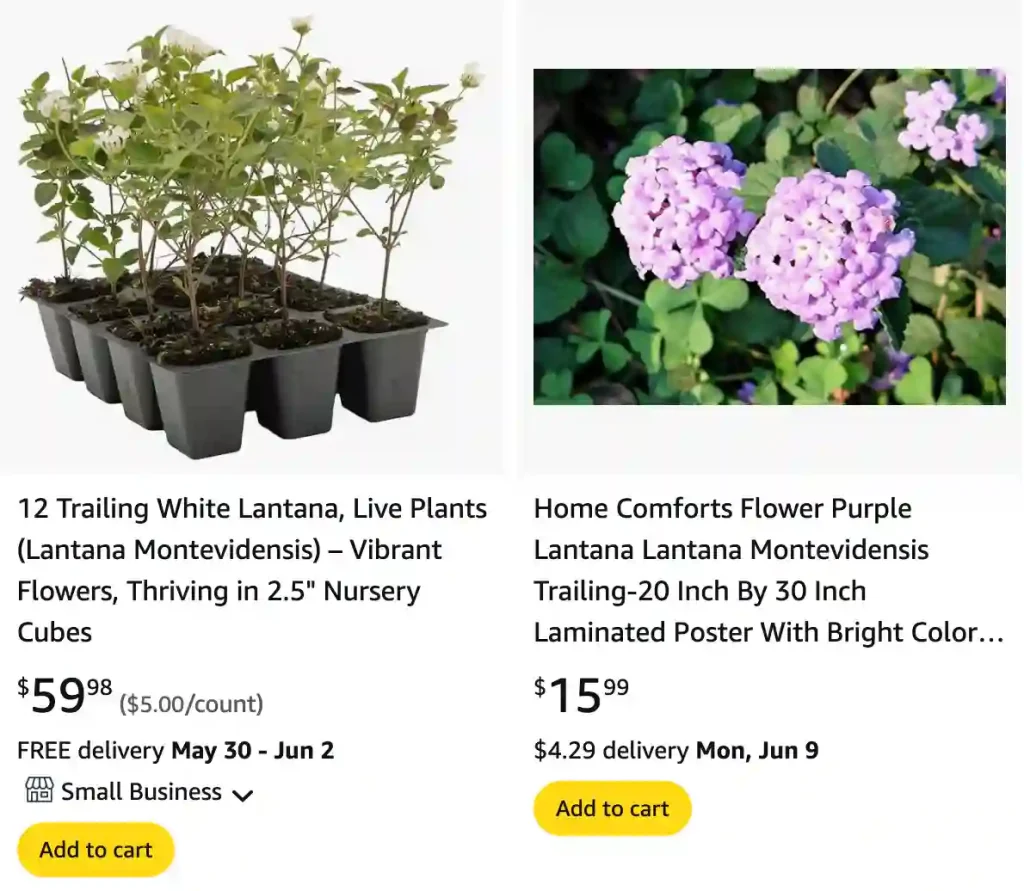
I’ve grown many trailing plants in my landscape beds, but Lantana Montevidensis is a special one. With its long blooming season, drought tolerance, and tough nature, this low-growing beauty has earned its spot in my garden. Below, I’ll share everything you need to know about it, in a no-fluff, first-hand FAQ style.
128 Species in Genus Lantana
What Is Lantana Montevidensis?
Lantana Montevidensis, also known as Trailing Lantana or Weeping Lantana, is a spreading ground cover native to South America. I’ve seen it thrive in hot, dry conditions where other plants give up. Its lavender to purple flowers bloom from spring through fall, often attracting butterflies and bees.
This plant belongs to the Verbenaceae family and is related to Lantana Camara, though they behave quite differently.
Is Lantana Montevidensis Invasive?
In some places like parts of California or Florida, it’s considered invasive due to its aggressive spreading habit. In my yard, though, it stays in check with occasional pruning. If you garden in a region where it’s listed as invasive, it’s worth checking with your local agricultural extension office.
How Much Sun Does It Need?
It loves full sun. I’ve tried it in partial shade, and the blooms weren’t as prolific. At least 6 hours of direct sunlight each day ensures dense foliage and a steady flow of blossoms.
What Soil Does Lantana Montevidensis Prefer?
I’ve grown it in sandy soil, loamy beds, and even poor rocky areas. It handles a wide pH range and thrives with good drainage. I avoid overwatering—this plant hates soggy roots.
Is It Drought-Tolerant?
Absolutely. Once established, Lantana Montevidensis survives on minimal water. It’s ideal for xeriscaping or low-water zones. I only water mine during extended dry spells or right after planting.
Does It Attract Pollinators?
Yes, and in a big way. My Lantana Montevidensis is always buzzing. Butterflies, hummingbirds, and bees all flock to its clusters of purple blooms. It’s an easy win for a pollinator garden.
How Do I Prune It?
It sprawls naturally, so I give it a trim two or three times per season. Pruning keeps it looking neat and prevents it from overtaking walkways. I use sharp shears and cut it back to shape—don’t be afraid to prune hard; it rebounds quickly.
Can I Use It As Ground Cover?
Definitely. I’ve used it on slopes, rock gardens, and sunny borders. Its trailing stems root where they touch the soil, forming a dense mat. It suppresses weeds well and covers bare spots with purple flair.
How Does It Compare to Lantana Camara?
Great question. I grow both.
- Lantana Montevidensis is a low-growing trailer.
- Lantana Camara is a bushier upright shrub, often with more vibrant multi-colored flowers.
Montevidensis is more subtle but easier to manage. Camara needs more pruning and can be more invasive in tropical climates. If you want cascading beauty for walls or containers, go Montevidensis. For height and splash, go Camara.
Can I Grow It in Containers?
Yes, and I do. Hanging baskets and raised pots bring out its cascading nature. Just make sure the pot drains well. I use a lightweight potting mix, and I water when dry—but not too much.
Is It Toxic?
Yes. Like most Lantanas, all parts of Montevidensis can be toxic to pets and livestock. I grow mine in areas where dogs and cats can’t access it. Always wash your hands after handling it, especially if you’ve got sensitive skin.
What Pests or Diseases Should I Watch For?
It’s a tough plant, but I’ve seen:
- Occasional whiteflies
- Mild powdery mildew in humid conditions
- Rarely, root rot from poor drainage
I control pests with neem oil or insecticidal soap. For mildew, I space plants well for airflow and avoid overhead watering.
How Does It Handle Frost?
Not well. It’s frost-tender in USDA Zones 7 and below. I garden in Zone 9, and mine survives winters just fine. In colder zones, you can grow it as an annual or overwinter it indoors.
Is It Good for Erosion Control?
Yes, and I’ve used it on slopes. Its sprawling stems root as they spread, helping to stabilize soil. It’s not a deep-rooted solution, but for light erosion in dry climates, it works well.
Can I Propagate It?
Easily. I snip a healthy stem, remove lower leaves, and place it in moist soil. It roots in a couple of weeks. You can also root it in water. Propagation is a breeze—one plant quickly becomes many.
Final Thoughts
Lantana Montevidensis is one of my go-to choices for low-maintenance, sunny areas. It checks all the boxes: tough, beautiful, butterfly-friendly, and drought-tolerant. It’s not perfect—watch for invasiveness and pet toxicity—but with proper care, it’s a rewarding plant that keeps on giving.
Whether you’re landscaping a dry slope, filling a hanging pot, or lining a sunny border, I’d say give Lantana Montevidensis a try. It might just become your favorite trailer, too.

If i die, water my plants!