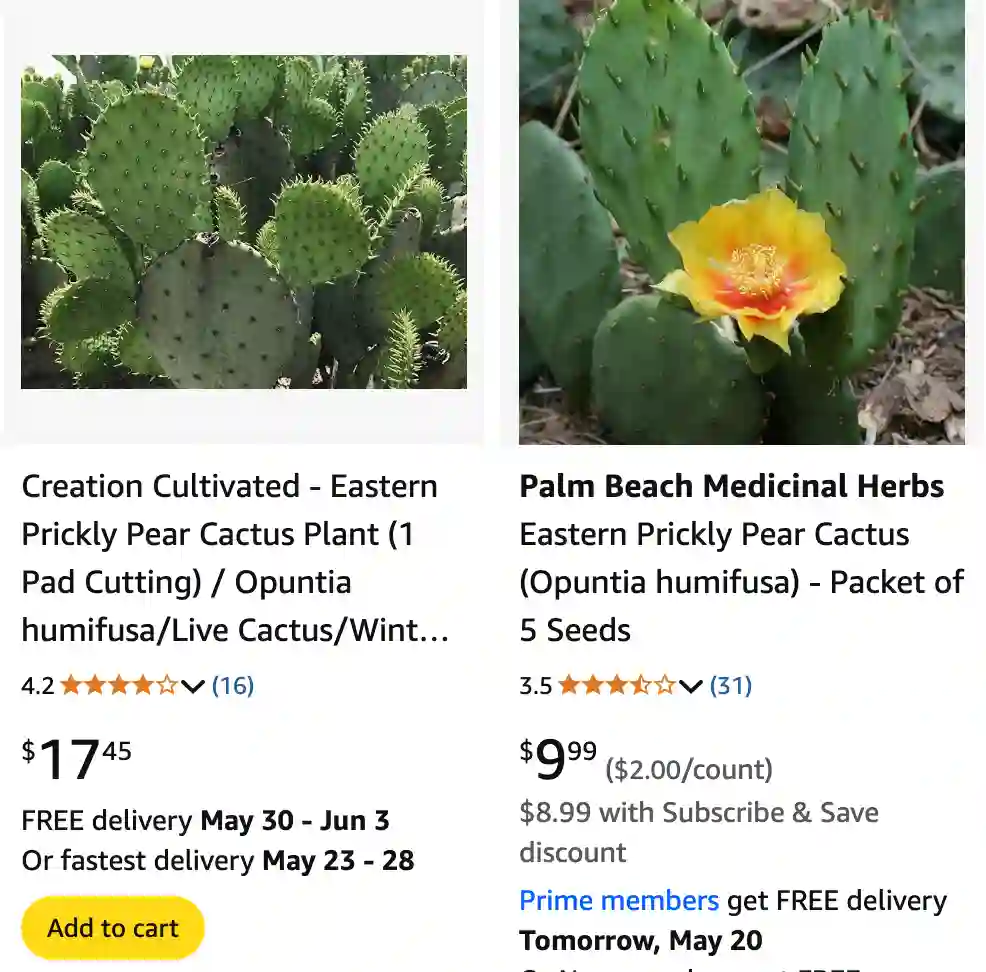
I’ve always had a soft spot for hardy, low-maintenance plants. One that’s earned a permanent place in my garden is Opuntia Humifusa, also known as the Eastern Prickly Pear Cactus. It’s native to the eastern and central U.S., thrives in poor soil, and still gives you that desert drama with minimal care. Below are the most common questions people ask me about this native succulent wonder.
160 Species in Genus Opuntia – Prickly Pear
What is Opuntia Humifusa?
Opuntia Humifusa is a cold-hardy cactus with flat, paddle-shaped pads. It’s native to much of North America, especially in dry, sandy soils, coastal dunes, and pine barrens. Unlike its desert relatives, it can survive snow and subzero temps.
What I love most? It gives bright yellow blooms in late spring and red edible fruit by fall. It’s a clump-forming cactus, meaning it stays low and spreads horizontally, which makes it perfect for xeriscaping, rock gardens, or naturalized landscapes.
How Cold Can Opuntia Humifusa Tolerate?
This is my go-to cactus for Zone 4 through 9 gardens. I’ve had mine survive -20°F winters in raised beds with no extra protection. The key is well-drained soil. Cold’s not the killer—excess moisture in winter is.
What Soil and Light Conditions Does It Prefer?
It lives for full sun and poor soil. I’ve planted mine in gravelly, sandy mixes with zero organic matter. I avoid clay soil at all costs—it hates wet feet. If you must plant in clay, amend heavily or keep it in a raised bed.
Is Opuntia Humifusa Edible?
Yes, both the pads (nopales) and fruit (tunas) are edible, but only if you know how to handle them. I use gloves and tongs to harvest, then I burn off the glochids (those tiny, hair-like spines) over a flame.
The pads are tender when young—grill them or chop them into tacos. The fruit is sweet and tart, packed with Vitamin C and antioxidants.
Is It Invasive or Aggressive?
It spreads, yes. But not in a bad way. Over time, it forms a wide mat, making it a great groundcover. You can easily dig out new pads if it gets too happy. I often share cuttings with friends, who are amazed by how easily it roots.
How Does It Compare to Other Cactus Like Opuntia Ficus-Indica?
Good question. I’ve grown both. Opuntia Ficus-Indica is the classic, tall-growing tropical prickly pear used in agriculture. It needs warm zones (9–11) and hates frost. Opuntia Humifusa, by contrast, stays low (under 1 foot), thrives in poor soil, and shrugs off winter.
In terms of fruit, Ficus-Indica has larger, sweeter tunas. But Humifusa wins for hardiness and ease.
Does It Flower Every Year?
Yes—and those sunburst-yellow blooms are stunning. Mine usually flowers in late May or early June, depending on the heat. They only last a day or two per bloom but bloom in flushes across the whole plant.
Pollinators love it. I’ve seen native bees, honeybees, and even butterflies visit the flowers. It’s not just drought-tolerant—it’s pollinator-friendly.
How Do You Propagate Opuntia Humifusa?
It’s laughably easy. I just break off a pad, let it callous over for a few days, and plant it upright in dry soil. I water once—then not again until it roots. Within weeks, it starts to anchor and sprout new growth.
For larger-scale propagation, I’ve also tried growing from seed. It works, but takes much longer. The seeds need cold stratification, so I leave them outside over winter.
Can You Grow It in Containers?
Yes. In fact, I often recommend it for container xeriscaping or balcony gardens. I use shallow terra cotta pots with fast-draining cactus mix. During winter, I move them to a cold, dry garage—they don’t need light when dormant.
Just remember: No saucers. No soggy roots. Drainage is everything.
Are There Any Common Problems?
Few. Really. But here’s what to watch for:
- Root rot from wet soil.
- Fungal spots in humid zones.
- Occasionally, mealybugs or scale insects, but a blast of water or rubbing alcohol takes care of them.
In my experience, pests avoid it, and deer leave it alone.
Can It Be Used in Ecological Restoration?
Absolutely. I’ve seen Opuntia Humifusa used in coastal dune stabilization, native prairie restoration, and even green roofs. Its deep roots, drought tolerance, and fire resistance make it a top pick for sustainable landscaping.
Why I Recommend It
If you want a native plant, drought-tolerant, low-maintenance, cold-hardy cactus that feeds pollinators and adds drama, Opuntia Humifusa is it.
It’s tough yet beautiful. Edible yet ornamental. It thrives on neglect but rewards you with brilliant flowers and bold form. I’ve used it in sunny borders, rock gardens, pollinator plots, and more.
This isn’t just another spiky cactus—it’s a resilient, adaptable botanical marvel that fits into almost any garden style.
Final Thoughts
Growing Opuntia Humifusa has been one of the most rewarding parts of my gardening journey. Whether you’re a native plant lover, an edible garden enthusiast, or just a cactus collector—this one deserves a place in your collection.

If i die, water my plants!