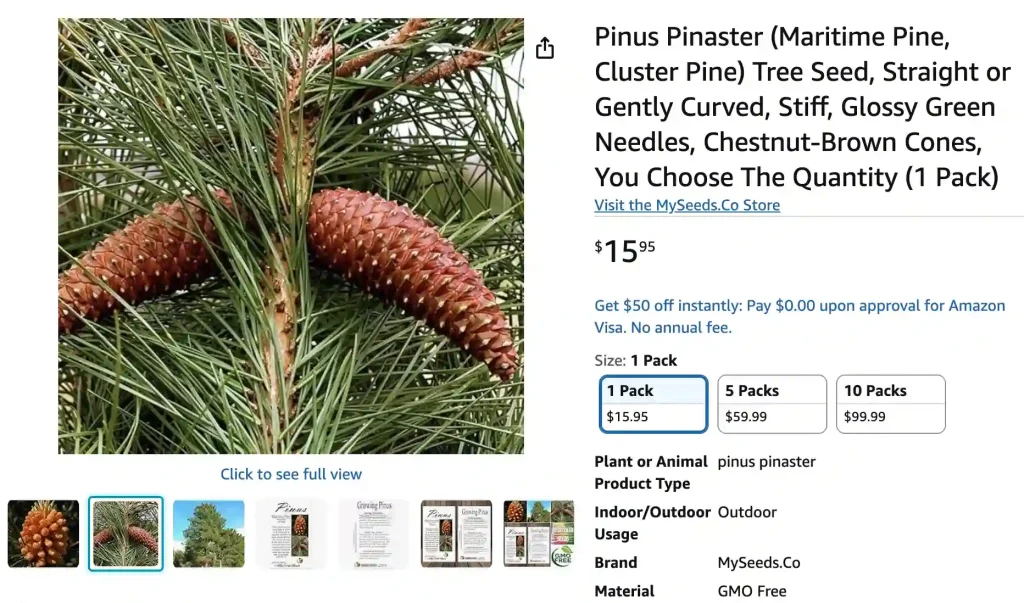
Hi, I’m Ferb Vu, and today I want to share what I’ve learned about Pinus Pinaster — also called the Maritime Pine. This tree has fascinated me for a long time, so I’m excited to answer common questions and offer insights based on my personal experience and research. Let’s dive right in.
What Is Pinus Pinaster?
Pinus Pinaster is a fast-growing pine native to the Mediterranean region. It’s often called the Maritime Pine because it thrives near the coast. I find it quite striking with its tall, straight trunk and long, dark green needles grouped in pairs. Its reddish-brown bark adds a beautiful texture, especially as the tree matures.
It’s widely used for timber, resin production, and ornamental purposes. What really drew me to Pinus Pinaster is how adaptable it is to poor soil and dry climates, which makes it a robust choice for reforestation projects and landscaping in challenging environments.
How Does Pinus Pinaster Compare to Other Pines?
If you’re like me and love comparing plants, you might wonder how Pinus Pinaster stacks up against other pines like Pinus Sylvestris (Scots Pine) or Pinus Radiata (Monterey Pine).
- Pinus Pinaster vs. Pinus Sylvestris: Both are Mediterranean pines but Pinus Pinaster grows faster and prefers warmer climates. Pinus Sylvestris has a more twisted, flaky bark, while Pinus Pinaster’s bark is thick and deeply fissured. I noticed that Pinus Pinaster tends to handle coastal winds better, making it ideal for seaside plantations.
- Pinus Pinaster vs. Pinus Radiata: Pinus Radiata is native to California and is extremely fast-growing but less drought-resistant than Pinus Pinaster. From my experience, Pinus Pinaster thrives better in poor, sandy soils, which makes it a better choice for dry, nutrient-poor sites.
What Are the Ideal Growing Conditions for Pinus Pinaster?
Pinus Pinaster is quite hardy, but it does have preferences. It grows best in sandy or rocky soils with good drainage. I’ve seen it flourish in places with low fertility where other trees struggle. It’s drought tolerant once established, so it’s perfect if you live in a region with dry summers.
Sunlight is key — this pine loves full sun. I’ve tried planting it in partial shade, and while it survived, its growth slowed significantly. It also tolerates coastal salt spray, which makes it a great option for coastal gardens or restoration projects near the ocean.
Is Pinus Pinaster Suitable for Urban Landscaping?
Absolutely! I’ve used Pinus Pinaster in several urban landscaping projects. Its tall, narrow shape fits well in tight spaces, and it creates a pleasant green canopy without overwhelming smaller yards. Plus, its deep roots stabilize soil, helping prevent erosion — a big plus in city areas prone to soil degradation.
However, keep in mind that it can grow quite large if not pruned, so regular maintenance is important. Its pine needles and cones can drop quite a bit, which means some cleanup is required. But overall, it’s a low-maintenance, resilient tree that adds a natural charm to urban settings.
What Are the Common Uses of Pinus Pinaster?
From my perspective, Pinus Pinaster is a multi-purpose tree:
- Timber: It produces strong, durable wood used in construction and furniture.
- Resin: Historically, it has been tapped for resin, which is used in varnishes and adhesives.
- Erosion Control: Because of its tough root system, it’s great for stabilizing sandy soils.
- Ornamental: Its tall stature and textured bark make it popular in parks and large gardens.
- Ecological Benefits: It provides habitat for various wildlife, including birds and insects.
I like how versatile it is — it’s both practical and beautiful.
How Does Pinus Pinaster Affect Local Ecosystems?
When I first planted Pinus Pinaster near native Mediterranean flora, I noticed it can outcompete some local species if not managed properly. Its thick canopy reduces light to the understory, and the pine needles acidify the soil, which may affect soil microbes and plant diversity.
That said, in degraded or barren areas, it often kick-starts ecosystem recovery by stabilizing soil and creating microhabitats. It’s a balancing act — useful for restoration but needs careful planning to avoid invasive tendencies.
What Are the Pest and Disease Concerns for Pinus Pinaster?
Like many pines, Pinus Pinaster can face threats from pests like the pine processionary moth, which I’ve had to watch out for. This moth’s caterpillars can defoliate the tree, weakening it. There are also risks from fungal diseases such as pine wilt disease caused by nematodes.
I recommend regular monitoring and, if necessary, biological control measures. I’ve found that keeping the tree healthy by avoiding stress (like overwatering or poor soil conditions) reduces susceptibility to pests and diseases.
How Fast Does Pinus Pinaster Grow?
Pinus Pinaster is a fast grower compared to many pines. In my experience, it can grow 1 to 2 feet per year under good conditions. That rapid growth is one reason it’s favored in commercial forestry and reforestation. If you want quick shade or erosion control, this pine is a great option.
Can Pinus Pinaster Be Used for Bonsai?
I’ve dabbled a bit in bonsai with various pines, and Pinus Pinaster can make a stunning bonsai due to its interesting bark and needle arrangement. However, it requires skillful pruning and wiring to shape because of its natural tall, straight growth.
If you enjoy bonsai and want a Mediterranean pine with character, Pinus Pinaster is worth a try.
How Does Pinus Pinaster Adapt to Climate Change?
One thing I admire about Pinus Pinaster is its adaptability. It tolerates drought, poor soils, and salty air, making it resilient in the face of changing climate conditions. This resilience is why it’s often chosen for reforestation in areas suffering from desertification or increasing temperatures.
Final Thoughts on Pinus Pinaster
Overall, Pinus Pinaster is a tough, versatile pine that offers many benefits. Whether you want a fast-growing timber tree, a resilient landscape specimen, or a tool for ecological restoration, this pine can fit the bill.

If i die, water my plants!