I. Introduction: Unveiling the Silver Elkhorn
A Captivating Introduction to a Botanical Marvel
The world of ferns offers an astonishing array of forms and adaptations, yet few captivate the imagination quite like the Platycerium veitchii. Commonly known as the Silver Elkhorn or Silver Staghorn fern, this botanical marvel stands out with its unique aesthetic, characterized by a striking silvery appearance and a sculptural form that makes it a prized specimen among collectors and plant enthusiasts alike. Its distinctive morphology and resilient nature have earned it the prestigious Royal Horticultural Society’s Award of Garden Merit, a testament to its reliability and ornamental value in cultivation. This recognition underscores that its beauty is matched by its suitability for a range of growing environments, appealing to both seasoned horticulturists and those new to the specialized world of ferns. The
Platycerium veitchii is more than just a plant; it is a living sculpture, capable of transforming any space with its rugged elegance and unique charm.
Embarking on a Time-Lapse Journey
This comprehensive guide invites readers on a unique “time-lapse” journey, tracing the life cycle of the Platycerium veitchii from its earliest, most delicate stages to its full, mature splendor. Interwoven with detailed botanical information and practical care advice, this narrative will provide a first-person account of a gardener’s experience, highlighting key growth milestones and the fascinating transformations this fern undergoes over time. This approach aims to make the intricate details of its biology and cultivation more relatable and inspiring, offering a deeper appreciation for this extraordinary plant.
II. Botanical Roots: Classification and Wild Origins
A. Scientific Identity: A Fern of Distinction
Platycerium veitchii belongs to the genus Platycerium, which encompasses approximately 18 species of ferns within the Polypodiaceae family. These ferns are globally recognized as staghorn or elkhorn ferns, a common name derived from their uniquely shaped fronds that strikingly resemble the antlers of deer or elk. The scientific classification places it firmly within the plant kingdom: Kingdom Plantae, Clade Tracheophytes, Division Polypodiophyta.
Formally, the species is known as Platycerium veitchii (Underw.) C. Chr., though it has also been recognized under synonyms such as Alcicornium veitchii Underw. and Platycerium bifurcatum subsp. veitchii (Underw.) Hennipman & M.C.Roos. Its distinctiveness and horticultural merit are further affirmed by its receipt of the Royal Horticultural Society’s Award of Garden Merit. This award is not merely an accolade; it serves as a reliable indicator for gardeners, signifying that
Platycerium veitchii has been rigorously tested and found to be an excellent plant for cultivation, exhibiting good performance, stability, and resistance to pests and diseases under typical garden conditions. This validation broadens its appeal, making it a trusted choice for those seeking a unique yet manageable addition to their plant collection.
B. Native Habitat & Evolutionary Adaptations: A Desert Survivor
The natural home of Platycerium veitchii is the semi-arid basins and eastern regions of Queensland, Australia. In these environments, it predominantly grows as a lithophyte, clinging to rock faces, and occasionally as an epiphyte, attaching itself to trees in seasonally dry vine forests or Araucaria forests. This native range, characterized by intense direct sunlight and periods of drought, has profoundly shaped its evolutionary trajectory, leading to remarkable adaptations that allow it to thrive where many other ferns would perish.
One of the most striking adaptations is its exceptional drought tolerance, enabling it to withstand dry periods lasting several months. This resilience is largely attributed to a dense covering of white stellate hairs, or trichomes, that blanket its fronds. These trichomes act as a natural sunblock, reflecting away a significant portion of sunlight and effectively minimizing harsh light intensity and surface heat buildup. This protective layer is also responsible for the fern’s characteristic silvery or grey-silver appearance, a visual cue of its robust defense against arid conditions. Beyond the trichomes,
Platycerium veitchii employs other drought-tolerating mechanisms, including leaf rolling, sunken stomata, and CAM photosynthesis, all designed to conserve precious moisture in its challenging environment.
The unique adaptations of Platycerium veitchii to its semi-arid, lithophytic habitat mean its care requirements diverge significantly from those of many other fern species. While most ferns flourish in high humidity and dappled light, this species demands high light levels and less frequent watering to truly express its prized silvery appearance and upright frond structure. Understanding this fundamental connection between its natural environment and its specific needs is paramount for successful cultivation. It shifts the focus from a generic “fern care” approach to a specialized “arid-adapted fern care” philosophy, ensuring that gardeners provide conditions that mimic its evolutionary home, thereby unlocking its full potential for beauty and vigor.
Time-Lapse Vignette 1: The First Glimmer of Green – My Spore Germination Journey (Months 0-6)
My journey with Platycerium veitchii began not with a small plant, but with a tiny packet of spores—a true test of patience and a fascinating dive into the plant’s most fundamental life stages. The initial excitement was palpable as I meticulously prepared the growing medium, choosing a sterile blend of coco coir and sphagnum moss, carefully sterilized with boiling water to prevent unwanted fungal or bacterial growth. The tiny, dust-like spores were then sown sparingly over the cooled, moist surface within a sealed container, mimicking the damp, protected conditions they would find in nature.
The first few weeks were a lesson in anticipation. Then, around the two-week mark, a faint, translucent green film began to appear on the surface of the medium. This was the initial glimmer of life – the gametophytes, the sexual stage of the fern’s life cycle. Over the next few months, these gametophytes slowly transformed into small, heart-shaped prothalli, a delicate carpet of green visible with careful observation. The process of sporophyte development, where the recognizable fern plant emerges from these prothalli, is notoriously slow, often taking anywhere from 3 months to 1-2 years, or even longer in some cases. This slow progression underscored that spore propagation is a long-term commitment, not a quick project, demanding consistent moisture and adequate light for success. Each tiny green speck was a promise of the magnificent silver staghorn to come.
III. The Silver Elkhorn’s Distinctive Form: Fronds and Features
A. Dimorphic Fronds Explained: Shields and Antlers
The Platycerium veitchii, like all staghorn ferns, is characterized by its dimorphic fronds, meaning it produces two distinctly different types of leaves, each serving a specialized function. Understanding these two forms is key to appreciating the plant’s unique biology and providing appropriate care.
Basal (Shield) Fronds: These sterile fronds are broad, shield- or kidney-shaped, and grow flattened against the host surface, whether it be a tree trunk or a mounting board. Their primary role is protective, shielding the fern’s root structure from physical damage and desiccation. Beyond protection, these fronds are instrumental in the fern’s nutrition. They form an ingenious “compost” system, growing into an open crown of lobes that effectively catch rainwater, falling forest litter, and organic debris. This collected material decomposes over time, funneling essential nutrients directly to the fern’s roots. Initially green, these shield fronds naturally turn papery brown and dry with age, but they should never be removed, as they continue to play a vital role in supporting the plant and providing nutrients. A distinguishing feature of
Platycerium veitchii is that the tops of its shield fronds grow into tall, thin, finger-like lobes, a trait that becomes more pronounced in high light conditions.
Foliage (Fertile) Fronds: Emerging from the basal fronds are the foliage or fertile fronds, which are typically ascending to somewhat pendulous and deeply forked. These are the “antlers” that give the staghorn fern its common name, mimicking the majestic horns of deer or elk. Their primary biological function is reproduction; the brownish, velvety masses (sporangia) found on their undersides contain the spores from which new ferns can propagate. For
Platycerium veitchii, these fertile fronds are characteristically very upright and narrow, contributing to its distinct sculptural appearance.
The appearance of both the shield and fertile fronds, including their uprightness, the density of their white hairs, and the length of the shield fingers, is directly influenced by the plant’s light exposure and water availability. This means that the fern’s morphology serves as a dynamic indicator of its environmental well-being. For example, if the plant receives insufficient light, its fertile fronds may become less erect, the characteristic white hairs less dense, and the shield fronds’ fingers shorter. This direct correlation between environmental conditions and frond characteristics provides a valuable diagnostic tool for gardeners, allowing them to interpret the plant’s visual signals and make precise adjustments to its care, ensuring it thrives and displays its most desirable traits.
B. The Silvery Sheen: A Signature Trait
The defining characteristic of Platycerium veitchii is its striking silvery or grey-silver appearance, a trait that has earned it the popular moniker “Silver Elkhorn”. This shimmering quality is due to a dense covering of specialized white stellate hairs, or trichomes, that blanket both its shield and fertile fronds.
This silvery sheen is not merely an aesthetic feature; it is a critical functional adaptation that directly reflects the plant’s evolutionary history in bright, semi-arid environments. The trichomes act as a highly effective natural sunblock, reflecting intense direct sunlight away from the frond surface. This mechanism minimizes the harsh light intensity and prevents excessive surface heat buildup, protecting the delicate fern tissue from scorching and desiccation. The density and reflective quality of these white hairs are directly proportional to the amount of light the plant receives. For instance, a
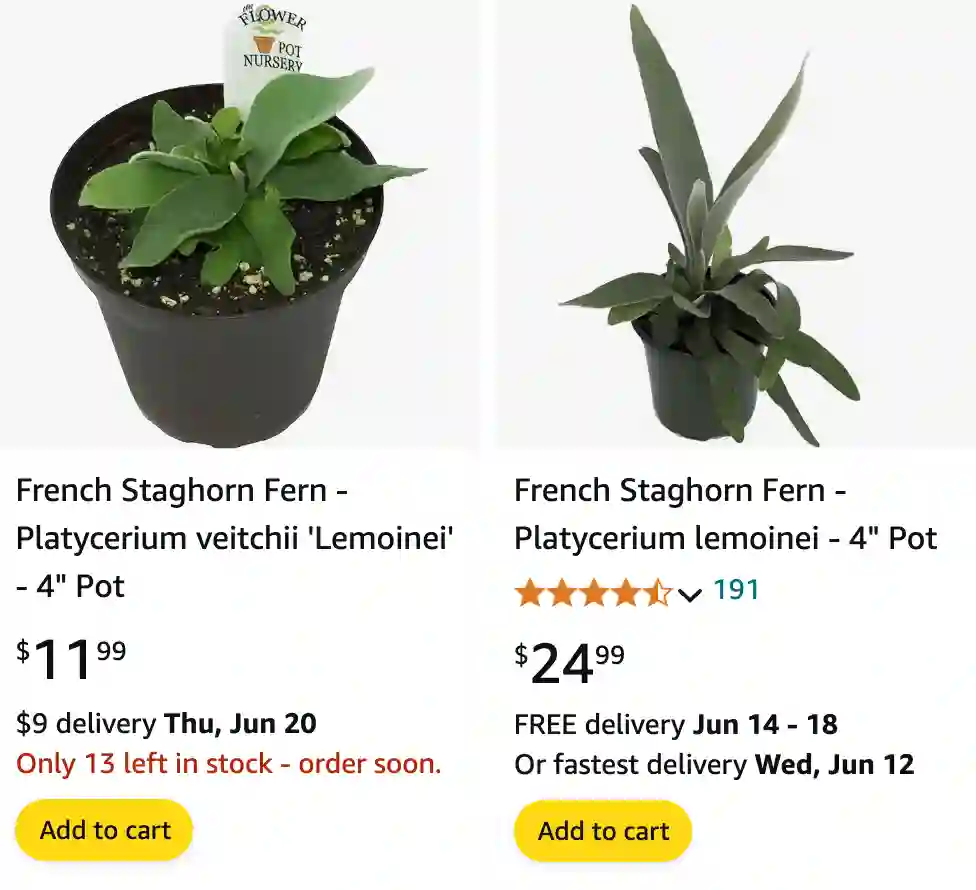
Platycerium veitchii grown in lower light conditions, sometimes referred to as a “green veitchii” variety like ‘Lemoinei’, will exhibit a much greener hue with fewer hairs and less erect fronds. Conversely, when exposed to high light levels, the plant intensifies its production of these reflective trichomes, resulting in a more pronounced and vibrant silver coloration.
This direct relationship between light exposure and the intensity of the silver sheen means that the plant’s color acts as a natural “light meter” for the attentive gardener. A vibrant, silvery appearance indicates optimal light conditions, while a greener, less lustrous look signals a need for more illumination. This provides a powerful, immediate feedback mechanism from the plant to its caregiver, allowing for precise environmental adjustments to ensure the fern not only survives but truly flourishes, displaying its most coveted and characteristic silvery beauty.
IV. Cultivating Silver Splendor: A Comprehensive Care Guide
Cultivating Platycerium veitchii successfully involves mimicking its natural arid-tropical environment, balancing its need for bright light with careful watering and appropriate mounting.
A. Light Requirements: Embracing the Sun
Platycerium veitchii stands apart from many other fern species in its remarkable preference for high light levels. It thrives in conditions ranging from filtered or partial sun to even full sun, particularly when aiming to achieve the most pronounced expression of its unique characteristics, such as its silvery coloration and upright fronds. This preference is a direct consequence of its native habitat in sunny, semi-arid regions of Australia.
When grown indoors, positioning the fern near an eastern or western-facing window is often ideal, as these locations provide bright, indirect light without the intensity of direct midday sun. While
Platycerium veitchii is more sun-tolerant than many other staghorn ferns, it is still crucial to exercise caution with harsh, direct midday sun, which can lead to scorching of its delicate fronds. The silvery trichomes offer protection, but extreme, unfiltered intensity can still cause damage. Therefore, providing ample bright, indirect light is paramount for its health and to encourage the full development of its signature silvery sheen.
B. Temperature & Humidity: Mimicking Arid Tropics
Temperature: The ideal temperature range for Platycerium veitchii is between 60-85°F (15-29°C). While it is generally considered a tender plant, it exhibits a surprising tolerance for brief dips in temperature, capable of withstanding conditions as low as 30-50°F (1-10°C). However, prolonged exposure to temperatures below 50°F (10°C) or frost should be avoided, as this can damage fronds and potentially lead to the plant’s demise. If grown outdoors in temperate climates, it is essential to bring the fern indoors before nighttime temperatures consistently fall below 50°F.
Humidity: Despite its arid origins, Platycerium veitchii is adaptable to various humidity levels. While it appreciates high humidity, it can tolerate average household humidity, making it a more forgiving indoor plant than some other tropical ferns. For optimal health and to prevent the tips and edges of fronds from browning, maintaining medium to high humidity, ideally around 60-75%, is beneficial. This can be achieved by placing the plant in naturally humid areas of the home, such as a bathroom or kitchen, grouping it with other plants to create a localized microclimate, or using a small humidifier. Regular misting of the new, green leaves can also supplement humidity, especially in drier climates or during warmer months. However, it is important to avoid misting the dark, dry shield fronds, as this can interfere with the production and viability of spores.
C. Watering Wisdom: The Art of Drying Out
Proper watering is perhaps the most crucial aspect of Platycerium veitchii care, and it often presents the greatest challenge for new growers. This species is remarkably drought-tolerant, a direct inheritance from its semi-arid native habitat. While it benefits from occasional deep watering, the key to its success lies in allowing the base and growing medium to dry out completely between waterings.
A general guideline is to water deeply about once a week during warmer months or in hot climates, and reduce the frequency to once every two to three weeks during cooler periods. The most effective method for mounted ferns is to remove the plant from its hanging location and submerge the entire root ball and mounting material in a sink or bucket of water for 10 to 20 minutes, or until fully saturated. After soaking, allow the plant to drip dry thoroughly before rehanging it.
Overwatering is a far more common problem than underwatering for this species and is a primary cause of distress, often leading to root rot. A clear sign of overwatering is the blackening of fronds, particularly towards the base of the plant. Conversely, wilting or browning at the tips of the fronds can indicate underwatering. The ability to read these signals from the plant is vital for maintaining its health.
D. Nourishing Growth: Fertilization
To promote vigorous growth, especially in younger plants and during periods of active development, Platycerium veitchii benefits from regular fertilization. It is recommended to feed the fern monthly during its active growing season, which typically spans spring and summer. A diluted, balanced water-soluble fertilizer is ideal, such as a 1:1:1 ratio, or a 10-10-10 or 20-20-20 formulation diluted to one-quarter or half strength.
During the fall and winter months, when the plant’s growth naturally slows, the frequency of fertilization should be reduced to every other month or withheld entirely. For those preferring organic methods, placing a few slow-release granular fertilizer pellets, or even organic materials like banana peels or chicken manure, within the shield fronds can provide a nutrient boost. This mimics the natural nutrient cycling that occurs in its wild habitat, where decaying organic matter is collected by the shield fronds.
E. Mounting & Substrate: A Natural Home
Platycerium veitchii is an epiphyte, meaning that in its natural environment, it grows on other plants or surfaces like trees and rocks, rather than in soil. This natural growth habit makes mounting the fern an ideal cultivation method, closely replicating its preferred conditions and allowing it to develop its full, sculptural beauty.
Mounting Methods: Various surfaces can be used for mounting, including cedar wood boards, bark slabs, or wire baskets. When mounting, the fern’s roots should be nestled into a mound of appropriate substrate, such as sphagnum moss or coco coir. This material provides moisture retention and nutrients while allowing for the necessary air circulation that epiphytes require. The plant and substrate are then secured to the chosen mount using non-abrasive materials like wire, mesh, or clear fishing line. As the fern grows and its shield fronds expand, they will gradually cover the fastening material, creating a seamless, natural appearance.
Crucially, the chosen mounting method and substrate must ensure excellent drainage and ample air circulation around the roots. This prevents water stagnation, which is a common precursor to root rot and other fungal issues. While young ferns can be started in pots with a well-draining potting mix, they generally perform much better when mounted as they mature.
Time-Lapse Vignette 2: My First Mount & Learning Its Thirst (Months 6-18)
After several months, my tiny Platycerium veitchii sporophyte had grown large enough to transition from its germination tray to its first permanent home: a cedar wood board. This was a significant milestone, transforming it from a delicate seedling into a true “living sculpture.” The process of carefully nestling its roots into a bed of damp sphagnum moss and securing it to the board felt like an initiation into the deeper world of fern cultivation.
The initial period after mounting, often referred to as an “awkward phase” or “acclimatization cycle,” presented its own set of challenges. For a few months, the plant seemed to pause, its fronds occasionally drooping as it adjusted to its new vertical orientation and the change in its root environment. This period required patience, as I learned to fine-tune its watering rhythm. I quickly discovered that the key was to allow the moss to dry out completely between thorough soakings, rather than maintaining constant moisture. Overwatering, I learned, was a far greater threat than a temporary dry spell. Simultaneously, I experimented with light exposure, observing how the nascent silvery sheen intensified as the plant received more bright, indirect light, and how its fertile fronds became more upright. This direct feedback from the plant, its color and posture responding to my care, reinforced the importance of mimicking its native arid-adapted conditions. By the 18-month mark, the plant had visibly settled, its shield fronds beginning to laminate against the board, and its characteristic silvery-green antlers emerging with increasing vigor, a testament to its inherent resilience.
V. Multiplying the Magic: Propagation of Platycerium Veitchii
Expanding a collection of Platycerium veitchii can be achieved through two primary methods: spore propagation and pup division. While both are viable, they differ significantly in their complexity and timeline, offering distinct experiences for the dedicated gardener.
A. Spore Propagation: A Patient Pursuit
Propagating staghorn ferns from spores is a fascinating biological process, albeit a slow and meticulous one. It offers a unique opportunity to witness the fern’s full life cycle, from microscopic spore to mature plant.
Process Overview: Ferns, unlike flowering plants, reproduce via spores, which develop into a tiny, heart-shaped gametophyte before the recognizable fern plant (sporophyte) emerges. This multi-stage process requires precise environmental control.
Detailed Steps:
- Spore Collection: The first step involves harvesting ripe spores. These appear as brownish, velvety masses (sporangia) on the underside of the fertile fronds. To collect them, a fertile frond section is typically placed in a paper bag or on a clean sheet of paper to dry, allowing the spores to naturally release over a few days.
- Medium Preparation: A sterile growing medium is crucial to prevent contamination by fungi or algae, which can outcompete the delicate fern gametophytes. Sphagnum moss or coco coir are excellent choices, and they should be sterilized, typically by pouring boiling water over them and allowing them to cool.
- Sowing and Nurturing: Once the medium is cool and moist, the spores are sown sparingly onto the surface. The container, often a clear plastic box with a lid (like a takeaway container), is then sealed to maintain high humidity and placed in a cool, shaded location with indirect light. Consistent moisture is maintained by misting with rainwater or filtered water as needed.
- Timeline: The initial signs of life, a translucent green film of gametophytes, can appear surprisingly quickly, within 4 to 14 days. These then develop into heart-shaped prothalli over 2 to 5 months. The true test of patience comes with the emergence of the sporophytes (the small fern plants), which can take anywhere from 3 to 7 months, or even 1 to 2 years, depending on conditions and species. Some reports even note prothallia remaining in that stage for up to six years. The entire process from spore to a mountable juvenile plant can take a considerable amount of time, with some sources suggesting up to 10 years for full maturity from spore. This extended timeline underscores that spore propagation is a long-term, rewarding endeavor that truly tests a gardener’s dedication.
B. Pup Division: Expanding Your Colony
For most home gardeners, propagating Platycerium veitchii through pup division is a significantly easier and more successful method compared to spore propagation.
Platycerium veitchii is a “pup-forming colonial species,” meaning it naturally produces offsets or “pups” around the base of the mother plant, allowing for straightforward vegetative reproduction. This natural tendency to form colonies means that a single
Platycerium veitchii can, over time, develop into a magnificent, multi-plant display, making it an accessible and rewarding species for those looking to expand their collection or share with others.
Identifying Pups: Pups are essentially miniature versions of the parent plant, emerging from the rhizome. A pup is ready for division when it has developed its own distinct rhizome, a few roots, and both sterile (shield) and fertile (foliage) fronds. They typically appear around the edges of the mother plant’s shield fronds.
Detailed Division Steps:
- Preparation: To minimize stress on both the mother plant and the pup, it is advisable to water the parent plant thoroughly a day before the division.
- Excision: Carefully lift the basal fronds of the mother plant to expose the pup’s connection. Using a sharp, sterilized knife, carefully cut the pup away from the mother plant, ensuring that the detached section includes a portion of the rhizome and its own root system. If the pup is particularly large, trimming a few of its fertile fronds can help reduce stress on the newly separated plant.
- Mounting or Potting: Once separated, the pup’s roots should be wrapped in a damp, well-draining substrate such as sphagnum moss or coco coir. This bundle is then secured to a new mounting surface (wood board, bark slab) or placed in a pot filled with a coarse, airy medium.
- Post-Division Care: New divisions require a period of establishment. Keep them warm and consistently moist, but not waterlogged, until new growth indicates they have rooted successfully. Once new shield fronds begin to form, the watering frequency can be gradually reduced to match that of a mature plant.
Timeline: Pups are typically ready for separation when they are large enough to sustain themselves, usually after 1 to 2 years of growth. While initial growth after division might be slow, it tends to accelerate significantly within a couple of years, eventually allowing the new plant to produce its own pups. This ability to readily form new plants makes
Platycerium veitchii an excellent choice for gardeners who enjoy multiplying their collection and sharing with others.
Time-Lapse Vignette 3: Welcoming New Generations – Observing Pup Development and Division (Years 2-5)
As my original Platycerium veitchii matured, reaching a significant size on its mounting board, a new and exciting phase began: the appearance of “pups.” These small offsets, miniature versions of the mother plant, started emerging around its base, a clear sign of a thriving, colonial species. This natural proliferation underscored a key aspect of
P. veitchii‘s appeal: its inherent ease of vegetative propagation. Unlike some solitary staghorn species that require the more challenging spore method, P. veitchii‘s tendency to form pups means that a single plant can eventually lead to a magnificent, multi-plant display, making it incredibly accessible for expanding one’s collection or sharing with fellow enthusiasts.
I watched these pups develop, waiting until they had formed their own distinct shield and fertile fronds, along with a healthy root system, typically after 1-2 years of growth. The moment of division was always a careful, almost surgical process, using a sharp, sterilized knife to separate the pup from the mother plant, ensuring a good portion of the rhizome and roots remained with the new individual. Each successful division felt like extending the plant’s legacy, a new chapter in its time-lapse story. The initial growth of these newly mounted pups was slow, a period of quiet establishment, but within a few months, they too began to unfurl their silvery fronds with renewed vigor, promising future generations of these captivating living sculptures.
VI. Navigating Challenges: Pests, Diseases, and Common Issues
While Platycerium veitchii is generally considered a resilient and relatively pest- and disease-free fern , like all plants, it can encounter challenges. Vigilance, early detection, and appropriate interventions are crucial for maintaining its health and beauty.
A. Common Pests: Vigilance and Organic Solutions
Staghorn ferns, including Platycerium veitchii, can occasionally become hosts to common houseplant pests such as scale insects, mealybugs, and spider mites. Infestations are often more likely if other nearby houseplants are already affected. Adopting an Integrated Pest Management (IPM) approach, prioritizing non-chemical methods, is highly effective for these ferns.
Scale Insects:
- Identification: Scale insects appear as small, immobile bumps on the plant’s leaves and stems. They can be either “armored” (with a removable, platelike cover) or “soft” (with a waxy surface that is part of their body). Soft scales often excrete a sticky substance called honeydew, which can lead to the growth of black sooty mold.
- Treatment (Organic/Non-Pesticide): Manual removal is often the most effective first line of defense. Gently scrape off visible scale insects using a credit card edge, fingernail, or toothpick, then dab the affected spot with a cotton swab soaked in diluted rubbing alcohol (a 1:1 mixture with water). A strong jet of water can help dislodge immature “crawlers”. Isolating affected plants prevents spread to healthy ones. Horticultural oils, such as neem oil or canola oil, can be sprayed to suffocate the pests, particularly effective against crawlers. Controlling ants is also important, as they can protect and even transport scale insects.
Mealybugs:
- Identification: Mealybugs are easily recognized by their white, waxy, segmented oval bodies, often accompanied by cottony egg sacs, typically found in leaf joints and on the undersides of fronds. Like soft scales, they excrete sticky honeydew, which can lead to sooty mold.
- Treatment (Organic/Non-Pesticide): Similar to scale, wiping mealybugs with a cotton swab dipped in diluted rubbing alcohol (1:1) is effective. A spray solution made from water, a teaspoon of liquid soap, and 50-100ml of rubbing alcohol can be applied to the entire plant, focusing on infected areas and undersides of leaves. Adding a small amount of neem oil to this mixture enhances its effectiveness. High-pressure water sprays can also dislodge them. Repeat treatments weekly until the infestation is gone.
Spider Mites:
- Identification: These tiny pests are often difficult to spot directly. Their presence is usually indicated by pale, yellowed, or stippled leaves, and fine webbing on new growth or between fronds. Affected leaves may feel dusty or gritty. Spider mites thrive in hot, dry conditions.
- Treatment (Organic/Non-Pesticide): Increasing ambient humidity and ensuring good airflow around the plant can significantly reduce spider mite outbreaks. Regular misting, especially focusing on the undersides of the antler fronds, helps deter them. Forceful water sprays can dislodge mites from the fronds. Insecticidal soaps, neem oil, or other botanical oils (such as canola or cottonseed oil) are effective organic miticides.
Successful Platycerium veitchii care extends beyond just providing optimal light and water; it includes proactive monitoring and a tiered response to potential pest issues. The plant’s general resilience means that prevention, such as inspecting new plants before introducing them to a collection and ensuring good air circulation, is often more effective than reactive chemical treatments. Prioritizing non-chemical methods aligns with a holistic approach to plant health, minimizing harm to beneficial insects and the environment.
B. Fungal & Bacterial Diseases: Prevention is Key
While staghorn ferns are generally robust, they can be susceptible to fungal and bacterial diseases, particularly when environmental conditions are not ideal. These issues often arise from excessive moisture, poor drainage, or inadequate air circulation.
Root Rot / Stem Rot / Leaf Rot:
- Identification: These common issues manifest as yellowing fronds, blackening of the stem base, a mushy or decayed crown area, and overall wilting. They are almost invariably caused by overwatering or poor drainage, which creates an anaerobic environment conducive to pathogen growth.
- Treatment (Organic/Non-Pesticide): The primary solution is to improve drainage immediately. This may involve adjusting the mounting substrate to be more airy or repotting into a fresh, well-draining mix. Remove any visibly infected or decaying plant parts to prevent further spread. Allowing the growing medium to dry out completely between waterings is paramount. For severe root rot, a soak in a weak phosphoric acid solution can sometimes help.
- Chemical Treatment: If non-pesticide methods are insufficient, fungicides containing copper or mancozeb can be applied according to label instructions.
Leaf Spot / Black Mold / White Blotch:
- Identification: These diseases typically appear as dark spots, black or dark brown patches, or white patchy spots on the fronds. They are often associated with high humidity, poor air circulation, or overhead watering, which creates a favorable environment for fungal and bacterial spores to thrive and spread. Sooty mold, a black powdery coating, is a secondary issue that grows on honeydew excreted by sap-sucking pests like mealybugs or scale.
- Treatment (Organic/Non-Pesticide): Improving air circulation around the plant and ensuring adequate spacing between plants is critical. Prune and dispose of any affected fronds to limit the spread of spores. When watering, aim to water at the base of the plant or soak the mount, avoiding wetting the fronds, especially the shield fronds, to reduce surface moisture. For sooty mold, the underlying issue (the honeydew-producing insects) must be controlled; once the insect problem is resolved, the sooty mold will gradually dry and flake off.
- Chemical Treatment: Organic fungicides like neem oil can be used for fungal spots. For bacterial spots, bactericides containing copper or streptomycin may be effective.
The consistent finding that fungal and bacterial diseases are strongly linked to “excessive moisture, poor air circulation, and damp conditions” highlights a crucial principle for
Platycerium veitchii care. While chemical treatments exist, the most effective and sustainable approach to managing these issues is through preventative environmental control. Proper watering practices, ensuring excellent drainage, and maintaining good air circulation are not merely general care tips; they are fundamental disease prevention strategies that significantly reduce the likelihood of these problems arising, thereby minimizing the need for chemical interventions. This emphasizes a proactive and holistic approach to maintaining the fern’s long-term health.
C. Environmental Stressors: Reading Your Plant’s Signals
Understanding and responding to the subtle cues your Platycerium veitchii provides is essential for its continued health. Many common problems are direct manifestations of environmental stressors.
- Leaf Scorch/Browning Tips: If fronds develop brown, crispy edges or scorched patches, it often indicates too much direct, intense sunlight. It can also be a sign of low humidity, cold drafts, or exposure to forced air from heating or cooling systems. Adjusting the plant’s location to provide more filtered light or increasing ambient humidity can alleviate these symptoms.
- Wilting/Drooping Fronds: Wilting or drooping fronds can be a confusing symptom, as it can indicate either underwatering or, paradoxically, overwatering if the fronds are also blackening at the base due to root rot. Observing other symptoms (e.g., dry substrate vs. soggy substrate) helps differentiate the cause.
- Yellowing Fronds: Yellowing of fronds can be a natural part of the aging process, especially for shield fronds. However, widespread or premature yellowing can signal watering issues (both over and under-watering) , or occasionally nutrient deficiencies.
- Pruning: Staghorn ferns generally require minimal to no pruning. The brown, papery shield fronds are a normal part of the plant’s life cycle and should never be removed unless they are completely detached or barely hanging on, as they continue to protect the root structure and collect nutrients. Removing healthy fronds can stress the plant and stunt its growth.
The successful cultivation of Platycerium veitchii relies heavily on a gardener’s ability to interpret these subtle plant signals. Understanding the direct cause-and-effect relationships between environmental conditions and the plant’s visual symptoms allows for timely and precise adjustments to its care regimen. This proactive approach prevents minor issues from escalating into severe problems, ensuring the fern remains vibrant and healthy over its long lifespan.
VII. The Platycerium Family Album: Veitchii vs. Its Relatives
The genus Platycerium is diverse, comprising about 18 species, each with unique characteristics and adaptations. While
Platycerium veitchii is a standout, comparing it to its relatives helps to highlight its distinctive traits and appreciate the broader diversity within the staghorn fern family.
A. Platycerium veitchii vs. P. bifurcatum
Platycerium veitchii is closely related to Platycerium bifurcatum, often even considered a subspecies of it. However, distinct differences set them apart:
- P. veitchii: Native to the semi-arid regions of eastern Australia, it is characterized by a dense covering of white hairs that give it a striking silvery sheen. Its fertile fronds are typically long, upright, and narrow, while its shield fronds develop distinctive tall, thin fingers. It is notably drought-tolerant and prefers high light levels for optimal coloration.
- P. bifurcatum: Found in New South Wales and Queensland, Australia. It has a less dense covering of hairs, allowing the veins on the lower surface of its foliage fronds to be more visible. Its nest fronds tend to dry to a coppery brown, and their upper lobes are not as finger-like as those of P. veitchii. P. bifurcatum is generally considered more tolerant of varied conditions and is often recommended as a common beginner staghorn fern. It can also withstand temperatures as low as 30°F.
The primary morphological distinction between P. veitchii and P. bifurcatum lies in the density of their white hairs and the resulting silvery appearance of P. veitchii. This difference is not merely cosmetic; it is a direct evolutionary adaptation to
P. veitchii‘s native semi-arid, high-light habitat. This highlights that the plant’s visual characteristics are profoundly intertwined with its environmental history, meaning that cultivating
P. veitchii to achieve its “true character” and prized silver color necessitates replicating those specific, brighter conditions.
B. Platycerium veitchii vs. P. superbum
These two Australian natives represent different growth strategies within the genus:
- P. veitchii: This species is colonial, meaning it readily produces “pups” or offsets, allowing it to form large colonies over time. Its spore patches are typically located at the tips of its fertile fronds.
- P. superbum: In contrast, P. superbum is a solitary species, meaning it does not produce pups. It grows from a single point and develops large, wide-spreading, fan-like nest fronds that form a basket to collect organic matter. Its fertile fronds are broad and branching, often dangling two to three feet below the plant, with a single large sorus (spore patch) typically located in the first sinus. P. superbum can grow to impressive sizes, exceeding 1 meter (3.3 ft) in width. While sometimes suggested for beginners , it is also noted as being “touchy about cold, heat and overwatering” and can only be propagated from spores.
The fundamental difference in propagation strategy – P. veitchii forming pups for easy division versus P. superbum being solitary and requiring spore propagation – significantly impacts a gardener’s experience. If the goal is to easily multiply one’s collection or create a large, sprawling display from a single initial plant, P. veitchii is a far more accessible and rewarding choice. This distinction illustrates how a core botanical characteristic directly influences a plant’s suitability for different gardening preferences and long-term cultivation goals.
C. Platycerium veitchii vs. P. willinckii
Platycerium willinckii is another species within the Bifurcatum Complex, closely related to P. veitchii. They are frequently hybridized, combining desirable traits from both parents:
- P. veitchii: Known for its striking silvery color, upright and narrow fertile fronds, and shield fronds with thin, finger-like extensions.
- P. willinckii: Hybrids involving P. willinckii and P. veitchii (e.g., Platycerium willinckii x veitchii) often inherit the bold, sculptural shield fronds from P. willinckii and the gracefully extending, branching fertile fronds from P. veitchii. Some P. willinckii naturally exhibit brown tips on their fertile fronds, which is a normal characteristic and not a sign of stress. These hybrids are highly sought after by collectors for their combined aesthetic appeal and often prove “easier to grow than veitchii” while retaining much of its beauty.
The prevalence of P. veitchii x P. willinckii hybrids underscores a significant horticultural practice: leveraging hybrid vigor to combine desirable traits. This demonstrates how plant breeding can create new cultivars that offer the best features of their parent species, potentially resulting in plants that are not only visually captivating but also more adaptable and easier to cultivate for a wider range of gardeners.
D. Other Notable Comparisons
The Platycerium genus offers a fascinating spectrum of forms and care requirements:
- P. hillii (Stiff/Green Staghorn): Also part of the Bifurcatum Complex , P. hillii is characterized by very broad, bright green fronds and shield fronds with an entire upper margin, rather than the lobed or finger-like margins of P. veitchii. It is considered an easy-to-grow species.
- P. wandae (Queen Staghorn): Native to Papua New Guinea, P. wandae is the largest Platycerium species, capable of growing one-third larger than P. superbum. It is distinguished by unique, dense frills that grow around its growth bud, a feature not seen in other species. Its fertile fronds are produced in pairs and have prominent veins. Like P. superbum, it is a solitary species.
- P. alcicorne (African Staghorn): Found in Madagascar, the Seychelles, Comoros Islands, Mozambique, and Zimbabwe. It presents in two distinct forms (African and Madagascan), with shield fronds that are round, waxy, and emerald green, turning rich chestnut brown or almost black with age. It is a pup-forming colonial species, with pups emerging at the edges of the shields. P. alcicorne typically requires high rainfall or irrigation and bright light to full sun and is considered easy to grow.
- P. grande (Giant Staghorn): Native to the Philippines, particularly Mindanao. This species can produce impressive leaves up to a meter long. It shares similar cultural requirements with P. superbum but can be differentiated by having two spore patches on its fertile fronds (versus P. superbum‘s single patch) and lacking frills around the growth bud.
- P. holttumii: Often confused with P. wandae, P. grande, and P. superbum due to morphological similarities, P. holttumii is a solitary species that does not produce pups.
- P. stemaria & P. quadridichotomum: These species belong to a group characterized by spore patches located in the middle of their fertile fronds, rather than at the tips. P. quadridichotomum, one of the rarest species, is the smallest in its group and features wavy fertile fronds that divide into four tips. Both P. stemaria and P. quadridichotomum exhibit drought adaptations, such as rolling their fertile fronds into vertical tubes to conserve water during dry periods.
- P. madagascariense: Endemic to Madagascar, known for its distinctive corrugated or veined shield fronds.
- P. ridleyi: Features graceful, antler-shaped leaves and often distinctive ribbed shield fronds.
This comparative overview underscores the incredible diversity within the Platycerium genus, each species offering a unique set of characteristics and care considerations.
Time-Lapse Vignette 4: Years of Growth and Unveiling True Character – Milestones of Maturation and Unique Traits (Years 5-10+)
As the years turned into a decade, my Platycerium veitchii transformed from a small, mounted pup into a truly magnificent specimen, a testament to the longevity and enduring beauty of these ferns. It now spans an impressive 2-4 feet in width and height, its distinctive silvery coloration more pronounced than ever, a direct result of consistent high light exposure. Its upright, narrow fertile fronds, once delicate, now stand proudly, creating a dramatic, sculptural silhouette that dominates its space.
Observing its growth over this extended period has been a profound lesson in botanical patience and the subtle ways plants communicate their needs. The shield fronds, now thick and layered, effectively capture any falling debris, reinforcing their role in the plant’s self-sustaining nutrient cycle. This long-term observation has also deepened my appreciation for
P. veitchii‘s unique resilience compared to other staghorn ferns I’ve encountered or researched. Its remarkable drought tolerance and ability to thrive in brighter conditions truly set it apart.
As the plant continued to expand, its increasing weight necessitated remounting onto a larger base, a periodic but essential task for mature specimens. Each successful remounting felt like a renewal, ensuring the plant had the structural support it needed to continue its impressive growth. The consistent production of new pups has also allowed me to share this living legacy with friends and family, ensuring its beauty continues through new generations. Staghorn ferns are not short-lived houseplants; they are potential multi-generational companions, capable of living for many decades, with some specimens known to thrive for 80 years or more. This long-term commitment is profoundly rewarding, transforming a simple act of gardening into the nurturing of a living, evolving work of art that can endure for a lifetime and beyond.
VIII. Conclusion: A Living Sculpture for Your Home
The Platycerium veitchii, or Silver Elkhorn fern, is a truly exceptional botanical specimen that offers a unique blend of striking beauty, remarkable resilience, and a deeply rewarding cultivation experience. Its distinctive silvery fronds, upright growth habit, and natural adaptations to semi-arid environments make it a captivating focal point in any indoor or outdoor collection. Understanding its specific needs—particularly its preference for high light and careful, less frequent watering—is key to unlocking its full potential and achieving its most coveted silvery hue.
From the meticulous process of spore germination to the exciting development of new pups and the eventual grandeur of a mature, multi-decade specimen, cultivating Platycerium veitchii is a journey of continuous discovery. The plant’s ability to communicate its needs through its frond morphology and color provides a dynamic interaction for the attentive gardener. By providing conditions that closely mimic its natural habitat, including ample light, appropriate watering, and a well-draining mounted substrate, gardeners can ensure this living sculpture thrives.
This fern is not merely a decorative item; it is a testament to nature’s adaptive artistry and a long-term companion that can bring immense satisfaction and a touch of the wild Australian landscape into any home. For those seeking a distinctive plant that offers both aesthetic appeal and a fascinating botanical story, embarking on a Platycerium veitchii adventure promises years of steady growth, increasing magnificence, and the profound joy of nurturing a truly extraordinary living organism.
Table 1: Platycerium Veitchii Care Quick Reference
| Characteristic | Optimal Condition | Notes/Symptoms of Imbalance |
| Light | Bright, Indirect to Filtered/Partial Sun (High Light for Silver Color) | Less light = less silver, less erect fronds. Direct midday sun = scorch. |
| Temperature | 60-85°F (15-29°C) | Protect from frost (<50°F). |
| Humidity | Medium to High (60-75% ideal) | Adaptable, but misting beneficial in dry climates. Low humidity = browning tips. |
| Watering | Allow to dry out completely between soakings (10-20 mins) | Weekly in warm months, bi-monthly in cool. Overwatering = blackening fronds/rot. Underwatering = wilting/browning tips. |
| Fertilization | Monthly (Spring/Summer) with diluted balanced liquid (1:1:1) | Reduce/withhold in Fall/Winter. |
| Substrate/Mounting | Sphagnum moss/Coco coir on wood/bark/basket | Ensure excellent drainage and airflow. |
| Pruning | Minimal/None | Only remove fully detached, brown shield fronds. |
Table 2: Staghorn Fern Species Comparison Chart
| Species | Common Name(s) | Native Habitat | Key Frond Characteristics | Growth Habit (Solitary/Colonial) | Propagation Ease (Hobbyist) | Care Nuances (vs. P. veitchii) |
| Platycerium veitchii | Silver Elkhorn, Silver Staghorn | Semi-arid Eastern Australia | Dense white hairs (silvery), upright narrow fertile fronds, shield fronds with tall thin fingers. | Colonial (Pups) | Easy (Pups) | Prefers high light, drought tolerant. |
| Platycerium bifurcatum | Common Staghorn, Elkhorn | Eastern Australia (NSW, QLD) | Less dense hairs (greener), veins visible, shield fronds not as finger-like. | Colonial (Pups) | Easy (Pups) | More tolerant of varied conditions, common beginner plant. |
| Platycerium superbum | Staghorn Fern | Australia | Large, wide-spreading fan-like nest fronds, single large sorus, broad branching fertile fronds. | Solitary | Difficult (Spores only) | Touchy about cold/heat/overwatering. |
| Platycerium willinckii | Willinck’s Staghorn | Sulawesi, Java | Elegant branching fertile fronds, bold sculptural shield fronds (often in hybrids). | Colonial (Pups) | Easy (Pups) | Often hybridized with P. veitchii for combined traits. |
| Platycerium hillii | Stiff/Green Staghorn | Australia | Very broad bright green fronds, entire upper margin on nest fronds (not lobed). | Colonial (Pups) | Easy (Pups) | Easier to grow. |
| Platycerium wandae | Queen Staghorn | Papua New Guinea | Largest species, distinctive frills around growth bud, fertile fronds in pairs with prominent veins. | Solitary | Difficult (Spores only) | Requires specific conditions due to size. |
| Platycerium grande | Giant Staghorn | Philippines | Impressive leaves up to 1 meter long, two spore patches, no frills. | Solitary | Difficult (Spores only) | Similar care to P. superbum. |
| Platycerium alcicorne | African Staghorn | Madagascar, Africa | Round, waxy, emerald green shields (turn chestnut/black), pups at shield edges. | Colonial (Pups) | Easy (Pups) | Requires high rainfall/irrigation, full sun to bright light. |
| Platycerium ridleyi | Ridley’s Staghorn | Southeast Asia | Graceful antler-shaped leaves, distinctive shield fronds (often ribbed). | Solitary | Difficult (Spores only) | More challenging care, prefers high humidity. |
| Platycerium stemaria | African Fan Staghorn | Africa | Wavy fertile fronds, shield fronds with single tall lobe. | Colonial (Pups) | Moderate | Drought adapted (fronds roll into tubes). |
| Platycerium quadridichotomum | Four-tipped Staghorn | West Madagascar | Rarest, smallest of its group, wavy fertile fronds divide into four tips, drought adapted (fronds roll). | Solitary | Difficult (Spores only) | Very drought resistant. |
| Platycerium madagascariense | Madagascar Staghorn | Madagascar | Distinctive corrugated/veined shield fronds. | Solitary | Difficult (Spores only) | Unique shield appearance. |
| Platycerium elephantotis | Elephant Ear Fern | Tropical Africa | Broad, undivided fertile fronds resembling elephant ears. | Solitary | Difficult (Spores only) | Can curl fronds to conserve water. |

If i die, water my plants!