I’ve grown and observed many native shrubs, but Rhus Copallinum—commonly called Winged Sumac or Shining Sumac—has earned a permanent place in my landscape. It’s not just a tough native shrub. It’s a showstopper in fall, a pollinator magnet in summer, and a low-maintenance friend year-round.
Here are answers to the most common questions I get about Rhus Copallinum.
56 Species in Genus Rhus – Sumac
What Is Rhus Copallinum?
Rhus Copallinum is a deciduous shrub or small tree native to eastern North America. It’s part of the Anacardiaceae family, which also includes plants like Poison Ivy and Staghorn Sumac. But don’t worry—Rhus Copallinum doesn’t have the same skin-irritating oils.
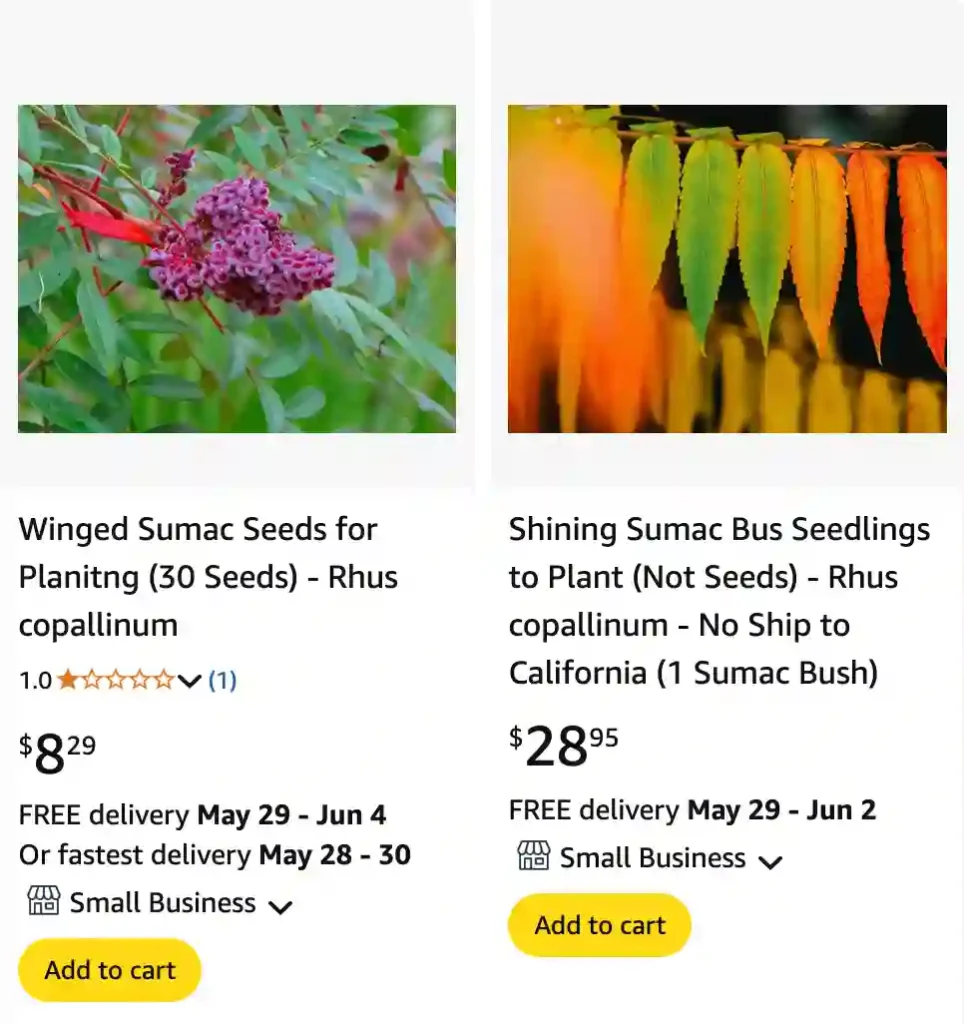
The “winged” part of the name comes from the flattened rachis between its leaflets—small green “wings” along the main stem of each compound leaf. In fall, it turns deep scarlet, orange, and crimson. I’ve seen whole colonies of this plant light up hillsides like wildfire.
How Big Does Rhus Copallinum Get?
In my experience, Rhus Copallinum grows fast. On average, it reaches 10 to 15 feet tall, sometimes stretching up to 25 feet under ideal conditions. Its spread is often broader than its height due to its suckering growth habit.
If you let it, it’ll form thickets, making it perfect for erosion control, wildlife cover, or naturalized plantings. I trim it back when I need to keep it tidy, but I also love how wild it can get.
Is Rhus Copallinum Invasive?
Not in the usual sense. It’s aggressive, yes. But not invasive—at least not outside its native range. Rhus Copallinum spreads by rhizomes, meaning underground stems can pop up new shoots.
I use it in restoration projects and along fencerows because it fills space quickly and stabilizes soil. It’s not a good pick if you want a neat, controlled shrub without boundaries. But if you want habitat, privacy, or slope control—this is your ally.
Is Rhus Copallinum Poisonous?
Nope. Unlike Poison Sumac (Toxicodendron vernix), Rhus Copallinum does not contain urushiol, the nasty oil that causes rashes. I’ve handled it plenty—pruning, moving, and mulching around it—and never had a problem.
In fact, birds and deer feed on its reddish-brown berries. I’ve seen Cedar Waxwings strip a shrub clean in winter. It’s a great food source in colder months when pickings are slim.
How Does Rhus Copallinum Compare to Staghorn Sumac?
I’ve grown both Rhus Copallinum and Staghorn Sumac (Rhus typhina), and they’re often confused. Here’s the real difference:
- Rhus Copallinum has shiny, winged leaf stems and a smoother texture.
- Staghorn Sumac has hairy branches—almost like velvet—and taller, fuzzier fruit spikes.
- Copallinum has a more compact form, while Staghorn gets leggy and loose.
For urban gardens, I prefer Copallinum. For wilder spaces, Staghorn has its place.
What Conditions Does Rhus Copallinum Like?
This plant is a tough native. It thrives in dry, sandy, or rocky soils—especially in full sun. I’ve seen it survive along highways, in poor clay soil, and on windswept ridges.
It’s also drought-tolerant once established. That makes it perfect for xeriscaping or low-water gardens. I’ve used it as part of a pollinator garden where water is limited, and it performs beautifully.
How Do I Propagate Rhus Copallinum?
You’ve got options. I usually let nature take its course with suckers—just dig and transplant the offshoots. But it can also be grown from seed, though you’ll need to scarify the seed coat and cold stratify for best results.
It’s not a fussy plant. If it likes your soil and sun, it’ll multiply without help. But keep in mind—it’ll spread whether you want it to or not.
Is Rhus Copallinum Good for Wildlife?
Absolutely. This is one reason I love it.
- Bees and butterflies flock to its late-summer flower panicles.
- The berries feed songbirds, including Robins, Mockingbirds, and Bluebirds.
- Deer nibble the foliage occasionally, but it’s not their favorite.
It’s also a larval host for several species of moths and butterflies, like the Red-banded Hairstreak. In fall, it’s a visual signal to wildlife that winter prep has begun.
Can I Use Rhus Copallinum in Urban Gardens?
Yes, but with care. It needs space to spread, or regular pruning. I’ve used it in bioswales, rain gardens, and even median strips where its drought tolerance shines.
For smaller spaces, try planting it in root barriers or as a specimen where it won’t overrun neighbors. And its fall color alone makes it worth the trouble.
Final Thoughts on Rhus Copallinum
If you’re like me and appreciate native plants, low-maintenance design, and wildlife gardening, Rhus Copallinum is a winner. It’s not for formal beds, but it shines in naturalistic landscapes.
It’s more than a pretty face. It’s a resilient ecological workhorse, and I’m always glad to see it thriving where others fail.

If i die, water my plants!