I’ve always had a soft spot for native plants, especially those that offer both beauty and function. Rubus Parviflorus, commonly known as Thimbleberry, is one of those rare species that does both. If you’re curious about growing it, using it in the garden, or comparing it to similar plants, this guide has all the answers from my own experience.
1556 Species in Genus Rubus
What Is Rubus Parviflorus?
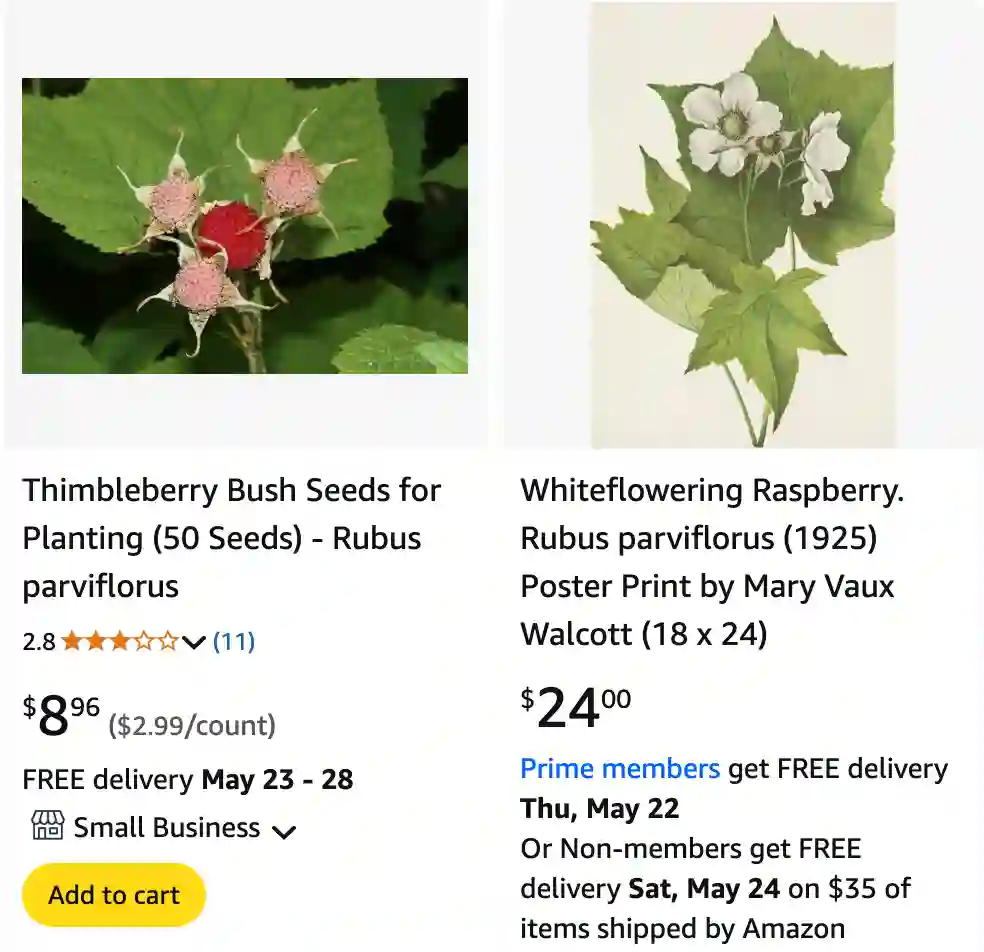
Rubus Parviflorus is a deciduous shrub in the Rosaceae family. It’s native to North America, from Alaska to Mexico and across the Great Lakes. What sets it apart is its soft, maple-like leaves and large, showy white flowers. These turn into bright red berries that look like raspberries but are flatter and softer.
I grow it mostly for its wild, cottage-garden feel and its ability to thrive in shade. Plus, local birds, bees, and butterflies love it. If you’re into ecological landscaping, this is a winner.
Is Rubus Parviflorus Edible?
Yes, and I’ve eaten them straight off the cane many times. The fruit is delicate, tangy-sweet, and a bit dry compared to cultivated raspberries. Still, they’re packed with antioxidants and vitamins. Indigenous communities have used Thimbleberries for centuries — both as food and medicine. I’ve even tried making Thimbleberry jam. It’s not as thick as traditional raspberry jam, but the flavor is rich and earthy.
How Does It Compare to Raspberry or Blackberry?
Here’s the breakdown I’ve seen in my garden:
- Rubus Parviflorus vs. Rubus Idaeus (Raspberry): Thimbleberry has larger, softer leaves and no thorns. Raspberries have a longer fruiting season, but their canes can be aggressive and prickly.
- Rubus Parviflorus vs. Rubus Fruticosus (Blackberry): Blackberries grow in denser thickets and have sharper thorns. Thimbleberry spreads more politely, though still with vigor.
I prefer Rubus Parviflorus in naturalized areas or shady woodland edges. For heavy fruit production, I still lean toward cultivated raspberries.
What Growing Conditions Does Rubus Parviflorus Prefer?
It thrives in moist, well-drained soil and tolerates part to full shade. I’ve planted it in dappled woodland light and it’s done beautifully, especially with a layer of mulch to retain soil moisture.
It’s not picky about pH but prefers slightly acidic soil. I’ve also noticed it handles cold better than many berries — down to USDA Zone 3. However, it can struggle in very dry or hot climates without some afternoon shade.
Is Rubus Parviflorus Invasive?
No, not in the way you’d fear. It spreads by rhizomes, but in my experience, it’s more persistent than invasive. You can control it with edging or regular thinning. Compared to Himalayan Blackberry (Rubus armeniacus), which is truly invasive in my region, Thimbleberry behaves itself.
How Big Does Rubus Parviflorus Get?
Mine typically reaches 3 to 6 feet tall, and about the same wide. It fills in fast, so it’s a great understory plant or shrub border filler. I’ve even used it to stabilize slopes thanks to its fibrous roots.
What Are the Benefits of Growing Rubus Parviflorus?
Here’s why I keep planting it:
- Native habitat restoration
- Food source for wildlife (and me!)
- No thorns, unlike most Rubus species
- Shade tolerance
- Erosion control
- Pollinator-friendly — bees adore the flowers
In terms of ecological value, it’s on par with elderberry and serviceberry in my garden.
Can I Grow Rubus Parviflorus in a Pot?
You can — but I wouldn’t recommend it long-term. Its root system likes to spread. I tried growing it in a 15-gallon container, and while it lived, it never thrived. If you’re tight on space, go for dwarf raspberry cultivars instead.
Is Rubus Parviflorus Deer Resistant?
In my area, deer do nibble on young leaves, especially in spring. But once established, it bounces back. If you’ve got heavy deer traffic, I suggest using deterrents or mixing it with deer-resistant perennials like ferns or hellebores.
What Plants Pair Well with Rubus Parviflorus?
From my experience, Thimbleberry plays well with others, especially woodland natives. Try pairing it with:
- Polystichum munitum (Western Sword Fern)
- Cornus sericea (Red Twig Dogwood)
- Arctostaphylos uva-ursi (Kinnikinnick)
- Aquilegia formosa (Western Columbine)
Together, these make for a Pacific Northwest woodland dream.
Final Thoughts: Why I Recommend Rubus Parviflorus
If you’re into sustainable gardening, native species, or simply want a low-maintenance plant that gives back to nature, Rubus Parviflorus is a gem. It’s beautiful, edible, supports local ecosystems, and behaves far better than many of its Rubus cousins.
Sure, it won’t replace your high-yield raspberry canes or polished landscape shrubs. But in my eyes, that’s the point. It offers something wilder, gentler, and closer to home.

If i die, water my plants!