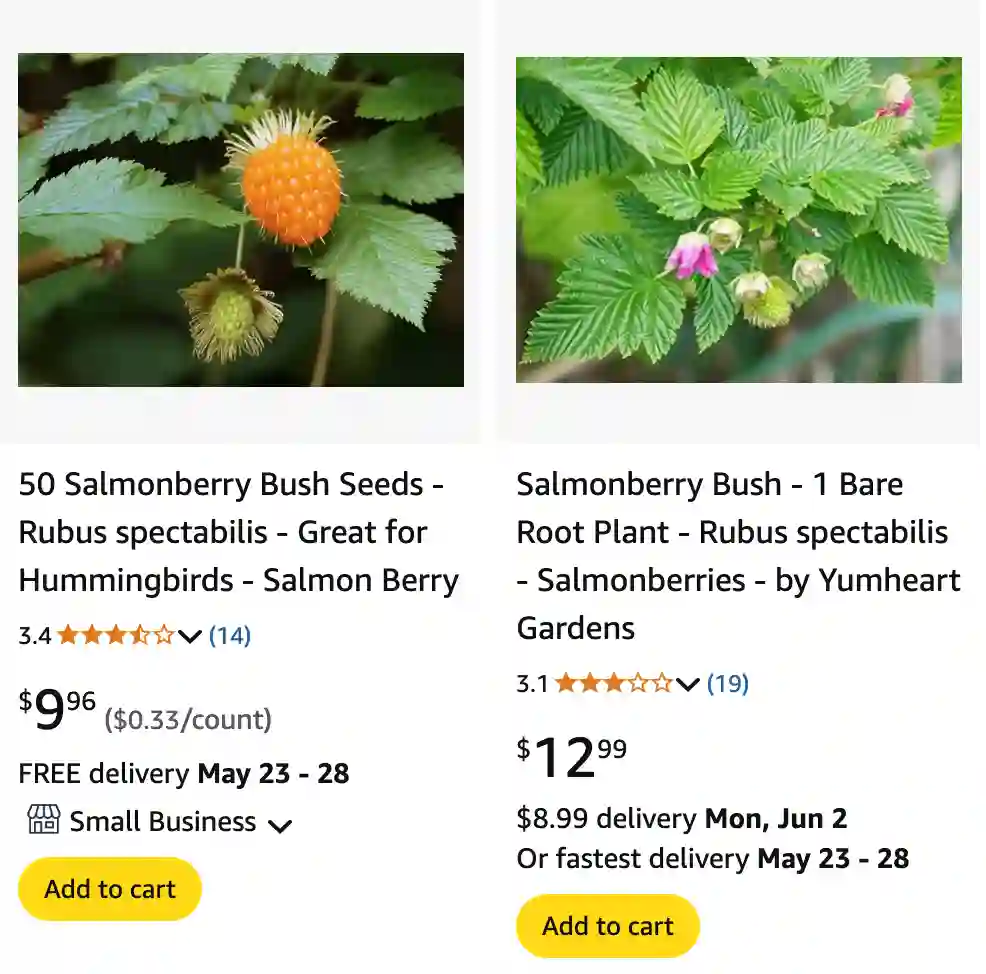
I grow Rubus Spectabilis, also known as Salmonberry, in my yard. Over time, I’ve come to love its lush green stems, bright pink flowers, and sweet orange berries. It’s a native plant from the Pacific Northwest that grows in moist forests, especially near streams. Let me answer some common questions about this underappreciated gem.
1556 Species in Genus Rubus
What Is Rubus Spectabilis?
Rubus Spectabilis is a deciduous shrub in the Rosaceae family. It’s part of the Rubus genus, which includes raspberries and blackberries. It’s called Salmonberry because of its vibrant, salmon-colored fruit. In spring, it blooms with striking magenta flowers. The fruit ripens in summer and is edible, though not as sweet as a cultivated raspberry.
It grows wild from Alaska to California, and east into Idaho and Montana. For me, it’s a plant that balances ornamental beauty with ecological function.
How Tall Does Salmonberry Grow?
In my experience, Rubus Spectabilis typically grows 6 to 12 feet tall. It can spread aggressively through rhizomes. In wet, shady areas, I’ve seen it form dense thickets. It behaves more like a hedge or barrier plant. The stems are upright and slightly prickly—not as thorny as blackberry, but still a bit rough.
Is Salmonberry Edible?
Yes, the berries are edible. I’ve eaten them straight off the bush. The taste is mild—sweet-tart, but not intense. I use them in jams and syrups more than pies. Birds, especially robins and towhees, also love them. This makes it a great addition to any pollinator garden or wildlife habitat.
How Do I Grow Rubus Spectabilis?
I plant Salmonberry in moist, shady areas—like along fences or woodland edges. It thrives in well-drained soils and doesn’t need fertilizer. It’s native, so once established, it doesn’t require much care. Pruning in late winter helps keep the size in check.
If you’re in USDA zones 5–9, Salmonberry will do fine outdoors. I’ve found that mulching keeps the roots cool and helps control spread.
How Does It Compare to Raspberry?
This is a question I get a lot. Both are in the Rubus genus, but they differ in several ways:
| Feature | Rubus Spectabilis (Salmonberry) | Rubus Idaeus (Raspberry) |
|---|---|---|
| Native Range | Pacific Northwest (US/Canada) | Europe and Asia |
| Flower Color | Magenta-Pink | White or Pale Pink |
| Berry Flavor | Mild, watery | Sweet, tangy |
| Growth Habit | Rhizomatous, shrubby | Caned, more upright |
| Pruning Needs | Minimal | Needs annual pruning |
I grow both, but I see Salmonberry as more ornamental and wildlife-supportive, while raspberry is strictly for the harvest.
Is Rubus Spectabilis Invasive?
Not invasive, but definitely vigorous. In rich soil and part shade, it spreads through underground runners. In my garden, I control it with root barriers and selective thinning. It doesn’t choke out native plants but can outcompete more delicate species if left unchecked.
Can I Use Salmonberry in Landscaping?
Absolutely. I use it in native plant gardens, rain gardens, and woodland borders. Its early spring blooms are among the first sources of nectar for bees and hummingbirds. The leaves provide shelter for insects and amphibians.
It also looks fantastic near ferns, dogwoods, and red-twig willows—other native plants with similar needs. It’s a practical, beautiful way to support ecological balance in my landscape.
How Does It Compare to Thimbleberry?
Another great question. I also grow Rubus Parviflorus (Thimbleberry), and here’s how they differ:
| Trait | Rubus Spectabilis | Rubus Parviflorus (Thimbleberry) |
|---|---|---|
| Leaf Texture | Glossy, veined | Large, soft, maple-shaped |
| Fruit Texture | Juicy, loose | Dry, thimble-shaped |
| Growth Form | Upright, suckering | Spreading, bushy |
| Flower Size | Medium | Large, white |
I find Salmonberry more vibrant, while Thimbleberry feels softer and more delicate. I plant both for diversity.
Is Rubus Spectabilis Good for Wildlife?
Yes, it’s a wildlife magnet. Birds eat the fruit. Bees and butterflies feed on its nectar. Even bears and foxes eat Salmonberries in the wild. I’ve noticed a sharp uptick in pollinators since planting it.
Can I Grow It in a Container?
It’s not ideal, but I’ve experimented with it. Use a deep, wide pot, at least 20 inches in diameter. Keep it moist, prune aggressively, and expect slower growth than in-ground. If space is limited, I’d suggest a more compact shrub like Gaultheria shallon (Salal).
Final Thoughts
Rubus Spectabilis isn’t just a plant—it’s a living thread in the fabric of the Pacific Northwest. It connects soil, insect, bird, and human. I grow it not just for beauty, but to give back to the land I live on. If you’re looking for a native shrub with history, function, and character, give Salmonberry a place in your garden.

If i die, water my plants!